
Stylish therapeutic shoes: comfort meets modern design
TL;DR:
- Modern therapeutic shoes combine style with essential support features like wide toe boxes and removable insoles.
- Popular models like Vionic Winny and Nike Motiva offer both fashion-forward design and foot health benefits.
- Aesthetic improvements increase daily wear compliance, improving foot health outcomes for users with medical needs.
Finding footwear that genuinely supports your feet without making you look like you’ve borrowed shoes from a hospital supply room is a challenge that millions of people face every day. The stereotype that therapeutic shoes are clunky, beige, and deeply unfashionable has persisted for decades, yet the reality in 2026 is strikingly different. Whether you manage diabetes, live with plantar fasciitis, or simply need extra support to get through the day comfortably, there is now a growing world of footwear designed to meet your medical needs and your aesthetic standards at the same time. This article breaks down exactly what to look for, which models stand out, and how to match the right shoe to your specific situation.
Table of Contents
- What makes a shoe both therapeutic and stylish?
- Leading stylish therapeutic shoe examples
- Comparing popular therapeutic shoe models
- Choosing the right stylish therapeutic shoe for your needs
- Why stylish therapeutic shoes matter more than ever
- Discover the latest in stylish therapeutic footwear
- Frequently asked questions
Key Takeaways
| Point | Details |
|---|---|
| Modern features and style | Therapeutic shoes can now blend medical support with attractive designs for all ages. |
| Top recommended models | Vionic Winny and Nike Motiva stand out for both style and proven therapeutic benefits. |
| Match shoes to your needs | Assess your condition and daily routine to choose the ideal stylish therapeutic shoe. |
| Comparison aids selection | Side-by-side tables and feature lists make it easier to compare and decide. |
What makes a shoe both therapeutic and stylish?
The gap between a medical device and a fashionable shoe has narrowed considerably over the past decade. Modern therapeutic footwear engineers have realised that people are far more likely to wear shoes consistently if they actually like the look of them. This insight has driven a genuine shift in how these shoes are designed, marketed, and constructed.
When evaluating a therapeutic shoe, these are the essential features to prioritise:
- Extra depth and wide toe boxes to accommodate swelling, bunions, or orthotics without squeezing the foot
- Seamless interiors to eliminate friction points that can cause blisters or ulcers, particularly critical for people with diabetes
- Removable insoles so you can swap in your own custom orthotics without losing the shoe’s structural integrity
- Substantial arch support built directly into the midsole, not just a thin foam insert
- Breathable uppers in mesh, leather, or technical fabrics that regulate temperature and moisture
- Cushioned, shock-absorbing soles to reduce impact on joints, ideal for arthritis or general joint pain
- Adjustable closures such as velcro straps, wide laces, or side zips for easy entry and a secure fit
Brands blend features like extra depth, wide toe boxes, seamless interiors, and orthotic insoles with modern styling to overcome the dated look of traditional orthopaedic shoes. The visual upgrades come through in the use of premium leather uppers, athletic-inspired silhouettes, neutral and contemporary colour palettes, and hardware details that look intentional rather than clinical.
For people with diabetes specifically, diabetic-friendly shoe features go beyond simple comfort, addressing real risks like nerve damage and poor circulation that make foot protection non-negotiable. For those who rely on custom orthotics, orthotic-friendly stylish comfort has become an achievable standard rather than a compromise. The result is footwear that a stranger on the street would simply see as a well-made, thoughtful shoe.
Leading stylish therapeutic shoe examples
With the core criteria established, it helps to look at real models that have earned their reputation for striking that balance between clinical function and contemporary style. The market has produced some genuinely impressive options.
Vionic Winny Sneaker
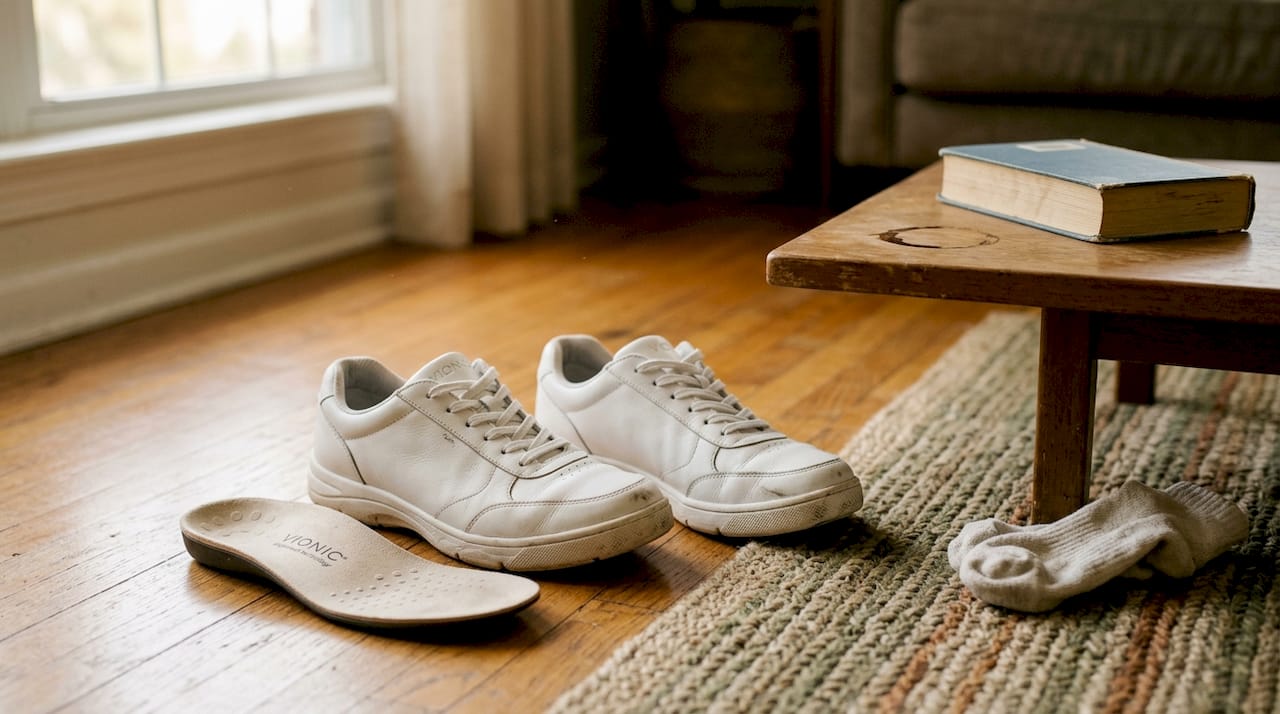
The Vionic Winny is one of the clearest examples of therapeutic technology wrapped in a genuinely wearable package. The VIO MOTION Technology offers a contoured arch support system, a deep heel cup, and meaningful shock absorption, making it suitable for plantar fasciitis and overpronation. The leather upper is clean and understated, reading more as a premium casual trainer than a medical aid. It comes in several neutral and earthy tones, works with a range of everyday outfits, and holds up well to daily wear. For anyone managing plantar fasciitis footwear needs, this model is one of the strongest starting points on the market.
Nike Motiva
The Nike Motiva has been identified as a top orthopedic walking shoe for bunions, hammertoe, joint pain, and wide feet, combining a genuinely roomy toe box with solid arch support and a cushioned sole that reduces impact on joints with each step. The design language is unmistakably Nike, which means it looks sporty, modern, and entirely at home on the high street. The Motiva suits people who want athletic styling without giving up therapeutic performance. It is particularly well regarded by those who are on their feet for extended periods throughout the day.
Orthofeet, Dr. Comfort, and Propét
These three brands represent a broader tier of therapeutic footwear that consistently delivers both clinical features and thoughtful aesthetics. Orthofeet focuses on biomechanical support with anatomical insoles and wide fits. Dr. Comfort holds Medicare approval for diabetic footwear in the United States and has expanded its designs into genuinely attractive lace-up walkers and slip-ons. Propét has built its reputation on durability and accessible styling, offering options in widths up to 5E. Explore some of the best stylish foot health picks across these categories to see how each brand approaches the same challenge from a slightly different angle.
“The conversation around orthopaedic footwear has fundamentally shifted. People are no longer willing to accept that caring for their feet means giving up on how they present themselves. The demand for beautiful, functional footwear is driving innovation at every level of the market.” — Footwear industry expert
Pro Tip: Always choose a therapeutic shoe with a fully removable insole. This single feature gives you the flexibility to use a custom orthotic prescribed by your podiatrist while still benefiting from the shoe’s structural support, without one cancelling out the other.
Comparing popular therapeutic shoe models
A direct comparison makes it considerably easier to see which option aligns best with your particular combination of needs, lifestyle, and preferences. The table below covers the leading models on their most important practical dimensions.
| Shoe model | Best for | Fit | Style | Key therapeutic feature | Closure type |
|---|---|---|---|---|---|
| Vionic Winny Sneaker | Plantar fasciitis, overpronation | Standard to wide | Classic leather trainer | VIO MOTION arch support | Lace-up |
| Nike Motiva | Bunions, hammertoe, wide feet, joint pain | Wide toe box | Modern athletic | Roomy toe box, cushioned sole | Lace-up |
| Kuru Atom 2 | Plantar fasciitis, wide feet | Wide | Sleek low-profile | KURUSOLE heel support system | Lace-up |
| Orthofeet Sneaker | Diabetes, neuropathy, wide feet | Extra wide | Understated sporty | Seamless interior, anatomical insole | Velcro or lace |
| Dr. Comfort Dylan | Diabetes, general support | Wide to extra wide | Classic lace-up walker | Medicare-approved, extra depth | Lace-up |
| Propét Stability Walker | Arthritis, general stability | Multiple widths | Traditional walking shoe | Cushioned footbed, firm midsole | Lace-up or velcro |
According to 2026 reviews, the Kuru Atom 2 and Nike Motiva both score highly on comfort and suitability for plantar fasciitis and wide feet, making either a solid choice if those are your primary concerns. The key differentiator between them comes down to aesthetic preference: the Kuru leans towards a minimalist profile, while the Motiva carries recognisable athletic branding. For types of diabetic comfort shoes, the Orthofeet and Dr. Comfort options stand apart due to their focus on seamless construction and extra depth.
Choosing the right stylish therapeutic shoe for your needs
Knowing which shoes exist is only part of the picture. The more important question is which shoe is right for you, given your specific foot health history, daily activities, and personal taste. A structured approach removes much of the guesswork.
Follow these steps when selecting your therapeutic shoe:
- Measure your feet properly. Foot size changes over time, particularly with age, pregnancy, or conditions that cause swelling. Measure both feet in the afternoon or evening when they are at their largest, and always fit to the larger foot.
- Identify your primary foot health concern. Diabetes, plantar fasciitis, arthritis, and neuropathy each require slightly different features. Be clear about your priority before you start browsing.
- Check the insole situation. If you use a custom orthotic, confirm the insole is fully removable and that the shoe offers enough depth to accommodate the extra volume without tightening around your foot.
- Inspect the interior carefully. Run your hand inside the shoe and feel for any seams, ridges, or protruding stitching. For people with reduced sensation due to neuropathy, what you cannot feel on your skin can still cause damage over time.
- Match the closure to your dexterity. If you have limited hand strength due to arthritis, velcro or elastic laces will serve you far better than traditional lace systems.
- Walk around the shop, or test at home before committing. Many specialist retailers and online brands now offer extended return windows precisely because fit is so individual with therapeutic footwear.
Individuals with severe neuropathy benefit most from seamless linings and friction-free materials, while those with arthritis need easy-entry features like zips or velcro for comfortable daily use. Understanding footwear tips for diabetics can help you translate these general principles into your specific daily routine. For those interested in the technical side, learning about technology benefits for diabetics reveals how midsole construction and material choice actively protect vulnerable feet in ways that are not always visible from the outside.
Mini-scenarios to guide your decision:
- You have diabetes with mild neuropathy: Prioritise seamless interiors, extra depth, and a wide toe box. The Orthofeet range or Dr. Comfort Dylan are strong candidates. Use the diabetic selection guide for a more thorough overview.
- You have plantar fasciitis and spend long hours standing: Focus on robust arch support and shock absorption. The Vionic Winny or Nike Motiva will serve you well.
- You have severe neuropathy or have had foot ulcers: Neuropathy comfort shoes with protective depth, friction-free lining, and pressure-distributing soles should be at the top of your list.
- You have wide feet and find most shoes uncomfortable: Look for brands that offer multiple width fittings and a generous toe box as standard, not as an afterthought.
Pro Tip: Always try on new therapeutic shoes later in the day, when your feet are naturally at their most swollen. A shoe that fits perfectly at 9am may feel uncomfortably tight by 3pm if you have any tendency towards fluid retention or inflammation.
Why stylish therapeutic shoes matter more than ever
There is a conversation happening in the footwear industry that goes well beyond product specifications. It is a conversation about dignity and self-expression, and it matters deeply to the people affected.
For too long, the implicit message attached to therapeutic shoes was that your medical needs cancelled out your right to look good. That message caused real harm. People abandoned their prescribed footwear because they felt embarrassed wearing it in public. Compliance rates for therapeutic shoe use have historically been poor, and aesthetic reluctance is a significant contributing factor. A shoe that sits in the wardrobe because you cannot bear the thought of wearing it to a dinner or a work meeting is not protecting your feet at all.
The shift towards genuinely attractive therapeutic footwear is not a cosmetic indulgence. It is a health intervention. When someone with diabetes actually wants to put their shoes on in the morning, because those shoes look sharp and feel good, the protective benefits of daily consistent wear compound meaningfully over time. Foot complications in diabetic patients are frequently linked to periods of reduced or absent proper footwear use. Removing the aesthetic barrier removes one of the most common reasons people skip their therapeutic footwear.
We believe that no one should have to choose between looking after their health and maintaining their sense of self. Looking at the broader range of footwear for health and comfort now available, it is clear that the industry has moved decisively in the right direction. The remaining task is ensuring that people know these options exist, and have the knowledge to make confident, informed choices. That is what we are here for.
Discover the latest in stylish therapeutic footwear
You now have the knowledge to identify genuine therapeutic quality and recognise it when it is presented in a stylish package. The next step is finding footwear that has been thoughtfully curated to meet exactly these standards.

At YDA UK, we focus on bringing together footwear that takes both foot health and visual design seriously. Our shop therapeutic shoes collection is built around models that deliver genuine support without the clinical aesthetic that has put so many people off therapeutic footwear in the past. If you want to understand what goes into our approach, the YDA shoe technology page explains the engineering principles behind our footwear in accessible terms. Whether you are shopping for a specific condition or simply want shoes that will look after your feet for years to come, explore our full range to find your ideal match.
Frequently asked questions
What features should I look for in therapeutic shoes if I have diabetes?
Choose shoes with seamless interiors, extra depth, and wide toe boxes to reduce friction and accommodate orthotic insoles. Brands like Orthofeet and Dr. Comfort focus specifically on these Medicare-approved features for diabetic footwear.
Are stylish therapeutic shoes suitable for plantar fasciitis?
Yes, models like the Vionic Winny Sneaker and Nike Motiva offer strong arch support and shock absorption that directly address plantar fasciitis. Both models are widely recommended for this condition alongside other common foot complaints.
Can therapeutic shoes be fashionable and comfortable?
Modern therapeutic shoes regularly use sleek designs, premium materials, and contemporary colour palettes without sacrificing support or comfort. Modern brands have countered the outdated look of traditional therapeutic footwear with genuinely attractive alternatives.
How can I tell if a stylish shoe is also therapeutic?
Look for removable insoles, substantial arch support, cushioned soles, and design details like seamless linings or wide toe boxes as your primary indicators. Key therapeutic features are typically listed in the product specification and are worth verifying before purchasing.
Recommended
- Top orthotic-friendly shoes: stylish comfort and support – YDA UK
- Choosing Shoes for Neuropathy: Find Comfort and Style Easily – YDA UK
- How to select the right orthopedic shoes: comfort and style – YDA UK
- 7 Examples of Stylish Footwear for Foot Health and Comfort – YDA UK
- Designerschuhe: Warum Exklusivität und Stil sich lohnen