
Top diabetic footwear tips: comfort and foot health
TL;DR:
- Proper diabetic footwear supports foot health by reducing pressure, friction, and moisture buildup.
- Fit and width are critical to prevent blisters, ulcers, and infections in people with diabetes.
- Stylish, functional diabetic shoes are now widely available, prioritizing health without sacrificing appearance.
Choosing the wrong shoes when you have diabetes is not just uncomfortable. It can be genuinely dangerous. Reduced sensation in the feet, a condition known as peripheral neuropathy, means small irritations like a seam rubbing or a shoe that is slightly too tight can escalate into blisters, ulcers, and even infections before you notice anything is wrong. The good news is that selecting the right footwear does not have to be complicated. With a few science-backed principles and some practical know-how, you can protect your feet every single day and still find shoes you actually want to wear.
Table of Contents
- Understand what makes footwear diabetic-friendly
- Prioritise fit and width for maximum comfort
- Evaluate materials, construction, and technology
- Match footwear type to your lifestyle and needs
- Why comfort and health trump fashion in diabetic footwear
- Find your perfect diabetic footwear solution
- Frequently asked questions
Key Takeaways
| Point | Details |
|---|---|
| Prioritise proper fit | Ensuring your shoes fit well significantly reduces your risk of diabetic foot complications. |
| Choose the right materials | Opt for breathable, cushioned materials to maintain comfort and protect sensitive feet. |
| Select shoes for your activities | Pick diabetic footwear styles tailored for work, exercise, and relaxation to match your lifestyle. |
| Technology enhances protection | Newer diabetic shoes incorporate advanced features that reduce injury risk and improve mobility. |
Understand what makes footwear diabetic-friendly
Not all shoes labelled as comfortable are suitable for people with diabetes. Diabetic footwear is a specific category of shoe designed to reduce pressure points, minimise friction, and support the unique needs of feet affected by poor circulation or nerve damage. Understanding support, cushioning, and breathable materials is what guides you towards genuinely safer options rather than marketing claims.
So what separates a diabetic shoe from a standard trainer or loafer? Several key features work together to protect your feet:
- Supportive soles: A firm yet cushioned midsole distributes pressure evenly across the foot, reducing the risk of pressure sores.
- Seamless interiors: Traditional stitching and seams can rub against sensitive skin. Diabetic shoes use smooth, seamless linings to eliminate this risk entirely.
- Non-binding uppers: The upper part of the shoe should never squeeze or constrict. Look for soft, flexible materials that conform to the foot’s shape.
- Adjustable closures: Velcro straps, lace-up designs, or buckles allow you to customise the fit throughout the day as feet naturally swell.
- Breathable materials: Mesh panels or natural leathers allow air to circulate, reducing moisture build-up that can lead to fungal infections.
Cushioning deserves special attention. Feet with reduced sensation cannot always signal when pressure is becoming harmful, so the shoe itself must absorb shock and distribute load. Breathability is equally important for daily wear because trapped moisture softens skin and makes it far more vulnerable to breakdown.
You can explore the full footwear selection guide for a deeper look at what to prioritise, and compare specific designs at diabetic-friendly shoes to see these features in action.
‘Expert guidance can prevent common diabetic foot injuries related to ill-fitting footwear.’
Pro Tip: Shop for shoes late in the afternoon or evening. Feet naturally swell throughout the day, so trying shoes when your feet are at their largest gives you a far more accurate sense of real-world fit.
Prioritise fit and width for maximum comfort
Even the most technically advanced diabetic shoe will cause harm if it does not fit correctly. Fit is arguably the single most important factor in diabetic footwear selection, yet it is also the area where people most commonly make mistakes.
Start by measuring both feet properly. Feet are rarely identical in size, and the larger foot should always dictate your shoe size. Measure length from the heel to the tip of the longest toe, and measure width at the widest part of the foot. Both dimensions matter. A shoe that is the right length but too narrow will compress the toes and restrict circulation. A shoe that is too wide will allow the foot to slide, creating friction with every step.
Common fit mistakes people with diabetes make include:
- Buying shoes that are too tight, assuming they will ‘break in’ over time
- Choosing narrow styles because they look sleeker or more fashionable
- Wearing shoes that are too loose, which causes the foot to slide and creates friction blisters
- Ignoring width fittings altogether and only considering length
- Failing to account for orthotic insoles, which take up space inside the shoe
The consequences of poor fit are serious. Ill-fitting shoes are directly linked to blisters, calluses, and ulcers, which in people with diabetes can become infected and extremely difficult to heal. A good retail fit ensures you avoid these complications before they start.
Research consistently shows that a significant proportion of diabetic foot ulcers are linked to improper footwear choices, making fit not just a comfort issue but a genuine medical priority. Paying attention to shoe width for diabetes is particularly important for those with bunions, hammertoes, or oedema.
Pro Tip: Always try shoes on while wearing the socks you plan to use daily. Sock thickness affects fit considerably, and what feels right barefoot may feel tight once you add a cushioned diabetic sock.
Evaluate materials, construction, and technology
Once you have identified the right fit, the next step is understanding what your shoes are actually made of and how the construction affects your foot health over time.
Breathable materials like genuine leather and technical mesh allow moisture to escape and air to enter. Synthetic materials such as PVC or heavily coated fabrics tend to trap heat and moisture, which is particularly problematic for diabetic feet prone to infection. That said, some modern synthetic blends are specifically engineered for breathability and can outperform natural materials in wet or cold climates.
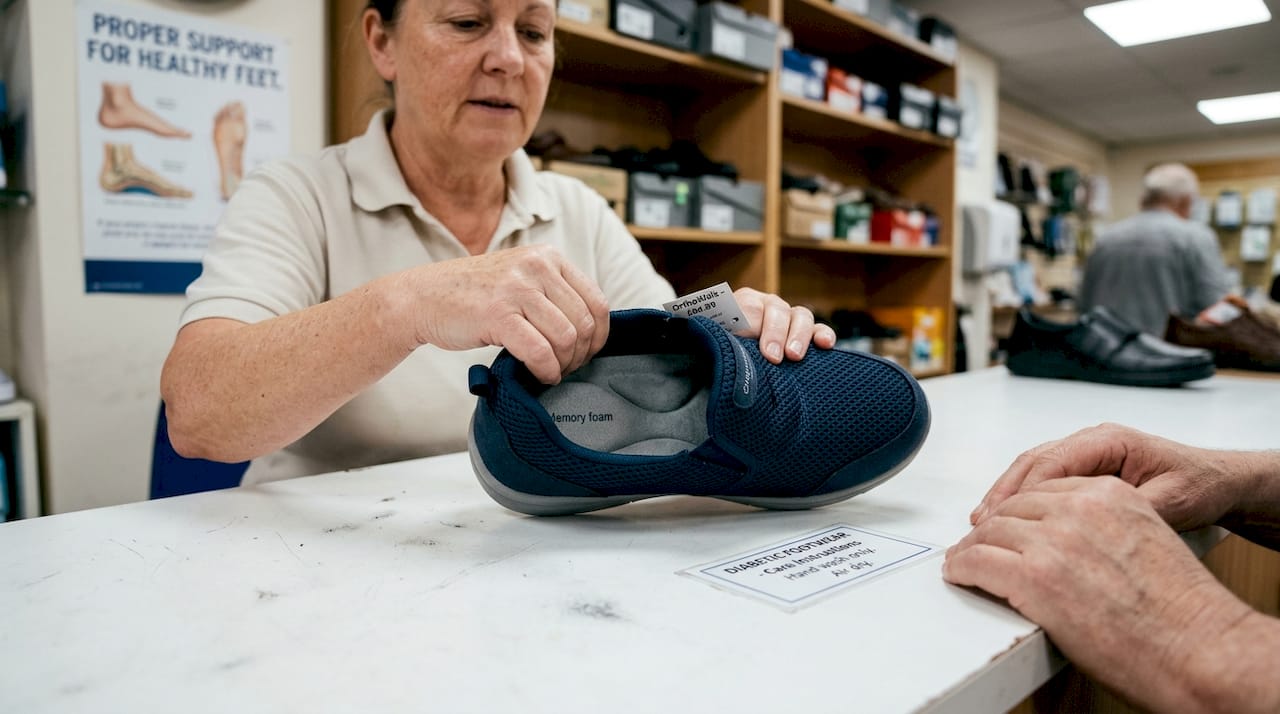
Here is a comparison of common diabetic footwear features to help you make an informed choice:
| Feature | Options | Best for |
|---|---|---|
| Cushioning type | Memory foam, EVA, gel inserts | Memory foam for pressure relief; gel for shock absorption |
| Sole material | Rubber, polyurethane, crepe | Rubber for grip; polyurethane for durability |
| Closure type | Velcro, lace-up, zip | Velcro for ease; lace-up for adjustability |
| Lining | Seamless fabric, padded mesh | Seamless for sensitive skin |
| Insole | Fixed, removable, custom orthotics | Removable for custom insole use |
Removable insoles are a particularly valuable feature. They allow you to insert custom orthotics prescribed by a podiatrist, which can correct gait issues and further reduce pressure on vulnerable areas of the foot.
Modern shoe technology for diabetics has advanced considerably. Rocker-bottom soles, for instance, reduce pressure on the forefoot and heel by rolling the foot through the gait cycle rather than bending it. Anti-microbial linings help control bacteria and odour. Understanding these identifying shoe technology benefits helps you move beyond surface-level choices.
When evaluating construction, look for these features in order of priority:
- Seamless or minimal-seam interior lining
- Removable, cushioned insole with arch support
- Wide, deep toe box to prevent compression
- Flexible yet supportive midsole
- Non-slip rubber outsole for stability
Exploring the full range of types of diabetic footwear will show you how these construction principles are applied across different shoe styles.
Match footwear type to your lifestyle and needs
There is no single perfect diabetic shoe. The right choice depends heavily on what you actually do each day. A retired person who walks gently in the park has very different needs from someone who stands for eight hours in a workplace or travels frequently.
Understanding different types of diabetic footwear helps you match function to your real life rather than buying whatever looks most medical or most fashionable.
Here is a practical guide to matching footwear type to activity:
| Activity | Recommended features | Shoe type |
|---|---|---|
| Office or work | Supportive sole, smart appearance | Diabetic dress shoe or loafer |
| Exercise or walking | Shock absorption, secure fit | Diabetic trainer or walking shoe |
| Travel | Lightweight, easy on and off | Slip-on with adjustable strap |
| Home or lounging | Soft lining, non-slip sole | Diabetic slipper or house shoe |
| Wet or outdoor use | Water resistance, grip | Diabetic sandal or waterproof boot |
For those living with neuropathy, the stakes are even higher. Specialist neuropathy footwear advice recommends prioritising extra depth, padded collars, and rocker soles. If you experience numbness or tingling regularly, shoes for neuropathy should be chosen with professional input.
Key lifestyle considerations when selecting diabetic footwear:
- How many hours per day will you wear the shoe?
- Do you walk on hard floors, uneven terrain, or both?
- Do you have any foot deformities such as bunions or hammertoes?
- Are you using custom orthotics that need to fit inside the shoe?
- Do you experience swelling that changes throughout the day?
When in doubt, consult a podiatrist or a certified footwear specialist. They can assess your specific foot shape, gait, and medical history to recommend the most appropriate style. This is not an overreaction. It is the smartest investment you can make in your long-term mobility and independence.
Why comfort and health trump fashion in diabetic footwear
Here is something we see time and again: people with diabetes spend months researching their condition, managing their diet carefully, and monitoring their blood sugar diligently. Then they put on a pair of fashionable but completely unsuitable shoes and undo much of that good work.
The pull of style is understandable. Nobody wants to feel defined by their health condition or forced into shoes that look clinical. But the reality is that a poorly chosen shoe can trigger a cascade of complications that no amount of careful eating or medication management can easily reverse.
What has changed, and this is genuinely encouraging, is that modern diabetic shoes guide options are increasingly stylish. Designers have recognised that health-conscious consumers still care about aesthetics, and the gap between functional and fashionable has narrowed considerably. You no longer have to choose between a shoe that protects your feet and one that you actually want to wear.
Our perspective is straightforward: start with health requirements and then find the most attractive option within those parameters. Not the other way around. Style matters, but healthy mobility matters more. The best footwear decision you will ever make is the one that keeps you walking comfortably and safely for years to come.
Find your perfect diabetic footwear solution
The right shoes do more than just protect your feet. They give you confidence, support your daily routine, and reduce the risk of complications that can seriously affect your quality of life.
At YDA UK, we have built our entire range around the principles covered in this article. Every shoe is designed with foot health at its core, combining supportive construction with genuinely wearable designs. Our YDA shoe technology brings together advanced cushioning, seamless interiors, and breathable materials to meet the specific demands of diabetic foot care. If you are ready to take your foot health seriously without sacrificing style, explore our range and find the shoe that fits your life.
Frequently asked questions
What features should I look for in diabetic shoes?
Look for shoes with supportive soles, seamless interiors, adjustable fastenings, and breathable materials to protect your feet. Essential elements include support, cushioning, and breathability working together.
How important is proper shoe fit for people with diabetes?
Proper fit is crucial, as ill-fitting shoes can cause blisters, ulcers, and serious infections in people with diabetes. A good retail fit ensures diabetic customers avoid calluses and more serious foot injuries.
Can I wear sandals or open-toed shoes if I have diabetes?
Sandals and open-toed shoes are generally discouraged unless specifically designed for diabetics, as they may expose feet to injuries or irritations. Reviewing diabetic footwear types will show you safer open-shoe alternatives.
How often should I replace my diabetic shoes?
Diabetic shoes should typically be replaced every 6 to 12 months or as soon as they show signs of wear or loss of support. Worn-out cushioning and collapsed soles no longer protect the foot effectively, so regular replacement is a genuine health priority.
Recommended
- Identifying shoe technology benefits for diabetic footwear – YDA UK
- Diabetic Footwear Selection Guide for Optimal Comfort – YDA UK
- Neuropathy Footwear: Improving Comfort for Diabetics – YDA UK
- 7 Types of Diabetic Footwear for Comfort and Health – YDA UK
- Stairs accessibility tips: 5 simple solutions for safer homes