
Shoe Width for Diabetics – Why Fit Matters Most
Finding stylish and supportive shoes becomes much more complex when living with diabetes. Every step brings new concerns about comfort, fit, and the risk of serious foot complications. Research confirms that diabetic individuals often have wider feet, making shoe width a crucial safeguard against ulcerations and pressure injuries. This guide highlights why prioritising correct width and thoughtful design in your footwear can transform your daily comfort and protect your foot health for years to come.
Table of Contents
- Shoe Width: Essential For Diabetic Foot Health
- Diabetic Foot Challenges And Shoe Fit Needs
- Common Types And Sizing Of Diabetic Shoes
- Risks Of Improper Shoe Width And Complications
- Choosing Shoe Width: Practical Fit Assessment
- Key Features For Supportive Diabetic Footwear
Key Takeaways
| Point | Details |
|---|---|
| Importance of Shoe Width | Proper shoe width is crucial for diabetic foot health to prevent complications such as ulcerations and infections. |
| Professional Fitting | Diabetic patients should seek professional fitting to ensure shoes accommodate unique foot dimensions and variations. |
| Choosing Appropriate Footwear | Prioritise shoes with features like wide toe boxes, cushioning, and seamless interiors to support foot health. |
| Regular Assessments | Schedule periodic foot assessments to monitor changing foot conditions and adjust footwear as necessary. |
Shoe width: Essential for diabetic foot health
People with diabetes face unique challenges with foot health, and shoe width plays a critical role in preventing serious complications. Precise foot dimension assessment reveals that diabetic feet often require specialised sizing considerations beyond standard shoe measurements.
Diabetic foot complications frequently arise from improper footwear, making shoe width an essential factor in preventative care. Research demonstrates that ill-fitting shoes can significantly increase risks of:
- Foot ulcerations
- Pressure points
- Circulation restrictions
- Nerve damage progression
Scientific studies highlight that diabetic individuals typically have wider feet with unique structural changes. Standardised width measurements are crucial for selecting appropriate footwear that accommodates these specific anatomical requirements.
Understanding foot width variations helps prevent potential health risks. Diabetic patients should prioritise shoes that offer:
- Extra width in toe box areas
- Flexible materials
- Seamless interior construction
- Adjustable fitting mechanisms
Proper shoe width can mean the difference between comfortable mobility and serious medical complications. Each millimetre of extra space helps reduce pressure and minimise potential injury risks.
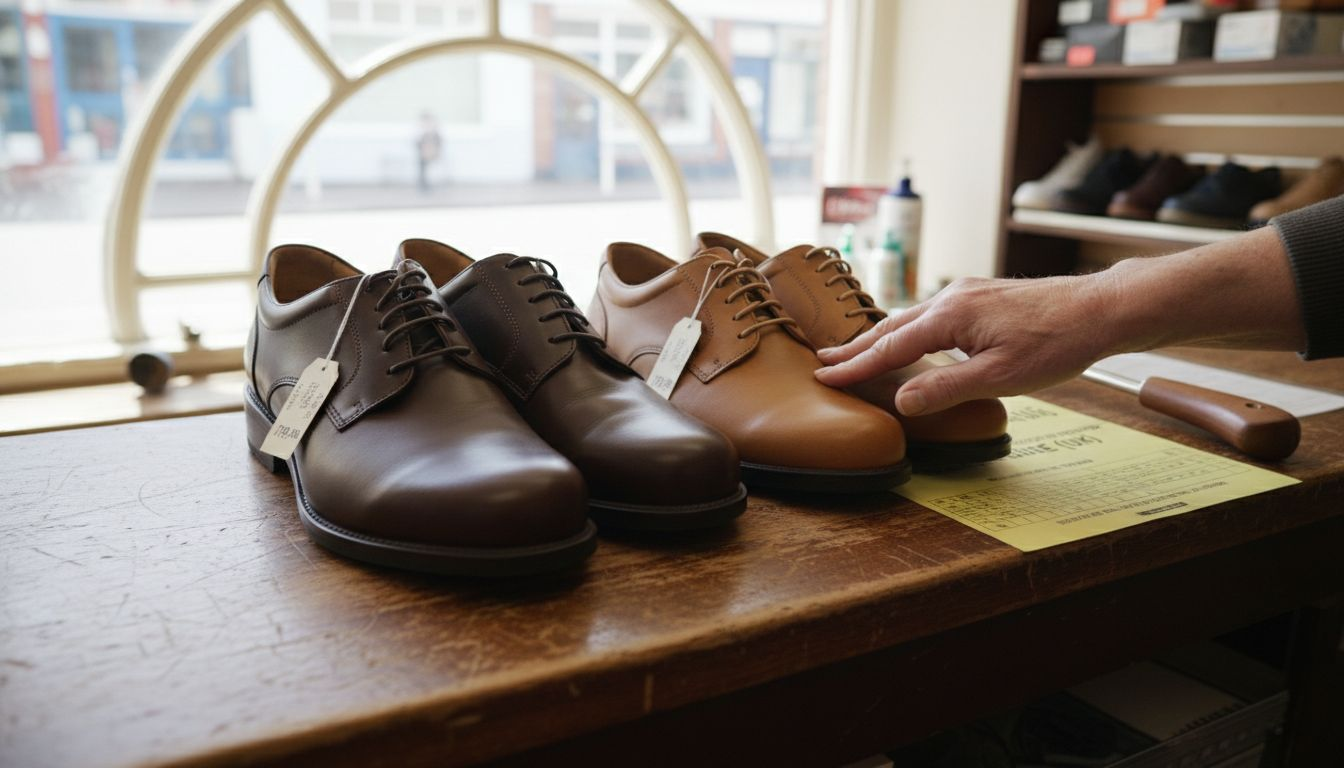
Pro tip: Always have your feet professionally measured using diabetic-specific assessment techniques, as standard shoe sizing may not capture the unique dimensions of diabetic feet.
Diabetic foot challenges and shoe fit needs
Diabetic patients face numerous complex challenges related to foot health, with shoe fit being a critical element in preventing serious complications. Precise foot measurement techniques reveal the intricate relationship between footwear and diabetic foot management.
The unique physiological changes associated with diabetes significantly impact foot structure and require specialised footwear considerations. Common diabetic foot challenges include:
- Peripheral neuropathy
- Reduced sensation in extremities
- Abnormal pressure distribution
- Higher risk of ulcerations
- Increased susceptibility to infections
Peripheral neuropathy fundamentally alters how diabetic patients experience foot comfort and pressure. Accurate shoe sizing assessments become crucial in mitigating potential health risks by preventing pressure points and minimising injury potential.
Understanding these challenges requires a comprehensive approach to footwear selection. Diabetic patients should prioritise shoes that provide:
- Enhanced cushioning
- Wider toe boxes
- Seamless interior construction
- Adjustable fitting mechanisms
- Pressure-distributing materials
By recognising the complex interplay between foot anatomy and diabetic conditions, patients can significantly reduce their risk of serious foot-related complications. Proper shoe fit is not merely a comfort issue, but a critical aspect of preventative healthcare.
Pro tip: Consider consulting a podiatrist specialising in diabetic foot care for personalised shoe fitting and comprehensive foot health assessment.
Common types and sizing of diabetic shoes
Diabetic footwear represents a specialised category of shoes designed to address the unique foot health challenges faced by individuals with diabetes. Therapeutic shoe characteristics play a crucial role in preventing foot complications and providing essential protection.
The primary types of diabetic shoes include:
- Extra-depth shoes
- Orthopedic therapeutic shoes
- Custom-moulded shoes
- Depth-inlay shoes
- Protective walking shoes
Each shoe type addresses specific foot requirements with unique design elements. Diabetic footwear sizing variations differ significantly across various healthcare contexts, particularly in low- and middle-income regions.
Here’s a comparison of diabetic shoe types and their primary benefits:
| Shoe Type | Best For | Key Benefit |
|---|---|---|
| Extra-depth shoes | Swelling, foot deformity | Reduces pressure on sensitive areas |
| Orthopaedic shoes | Severe foot structure issues | Supports complex foot shapes |
| Custom-moulded shoes | Unusual foot anatomy | Tailored fit for unique requirements |
| Depth-inlay shoes | Moderate deformity | Improves cushioning and comfort |
| Protective walking shoes | Daily activities | Shields feet from injury and impact |
Key design features that distinguish diabetic shoes involve:
- Wide toe boxes
- Soft, stretchable materials
- Seamless interior construction
- Pressure-redistributing insoles
- Adjustable closure systems
- Enhanced cushioning
The complexity of sizing diabetic shoes goes beyond standard measurements. Precise fitting requires comprehensive assessment of foot shape, potential deformities, and individual pressure points. Proper shoe selection can dramatically reduce the risk of ulcerations and other serious foot complications.
Pro tip: Request a professional foot measurement from a podiatrist specialising in diabetic foot care to ensure optimal shoe fitting and comfort.
Risks of improper shoe width and complications
Diabetic foot health requires meticulous attention to shoe fitting, as improper shoe width dramatically increases ulceration risks. Narrow or incorrectly sized shoes can transform simple pressure points into potentially life-altering medical complications.
The primary risks associated with inappropriate shoe width include:
- Accelerated skin breakdown
- Increased pressure point formation
- Higher ulceration probability
- Reduced blood circulation
- Potential nerve damage
- Exacerbation of existing foot deformities
Neuropathy compounds these risks significantly. Foot anthropometrics in diabetic populations demonstrate that diabetic individuals often have wider feet with unique structural characteristics, making standard shoe sizing particularly dangerous.
Critical complications can emerge when shoe width is not carefully considered, including:
- Chronic wound development
- Infection risks
- Potential amputation scenarios
- Reduced mobility
- Significant quality of life impacts
Proper shoe width is not merely a comfort issue but a critical aspect of preventative healthcare for diabetic patients. Understanding and addressing these risks can prevent serious, potentially irreversible foot complications.
Pro tip: Schedule an annual professional foot assessment to accurately measure your foot’s unique dimensions and prevent potential shoe-related complications.
Choosing shoe width: Practical fit assessment
Assessing diabetic shoe width requires precision and careful evaluation to prevent potential foot complications. Footwear width measurement standards reveal multiple critical approaches for ensuring optimal shoe fitting for diabetic patients.
Practical assessment involves several key measurement techniques:
- Foot length measurement
- Foot width measurement
- Toe box space evaluation
- Arch support assessment
- Flexibility testing
- Pressure point identification
Professional fitting demands more than standard shoe sizing. Toe gap and internal shoe length assessment provides crucial insights into preventing pressure injuries and ensuring adequate shoe accommodation.
The recommended assessment process includes:
- Professional foot measurement
- Static foot pressure analysis
- Dynamic walking pattern evaluation
- Comprehensive shoe interior examination
- Regular periodic re-assessment
Understanding individual foot anatomy helps healthcare professionals recommend shoes with precise width specifications that accommodate unique diabetic foot characteristics. This personalised approach minimises potential complications and enhances overall foot health.
Pro tip: Request a comprehensive diabetic foot assessment from a podiatrist who specialises in precise shoe width measurements and foot health.
Key features for supportive diabetic footwear
Diabetic footwear requires sophisticated design elements to protect vulnerable feet from potential complications. Specialised shoe components play a critical role in preventing injury and maintaining foot health.
Key design features include:
- Wide, extra-depth toe boxes
- Firm heel counters
- Shock-absorbing cushioned insoles
- Pressure-redistributing materials
- Seamless interior construction
- Rocker-bottom sole profiles
Material selection is equally crucial in diabetic footwear design. Friction-reducing shoe technologies help prevent skin breakdown and minimise potential ulceration risks by creating protective environments for sensitive feet.
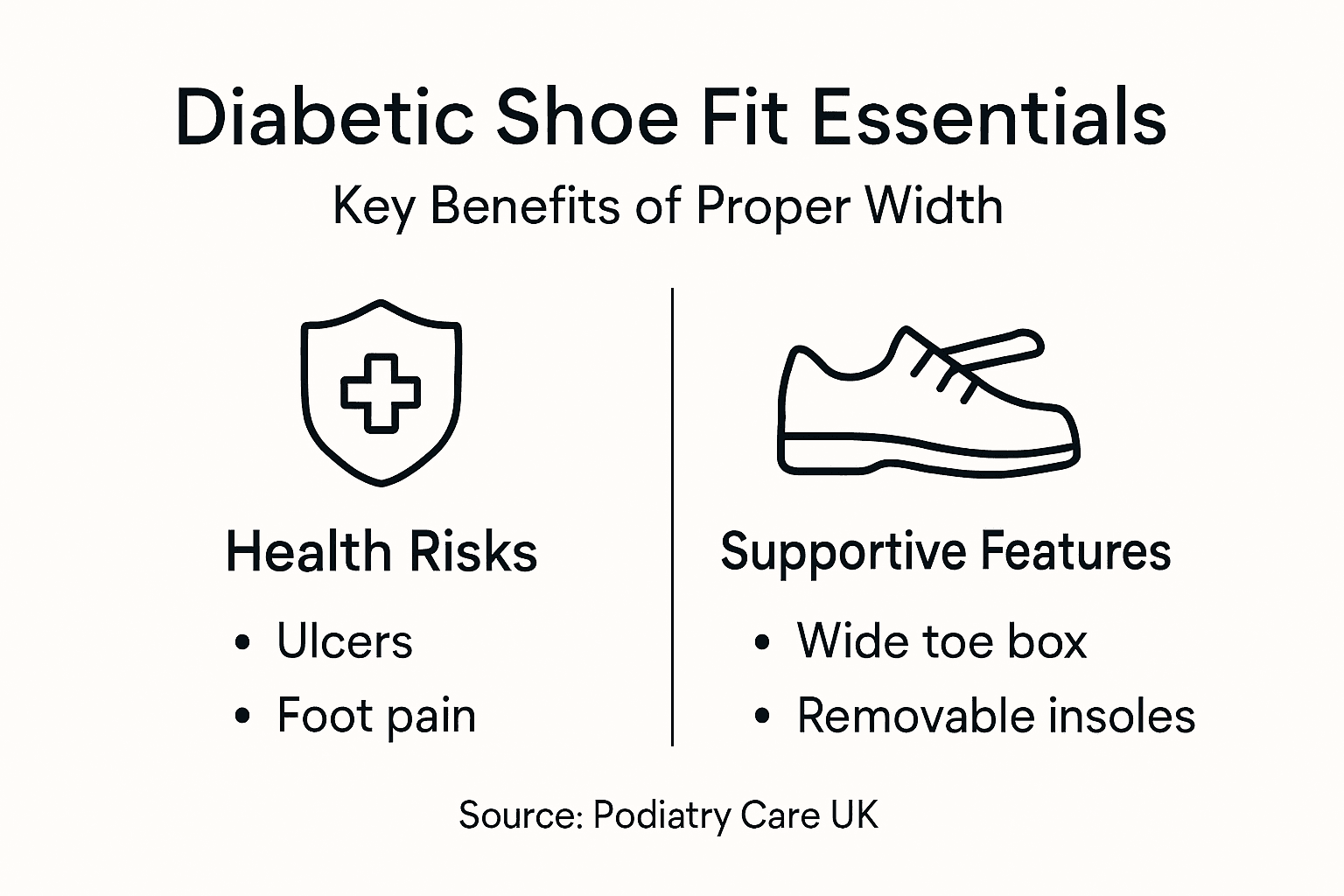
Comprehensive foot protection involves multiple design considerations:
The following summarises key features for optimal diabetic footwear support:
| Feature | Function | Impact on Foot Health |
|---|---|---|
| Wide toe box | Prevents toe crowding | Reduces risk of ulceration |
| Seamless interior | Minimises friction | Lowers chance of skin breakdown |
| Cushioned insole | Absorbs shock | Eases pressure on vulnerable zones |
| Rocker-bottom sole | Assists natural movement | Promotes mobility and gait efficiency |
- Accommodating foot deformities
- Reducing pressure points
- Enhancing shock absorption
- Promoting air circulation
- Supporting natural foot movement
Understanding these intricate design requirements helps diabetic patients select footwear that provides medical-grade protection while maintaining comfort and mobility.
Pro tip: Choose shoes with removable insoles to allow custom orthotics and accommodate changing foot conditions.
Prioritise Your Foot Health with Perfect Shoe Width from YDA UK
People living with diabetes understand that proper shoe width directly impacts foot comfort and health by reducing painful pressure points and preventing serious complications. The article highlights the importance of selecting footwear with extra width, cushioned insoles, and seamless interiors to accommodate diabetic foot needs. Avoiding narrow shoes is essential to lowering risks of ulcerations, nerve damage, and mobility loss.
At YDA UK, we specialise in combining advanced foot health technology with sleek, comfortable designs to support your diabetic foot care goals. Our collection features innovative solutions engineered to provide:
- Extra-width toe boxes
- Pressure-redistributing cushioning
- Adjustable fitting systems for personalised comfort

Take control of your diabetic foot health today by exploring our expertly crafted footwear range. Visit YDA UK to find your ideal shoes that merge medical-grade protection with everyday style. Don’t wait for complications to arise – invest in your mobility and wellbeing now.
Frequently Asked Questions
What is the importance of shoe width for diabetics?
Shoe width is crucial for diabetics as it helps prevent complications such as ulcerations, pressure points, and nerve damage. Ill-fitting shoes can exacerbate existing foot issues, making proper fit essential for foot health.
How can I determine the right shoe width for my diabetic feet?
To determine the right shoe width, it is recommended to have your feet professionally measured using diabetic-specific assessment techniques. This ensures that your unique foot dimensions are accurately captured, accommodating any structural changes associated with diabetes.
What features should I look for in diabetic shoes?
Diabetic shoes should have wide toe boxes, cushioned insoles, seamless interiors, and adjustable fitting mechanisms. These features help reduce pressure points, enhance comfort, and protect vulnerable feet from injuries.
What are the risks of wearing improperly sized shoes as a diabetic?
Wearing shoes that are too narrow or incorrectly sized can lead to skin breakdown, increased pressure points, heightened ulceration risks, and potential nerve damage. It is vital to choose well-fitted shoes to mitigate these risks and maintain foot health.