
What Makes Shoes Diabetic Friendly – Foot Health Matters
Over 4 million British adults are living with diabetes, making everyday choices like footwear more crucial than most people realise. Ill-fitting shoes can trigger serious complications for those with diabetes, yet many overlook this risk. By understanding what sets diabetic friendly shoes apart, you will discover the features that deliver better comfort, protection, and long-term foot health for people across the United Kingdom.
Table of Contents
- What Are Diabetic Friendly Shoes?
- Essential Features For Diabetic Footwear
- Types Of Diabetic Friendly Shoes Explained
- Health Benefits For People With Diabetes
- Risks Of Unsuitable Footwear For Diabetics
Key Takeaways
| Point | Details |
|---|---|
| Diabetic Friendly Shoes | These specialised shoes are designed to protect diabetic feet by minimising pressure points and accommodating foot deformities. |
| Essential Features | Key design elements include soft materials, adjustable closures, and breathable fabrics for optimal comfort and foot health. |
| Types of Diabetic Footwear | There are four main categories: closed shoes, sneakers, open footwear, and therapeutic footwear, each serving specific health needs. |
| Risks of Unsuitable Footwear | Inappropriate shoes can escalate risks such as foot ulcers and nerve damage; therefore, proper selection is crucial for diabetic patients. |
What Are Diabetic Friendly Shoes?
Diabetic friendly shoes are specialised footwear designed to protect and support the unique foot health challenges experienced by individuals with diabetes. These shoes go far beyond standard footwear, offering targeted features that help prevent serious foot complications. Diabetic shoes are specifically intended to reduce the risk of skin breakdown for patients experiencing neuropathy, circulation issues, or foot deformities.
The critical design elements of diabetic friendly shoes include extra depth, soft protective materials, and customised support mechanisms. Therapeutic shoes are engineered to minimise pressure points, accommodate irregular foot shapes, and provide superior cushioning. Unlike standard footwear, these shoes feature wider toe boxes, seamless interior linings, and adjustable closures that adapt to potential foot swelling or sensitivity.
Key characteristics that distinguish diabetic friendly shoes include:
- Reduced interior seams to prevent friction and potential wound sites
- Breathable materials that manage moisture and temperature
- Extra depth accommodations for custom orthotics or protective inserts
- Shock absorption to minimise impact during walking
- Flexible yet supportive construction that allows natural foot movement
Pro Tip for Diabetic Footwear Selection: Always consult a podiatrist or diabetes specialist before purchasing specialised shoes, as individual foot conditions can vary significantly and require personalised recommendations.
Essential Features for Diabetic Footwear
Diabetic footwear requires specialised design features that go well beyond standard shoe construction. Protective footwear for individuals with diabetes demands precise engineering to mitigate potential foot health risks. The goal is to create a shoe environment that minimises friction, pressure, and potential injury while maximising comfort and support.
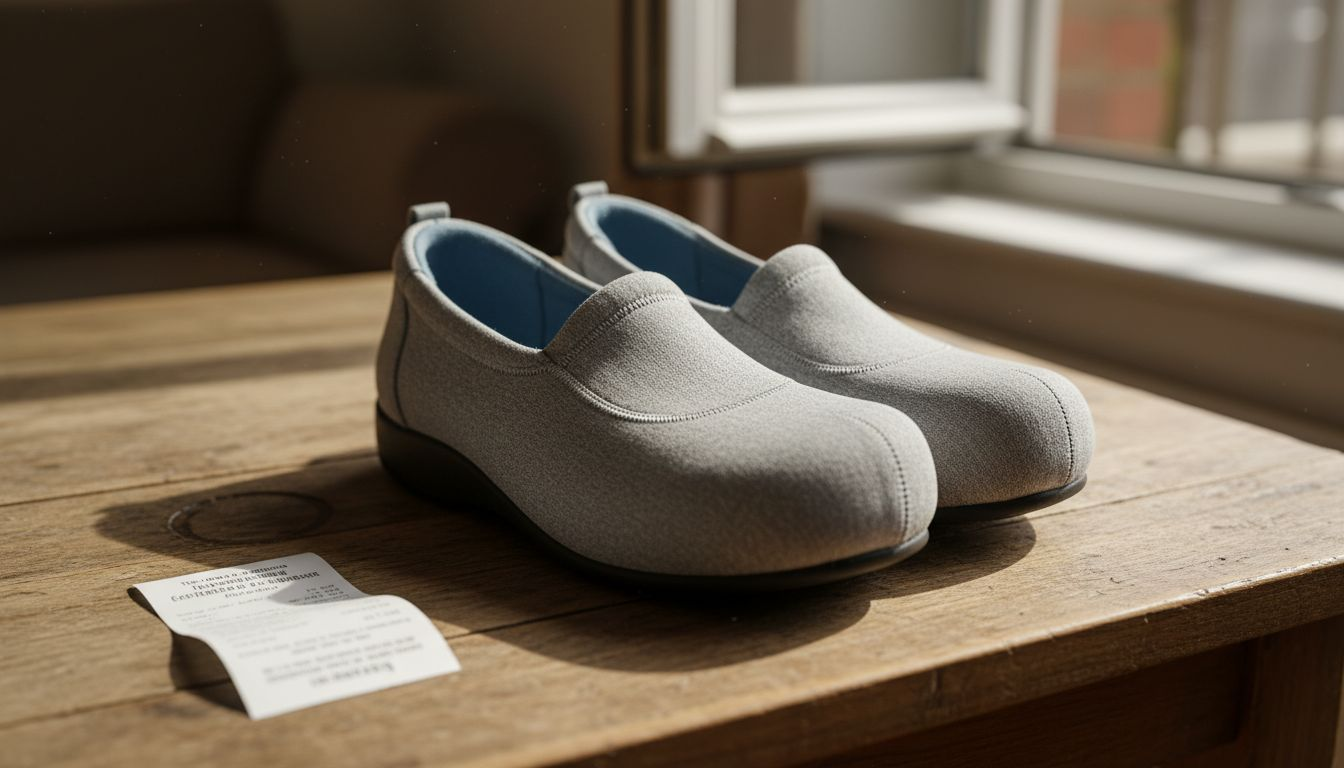
Key design specifications are critical for ensuring diabetic footwear provides optimal protection. These shoes must feature uppers constructed from soft, smooth materials like leather or breathable canvas, with minimal interior seams to prevent friction and potential wound development. Dimensional accuracy is paramount, with recommendations including a precise 1 cm allowance from the longest toe and sufficient depth to accommodate foot variations without causing compression.
The most essential features of diabetic footwear include:
- Wide toe boxes preventing foot crowding
- Lightweight materials allowing maximum breathability
- Low heels (≤2 cm) to reduce forefoot pressure
- Cushioned soles for shock absorption
- Adjustable closures like Velcro or laces to manage potential foot swelling
- Seamless interior linings to minimise friction points
Pro Tip for Diabetic Footwear Selection: Always prioritise professional fitting and personalised assessment over generic sizing, as individual foot health requirements can vary significantly between diabetic patients.
Types of Diabetic Friendly Shoes Explained
Diabetic friendly footwear encompasses a diverse range of specialised shoe designs, each tailored to address specific foot health challenges. Diabetic footwear can be comprehensively categorised into four primary types: off-the-shelf closed footwear, off-the-shelf sneakers, off-the-shelf open footwear, and therapeutic footwear. These categories represent a nuanced approach to managing foot health for individuals managing diabetes.
Therapeutic footwear stands out as the most advanced category, specifically engineered for high-risk patients with complex foot conditions. These shoes feature sophisticated design elements such as rigid out-soles, thermoformable uppers, and precise accommodations for custom orthoses. Specialised diabetic shoes incorporate advanced features like padded collars, rocker bottom soles, and adjustable closures to enhance comfort and improve overall mobility.
The different types of diabetic friendly shoes include:
Here is a concise summary comparing the main types of diabetic friendly shoes:
| Shoe Type | Key Design Focus | Common Users | Unique Benefit |
|---|---|---|---|
| Closed Footwear | Minimal seams, protective fit | Most diabetics | Reduces friction and pressure |
| Sneakers | Extra depth, shock absorbent | Active individuals | Enhances support for activities |
| Open Footwear | Maximum breathability | Warm climates | Prevents overheating and sweating |
| Therapeutic Footwear | Custom orthotics, advanced fit | High-risk patients | Accommodates severe deformities |
- Closed footwear with minimal interior seams
- Sneakers with extra depth and shock absorption
- Open footwear designed for breathability
- Therapeutic shoes with custom orthotic compatibility
- Shoes with rocker bottom soles to reduce forefoot pressure
- Footwear with adjustable closures for accommodating swelling
Pro Tip for Shoe Selection: Prioritise professional consultation and personalised assessment to ensure the most appropriate diabetic shoe type matches your specific foot health requirements.
Health Benefits for People with Diabetes
The intricate science behind diabetic footwear reveals a comprehensive approach to managing foot health for individuals with diabetes. These specialised shoes are meticulously engineered to address the unique physiological challenges faced by diabetic patients, offering more than just standard foot protection. By reducing friction, managing pressure points, and accommodating specific foot conditions, diabetic shoes play a crucial role in preventing serious complications.
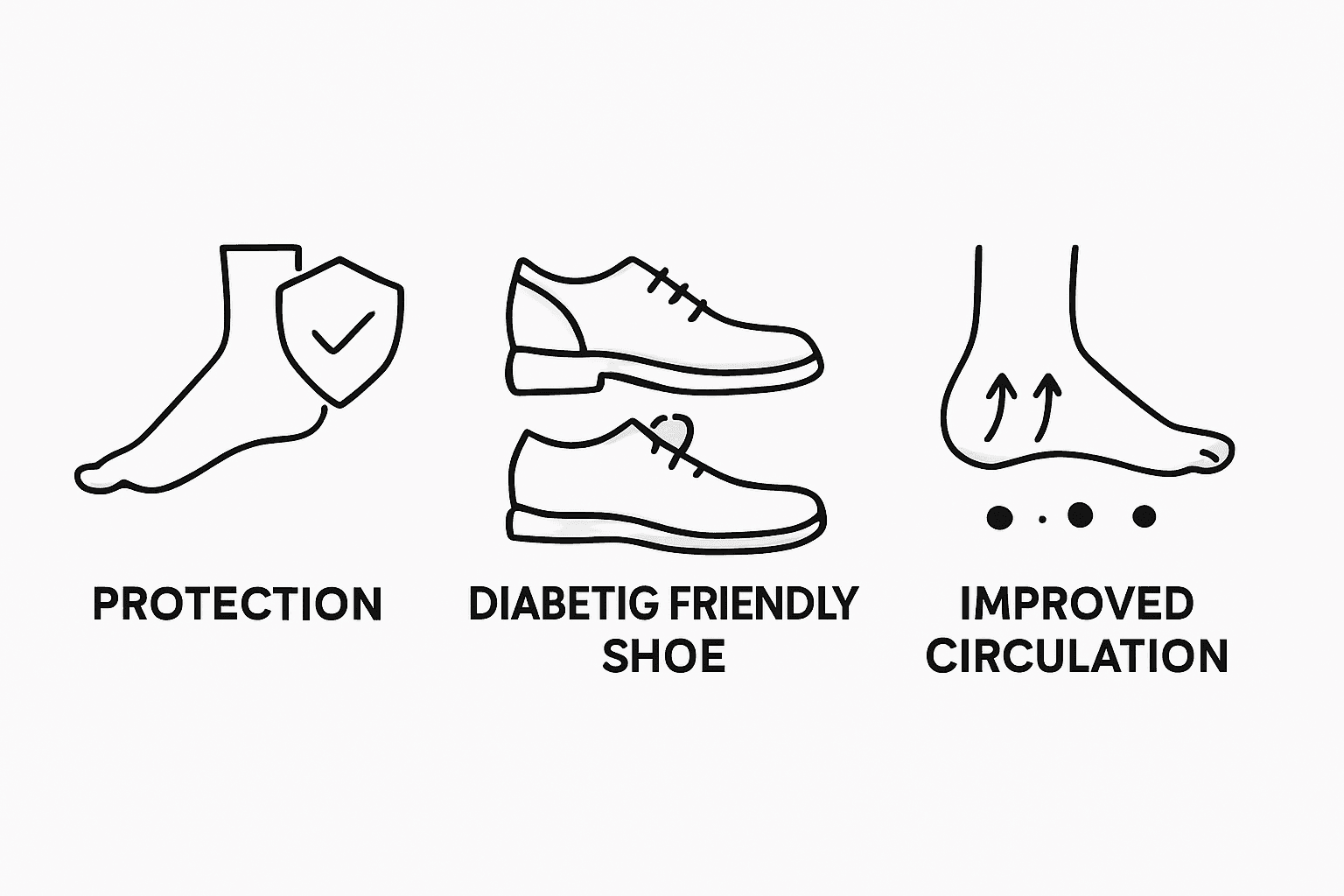
The primary health benefits of diabetic footwear centre on protecting vulnerable feet from potential damage. Circulation management becomes a critical aspect of these shoes, with designs specifically created to ensure adequate blood flow and prevent vessel constriction. The shoes achieve this through strategic features like enhanced interior space, flexible materials, and removable insoles that can adapt to individual foot structures and potential deformities such as bunions or hammertoes.
Key health benefits include:
- Reduced risk of foot ulceration
- Improved blood circulation
- Prevention of pressure-related injuries
- Accommodation of foot deformities
- Minimised friction and shear stress
- Enhanced comfort for sensitive feet
- Support for irregular foot shapes
Pro Tip for Diabetic Foot Care: Regular professional foot assessments combined with appropriate specialised footwear can significantly mitigate potential long-term diabetes-related foot complications.
Risks of Unsuitable Footwear for Diabetics
Wearing inappropriate footwear can dramatically escalate potential health risks for individuals managing diabetes. The consequences extend far beyond simple discomfort, potentially leading to severe complications such as foot ulceration, nerve damage, and compromised circulation. Diabetic patients possess heightened foot vulnerability, making shoe selection a critical health decision that can prevent or precipitate serious medical challenges.
The specific risks associated with unsuitable footwear are multifaceted and profound. Foot injury potential increases substantially with shoes that lack proper accommodation, featuring problematic elements like tight dimensions, internal seams, or insufficient orthotic space. Research indicates that non-adherence to therapeutic footwear significantly correlates with increased foot ulcer incidences, underscoring the importance of selecting shoes specifically designed for diabetic foot care.
Critical risks of inappropriate footwear include:
This table summarises the contrast between suitable and unsuitable footwear for people with diabetes:
| Footwear Suitability | Main Outcome | Typical Features | Health Impact |
|---|---|---|---|
| Diabetic Friendly | Protection and comfort | Seamless, cushioned, adjustable | Reduced complications |
| Unsuitable Footwear | Higher risk of foot issues | Tight, rigid, internal seams | Increased ulcer risk |
- Accelerated development of foot ulcers
- Increased nerve damage potential
- Restricted blood circulation
- Higher infection vulnerability
- Exacerbation of existing foot deformities
- Potential long-term mobility restrictions
- Enhanced risk of diabetic foot complications
Pro Tip for Footwear Safety: Always prioritise professional fitting and personalised shoe assessments over generic sizing, recognising that individual diabetic foot health requirements are uniquely complex.
Discover Diabetic Friendly Shoes That Truly Support Your Foot Health
Managing diabetes means paying close attention to your feet to prevent serious complications like ulcers or poor circulation. The article emphasises choosing footwear with features such as seamless interiors, adjustable closures, and extra depth to reduce pressure and friction. Finding shoes that combine these specialised benefits with comfort and style can feel overwhelming but is essential for your daily wellbeing.
Explore our carefully selected collection of innovative footwear at Shoes – YDA UK designed to provide the protective features diabetic feet require without sacrificing a modern look.

Take control of your foot health today with shoes made to accommodate sensitive feet and irregular shapes while delivering energy-efficient comfort. Visit https://ydauk.com now for advanced foot technology and expert craftsmanship that supports your lifestyle. Find the perfect fit, reduce risks, and move confidently with footwear that truly understands the needs of diabetic foot care. Browse our Womens – YDA UK range or start your search on the Home page – YDA UK to experience how innovative design meets diabetic friendly protection.
Frequently Asked Questions
What are the key features of diabetic friendly shoes?
Diabetic friendly shoes are designed with essential features that include wide toe boxes, cushioned soles for shock absorption, seamless interiors to minimise friction, breathable materials to manage moisture, and adjustable closures to accommodate potential foot swelling.
How do diabetic friendly shoes prevent foot complications?
These shoes help prevent foot complications by offering support, reducing friction, managing pressure points, ensuring proper blood circulation, and accommodating foot deformities, thereby protecting sensitive or at-risk feet from potential injuries.
What types of diabetic friendly shoes are available?
Diabetic friendly shoes come in categories such as closed footwear, sneakers, open footwear, and therapeutic footwear, each tailored to meet specific foot health needs and challenges faced by individuals with diabetes.
Why is it important to consult a podiatrist before choosing diabetic shoes?
Consulting a podiatrist ensures a professional fitting and personalised assessment, which is crucial since individual foot health requirements can vary significantly among diabetic patients, leading to better protection and comfort.