
Choosing Shoes for Neuropathy: Find Comfort and Style Easily
Finding shoes that truly support neuropathy can often feel like a complicated challenge, especially for those living in Europe or North America. With peripheral nerve damage affecting each person differently, your journey to comfort and style starts with a proactive understanding of your foot health. This guide breaks down practical steps for choosing footwear that addresses sensory loss, stability concerns, and unique medical needs, so you can move confidently and stay fashionable while managing your neuropathy.
Table of Contents
- Step 1: Assess Your Neuropathy Needs
- Step 2: Identify Essential Shoe Features
- Step 3: Explore Health-Focused Footwear Options
- Step 4: Test and Evaluate Shoe Comfort
- Step 5: Verify Long-Term Fit and Support
Quick Summary
| Key Insight | Explanation |
|---|---|
| 1. Assess your neuropathy needs | Conduct a comprehensive foot examination to identify specific challenges related to neuropathy. |
| 2. Identify essential shoe features | Prioritise features like a firm heel and spacious toe box for safety and comfort. |
| 3. Explore health-focused footwear options | Consider custom-moulded and diabetic-specific shoes for optimal support and injury prevention. |
| 4. Test and evaluate shoe comfort | Trial shoes by measuring in the afternoon, walking around, and checking for pressure points. |
| 5. Verify long-term fit and support | Regularly assess shoe condition and fit to ensure continued comfort and protection for your feet. |
Step 1: Assess your neuropathy needs
Understanding your specific neuropathy symptoms is crucial for choosing the right footwear. Peripheral nerve damage varies widely, affecting sensory, motor, and autonomic nerves, which means your shoe requirements will be unique.
To effectively assess your neuropathy needs, you’ll want to perform a comprehensive foot examination that helps identify your specific challenges:
- Check for reduced sensation in feet and toes
- Evaluate your balance and walking stability
- Identify any existing skin abnormalities like ulcers or calluses
- Test temperature and pressure sensitivity
A thorough clinical neuropathy assessment involves multiple steps to understand how nerve damage impacts your feet. Healthcare professionals typically use monofilament tests to map sensory loss, helping determine precise footwear modifications.
Your neuropathy assessment is not just a medical procedure, but a personalised roadmap to comfortable, safe footwear.
Expert recommendation: Consult a podiatrist or neurologist who specialises in neuropathy for a comprehensive foot assessment before selecting specialised footwear.
Step 2: Identify essential shoe features
When dealing with neuropathy, selecting the right footwear goes far beyond style—it’s about protection and comfort. Safe shoe design requires careful consideration of specific features that support your unique foot health needs.
Let’s break down the critical shoe characteristics you’ll want to prioritise:
- Firm heel collar for enhanced stability
- Secure fastening system (laces or straps)
- Broad flared heel to improve balance
- Textured soles for better traction
- Adequate toe box space to prevent crowding
Footwear protection strategies emphasise choosing shoes that accommodate potential foot deformities while providing consistent support. Look for designs with enclosed heels and non-slip surfaces that minimise pressure points and reduce injury risks.
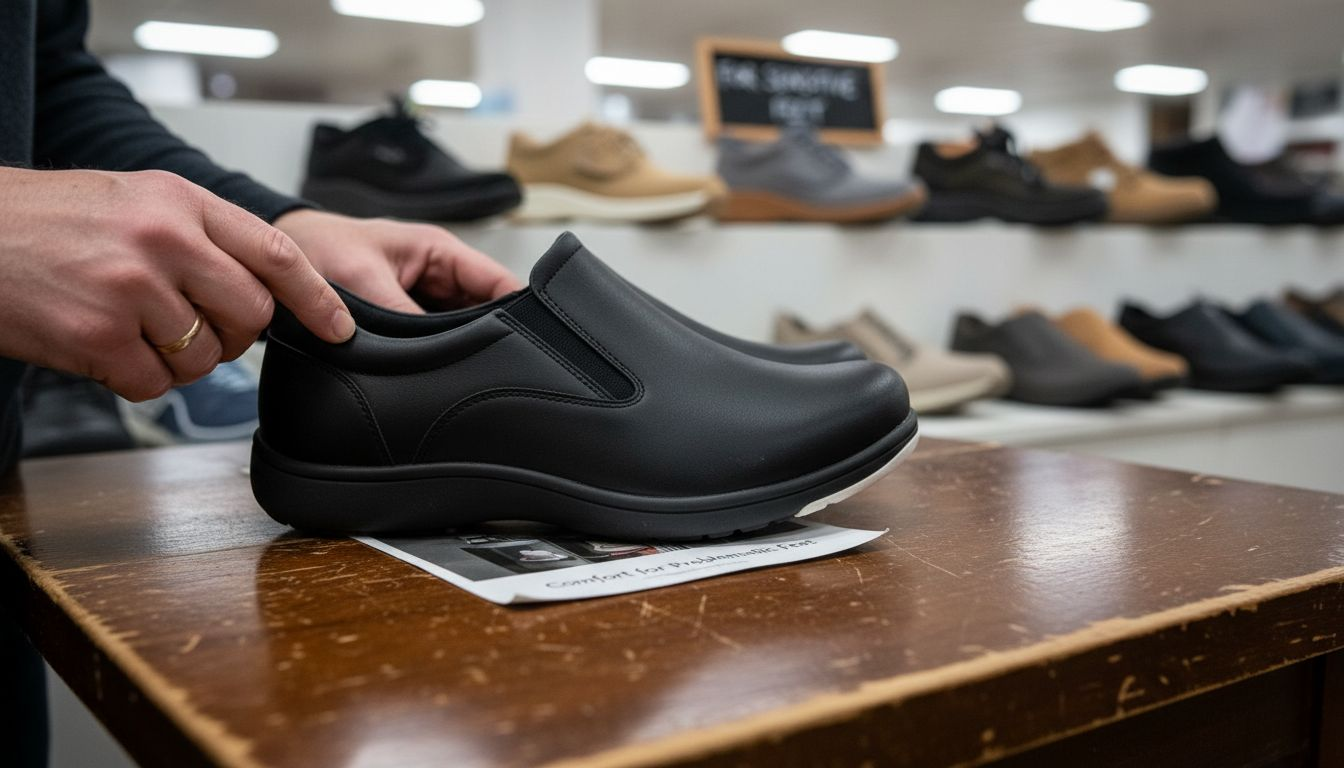
To better understand which shoe features address common neuropathy-related concerns, see this comparison table:
| Neuropathy Challenge | Relevant Shoe Feature | Benefit to Foot Health |
|---|---|---|
| Poor balance | Broad flared heel | Increases stability and prevents falls |
| Sensitive skin | Enclosed heel, soft lining | Reduces friction and risk of ulcers |
| Swelling or deformities | Spacious toe box | Allows accommodation and prevents crowding |
| Slippery surfaces | Textured sole | Improves grip and minimises slipping |
| Orthotic use | Secure fastening, removable insole | Enables proper fit and adjustment |
Your ideal shoe isn’t just about comfort—it’s a critical tool in managing neuropathy symptoms and preventing potential complications.
Top tip: Bring your current orthotics or insoles when shoe shopping to ensure proper fit and compatibility with new footwear.
Step 3: Explore health-focused footwear options
Navigating the world of specialised footwear for neuropathy can feel overwhelming, but understanding your available options makes the process much simpler. Therapeutic shoe coverage offers comprehensive solutions designed specifically for individuals managing complex foot conditions.
Consider these key health-focused footwear categories:
- Custom-molded shoes with extra depth
- Orthotic-compatible designs
- Pressure-redistributing footwear
- Diabetic-specific shoe models
- Adaptive footwear with adjustable features
Specialised footwear programmes provide tailored solutions that address specific neuropathic challenges. These options go beyond standard shoe shopping—they’re about finding footwear that actively supports your foot health and reduces potential complications.
Here’s a summary of specialised footwear types and their typical health benefits:
| Footwear Type | Intended Users | Key Health Benefit |
|---|---|---|
| Custom-moulded shoes | Severe neuropathy | Maximises personalised support |
| Orthotic-compatible | Orthotic wearers | Ensures comfortable integration |
| Pressure-redistributing | High-risk patients | Minimises localised injury |
| Diabetic-specific | Diabetes with neuropathy | Prevents ulceration and infection |
| Adaptive footwear | Variable needs | Accommodates day-to-day changes |
Selecting the right shoe isn’t just about comfort—it’s about creating a protective environment for your vulnerable feet.
Expert suggestion: Consider scheduling a professional fitting with a podiatrist who specialises in neuropathy to ensure you select the most appropriate footwear for your specific condition.
Step 4: Test and evaluate shoe comfort
Evaluating shoe comfort for neuropathy requires more than a quick try-on—it’s about understanding how footwear interacts with your unique foot condition. Shoe comfort assessment involves a comprehensive approach to ensure maximum protection and minimal irritation.
Here are essential steps to thoroughly test your potential footwear:
- Measure feet later in the day when they’re slightly swollen
- Walk around the store to assess stability and cushioning
- Check for pressure points and potential friction areas
- Test heel support and overall shoe responsiveness
- Evaluate arch and sole comfort during movement
Footwear comfort evaluation goes beyond initial impressions. Pay attention to how shoes accommodate your orthotics, redistribute pressure, and support sensitive areas affected by neuropathy.
Comfort is not a luxury—it’s a critical component of foot health for neuropathy patients.
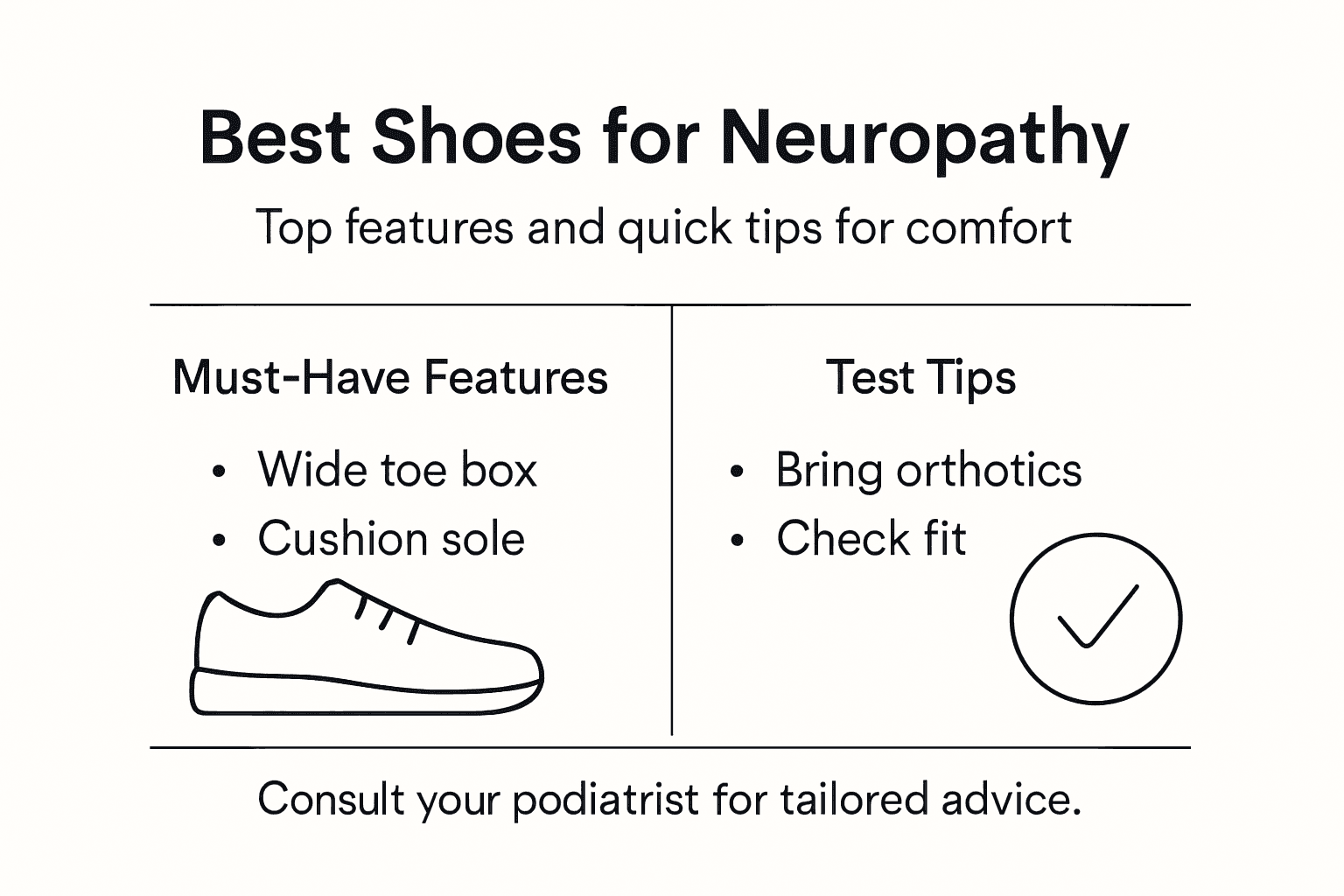
Expert suggestion: Bring your current orthotics and wear the socks you typically use when trying on new shoes to ensure the most accurate fit and comfort assessment.
Step 5: Verify long-term fit and support
Ensuring your neuropathy shoes continue to provide optimal support requires more than a one-time purchase. Therapeutic footwear maintenance involves regular assessments to guarantee ongoing protection and comfort for your sensitive feet.
Key strategies for maintaining long-term shoe fit include:
- Monitor shoe shape and structural integrity
- Check for wear and tear in critical support areas
- Assess cushioning and shock absorption performance
- Track foot shape changes related to neuropathy progression
- Schedule periodic professional fittings
Footwear replacement guidelines recommend annual evaluations to ensure your shoes continue meeting your specific medical needs. This proactive approach helps prevent potential foot complications and maintains optimal foot health.
Long-term shoe support is not just about comfort—it’s a critical component of neuropathy management.
Expert recommendation: Maintain a detailed record of your foot measurements and shoe performance to help healthcare providers track your neuropathy progression and footwear needs.
Discover Footwear Designed for Neuropathy Comfort and Style
Living with neuropathy means facing challenges like poor balance, sensitive skin, and the need for shoes that truly protect and support your feet. The right footwear is essential to reduce discomfort, prevent injury, and maintain your confidence every step of the way. Our collection at Shoes – YDA UK offers high-performance shoes engineered with features such as firm heel collars, spacious toe boxes, and advanced grip technology to meet your unique needs.

Take control of your foot health with stylish shoes that marry comfort and innovative design. Visit https://ydauk.com now to explore our range tailored for neuropathy and everyday wear. Act today to experience footwear that supports your journey towards safer, more comfortable steps.
Frequently Asked Questions
How can I assess my specific neuropathy needs when choosing shoes?
Understanding your specific neuropathy needs involves a thorough foot examination to identify symptoms such as reduced sensation, balance issues, and any skin abnormalities. Consult a healthcare professional to conduct a comprehensive assessment that will help you determine the suitable footwear for your unique condition.
What essential features should I look for in shoes if I have neuropathy?
When selecting footwear for neuropathy, prioritise features like a firm heel collar, secure fastening system, broad flared heel, and adequate toe box space. These characteristics enhance stability, reduce pressure points, and improve overall comfort and foot health.
What types of health-focused footwear are best for managing neuropathy?
Consider specialised footwear types such as custom-moulded shoes, orthotic-compatible designs, and diabetic-specific models. Look for shoes that offer pressure redistribution and adjustable features to support your unique foot health needs effectively.
How can I effectively test the comfort of shoes for neuropathy?
To test shoe comfort, measure your feet later in the day when they are slightly swollen, and try walking around in the shoes. Pay attention to any pressure points, heel support, and overall responsiveness during movement to ensure optimal comfort.
How can I maintain the fit and support of my neuropathy shoes over time?
Regularly assess the shape and structural integrity of your shoes to ensure they still provide adequate support. Schedule annual evaluations to check for wear and tear and monitor any changes in your foot shape related to neuropathy progression.
What should I do if I experience discomfort wearing my new neuropathy shoes?
If you experience discomfort, evaluate the fit and features of your shoes, focusing on areas that may be causing irritation. Consider revisiting a healthcare professional for a fitting or further assessment to ensure your shoes meet your specific comfort and health needs.