
Top orthotic-friendly shoes: stylish comfort and support
TL;DR:
- Genuine orthotic-friendly shoes feature removable insoles and wide toe boxes for comfort and support.
- Style and support are now compatible, with brands offering attractive designs suitable for daily wear.
- Proper fit with orthotics requires trying shoes with inserts and considering your specific foot condition.
Finding shoes that tick every box is harder than it looks. You want something that fits your orthotics, supports your arch, accommodates any swelling or bunions, and still looks like a shoe you’d actually choose to wear. That last part is where most people feel forced to compromise. The good news is that orthotic-friendly footwear has come a long way: removable insoles, extra depth, wide toe boxes, stable heel counters, and proper arch support are now found in genuinely attractive styles. This article walks you through exactly what to look for, which brands deliver, and how to choose the right pair for your specific foot condition and lifestyle.
Table of Contents
- What makes a shoe orthotic-friendly?
- Top orthotic-friendly shoe brands and models
- Comparing orthotic-friendly options: features and fit
- Finding the right shoe for your needs: style, comfort, and health
- Our perspective: rethinking orthotic-friendly footwear
- Explore orthotic-friendly shoes with YDA UK
- Frequently asked questions
Key Takeaways
| Point | Details |
|---|---|
| Key shoe features | Removable insoles, extra depth, and wide toe boxes are essential for orthotic-friendly footwear. |
| Brands to consider | Hoka, New Balance, Orthofeet, Vionic, Brooks, and Dr. Comfort are top picks for combining support and style. |
| Fit and comfort | Always try shoes with your orthotics, considering both fit and break-in period for best results. |
| Style integration | Modern orthotic-friendly shoes can be fashionable, so healthy feet don’t mean sacrificing style. |
| Health and insurance | Certain orthotic-friendly shoes may be covered by insurance if prescribed for diabetic foot health. |
What makes a shoe orthotic-friendly?
Before examining specific examples, it helps to understand what makes footwear truly orthotic-friendly. Not every comfortable-looking shoe will actually work with a custom or over-the-counter (OTC) orthotic insert. The structural details matter far more than the marketing language on the box.
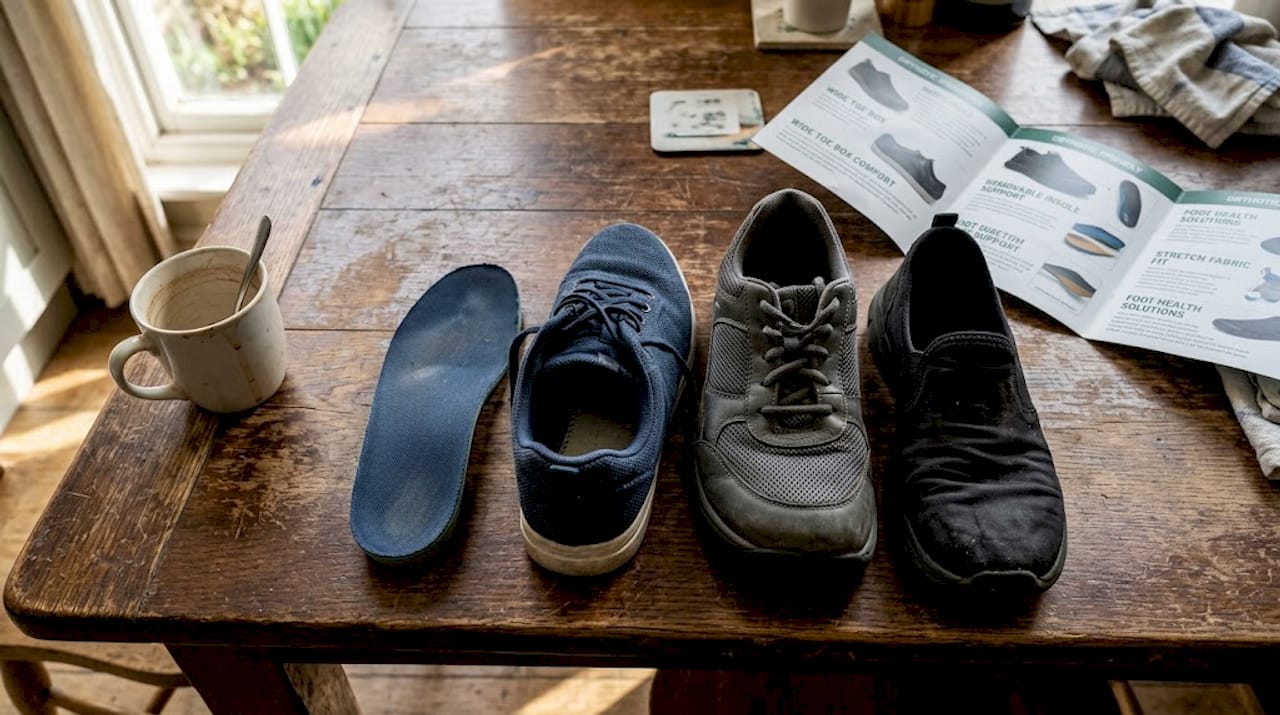
The most important feature is a removable insole. If the factory insole cannot be lifted out, there is simply no room for your orthotic. Many standard shoes glue their insoles in place, which makes them incompatible from the start. Orthotic-friendly shoes are specifically built with this in mind, offering extra depth so that once you remove the standard insole and insert your own, the shoe still fits correctly around your foot.
Wide toe boxes are the next critical element. A cramped toe box compresses the forefoot, worsening conditions such as bunions, hammertoes, and general swelling. The benefits of orthotic-friendly footwear become far more noticeable when the shoe allows your toes to spread naturally rather than being squeezed together.
Other features that separate truly supportive shoes from ordinary ones include:
- Stable heel counters: the firm cup at the back of the shoe that controls heel movement and maintains alignment
- Deep heel cups: these control pronation (the inward rolling of the foot) and reduce stress on the ankle and knee
- Rocker soles: a curved outsole that aids natural propulsion through the gait cycle, particularly useful for those with arthritis or rigid feet
- Anatomical arch support: built-in contouring that complements rather than fights your orthotic
“A good orthotic-friendly shoe does not just hold your orthotic in place; it works with it. The two should function as a single system, not compete for space.”
Pro Tip: When shopping, remove the insole and hold it up. If it is thin, flat, and feels like cardboard, the shoe is likely designed with orthotic use in mind. If it is thick, moulded foam, there may not be enough room for your own insert.
Style and support are no longer mutually exclusive. Learning to look for these structural cues means you can confidently choose footwear that supports your foot health without settling for something that looks clinical. Understanding how custom insoles improve comfort alongside the right shoe structure is the foundation of good orthotic footwear choice.
Top orthotic-friendly shoe brands and models
Having grasped the vital criteria, now let’s explore standout shoe options that excel in both comfort and style.
Hoka Bondi series is consistently cited by podiatrists as one of the gold-standard options for heel pain. The maximal cushioning platform absorbs impact effectively, and the wide base provides excellent stability. The removable insole means your custom orthotic fits in without a fight.
New Balance 990v6 takes a different approach. Where Hoka prioritises softness, the 990v6 offers a firmer ENCAP midsole that suits rigid custom orthotics particularly well. The extra depth and wide platform make this one of the most durable pairings for long-term orthotic use.
Orthofeet specialises almost entirely in therapeutic footwear. Their designs feature extra depth, stretch uppers, wide toe boxes, and anatomical arch support as standard. They are especially useful for bunions and significant swelling, where other brands still fall short on volume.
Vionic earns strong marks for blending everyday style with genuine support. Their built-in orthotic footbeds and firm heel support make them ideal for those who want a shoe that passes for normal at work or on a night out.
Brooks Adrenaline GTS is a favourite for runners and walkers dealing with overpronation. The GuideRails technology limits excess movement at the knee and ankle without forcing your foot into an unnatural position.
Dr. Comfort rounds out the list with removable footbeds, extra widths and depths, and diabetic-friendly construction. These are among the few brands where clinical need and real wearability genuinely coexist.
| Brand | Best for | Key feature |
|---|---|---|
| Hoka Bondi | Heel pain, high impact | Maximal cushioning, wide platform |
| New Balance 990v6 | Custom rigid orthotics | Firm ENCAP midsole, extra depth |
| Orthofeet | Bunions, swelling | Stretch uppers, wide toe box |
| Vionic | Everyday style and support | Built-in orthotic footbed |
| Brooks Adrenaline GTS | Overpronation | GuideRails stability system |
| Dr. Comfort | Diabetic feet | Extra widths, removable footbeds |
Pro Tip: Browse types of orthopaedic shoes before committing to one brand. Different conditions genuinely call for different structures, and knowing the category helps you narrow options quickly.
For further real-world examples of how these designs perform, top orthopaedic shoe models offer useful comparisons to support your decision.
Comparing orthotic-friendly options: features and fit
With the top options identified, it’s useful to see how their features stack up for various foot conditions.
| Shoe | Removable insole | Toe box width | Best condition | Price range |
|---|---|---|---|---|
| Hoka Bondi | Yes | Wide | Heel pain, plantar fasciitis | £££ |
| New Balance 990v6 | Yes | Wide/Extra wide | Custom orthotics, general support | £££ |
| Orthofeet | Yes | Extra wide | Bunions, diabetes, swelling | ££ |
| Vionic | Yes | Standard/Wide | Everyday wear, mild conditions | ££ |
| Brooks Adrenaline GTS | Yes | Standard/Wide | Overpronation, running | £££ |
| Dr. Comfort | Yes | Multiple widths | Diabetes, neuropathy | ££ |
One detail that often gets overlooked is midsole firmness. Softer midsoles suit OTC orthotics, whilst firmer midsoles work better with rigid custom inserts. Placing a rigid custom orthotic inside a very soft shoe can actually destabilise your foot rather than supporting it, because the orthotic sinks unevenly into the foam.
Podiatrists recommend always fitting shoes with your orthotics already inserted before purchasing. This single step prevents the most common fitting mistake. Also factor in break-in time: firmer supportive shoes often need one to two weeks of gradual wear before they feel truly comfortable.
Some practical fit considerations:
- If you have plantar fasciitis, prioritise cushioning under the heel and firm arch support
- For bunion protection, focus on toe box volume and stretch uppers that do not press on the joint
- For general health-oriented footwear needs, balance cushioning with structure rather than maxing out on either
Style does not have to be sacrificed at this stage. Several of the brands above offer neutral colourways and designs that look like everyday trainers, making it far easier to wear supportive footwear consistently throughout the day.
Finding the right shoe for your needs: style, comfort, and health
To make the most informed decision, consider these practical steps based on your health and lifestyle.
- Identify your primary foot condition. Heel pain, bunions, diabetes, and overpronation each call for different structural priorities. Knowing this narrows your shortlist significantly.
- Measure your feet with orthotics in place. Orthotics add volume. A shoe that fits perfectly without them may be painfully tight once they are inserted.
- Check for removable insoles first. This is non-negotiable. Without it, even the most expensive shoe will not accommodate your orthotic properly.
- Consider toe box width and depth. If you have bunions or swelling, standard widths will not suffice. Look for wide or extra-wide options as a baseline.
- Try before committing, where possible. Wear the shoe for at least ten minutes in-store with your orthotics inserted to assess fit, pressure points, and heel slip.
- Check your insurance eligibility. Insurance may cover diabetic footwear when prescribed by a healthcare professional, which can significantly reduce the cost of high-quality options.
Style is a legitimate priority, not a vanity. Consumer testing shows that Vionic and similar brands deliver all-day comfort in designs that genuinely pass as everyday shoes. Wearing supportive footwear you actually like means you will wear it more consistently, which is ultimately what produces better outcomes for your feet.
Pro Tip: Use this orthotic shoes guide as a reference when speaking with a podiatrist or shoe specialist. Having clear terminology helps you ask better questions and assess the answers you receive.
Beyond condition-specific needs, think about your daily routine. A person on their feet for eight hours in a retail environment needs a different solution to someone walking a mile each morning. Match the shoe to your actual life, not an idealised version of it.
Our perspective: rethinking orthotic-friendly footwear
Beyond objective comparisons, here is what experience and real-world feedback reveal about choosing orthotic-friendly footwear.
There is still a widespread assumption that if a shoe is genuinely good for your feet, it will look clinical, heavy, or outdated. That assumption is simply no longer accurate, and accepting it means settling for less than you need to. Stylish brands like Vionic and Skechers have spent years proving that supportive footwear can look like something you would choose even without a foot condition.
Generic advice tells you to “prioritise comfort over style.” That framing sets up a false choice. The real question is: which shoes deliver both, and which brands have invested enough in design to make that possible? The answer has changed dramatically in recent years.
What we have learnt from genuine feedback is this: fit tested with orthotics in place is the single most important step most people skip. You can read every review available, but nothing replaces the experience of standing in a shoe with your orthotic inserted and walking for ten minutes. If something feels off in the first five minutes, it will feel worse after five hours. Explore real orthopaedic shoe examples and take your time choosing something you will actually wear every day.
Explore orthotic-friendly shoes with YDA UK
If you are ready to bridge support and style, explore solutions designed for orthotic compatibility. At YDA UK, we believe healthy feet and good-looking shoes are not a trade-off. Our range of shoes for problem feet is built around real foot health needs, combining the structural features discussed in this article with designs you will genuinely want to wear.
Browse our full YDA shoe collection to find options with removable insoles, wide toe boxes, and the depth needed to accommodate your orthotics comfortably. Want to understand what makes our footwear different at a technical level? The YDA shoe technology page explains exactly how our designs support foot health and everyday performance. Your feet deserve both.
Frequently asked questions
What features should I look for in orthotic-friendly shoes?
Choose shoes with removable insoles, extra depth, wide toe boxes, and firm heel counters to best accommodate orthotics and ensure proper foot alignment.
Can stylish shoes also be orthotic-friendly?
Yes. Brands like Vionic and Skechers offer orthotic-friendly models that combine fashion with support, suitable for everyday wear without compromising on structure.
How do I find the right size and fit for orthotic shoes?
Always try shoes with your orthotics inserted, account for extra width and depth requirements, and allow for a break-in period for firmer supportive models.
Are orthotic-friendly shoes covered by health insurance for diabetics?
Some insurance plans do cover diabetic footwear when prescribed by a healthcare professional. Check your eligibility with your provider before purchasing.
Which shoe brands are most recommended for orthotic use?
Top recommendations include Hoka Bondi, New Balance, Orthofeet, Vionic, Brooks Adrenaline, and Dr. Comfort for their evidence-based support features and removable insoles.