
Orthotic-Friendly Footwear: Enhancing Comfort and Foot Health
Finding shoes that actually support your feet often feels impossible, especially for those living with diabetes or chronic foot conditions. One surprising fact is that more than 30 percent of British adults experience foot pain linked to poor footwear choices. Selecting orthotic-friendly shoes matters because they blend style with proven comfort, making healthy decisions easier for anyone needing advanced support. This guide uncovers common myths and explains how modern orthotic footwear can transform everyday mobility without sacrificing personal style.
Table of Contents
- Defining Orthotic-Friendly Footwear And Myths
- Types Of Orthotic-Friendly Shoes Available
- Essential Design Features And Technology
- Benefits For Diabetes And Common Foot Conditions
- Choosing Shoes And Avoiding Common Pitfalls
Key Takeaways
| Point | Details |
|---|---|
| Orthotic-Friendly Footwear Benefits | These shoes provide tailored support and comfort for individuals with various foot conditions, accommodating both preventative and therapeutic needs. |
| Design and Technology Integration | Modern orthotic shoes use advanced technologies like 3D scanning and adaptive materials to ensure optimal fit and biomechanics. |
| Diverse Styles Available | Orthotic-friendly footwear ranges from athletic shoes to professional work shoes, offering style without sacrificing function. |
| Importance of Professional Fit Assessment | Consulting with a foot health professional ensures the best shoe selection tailored to individual biomechanics and foot health needs. |
Defining orthotic-friendly footwear and myths
Orthotic-friendly footwear represents a specialised category of shoes engineered to provide customised support, comfort, and alignment for individuals experiencing various foot conditions. These shoes incorporate design features that accommodate orthotic inserts or are constructed with built-in orthotic technologies to enhance foot biomechanics and reduce potential discomfort.
Contrary to popular misconceptions, orthotic technologies are not limited to elderly populations or individuals with existing foot problems. Modern orthotic footwear serves a broad demographic, offering targeted support for athletes, professionals who spend extended periods standing, and individuals seeking preventative foot health solutions. These shoes are designed using advanced technologies like 3D scanning and biomechanical analysis, ensuring precise customisation and support.
Some persistent myths about orthotic footwear include assumptions that they are uncomfortable, aesthetically unappealing, or exclusively medical devices. In reality, contemporary orthotic shoes blend functionality with style, providing ergonomic design that supports natural foot movement while maintaining visual appeal. They incorporate features like arch support, cushioned insoles, and adaptive materials that respond to individual foot shapes and movement patterns.
Understanding the nuanced benefits of orthotic-friendly footwear requires recognising that these are not one-size-fits-all solutions but personalised interventions tailored to specific foot health needs. Each design considers factors such as arch type, gait mechanics, and potential pressure points to deliver optimal comfort and support.
Pro tip: When selecting orthotic-friendly footwear, prioritise shoes with removable insoles that allow for custom orthotic integration and ensure a comprehensive fit assessment by a foot health professional.
Types of orthotic-friendly shoes available
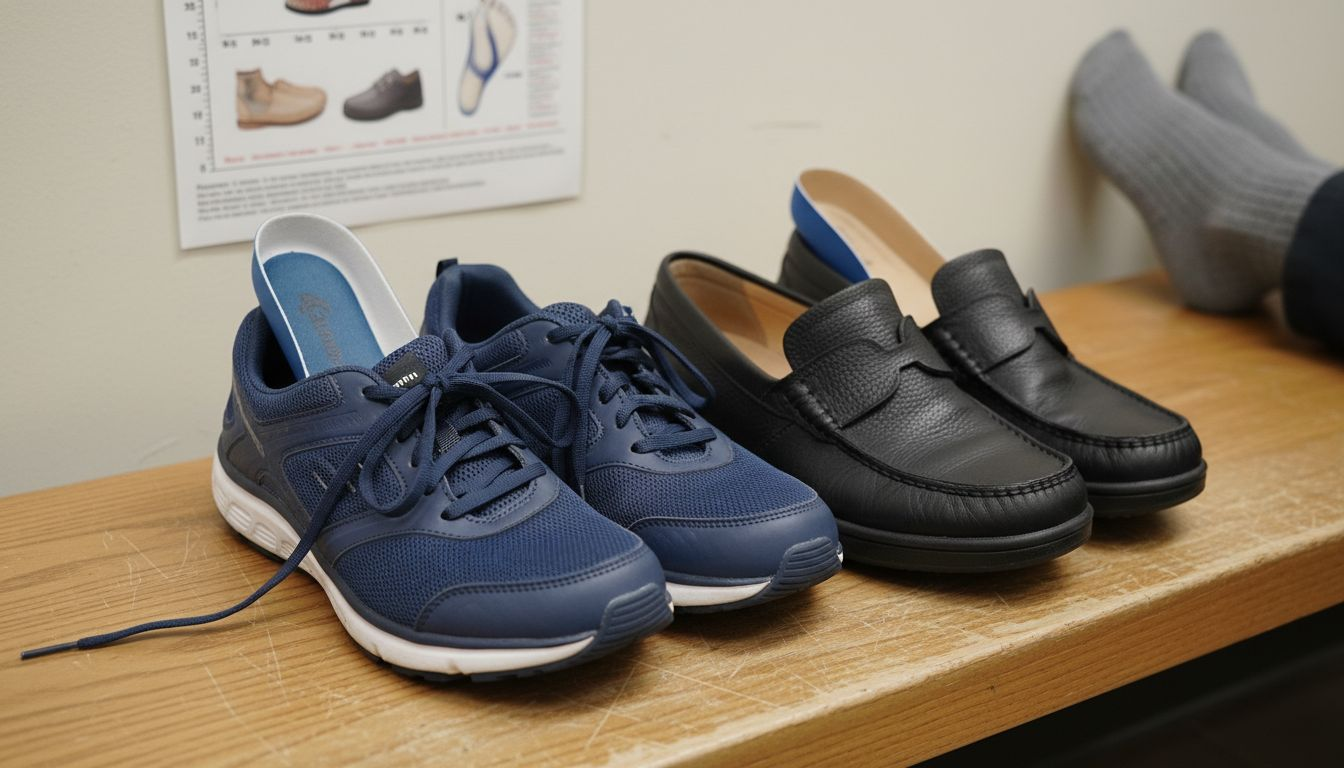
Orthotic-friendly footwear encompasses a diverse range of shoe styles designed to accommodate different foot health needs and personal preferences. Orthopaedic shoes now come in multiple variations, including supportive sneakers, professional work shoes, casual loafers, and specialised athletic footwear, each tailored to specific activity levels and comfort requirements.
Traditional categories of orthotic-friendly shoes include athletic shoes, dress shoes, casual walking shoes, and specialised medical footwear. Athletic shoes often feature enhanced arch support and cushioning, making them ideal for individuals requiring additional biomechanical support. Dress shoes have evolved to incorporate orthotic technologies without compromising professional aesthetics, offering discreet support for office workers and formal event attendees.
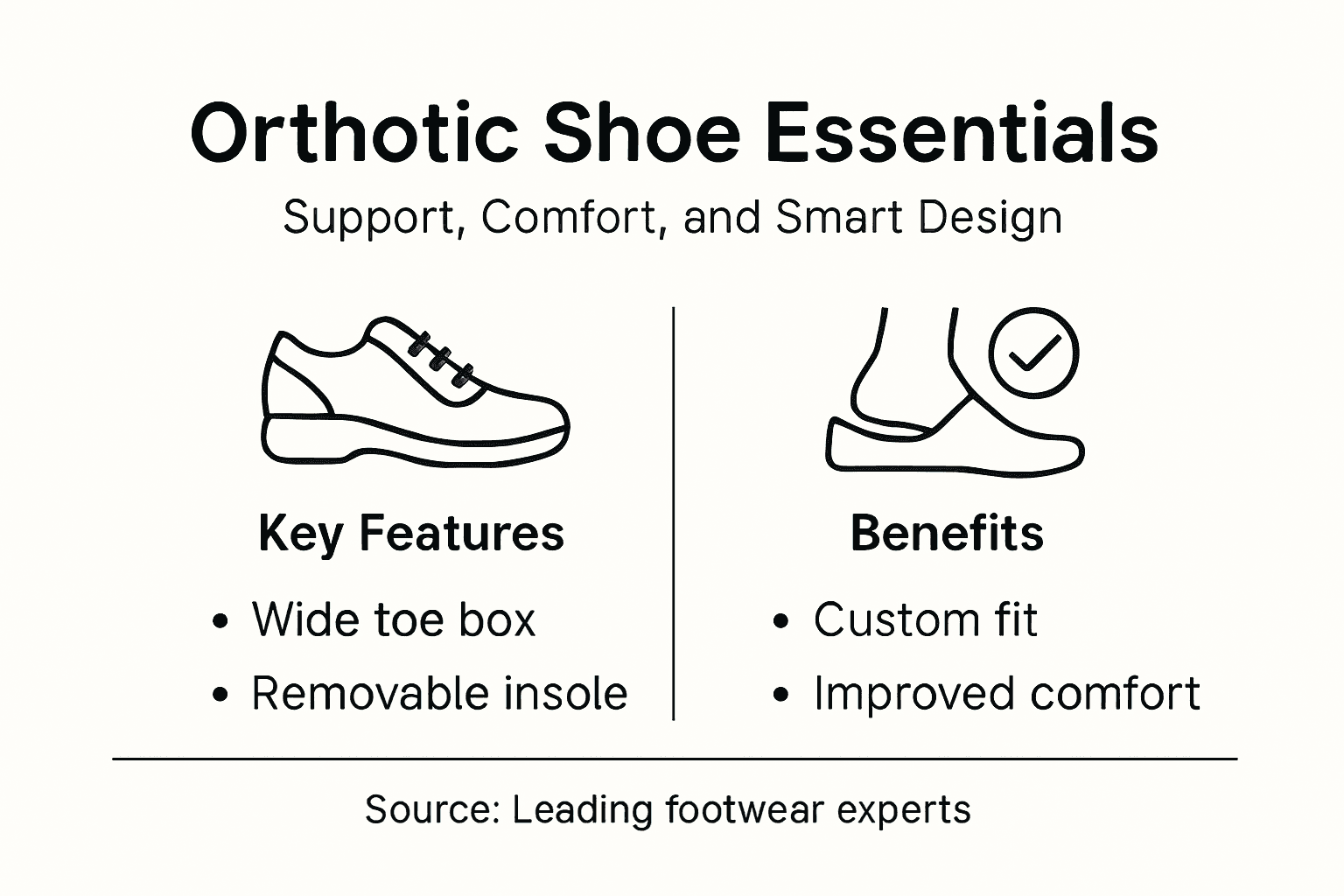
Key design features that distinguish orthotic-friendly footwear include a wide toe box, firm heel counter, superior cushioning, and adaptable insole systems. These characteristics enable proper foot alignment, reduce pressure points, and accommodate custom orthotic inserts. Manufacturers now prioritise creating shoes that blend medical functionality with contemporary design, ensuring users do not compromise style for comfort.
The table below summarises essential design features and how they benefit foot health:
| Feature | Foot Health Benefit | Example Technology |
|---|---|---|
| Wide Toe Box | Prevents crowding and blisters | Anatomically shaped lasts |
| Removable Insoles | Allows custom orthotic integration | Adjustable insole systems |
| Firm Heel Counter | Improves rearfoot stability | Reinforced heel structures |
| Adaptive Materials | Customises fit to foot movement | Thermoplastic polyurethane |
Different foot conditions demand specific shoe types. Individuals with diabetes might require shoes with extra depth and minimal seams, while those with plantar fasciitis need shoes with robust arch support and shock absorption. Runners and athletes often benefit from shoes with advanced motion control and personalised biomechanical support.
Here is a comparison of common orthotic-friendly shoe types and their primary benefits:
| Shoe Type | Main Benefit | Suitable Users |
|---|---|---|
| Supportive Sneakers | Enhanced arch support | Athletes, active individuals |
| Professional Work Shoes | Prolonged comfort standing | Office workers, service staff |
| Casual Loafers | Everyday comfort and mobility | Older adults, general population |
| Athletic Footwear | Motion control, stability | Runners, sports participants |
Pro tip: When shopping for orthotic-friendly shoes, always try multiple sizes and walk around to assess comfort, ensuring the shoe provides adequate support and allows natural foot movement.
Essential design features and technology
Parametric design and advanced manufacturing techniques have revolutionised orthotic footwear technology, enabling unprecedented levels of customisation and precision. Modern orthotic design integrates sophisticated biomechanical research with cutting-edge digital modelling, creating shoes that adapt seamlessly to individual foot structures and movement patterns.
Key technological innovations in orthotic footwear include computer simulations, finite element analysis, and advanced material science. These approaches allow manufacturers to optimise load-bearing areas, create strategic cushioning zones, and develop materials with precise flexibility gradients. Digital modeling techniques now enable shoe designers to tailor stiffness and support levels with microscopic accuracy, ensuring optimal biomechanical alignment for each wearer.
Biocompatible materials like thermoplastic polyurethane (TPU) have emerged as game-changing components in orthotic shoe technology. These materials offer exceptional durability, lightweight performance, and the ability to create complex structural designs that traditional manufacturing methods could not achieve. By leveraging 3D printing and parametric design, manufacturers can now produce shoes that provide targeted support, reduce pressure points, and enhance overall foot comfort.
The intersection of academic research, digital technologies, and biomechanical engineering continues to drive orthotic footwear innovation. Collaborations between medical institutions, engineering departments, and footwear manufacturers are pushing boundaries in understanding human locomotion, developing shoes that not only treat existing foot conditions but also prevent potential biomechanical issues.
Pro tip: When evaluating orthotic shoes, assess the shoe’s adaptability to your specific foot mechanics by checking the flexibility, cushioning, and support features designed for your unique movement patterns.
Benefits for diabetes and common foot conditions
Proper orthotic footwear plays a critical role in managing complex diabetic foot challenges, providing comprehensive protection and support for individuals with diabetes and related foot conditions. These specialised shoes address multiple health concerns by distributing plantar pressure evenly, reducing injury risks, and supporting compromised foot biomechanics.
For individuals with diabetic peripheral neuropathy, orthotic footwear offers significant therapeutic benefits. The shoes are engineered to mitigate musculoskeletal complications, improve gait stability, and prevent potential ulceration. Targeted design features such as extra depth, seamless interiors, and strategic cushioning zones help protect sensitive nerve endings and reduce pressure points that could lead to serious complications.
Beyond diabetes, orthotic-friendly shoes provide substantial benefits for various foot conditions. Individuals experiencing plantar fasciitis, arthritis, flat feet, and high arch disorders can find relief through carefully designed footwear. The shoes incorporate advanced support mechanisms that redistribute body weight, minimise joint stress, and promote natural foot alignment, thereby reducing pain and preventing further structural deterioration.
Comprehensive foot health requires a holistic approach that combines appropriate footwear, regular medical assessment, and proactive self-care. By selecting orthotic-friendly shoes tailored to specific foot mechanics, individuals can significantly improve mobility, reduce discomfort, and prevent potential long-term complications associated with various foot conditions.
Pro tip: Consult a podiatrist annually to assess your specific foot health needs and ensure your orthotic footwear continues to provide optimal support and protection.
Choosing shoes and avoiding common pitfalls
Selecting appropriate orthotic-friendly shoes requires careful consideration of multiple factors. Proper shoe fit is crucial for foot health and the effectiveness of orthotic interventions. Understanding the key characteristics that contribute to optimal footwear can help individuals make informed decisions that support their unique biomechanical needs.
Common pitfalls in shoe selection include overlooking critical fit parameters such as toe box width, heel stability, and arch support. Many individuals mistakenly prioritise aesthetic appeal over functional design, leading to potential foot health complications. Shoes should provide sufficient room for natural foot movement, secure fastening mechanisms to prevent slippage, and strategic cushioning that aligns with individual foot mechanics.
Different foot conditions demand specific shoe features. People with high arches require shoes with enhanced cushioning and support, while those with flat feet need footwear that provides structured arch reinforcement. Runners, professionals who stand extensively, and individuals with specific medical conditions should seek shoes that offer targeted support, accommodate custom orthotics, and minimise pressure points.
Beyond physical characteristics, shoe selection involves understanding personal biomechanical patterns. Factors such as gait type, weight distribution, and specific foot structural nuances play significant roles in determining the most suitable footwear. Professional assessments from podiatrists or specialised shoe fitting experts can provide invaluable insights into selecting shoes that genuinely support foot health.
Pro tip: Always walk and move around in potential shoes, assessing comfort and support across different movements to ensure comprehensive suitability for your specific foot requirements.
Discover Orthotic-Friendly Footwear Designed for True Comfort and Support
If you are seeking relief from foot discomfort or aiming to prevent future issues caused by improper shoe support, it is essential to choose footwear that truly understands your foot health needs. This article highlights common challenges such as finding shoes that accommodate custom orthotics while maintaining style and ensuring natural foot movement. At YDA UK, we specialise in innovative shoes engineered with advanced foot health technology to provide the optimal combination of support, cushioning, and energy efficiency.
Experience the difference that carefully designed orthotic-friendly footwear can make for your mobility and daily comfort. Do not wait until foot pain limits your activities. Explore our collection now at YDA UK, where every pair integrates the latest in supportive design and performance. Start your journey towards healthier feet and enhanced wellbeing today by visiting our site and selecting shoes tailored for your unique biomechanical requirements.
Frequently Asked Questions
What is orthotic-friendly footwear?
Orthotic-friendly footwear is a type of shoe designed to provide customised support and comfort for individuals with various foot conditions. These shoes can accommodate orthotic inserts or feature built-in orthotic technologies to enhance foot biomechanics.
Who can benefit from orthotic-friendly shoes?
Orthotic-friendly shoes are not just for the elderly or those with existing foot issues. They can benefit athletes, professionals who stand for long periods, and anyone seeking preventative foot health solutions.
What features should I look for in orthotic-friendly footwear?
Key features include a wide toe box, removable insoles for custom orthotic integration, firm heel counters for stability, and adaptive materials that respond to foot movement, all designed to promote proper foot alignment and reduce pressure points.
How do I choose the right orthotic shoes for my foot condition?
Consider your specific foot needs, such as arch type and gait mechanics. Consulting with a foot health professional is crucial for a comprehensive fit assessment, ensuring the shoes provide adequate support and comfort tailored to your foot health requirements.