
Why custom insoles improve comfort and performance
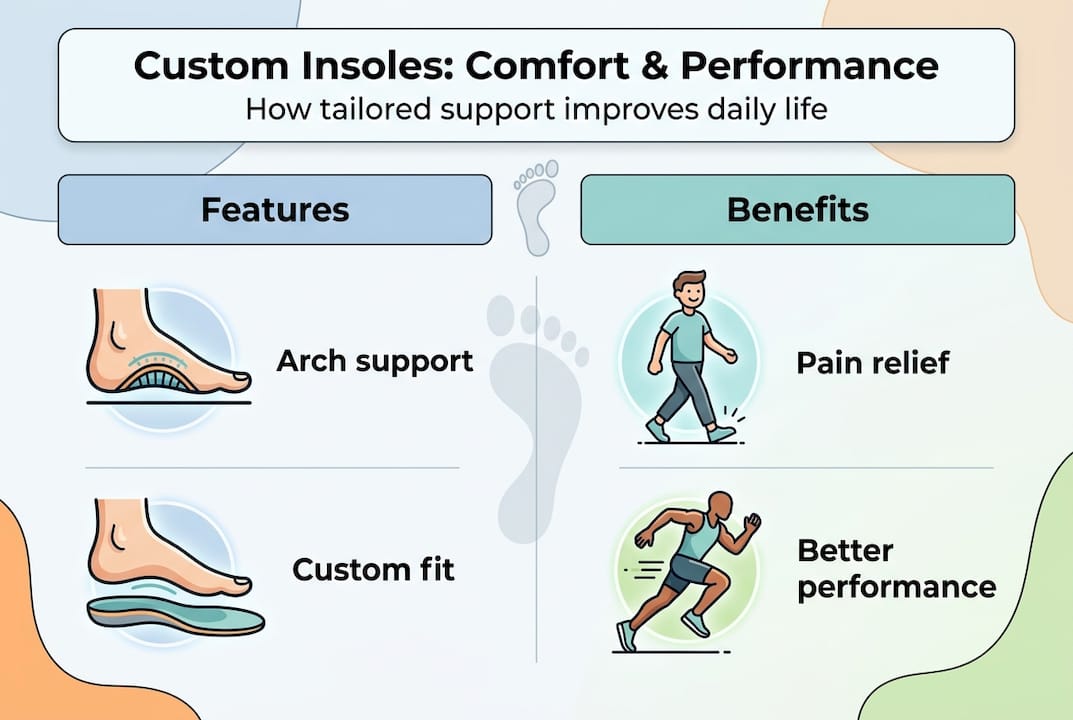
You might think standard insoles offer enough support for daily activities and exercise, but they often fall short for individuals with specific foot health needs. Custom insoles provide tailored solutions that address unique biomechanical requirements, delivering superior comfort and performance enhancement. Whether you’re an athlete pushing physical limits or managing a chronic foot condition, understanding how custom insoles work can transform your foot health journey. This guide explores the science, technology, and practical benefits of custom insoles, helping you make informed decisions about your footwear choices.
Table of Contents
- Key takeaways
- Understanding the limitations of standard insoles
- How custom insoles provide superior support and comfort
- Technological advances in custom insole design
- Who benefits most from custom insoles and how to choose them
- Explore custom insole solutions at YDA UK
- Frequently asked questions
Key Takeaways
| Point | Details |
|---|---|
| Customised support for feet | Customised insoles begin with precise measurements to match your foot shape and provide targeted arch support. |
| Advanced materials boost comfort | Memory foam adapts to your foot shape while gel inserts cushion high impact zones and carbon fibre adds rigidity where needed. |
| Optimised biomechanics enhance performance | The process uses gait assessment and pressure mapping to optimise foot mechanics and boost performance. |
| Reduce long term foot issues | Targeted support reduces the risk of misalignment and chronic strain across ankles, knees and hips. |
| Technological advances revolutionise insole design | Digital scanning and computer analysis enable precise arch heights and density adjustments. |
Understanding the limitations of standard insoles
Standard insoles represent a one-size-fits-all approach that rarely accommodates the unique contours and pressure distribution patterns of individual feet. Customised footwear explained reveals how standard insoles provide limited targeted support, potentially leading to discomfort and exacerbating foot conditions. These generic solutions typically feature uniform arch heights and cushioning levels that may not align with your specific biomechanical needs.
The consequences of relying on standard insoles become apparent during prolonged standing or high-impact activities. Without proper arch support, your feet may pronate excessively, causing misalignment that travels up through your ankles, knees, and hips. This cascade effect can trigger pain in multiple joints and contribute to chronic issues over time. Athletes particularly notice performance limitations when their feet lack adequate shock absorption during repetitive movements.
Common problems with standard insoles include:
- Insufficient cushioning for high-impact activities
- Generic arch support that doesn’t match individual foot shape
- Poor pressure distribution across the foot surface
- Materials that compress quickly and lose effectiveness
- Inadequate heel stabilisation during lateral movements
For individuals with conditions like plantar fasciitis or flat feet, standard insoles often worsen symptoms rather than providing relief. The lack of targeted support means inflamed tissues continue experiencing stress, delaying healing and perpetuating the pain cycle. Flat feet require specific medial arch reinforcement that generic insoles simply cannot deliver.
“The difference between standard and custom insoles mirrors the difference between reading glasses from a chemist versus prescription lenses fitted to your exact vision needs.”
This fundamental mismatch between generic design and individual requirements explains why so many people experience ongoing foot discomfort despite wearing supposedly supportive insoles. The solution lies in personalised approaches that account for your unique biomechanical profile.
How custom insoles provide superior support and comfort
Custom insoles begin with precise measurements that capture your foot’s exact shape and pressure distribution. Footbed design demonstrates how custom insoles use foot scans to consider pressure points and arch shape, offering optimal support tailored to individual anatomy. This data-driven approach ensures every contour matches your biomechanical requirements.
The manufacturing process typically follows these steps:
- Professional assessment evaluates your gait pattern and identifies pressure points
- Digital scanning or physical impression captures three-dimensional foot structure
- Computer analysis determines optimal support zones and material densities
- Fabrication creates insoles with precise arch heights and cushioning placement
- Fitting session allows adjustments based on real-world comfort feedback
Material selection plays a crucial role in custom insole performance. Memory foam adapts to your foot shape whilst providing responsive cushioning. Gel inserts absorb shock in high-impact zones like the heel and forefoot. Carbon fibre elements add rigidity to prevent excessive pronation without adding bulk. Advanced polymers combine flexibility with durability, maintaining their supportive properties through thousands of steps.
Key features distinguish custom insoles from standard alternatives. Targeted arch support lifts and stabilises your midfoot according to your specific arch type, whether high, normal, or flat. Heel cups cradle and centre your heel bone, reducing lateral movement and preventing ankle rolling. Metatarsal pads redistribute pressure away from the ball of your foot, alleviating forefoot pain during push-off phases.
Pro Tip: Request a wear trial period when ordering custom insoles, as minor adjustments during the first week can significantly improve long-term comfort and effectiveness.
The benefits extend beyond immediate comfort. Proper foot alignment influences your entire kinetic chain, reducing compensatory movements that strain knees and hips. Athletes report improved energy efficiency because optimised biomechanics require less muscular effort to maintain form. Individuals with arthritis experience reduced joint stress as custom insoles absorb forces that would otherwise travel through inflamed tissues.

Pain reduction occurs because custom insoles address root causes rather than masking symptoms. If overpronation triggers your plantar fasciitis, medial arch support prevents the excessive stretching that inflames your plantar fascia. This targeted intervention allows tissues to heal whilst you remain active.
Technological advances in custom insole design
Recent innovations have revolutionised custom insole manufacturing, making precision support more accessible and effective. Technology of YDA Shoes showcases how 3D printing and advanced materials offer greater precision and customisation options, enhancing both comfort and performance through data-driven design.
| Feature | Traditional custom insoles | 3D printed insoles |
|---|---|---|
| Manufacturing time | 2-3 weeks | 24-48 hours |
| Precision level | ±2mm tolerance | ±0.1mm tolerance |
| Material options | Limited to mouldable foams | Multiple polymers and densities |
| Adjustment capability | Requires remake | Digital file easily modified |
| Cost efficiency | Higher labour costs | Automated production reduces price |
Three-dimensional printing enables lattice structures that vary density across different zones of the insole. High-density regions provide firm support where needed, whilst softer areas enhance cushioning in pressure-sensitive zones. This variable geometry would be impossible to achieve through traditional moulding techniques.
Breathable fabrics now incorporate moisture-wicking technologies that keep feet dry during intense activities. Antimicrobial treatments prevent odour-causing bacteria from colonising insole surfaces. These material advances address hygiene concerns that previously limited insole longevity, particularly for athletes training daily.
Weight reduction represents another significant improvement. Carbon fibre composites deliver structural support at a fraction of traditional materials’ weight. Lighter insoles reduce the energy cost of each step, a critical advantage for distance runners and hikers covering long distances. Some advanced designs weigh less than 50 grammes per pair whilst maintaining full support capabilities.
Responsive gel technologies now feature variable viscosity that adapts to impact forces. During heel strike, the gel flows to absorb shock, then rapidly returns to its original state for the next step. This dynamic response provides superior protection compared to static foam cushioning.
Pro Tip: Look for custom insole manufacturers offering digital foot scans that you can store and reuse, allowing quick reorders or adjustments without repeating the entire fitting process.
Durability improvements mean modern custom insoles maintain their supportive properties significantly longer than previous generations. Advanced polymers resist compression fatigue, preserving arch height and cushioning through 18 months of regular use. This extended lifespan improves cost-effectiveness whilst ensuring consistent biomechanical support.
Who benefits most from custom insoles and how to choose them
Specific groups experience transformative results from custom insoles due to their unique biomechanical needs. Improve foot support for lasting comfort explains how athletes gain improved alignment and shock absorption, reducing injury risk and boosting performance, whilst individuals with flat feet see pain relief and improved posture.
Athletes across disciplines benefit from sport-specific customisation. Runners require enhanced forefoot cushioning and heel stability for repetitive impact absorption. Basketball players need lateral support to prevent ankle rolling during quick direction changes. Cyclists benefit from metatarsal relief that prevents numbness during long rides. Custom insoles optimise energy transfer whilst protecting against overuse injuries.
Individuals managing chronic foot conditions find custom insoles essential for pain management:
- Plantar fasciitis sufferers need targeted arch support to reduce fascia tension
- Flat feet require medial posting to prevent excessive pronation
- Arthritis patients benefit from pressure redistribution away from inflamed joints
- Heel spur cases need cushioning that protects bony protrusions
- Bunion management requires forefoot width accommodation and pressure relief
Selecting appropriate custom insoles requires considering multiple factors. Your primary activity level determines necessary durability and performance features. Casual walkers need different specifications than marathon runners. Foot shape assessment identifies whether you require high arch support, neutral cushioning, or motion control features.
| Selection factor | Consideration | Impact on choice |
|---|---|---|
| Activity type | Walking, running, standing | Determines cushioning and support level |
| Foot shape | Arch height, width | Influences structural design |
| Existing conditions | Pain points, injuries | Guides therapeutic features |
| Footwear compatibility | Shoe volume, style | Affects insole thickness and profile |
| Budget | Investment level | Determines material quality and features |
Professional assessment provides the foundation for effective custom insoles. Podiatrists and specialised fitters use gait analysis to identify biomechanical issues invisible to casual observation. Pressure mapping reveals hotspots that require additional cushioning or support. This diagnostic approach ensures your custom insoles address actual problems rather than assumed needs.
Footwear compatibility matters because even perfectly designed insoles fail if they don’t fit your shoes properly. Dress shoes with limited volume require low-profile insoles, whilst athletic trainers accommodate fuller designs. Improve foot comfort naturally offers additional strategies for optimising your footwear choices.
Maintenance extends custom insole lifespan and preserves their therapeutic benefits. Remove insoles from shoes after wearing to allow complete air drying. Clean surfaces weekly with mild soap and lukewarm water, avoiding harsh chemicals that degrade materials. Inspect regularly for compression signs or material breakdown, replacing when support diminishes.
Explore custom insole solutions at YDA UK
YDA UK combines advanced footwear engineering with custom support solutions designed for individuals seeking superior foot health and performance. Our technology-driven approach addresses the root causes of foot pain whilst delivering lasting comfort through innovative materials and precision design.
Whether you’re an athlete demanding peak performance or managing a chronic foot condition, our shoes for problem feet integrate seamlessly with custom insole technology. The technology of YDA Shoes demonstrates our commitment to biomechanical optimisation, ensuring every step benefits from scientifically validated support principles.
Discover how personalised footwear solutions can transform your daily comfort and athletic capabilities. Visit YDA UK to explore our range of technologically advanced options tailored to your unique foot health needs.
Frequently asked questions
What conditions can custom insoles help with?
Custom insoles effectively address plantar fasciitis, flat feet, arthritis, heel spurs, and overpronation by providing targeted support that standard insoles cannot deliver. They reduce inflammation, redistribute pressure away from painful areas, and correct biomechanical imbalances that contribute to chronic discomfort. The personalised design ensures therapeutic benefits match your specific condition and foot anatomy.
How do I know if I need custom insoles?
Persistent foot pain, discomfort in standard shoes, and decreased athletic performance signal potential benefits from custom insoles. If you experience pain that worsens throughout the day or after activity, standard solutions likely aren’t addressing your biomechanical needs. A professional gait analysis and pressure mapping assessment can definitively confirm whether custom insoles would improve your foot health and comfort.
How should custom insoles be maintained for best results?
Clean your custom insoles regularly with mild soap and lukewarm water, then air dry them completely before reinserting into shoes. Avoid exposing them to direct heat sources or harsh chemicals that can degrade materials. Replace insoles every 12 to 18 months or sooner if you notice compression, material breakdown, or diminished support, as worn insoles lose their therapeutic effectiveness and may contribute to renewed pain.
Can custom insoles improve athletic performance?
Custom insoles enhance athletic performance by optimising foot mechanics, improving energy transfer, and reducing fatigue during prolonged activity. Proper alignment allows muscles to function more efficiently, requiring less compensatory effort to maintain form. Athletes report improved stability, reduced injury rates, and better endurance when biomechanical issues are corrected through precision support that matches their sport-specific movement patterns.