
Customised Footwear Explained: Enhancing Comfort and Health
Over 60 percent of British adults experience ongoing foot discomfort, yet many overlook solutions tailored to their unique needs. Customised footwear stands out as a game changer, offering shoes designed specifically for individual anatomy and lifestyle. For British consumers seeking better comfort or relief from medical conditions, understanding customised options reveals new possibilities for health and personal style.
Table of Contents
- What Is Customised Footwear? Key Concepts
- Types Of Customised Footwear And Uses
- How The Customisation Process Works
- Custom Solutions For Medical Foot Conditions
- Costs, Common Pitfalls, And Alternatives
Key Takeaways
| Point | Details |
|---|---|
| Customised Footwear Revolutionises Comfort | Tailored shoes are designed to fit individual foot anatomy and biomechanical needs, enhancing comfort significantly. |
| Variety of Applications | Customised footwear includes orthotic, athletic, and fashion options, catering to diverse user requirements from health conditions to style preferences. |
| Advanced Technological Process | The customisation process employs 3D scans and computational modelling to ensure precise fit and support for users. |
| Investment Considerations | Fully customised shoes can be costly, ranging from £250 to £1,500, necessitating comprehensive assessments and smart financial planning. |
What Is Customised Footwear? Key Concepts
Customised footwear represents a transformative approach to shoe design that moves far beyond traditional mass production methods. At its core, customised footwear is about creating shoes tailored precisely to an individual’s unique foot anatomy, biomechanical needs, and personal comfort requirements. This specialised approach integrates advanced digital technologies to capture intricate foot measurements and design shoes that fit like a second skin.
The concept of customisation goes well beyond simple sizing adjustments. Innovative digital frameworks for managing shoe customisation enable manufacturers to develop highly personalised footwear solutions. These frameworks utilise sophisticated technologies like 3D scanning, computational modelling, and adaptive design algorithms to create shoes that address specific foot characteristics such as arch height, pressure points, and movement patterns.
At the heart of customised footwear are two critical scientific models: the bio-deformable foot model and the deformable shoe last model. These interrelated models allow designers to understand how individual feet interact with footwear, ensuring unprecedented levels of comfort and support. By mapping foot geometry with extraordinary precision, manufacturers can produce shoes that adapt dynamically to an individual’s unique biomechanical requirements.
Pro Tip for Shoe Shopping: When exploring customised footwear, request a comprehensive foot scan and biomechanical assessment to ensure you receive truly personalised recommendations that match your specific physiological needs.
Types Of Customised Footwear And Uses
Customised footwear encompasses a diverse range of specialised shoe types designed to address specific physiological needs, health conditions, and performance requirements. These personalised solutions go far beyond standard off-the-shelf options, offering targeted support and comfort for individuals with unique biomechanical characteristics.
One primary category of customised footwear includes orthotic and medical shoes. Utilising advanced bio-deformable modelling techniques, these shoes are engineered to address specific medical conditions such as diabetes, plantar fasciitis, arthritis, and structural foot abnormalities. They incorporate precise measurements and adaptive technologies to provide exceptional support, reduce pressure points, and mitigate potential complications associated with various health challenges.
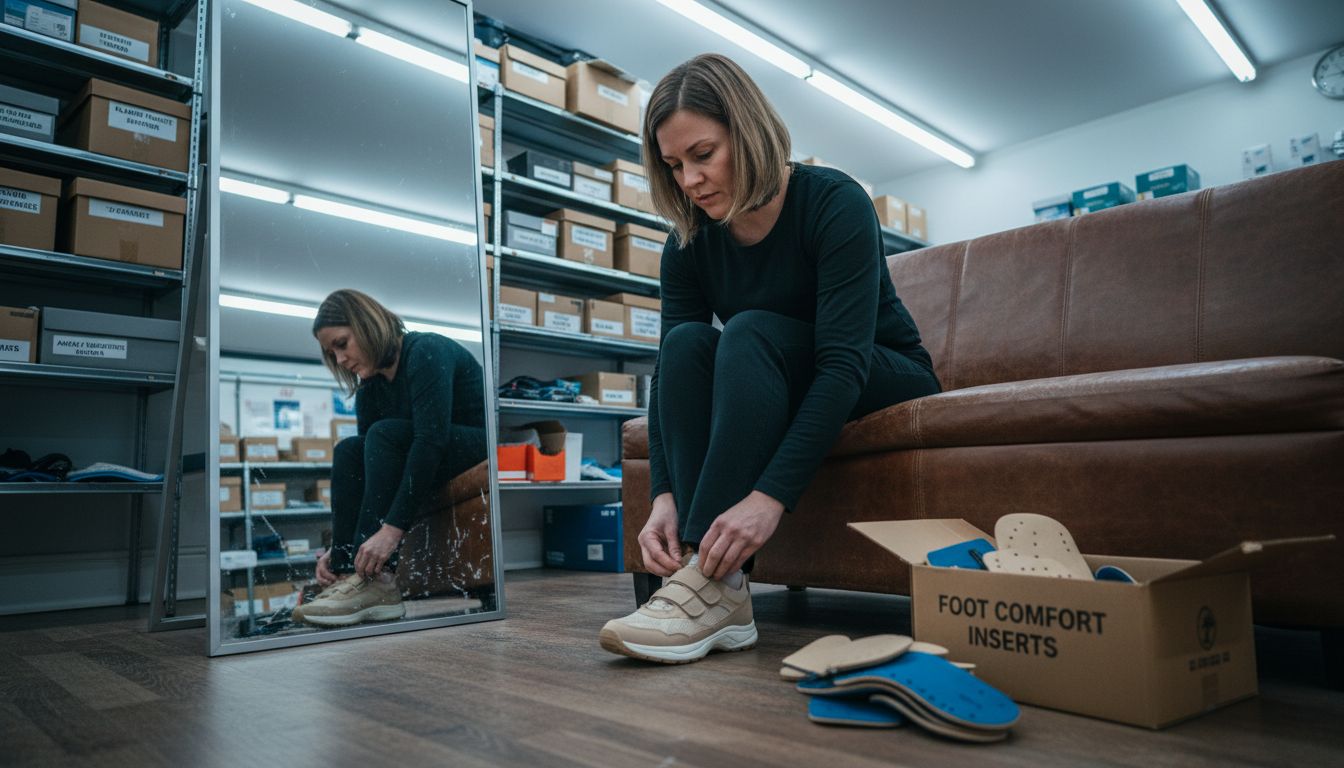
Another significant category is performance and athletic customised footwear. These shoes are meticulously crafted for athletes and active individuals, taking into account unique aspects like gait pattern, arch structure, weight distribution, and specific sporting requirements. Professional runners, basketball players, and dancers often benefit from shoes that are tailored to their exact foot shape and movement dynamics, reducing injury risk and enhancing overall performance.
Additionally, customised footwear includes lifestyle and fashion-oriented shoes that blend personalisation with aesthetic preferences. These range from bespoke dress shoes and work boots to specialised casual footwear that accommodates individual comfort needs while maintaining style. Some manufacturers now offer digital customisation platforms where customers can select materials, colours, and design elements while ensuring a perfect anatomical fit.
Here is a summary of major types of customised footwear and their core purposes:
| Footwear Type | Primary Purpose | Typical User |
|---|---|---|
| Orthotic & Medical | Therapeutic support, condition management | Patients with foot disorders |
| Performance & Athletic | Enhance performance, reduce injury risk | Athletes and active individuals |
| Lifestyle & Fashion | Combine comfort with style | Everyday and professional users |
Pro Tip for Personalised Footwear: Always request a comprehensive biomechanical assessment before investing in customised shoes to ensure the most accurate and beneficial fit for your specific physiological requirements.
How The Customisation Process Works
The customisation process for footwear represents a sophisticated intersection of digital technology, biomechanical analysis, and precision engineering. This intricate journey transforms traditional shoe manufacturing from a one-size-fits-all approach to a highly personalised experience that caters to individual physiological requirements.
Advanced digital frameworks for shoe customisation leverage cutting-edge technologies to create truly bespoke footwear. The process typically begins with a comprehensive foot scan using 3D imaging technology, which captures precise measurements of foot shape, arch structure, pressure points, and biomechanical characteristics. These digital measurements are then processed through sophisticated computational models that analyse gait, weight distribution, and individual movement patterns.
The next stage involves computational modelling and design adaptation. Manufacturers utilise specialised software that translates the detailed foot scan data into a custom shoe design. This includes creating a unique shoe last (the foot-shaped mould used in shoe construction) that matches the individual’s exact foot geometry. Advanced algorithms help predict potential comfort issues, stress points, and ergonomic requirements, ensuring that the final product provides optimal support and comfort.
Manufacturing of customised footwear typically combines high-tech precision with traditional craftsmanship. Once the digital design is finalised, specialised production techniques such as 3D printing, computer-controlled cutting, and precision moulding are employed to create shoes that are literally shaped to the individual’s feet. Some advanced manufacturers even use adaptive materials that can adjust to foot movement and provide dynamic support throughout the day.
Pro Tip for Custom Shoe Ordering: Always provide multiple types of foot measurements during your initial consultation, including standing scans, pressure mapping, and dynamic movement assessments to ensure the most accurate and comfortable custom footwear design.
Custom Solutions For Medical Foot Conditions
Custom medical footwear represents a critical intervention for individuals struggling with complex foot-related health challenges. These specialised shoes go far beyond standard orthopaedic solutions, offering targeted support and therapeutic benefits for patients with diverse medical conditions that impact foot structure, mobility, and overall comfort.
Advanced data-driven custom footwear concepts provide remarkable solutions for patients with specific medical requirements. Diabetic patients, for instance, benefit tremendously from shoes engineered to redistribute pressure and prevent potentially devastating complications like foot ulceration. These shoes incorporate sophisticated pressure mapping technologies, using precise biomechanical measurements to create footwear that actively reduces risk and supports healing.
Critical medical conditions addressed by customised footwear include diabetic neuropathy, plantar fasciitis, rheumatoid arthritis, structural foot deformities, and post-surgical rehabilitation needs. Artificial intelligence-driven personalised offloading devices have emerged as a groundbreaking approach to designing medical footwear, enabling healthcare professionals to create highly specific interventions that address individual patient biomechanics with unprecedented accuracy.
The design process for medical custom footwear involves comprehensive assessment, including detailed foot scans, pressure mapping, gait analysis, and consultation with podiatrists and orthopaedic specialists. Advanced manufacturing techniques like 3D printing and computer-aided design allow for extraordinary precision, ensuring that each shoe is crafted to provide maximum therapeutic benefit while maintaining patient comfort and mobility.
Pro Tip for Medical Shoe Selection: Always consult a qualified podiatrist or orthopaedic specialist who can provide a comprehensive biomechanical assessment before investing in custom medical footwear to ensure the most effective therapeutic intervention.
Costs, Common Pitfalls, And Alternatives
Customised footwear represents a significant investment in personal comfort and health, with pricing that can vary dramatically based on complexity, technology, and individual requirements. Understanding the financial landscape and potential challenges is crucial for anyone considering personalised footwear solutions.
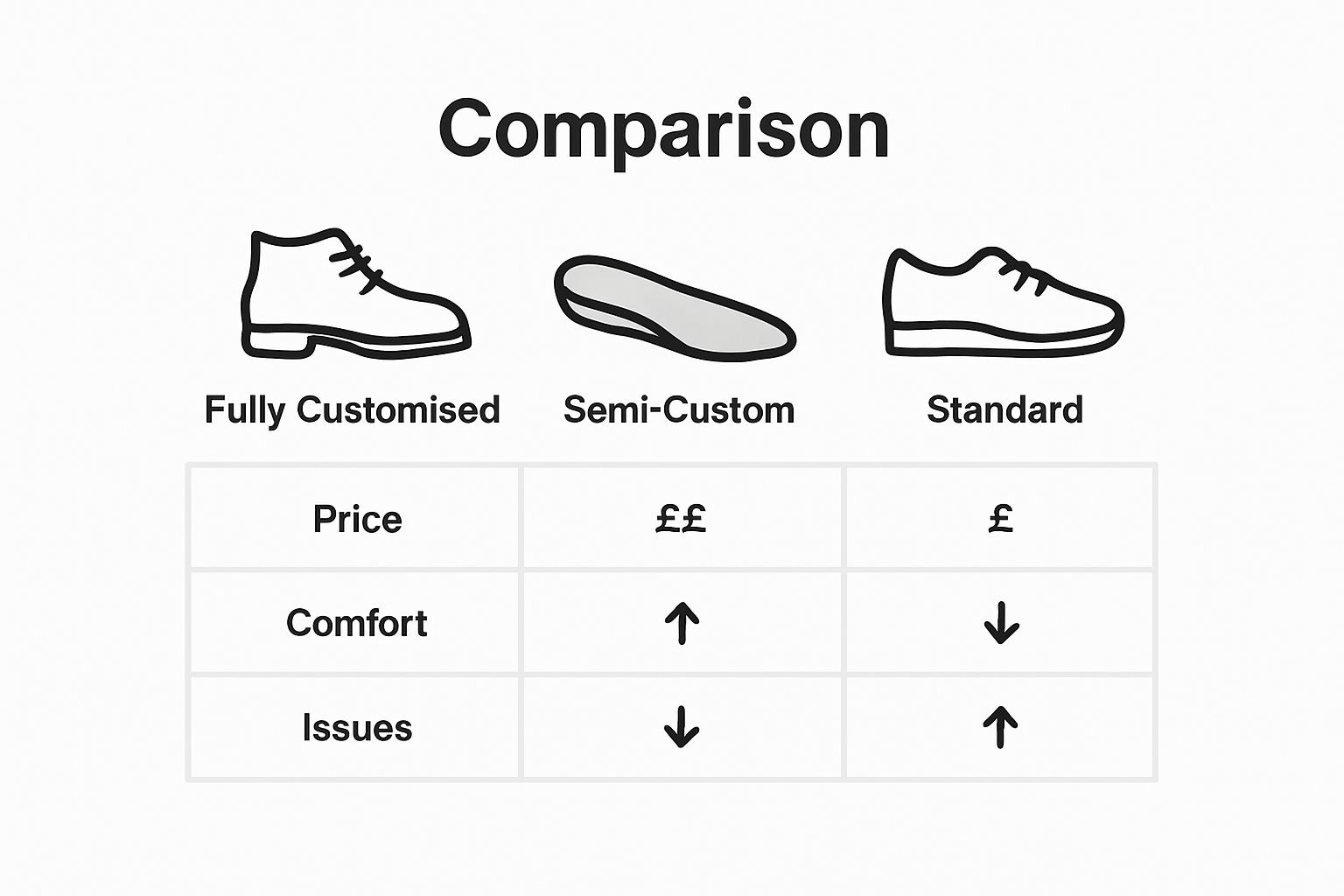
Innovative customisation frameworks have helped manufacturers reduce production costs, but consumers should still anticipate a substantial financial commitment. Prices for fully customised footwear can range from £250 to £1,500, depending on the level of personalisation, materials used, and specific medical or performance requirements. Standard orthotic shoes typically start around £300, while highly specialised medical footwear can exceed £1,000.
Common pitfalls in the customisation process include inadequate initial foot assessment, unrealistic expectations about comfort, and potential fit issues. Some individuals experience disappointment when custom shoes do not immediately resolve all foot-related problems. Comprehensive biomechanical modelling techniques have improved accuracy, but no custom solution guarantees complete resolution of complex foot conditions. Patients must maintain realistic expectations and work closely with healthcare professionals throughout the fitting and adaptation process.
Alternatives to full custom footwear include semi-custom orthotics, over-the-counter supportive shoes with adjustable features, and modular shoe systems that allow partial customisation. These options typically range from £100 to £300 and can provide significant comfort improvements for individuals with mild foot conditions. Some health insurance plans and national health services may partially cover customised footwear for specific medical conditions, potentially reducing out-of-pocket expenses.
The following table compares key cost factors, pitfalls, and alternative options for customised footwear:
| Aspect | Fully Customised | Alternatives |
|---|---|---|
| Price Range | £250–£1,500 | £100–£300 |
| Customisation Level | Full anatomical mapping | Partial or modular adjustments |
| Risk of Poor Fit | Possible if assessment is poor | Higher due to generic design |
| NHS/Insurance Coverage | Sometimes available for medical need | Rarely offered except orthotics |
Pro Tip for Budget-Conscious Buyers: Request multiple consultations and compare detailed quotes from different providers, ensuring you understand the exact specifications and potential long-term benefits before making a significant investment in customised footwear.
Discover Footwear That Truly Fits Your Life and Needs
The challenge of finding shoes that provide genuine comfort, support, and health benefits is real. This article highlights how customised footwear, built with precise foot scans and biomechanical insights, can transform your walking experience by addressing personal foot structure and movement. At YDA UK, we embrace these principles by offering high-performance shoes designed with advanced foot health technology that deliver both style and functional comfort. Whether you seek injury prevention, everyday support, or enhanced energy efficiency our range caters to those demanding more from their footwear.
Explore our carefully crafted collection of Shoes that merge innovative technology with aesthetic appeal. Don’t compromise on foot health or style visit YDA UK now to find your perfect fit and experience shoes built around you. Step into a world where comfort meets cutting-edge design—your feet will thank you.
Frequently Asked Questions
What is customised footwear?
Customised footwear is a type of shoe designed specifically to cater to an individual’s unique foot anatomy and biomechanical needs, utilising advanced digital technologies for precise measurements and fit.
Who can benefit from customised footwear?
Individuals with specific medical conditions such as diabetes or plantar fasciitis, athletes seeking enhanced performance, and anyone wanting a more comfortable fit can benefit from customised footwear.
How does the customisation process work?
The process typically begins with a 3D foot scan to obtain precise measurements, followed by computational modelling to create a unique shoe design tailored to the individual’s foot anatomy and biomechanics.
What are the costs associated with customised footwear?
The price for customised footwear can range from £250 to £1,500, depending on the level of personalisation and specific requirements, while alternatives like semi-custom orthotics range from £100 to £300.