
How to improve foot support for lasting comfort
Foot discomfort from poor support affects millions, causing fatigue and pain during everyday activities. Whether you experience aching arches, heel pain, or general foot tiredness, improving your foot support can transform your daily comfort and long-term foot health. This guide provides evidence-based strategies covering footwear selection, orthotics, strengthening exercises, and practical troubleshooting to help you achieve lasting relief and improved foot function.
Table of Contents
- Introduction To Foot Support And Its Importance
- Prerequisites And Preparation For Improving Foot Support
- Selecting Biomechanically Appropriate Footwear
- Utilising Orthotics And Insoles For Customised Support
- Targeted Strengthening And Stretching Exercises
- Common Pitfalls And How To Troubleshoot Them
- Alternative Approaches And Their Tradeoffs
- Expected Outcomes And How To Measure Success
- Discover Supportive Footwear Solutions At YDA UK
- FAQ
Key takeaways
| Point | Details |
|---|---|
| Proper footwear reduces pain | Shoes with good arch support cut foot pain by 30-50% within four weeks. |
| Custom orthotics outperform generic insoles | Custom orthotics achieve 70% success rates compared to 40% for off-the-shelf options. |
| Strengthening exercises build natural support | Daily foot exercises increase intrinsic muscle strength by 25% in eight weeks. |
| Common mistakes delay progress | Ignoring pain and wearing tight shoes cause persistent discomfort in 60% of cases. |
| Measure success with clear metrics | Expect 30-50% pain reduction within two months and noticeable functional improvements. |
Introduction to foot support and its importance
Foot support refers to the structural and functional assistance that maintains proper foot alignment whilst reducing strain on muscles, ligaments, and bones. Good support keeps your feet stable during standing, walking, and movement, distributing pressure evenly across the foot structure. Without adequate support, your feet work harder to compensate, leading to fatigue and discomfort.
Poor foot support creates numerous problems that extend beyond simple discomfort:
- Chronic pain in the heel, arch, or ball of the foot
- Excessive fatigue after minimal walking or standing
- Development of deformities such as bunions, hammertoes, or fallen arches
- Reduced mobility and reluctance to engage in physical activities
- Compensatory issues in ankles, knees, hips, and lower back
The benefits of improving foot support are substantial and well-documented. Proper support reduces pain by correcting biomechanical imbalances that strain your feet. It improves your gait pattern, making walking more efficient and less tiring. Maintaining foot comfort prevents long-term conditions from worsening and enhances overall quality of life. Research consistently shows that individuals who prioritise foot support experience fewer foot-related problems as they age and maintain higher activity levels throughout their lives.
The benefits of foot support extend to athletic performance, workplace productivity, and daily comfort. When your feet function optimally, you move with greater ease and confidence. Investing in proper foot support pays dividends in reduced pain, improved posture, and enhanced mobility for years to come.
Prerequisites and preparation for improving foot support
Before starting any foot support improvement programme, assess your current foot type and identify existing conditions. Understanding whether you have flat feet, high arches, or neutral foot structure helps determine which interventions will work best. Look for signs of bunions, hammertoes, plantar fasciitis, or other structural issues that may require professional attention.
Essential preparation steps include:
- Evaluating your current footwear for proper fit, arch support, and heel stability
- Measuring both feet later in the day when natural swelling occurs
- Identifying activities causing the most foot discomfort to target solutions effectively
- Gathering baseline information about pain levels and functional limitations
Access to properly fitting, supportive footwear forms the foundation for any foot support improvement effort. You cannot exercise or use orthotics effectively if your shoes undermine these efforts. Invest in quality footwear as your first priority before adding supplementary interventions.
Commitment to daily foot exercises yields the best results over time. Foot support improvement programmes incorporating patient education achieve 30% higher adherence and better long-term outcomes. Understanding why exercises matter motivates consistent practice, which directly correlates with success.
For complex or chronic foot issues, consult healthcare professionals such as podiatrists, physiotherapists, or orthopaedic specialists. They can diagnose underlying conditions, recommend custom orthotics, and design tailored support plans. Professional guidance ensures you address root causes rather than masking symptoms. Caring for problem feet often requires expert input to prevent complications and maximise improvement.
Pro Tip: Schedule a professional foot assessment before investing heavily in footwear or orthotics. This evaluation identifies your specific needs and prevents costly trial-and-error purchases.
Selecting biomechanically appropriate footwear
Choosing the right shoes dramatically impacts foot comfort and support effectiveness. Biomechanically sound footwear incorporates specific features that work together to stabilise your feet, absorb shock, and promote proper alignment. Understanding these features helps you make informed purchasing decisions.
Critical footwear features for effective foot support:
- Arch support that matches your foot type and prevents excessive pronation or supination
- Cushioned midsoles that absorb impact forces and reduce stress on joints
- Firm heel counters that stabilise the rearfoot and control motion
- Roomy toe boxes allowing toes to spread naturally without compression
- Appropriate flexibility in the forefoot whilst maintaining midfoot stability
Shoes with good arch support and cushioned midsoles significantly reduce foot pain and improve alignment in individuals with flat feet, with studies showing 30-50% pain reduction within four weeks. This improvement occurs because proper arch support distributes pressure more evenly and prevents the foot from collapsing inward excessively.
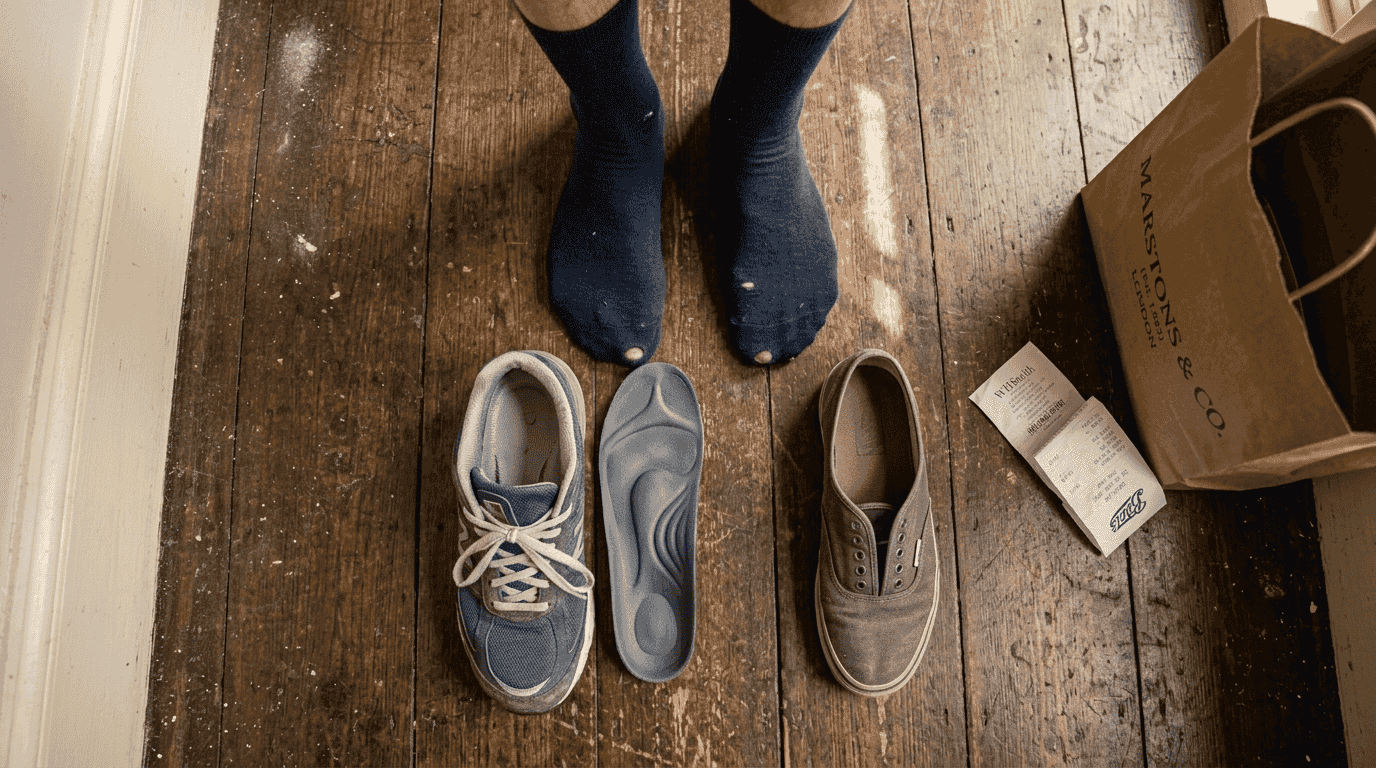
Wearing shoes with cushioned midsoles and firm heel counters results in 50% fewer reports of foot pain in active individuals. The heel counter prevents excessive rearfoot motion, whilst cushioning reduces impact forces during heel strike. Together, these features create a stable, comfortable foundation.
| Shoe Feature | Primary Benefit | Impact on Foot Health |
|---|---|---|
| Arch Support | Maintains foot alignment | Reduces strain on plantar fascia and prevents collapse |
| Cushioned Midsole | Absorbs shock | Decreases joint stress and impact-related pain |
| Firm Heel Counter | Stabilises rearfoot | Controls excessive motion and improves gait efficiency |
| Roomy Toe Box | Prevents compression | Avoids bunions, hammertoes, and forefoot pain |
| Proper Fit | Ensures effectiveness | Maximises benefit of all features and prevents blisters |
Tight or poorly fitting shoes undermine all other support efforts. They compress toes, restrict natural foot movement, and create pressure points that cause pain and deformities. A footwear selection guide helps you identify the right fit parameters for your foot shape and needs.
When evaluating shoe technology, look beyond marketing claims to examine actual construction and materials. Quality shoes use durable materials that maintain support properties over time. The role of stability in footwear cannot be overstated, as stability features prevent excessive foot motion that leads to injuries and discomfort.
Pro Tip: Shop for shoes in the late afternoon or evening when your feet are naturally swollen to their largest size. This ensures proper fit throughout the day and prevents purchasing shoes that become uncomfortably tight.
Utilising orthotics and insoles for customised support
Orthotic devices provide personalised support that addresses your specific biomechanical needs. They work by redistributing pressure, correcting alignment issues, and cushioning problem areas. Understanding when to use custom orthotics versus off-the-shelf insoles helps you make cost-effective decisions.
Custom-moulded orthotics are individually designed based on precise measurements and casts of your feet. Healthcare professionals prescribe them for specific conditions such as severe flat feet, high arches, plantar fasciitis, or post-injury rehabilitation. Custom-moulded orthotic devices yield a 70% success rate in improving foot function and alleviating pain compared to 40% for off-the-shelf insoles. This significant difference stems from precise customisation addressing your unique foot structure.
Off-the-shelf insoles suit mild to moderate support needs and general comfort enhancement. They cost considerably less than custom orthotics and provide immediate availability. Many people find adequate relief from quality prefabricated insoles, especially when combined with proper footwear and exercises.
Key considerations for orthotic selection:
- Severity of foot condition and degree of biomechanical correction needed
- Budget constraints and insurance coverage for custom devices
- Activity level and specific performance requirements
- Compatibility with existing footwear and lifestyle needs
Orthotics complement footwear and exercises by optimising foot biomechanics throughout daily activities. They fill gaps that shoes alone cannot address, providing targeted support for problem areas. When used consistently, orthotics reduce strain on muscles and ligaments, allowing natural healing and strength development.
Consult healthcare professionals for proper fitting and selection to maximise benefits. Poorly fitted orthotics can worsen problems by creating new pressure points or forcing feet into unnatural positions. Professional guidance ensures orthotics work synergistically with your foot comfort improvement efforts rather than against them.
Targeted strengthening and stretching exercises
Building intrinsic foot muscle strength creates natural, long-lasting support that reduces reliance on external devices. These small muscles within your feet control fine movements, maintain arch structure, and absorb forces during walking. Strengthening them improves overall foot function and resilience.
Effective foot strengthening exercises:
- Towel scrunches: Place a towel on the floor and use your toes to scrunch it towards you, working the small muscles in your arch. Perform three sets of 10 repetitions daily.
- Toe spreads: Actively spread your toes apart as wide as possible, hold for five seconds, then relax. This strengthens the muscles controlling toe movement. Complete 15 repetitions twice daily.
- Marble pickups: Place marbles on the floor and pick them up using only your toes, transferring them to a container. This exercise targets intrinsic foot muscles and improves dexterity. Aim for 20 marbles per session.
- Single-leg balance: Stand on one foot for 30 seconds to one minute, engaging foot muscles to maintain stability. Progress by closing your eyes or standing on an unstable surface. Perform three repetitions per foot.
- Calf raises: Rise onto your toes whilst standing, hold briefly, then lower slowly. This strengthens the calf muscles that support the arch. Complete three sets of 15 repetitions.
Complementary stretching routines maintain flexibility and prevent tightness that contributes to foot pain. Stretch your plantar fascia by pulling your toes back towards your shin, holding for 30 seconds. Stretch calves by leaning into a wall with one leg straight behind you. Perform stretches after strengthening exercises when muscles are warm.
Daily foot and ankle strengthening exercises improve intrinsic foot muscle strength by 25% within eight weeks, enhancing natural foot support. This improvement translates to better arch maintenance, reduced pain during weight-bearing activities, and enhanced overall foot function. The timeline for noticeable strength gains typically spans six to eight weeks with consistent practice.
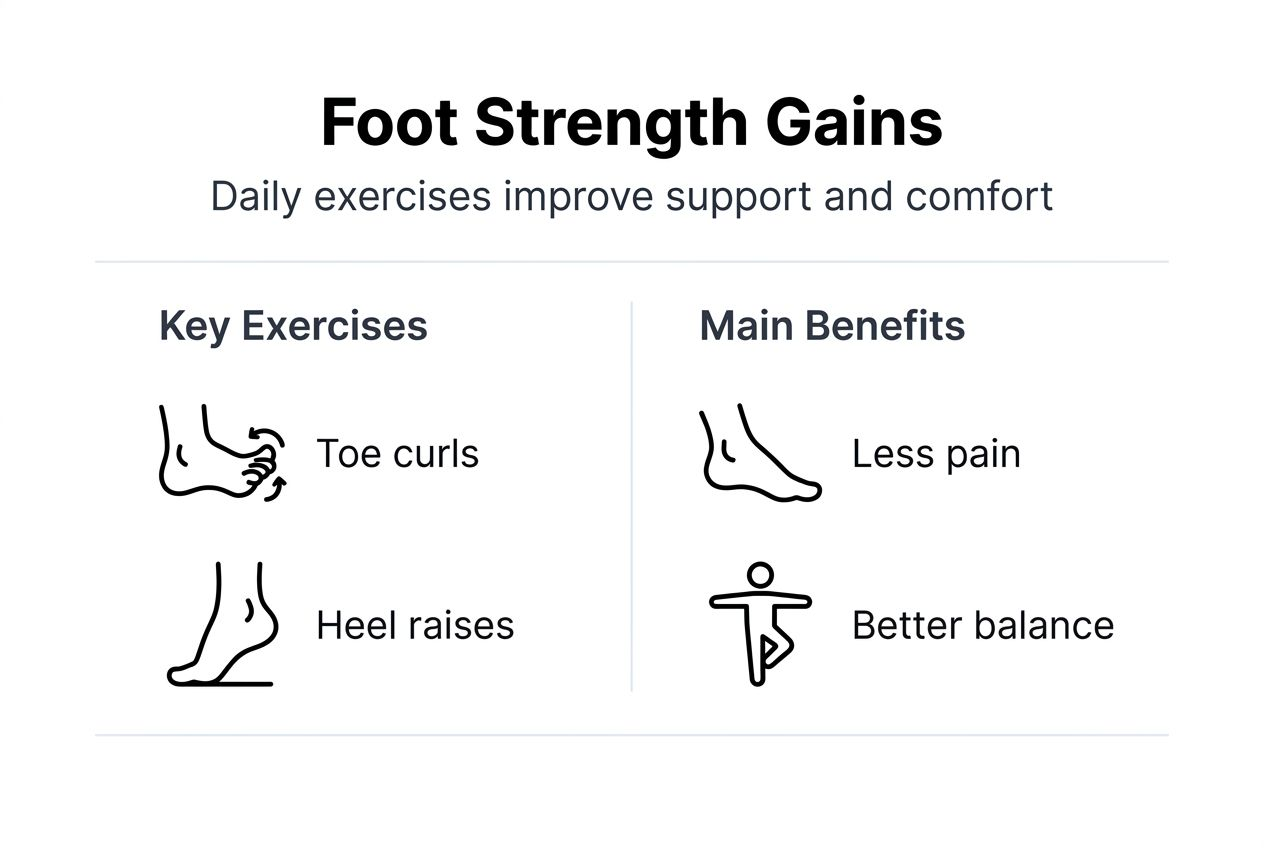
Exercises reduce foot pain by addressing muscular weaknesses that force other structures to compensate. Stronger muscles distribute loads more effectively, reducing strain on ligaments and fascia. Improved endurance allows you to stand and walk longer without fatigue.
Pro Tip: Incorporate foot exercises into your daily routine by performing them whilst watching television or during morning preparations. Consistency matters more than intensity, so regular brief sessions outperform occasional marathon workouts.
Common pitfalls and how to troubleshoot them
Many people unknowingly sabotage their foot support improvement efforts through preventable mistakes. Recognising these errors early and implementing corrections keeps progress on track and prevents frustration.
Frequent errors undermining foot support improvement:
- Purchasing shoes based on appearance rather than fit and support features
- Ignoring early warning signs of pain or discomfort until problems worsen
- Using orthotics in shoes lacking adequate depth or width to accommodate them
- Expecting immediate results without allowing time for adaptation and strengthening
- Inconsistently performing exercises or wearing supportive footwear
Common mistakes such as choosing shoes without proper heel support or ignoring foot pain lead to persistent discomfort in 60% of cases. These errors compound over time, making eventual treatment more difficult and prolonged. Prevention through informed choices proves far more effective than later correction.
Detecting support deficiencies requires monitoring pain levels, functional limitations, and changes in foot appearance. Keep a simple log noting daily pain intensity, activities causing discomfort, and improvements or setbacks. This information helps identify patterns and assess whether interventions work effectively.
Ignoring early foot pain signals increases treatment difficulty by 40% and extends recovery time significantly. Early intervention prevents minor issues from becoming chronic conditions requiring intensive management.
Adapt your approach based on feedback from your body and professional advice. If new orthotics cause increased pain after the initial adaptation period, consult the provider for adjustments. If exercises trigger sharp pain rather than mild muscle fatigue, modify technique or intensity. Footwear selection mistakes often become apparent only after wearing shoes for extended periods, so monitor comfort during various activities.
Troubleshooting involves systematically evaluating each component of your foot support strategy. Isolate variables by changing one element at a time rather than overhauling everything simultaneously. This approach identifies specific problem sources and prevents creating new issues whilst attempting to resolve existing ones.
Alternative approaches and their tradeoffs
Beyond conventional footwear, orthotics, and exercises, several alternative methods offer supplementary foot support benefits. Understanding their effectiveness, limitations, and appropriate use cases helps you decide whether to incorporate them into your strategy.
Toe spacers physically separate toes, counteracting compression from tight shoes and promoting natural toe alignment. They suit individuals with bunions, overlapping toes, or forefoot crowding. Effectiveness is moderate, primarily addressing toe positioning rather than arch support or overall foot biomechanics. Noticeable improvements typically require three to six months of consistent nightly use.
Night splints maintain the foot in a stretched position during sleep, preventing morning pain from plantar fasciitis and Achilles tendinopathy. They work by keeping tissues elongated, reducing the sudden stretch that occurs with first steps after rest. Success rates vary, with approximately 50% of users experiencing significant relief within eight weeks. However, compliance challenges arise from discomfort and sleep disruption.
| Method | Effectiveness | Timeline | Best Use Case | Limitations |
|---|---|---|---|---|
| Toe Spacers | Moderate | 3-6 months | Bunions, toe crowding | Addresses only forefoot alignment |
| Night Splints | Moderate to High | 6-12 weeks | Plantar fasciitis, Achilles issues | Sleep disruption, compliance challenges |
| Barefoot Walking | Low to Moderate | 6+ months | Foot strengthening, sensory input | Risky for existing foot problems |
| Foot Taping | Low | Immediate | Acute pain relief, arch support | Temporary, requires skill to apply |
Barefoot walking strengthens foot muscles through natural movement patterns and increased sensory feedback. Proponents claim improved strength and proprioception over six months or more. However, risks include acute injuries, exacerbation of existing conditions, and inadequate support for biomechanical issues. This approach suits healthy feet in controlled environments more than therapeutic intervention for problem feet.
Foot taping provides immediate temporary support using adhesive tape to reinforce the arch or stabilise joints. Athletic trainers use it for acute pain relief and performance support. Effectiveness is limited by tape durability, application skill requirements, and inability to address underlying causes. It serves as a short-term solution rather than a long-term strategy.
Consider alternatives when standard methods provide insufficient relief or as complementary tools enhancing primary interventions. Toe spacers pair well with proper footwear to maximise toe box benefits. Night splints supplement daytime orthotics for round-the-clock management. Evaluate tradeoffs between effectiveness, convenience, cost, and compliance when selecting alternative approaches.
Expected outcomes and how to measure success
Setting realistic expectations and tracking progress objectively helps maintain motivation and identify when adjustments are needed. Foot support improvement follows predictable timelines, though individual variation exists based on condition severity and adherence.
Measurable outcomes indicating successful foot support improvement:
- Pain reduction of 30-50% within one to two months of implementing proper footwear and orthotics
- Increased intrinsic foot muscle strength by 25% after eight weeks of consistent exercise
- Extended standing or walking tolerance without fatigue, typically doubling within three months
- Improved gait efficiency and reduced compensatory movements in ankles and knees
- Decreased frequency and intensity of acute pain episodes
Functional improvements manifest as increased ease during daily activities. You notice walking becomes less tiring, standing at work causes less discomfort, and recreational activities become more enjoyable. These subjective improvements often precede measurable changes and provide early encouragement.
Adherence to footwear, orthotics, and exercise protocols directly determines results. Studies consistently show that individuals following comprehensive programmes combining all three elements achieve superior outcomes compared to single-intervention approaches. Consistency matters more than perfection, so maintaining good habits most days yields better results than sporadic perfect execution.
Regular self-assessment involves monitoring pain levels using a simple 0-10 scale, noting functional improvements, and tracking exercise progression. Photograph your feet monthly to document visible changes in arch height, toe alignment, or swelling reduction. Compare these markers against baseline measurements to confirm progress.
Consult professionals if progress stalls after six to eight weeks despite consistent effort. Plateaus may indicate need for orthotics adjustment, exercise modification, or investigation of underlying conditions requiring different treatment. Foot comfort improvement metrics provide benchmarks for evaluating whether your outcomes align with typical responses.
Discover supportive footwear solutions at YDA UK
Achieving optimal foot support requires the right foundation, and YDA UK specialises in footwear designed specifically for problem feet. Our range incorporates advanced arch support, cushioned midsoles, and firm heel counters that work together to reduce pain and improve alignment. Each shoe is engineered with innovative technology that stabilises foot structure whilst enhancing comfort during extended wear.
Exploring our shoes for problem feet complements your exercise and orthotic use, creating a comprehensive foot health strategy. The technology of YDA shoes combines biomechanical research with durable materials to deliver lasting support that maintains effectiveness over time.
Key benefits of YDA UK footwear:
- Customised support features addressing common foot conditions
- Durable construction maintaining support properties through extended use
- Comfortable fit accommodating orthotics when needed
- Expert design incorporating the latest foot health research
Discover how the right footwear transforms your foot support journey and enhances overall comfort throughout your daily activities.
FAQ
How often should I replace my supportive shoes to maintain foot health?
Replace supportive shoes every six to twelve months depending on wear patterns and activity level. Heavy daily use or high-impact activities accelerate breakdown of cushioning and support structures. Inspect shoes regularly for compressed midsoles, worn outsoles, or deformed heel counters, as these indicate diminished support effectiveness.
Can foot strengthening exercises fully replace the need for orthotics?
Exercises enhance natural foot support but often cannot fully replace orthotics, especially for significant structural alignment issues or severe biomechanical problems. Combining both approaches yields optimal results, with exercises building long-term strength whilst orthotics provide immediate correction and symptom relief. Consult a healthcare professional to determine whether your condition requires ongoing orthotic use or whether exercises alone suffice.
What signs indicate I should consult a healthcare professional about my foot support?
Persistent or worsening foot pain despite self-care efforts, visible deformities such as bunions or hammertoes, unexplained swelling, or difficulty walking normally warrant professional evaluation. Sharp pain, numbness, tingling, or symptoms affecting daily function require prompt assessment. Early intervention prevents complications, identifies underlying conditions, and enables tailored support plans addressing root causes rather than merely managing symptoms.
Recommended
- How to Maintain Shoe Comfort for Lasting Foot Support – YDA UK
- How to Maintain Foot Comfort Naturally for Healthy Feet – YDA UK
- How to Improve Foot Comfort Naturally for Everyday Wear – YDA UK
- How to Identify Quality Footwear for Lasting Comfort – YDA UK
- 7 Best Supplements for Runners: Natural Tips for Hyrox Women – Interval