
Footwear Selection Guide 2025: Choose Shoes for Health and Comfort
Most people overlook how much their shoes affect not only their feet but their whole body. For british adults, nearly 60 percent experience foot pain at some point, highlighting the need for proper footwear choices. With so many options on the market, understanding your unique needs can be the key to lasting comfort and better health. This guide breaks down every step so your next shoe decision supports your lifestyle and keeps you moving with confidence.
Table of Contents
- Step 1: Assess Your Foot Health and Activity Needs
- Step 2: Measure Feet and Identify Key Fit Factors
- Step 3: Explore Footwear Technology and Material Options
- Step 4: Match Shoe Styles to Your Lifestyle and Medical Needs
- Step 5: Test Fit and Evaluate Support for Comfort
Quick Summary
| Key Takeaway | Explanation |
|---|---|
| 1. Assess Your Foot Health Regularly | Conduct self-examinations to identify swelling or discomfort and detect underlying health issues early on. |
| 2. Measure Your Feet Accurately | Use correct techniques to measure both length and width, as foot size can change over time and varies between brands. |
| 3. Understand Footwear Technology | Familiarise yourself with shoe components like toe box and arch support to optimise comfort and prevent injury. |
| 4. Match Shoes to Lifestyle Needs | Choose footwear aligned with your daily activities and any medical conditions to ensure proper support and comfort. |
| 5. Test Fit Before Purchase | Always try shoes on at the end of the day with appropriate socks to assess fit and comfort while walking. |
Step 1: Assess Your Foot Health and Activity Needs
Understanding your unique foot health and activity requirements is essential for selecting the right footwear. Every individual’s feet are different, and recognising your specific needs can prevent potential discomfort, injuries, and long-term musculoskeletal problems.
Begin by conducting a thorough self examination of your feet. Look for signs of swelling, discoloration, or structural changes that might indicate underlying health concerns. Regular self assessment of foot health is crucial for detecting early signs of potential issues, allowing you to take proactive steps towards maintaining optimal foot wellness. Pay close attention to blood circulation and sensory responses, which can reveal important information about your overall foot condition.
To determine your activity needs, consider your typical daily movements and physical demands. Are you an office worker, an athlete, or someone with a job requiring prolonged standing? Each activity profile requires different levels of support and cushioning. Proper footwear selection plays a critical role in supporting overall musculoskeletal health, potentially alleviating problems not just in your feet, but also in your knees, hips, and lower back.
A helpful tip is to perform a simple wet test at home. Step onto a surface with a slightly damp foot and examine your footprint. This can reveal your arch type low, neutral, or high which is fundamental in understanding the kind of shoe support you need. By taking these preliminary steps, you will be well prepared to make an informed footwear selection that prioritises both comfort and health.
Step 2: Measure Feet and Identify Key Fit Factors
Accurately measuring your feet is a critical step in selecting the perfect footwear that ensures comfort, support, and overall foot health. Understanding the nuanced details of your foot measurements will help you make informed choices about shoe selection.

Accurate foot measurement involves considering both length and width, recognising that sizes can vary significantly between different brands. To get started, you will need a piece of paper, a pencil, and a ruler. Place the paper against a wall, stand on it with your full weight, and trace the outline of your foot carefully. Measure the length from the back of your heel to the tip of your longest toe, and the width at the broadest part of your foot.
Regular foot measurements are essential because foot size can change over time due to factors like weight fluctuations, age, and pregnancy. Always measure both feet, as most people have slight differences between their left and right foot. When trying on shoes, fit the shoe to the larger foot to ensure overall comfort. Pay attention to how the shoe accommodates your unique foot shape, ensuring there is adequate room in the toe box and that the shoe provides proper arch support.
A helpful tip is to measure your feet later in the day when they are slightly larger due to natural swelling. This will help you select shoes that will remain comfortable throughout the day, preventing potential discomfort or painful pressure points. By taking these detailed measurements and understanding your specific foot characteristics, you will be well prepared to choose footwear that supports your individual needs.
Step 3: Explore Footwear Technology and Material Options
Understanding the intricacies of footwear technology and materials is essential for selecting shoes that provide optimal comfort, support, and performance. Modern footwear has evolved far beyond simple protective coverings, incorporating advanced design elements that can significantly impact your overall foot health and mobility.
Understanding key shoe components like the toe box, vamp, and heel counter helps in selecting footwear that offers proper support and comfort. Each component plays a critical role in how the shoe interacts with your foot. The toe box provides space for your toes to move naturally, the vamp covers the top of your foot and contributes to overall fit, while the heel counter stabilises your heel and prevents unnecessary movement.
Exploring minimal footwear options can enhance foot muscle strength and promote natural foot mechanics across various age groups. This approach encourages a more biomechanically efficient walking and running pattern. When examining material options, consider breathable fabrics like mesh and lightweight synthetic materials that offer flexibility and moisture management. Natural materials such as leather provide durability and can mould to your foot shape over time.
A helpful tip is to examine the shoe’s flexibility, cushioning, and arch support. Press the shoe at its midpoint to check flexibility, ensuring it bends where your foot naturally moves. By understanding these technological nuances, you will be well equipped to choose footwear that not only looks good but supports your foot’s unique characteristics and movement patterns.
Step 4: Match Shoe Styles to Your Lifestyle and Medical Needs
Choosing the right footwear is about more than aesthetic appeal. Your shoes should seamlessly integrate with your daily activities, physical demands, and any specific medical considerations you might have.
Selecting shoes based on daily activities and specific health conditions is crucial for preventing potential foot problems and ensuring proper support. For instance, an office professional might require different shoe characteristics compared to a construction worker or an athlete. Consider your typical daily movements, work environment, and physical activities when making your selection.
Choosing shoes with a firm foundation and adequate arch support is essential for maintaining balance and stability. For individuals with specific medical conditions such as diabetes, arthritis, or plantar fasciitis, specialized footwear becomes even more critical. Orthotic shoes or those with extra cushioning and support can provide targeted relief and prevent potential complications.
A helpful tip is to rotate between different shoe styles to prevent repetitive strain on your feet. Different shoe designs distribute pressure and impact uniquely, helping maintain foot muscle strength and overall foot health. By carefully matching your shoe style to your lifestyle and medical needs, you will not only enhance comfort but also protect your long-term foot wellness.
Step 5: Test Fit and Evaluate Support for Comfort
Mastering the art of shoe fitting is crucial for ensuring optimal foot comfort and preventing potential long term health issues. Your shoes should feel like a natural extension of your body, providing support and protection with every step.
Trying on shoes in the afternoon while wearing appropriate socks is a critical strategy for evaluating true fit and support. During this time, your feet are slightly larger and more representative of their typical daily state. When testing shoes, walk around the store to assess comfort, checking for immediate responsiveness and support without requiring a break in period.
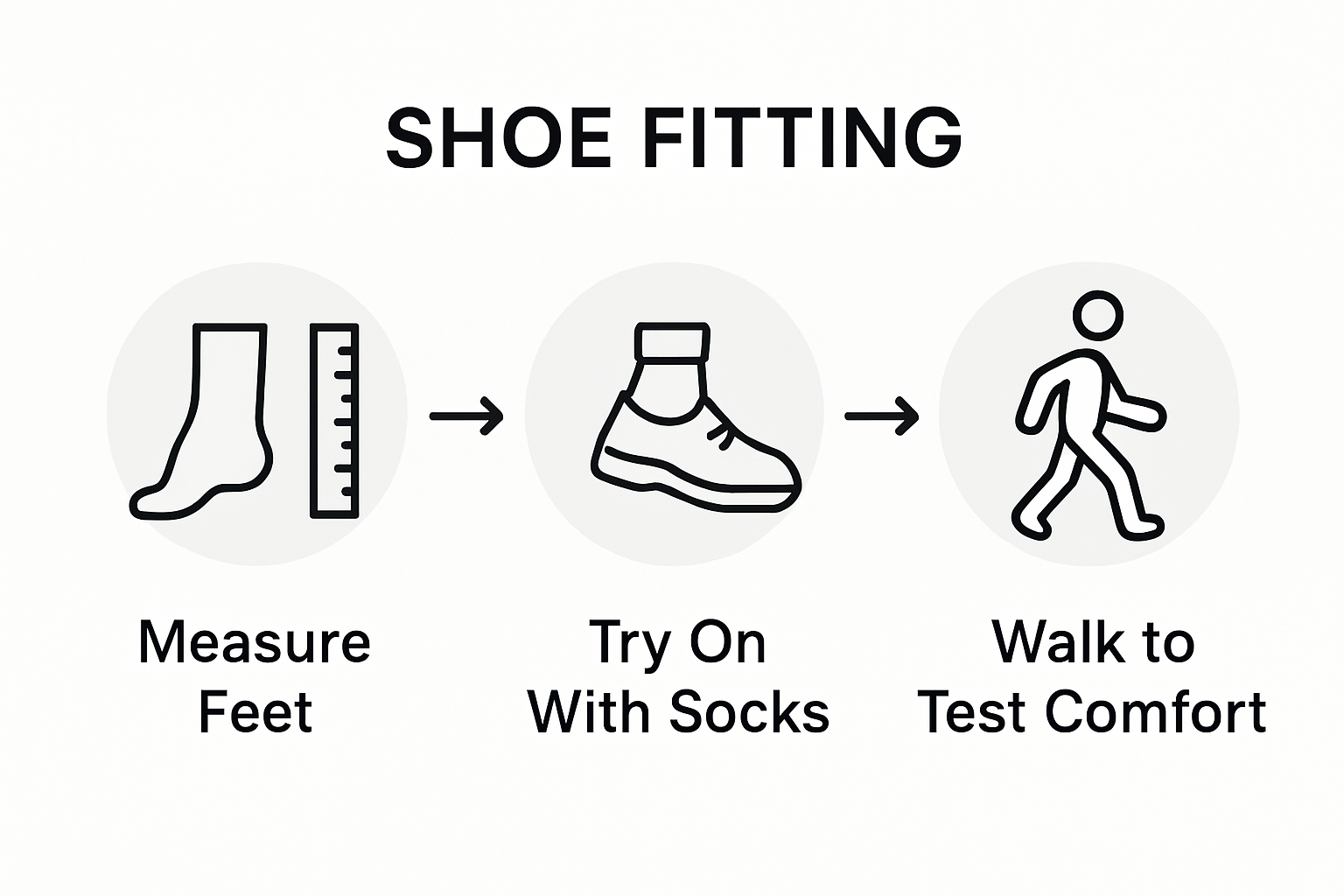
Carefully assessing your foot shape and matching it precisely to the shoe’s design ensures a comfortable and supportive fit. Pay close attention to how the shoe accommodates your unique foot contours. Check for adequate space in the toe box, proper arch support, and a secure heel fit. Wiggle your toes to ensure there is enough room, and press the insole to evaluate cushioning and responsiveness.
A helpful tip is to bring any orthotics or specialised insoles you regularly use when trying on new shoes. This ensures a comprehensive evaluation of fit and support. By taking time to thoroughly test and assess your footwear, you will invest in shoes that not only look good but provide the comfort and support your feet deserve.
Discover Footwear That Supports Your Health and Comfort Journey
Choosing footwear that perfectly fits your unique foot measurements, provides proper arch support, and matches your lifestyle is vital for lasting comfort and foot health. If you want to avoid discomfort and support your musculoskeletal wellbeing, exploring shoes designed with advanced technology and thoughtful materials is essential. From cushioning to flexibility, every detail matters in preventing foot strain and enhancing your daily movement.
Experience the difference with our curated selection of high-performance shoes at Shoes – YDA UK. Every pair combines style with orthopaedic benefits backed by YDA Technology to optimise your foot’s natural mechanics. Whether you need durable everyday wear or specialised options for specific needs, start your journey now by visiting our Home page – YDA UK and discover the perfect fit tailored to your health and lifestyle.
Frequently Asked Questions
How do I assess my foot health before choosing footwear?
To assess your foot health, conduct a thorough self-examination looking for signs of swelling, discoloration, or structural changes. Regularly check your feet, as early detection of issues can help maintain optimal foot wellness.
What key factors should I measure when determining my shoe size?
You should measure both the length and width of your feet, as sizes can vary between brands. Use a piece of paper to trace your foot outline and measure from the back of your heel to the tip of your longest toe, ensuring you fit to the larger foot for comfort.
What footwear technology should I look for to enhance comfort?
Look for shoes with specific features such as a roomy toe box, breathable materials, and adequate cushioning. Choose shoes that provide proper arch support and flexibility to better accommodate your unique foot shape and movement patterns.
How can I match shoe styles to my daily activities?
Match shoe styles to your typical activities by considering your work environment and physical demands, such as whether you are an office worker or an athlete. Select shoes that offer the necessary support and stability relevant to your lifestyle, such as those with a firm foundation if you stand for long periods.
What steps should I take to ensure a proper shoe fit?
To ensure a proper shoe fit, try on shoes later in the day and wear appropriate socks. Walk around to assess their comfort and support, checking for adequate toe room and arch support, ensuring a snug heel fit without excessive pressure.
How can I evaluate the support and comfort of new shoes before buying?
Evaluate the support and comfort of new shoes by wearing them and walking around the store. Assess how they respond to your foot shape and ensure you can wiggle your toes comfortably, while also checking for proper cushioning and responsiveness in the insole.
Recommended
- Role of Footwear in Daily Comfort: Complete Guide – YDA UK
- How to Shop for Foot Health: A Step-by-Step Guide – YDA UK
- Complete Guide to Why Choose Comfortable Shoes – YDA UK
- 7 Examples of Foot Health Shoes for Everyday Comfort – YDA UK
- Understanding Fashionable Reading Glasses Guide for Style – ministry of sight