
Bunion protection footwear: comfort and support daily
TL;DR:
- Bunion protection footwear is specially designed to accommodate and shield the bunion area.
- Key features include a wide toe box, seamless linings, and extra depth for comfort.
- Consistent use of properly fitted shoes reduces pain, slows progression, and improves mobility.
If you’ve ever bought a pair of shoes labelled ‘extra wide’ or ‘comfort fit’ only to find your bunion pain worse by lunchtime, you’re not alone. The uncomfortable truth is that most so-called comfort shoes are designed for general foot fatigue, not the specific structural demands of a bunion. A bunion, or hallux valgus, is a bony prominence at the base of the big toe, and it needs far more than a soft insole to stay protected. The right footwear can genuinely reduce daily pain, slow progression, and give you back the freedom to move. This guide explains exactly how bunion protection footwear works and what to look for.
Table of Contents
- What is bunion protection footwear?
- Key design features: what to look for in bunion-friendly shoes
- Do wide toebox and other features really help? The evidence
- Practical steps: choosing and using bunion protection footwear
- Why most people get bunion protection footwear wrong
- Find footwear that truly protects your bunions
- Frequently asked questions
Key Takeaways
| Point | Details |
|---|---|
| Specialised shoes matter | Footwear designed for bunion protection can significantly improve daily comfort and reduce pain. |
| Features to prioritise | Look for wide toeboxes, cushioning, and seamless designs for optimal bunion relief. |
| Evidence is nuanced | Research supports key features, but individual experience and fit remain crucial. |
| Combine strategies | For best results, pair protective footwear with orthotics or toe spacers. |
What is bunion protection footwear?
Bunion protection footwear is not simply a wider shoe. It is a category of specialist footwear engineered around the anatomy of a foot affected by hallux valgus. According to the clinical overview of bunions, bunions develop when the big toe pushes inward against the other toes, forcing the joint outward. That protruding joint is vulnerable to friction, pressure, and irritation with every single step.
Bunion protection footwear refers to specialised shoes designed to accommodate and protect the bony prominence at the base of the big toe, reducing pain, friction, and pressure. The key word here is accommodate. Rather than compressing the foot into a standard last (the mould a shoe is built around), these shoes are constructed with extra depth, a broader forefoot, and materials that move with the foot rather than against it.
Ordinary shoes, even ones marketed as comfortable, are typically built on a narrow last to look sleek. The upper fabric is often stiff, the toebox tapers toward the front, and internal seams run directly over the bunion area. Wear them for a few hours and you’ll feel exactly why that matters.
Here is a practical review of everyday protective footwear for bunions that illustrates the difference between shoes that look supportive and shoes that actually are. The contrast is striking once you know what to look for.
“The difference between a bunion-protective shoe and a standard comfort shoe often comes down to millimetres of space and the choice of upper material. Those small details determine whether your foot is protected or progressively irritated.”
Signs your shoes are not protecting your bunions:
- Redness or soreness directly over the bunion joint after wearing
- A visible indentation or pressure mark on the upper fabric
- Pain that worsens throughout the day rather than easing
- Numbness or tingling in the big toe
- Calluses forming around the bunion area
- Shoes that feel fine in the morning but unbearable by afternoon
If any of these sound familiar, your current footwear is working against you, not for you.
Key design features: what to look for in bunion-friendly shoes
Knowing what bunion protection footwear is gets you halfway there. The other half is understanding the specific design elements that make a real difference. Not every wide shoe qualifies, and not every flexible upper is created equal.
The most important feature is the wide toebox. Research shows that wide toebox shoes reduce sprint time by 6.53% and improve propulsion by 27%, with lab tests confirming better shock absorption. For everyday walking, that improved mechanics translates directly into less stress on the forefoot joint.
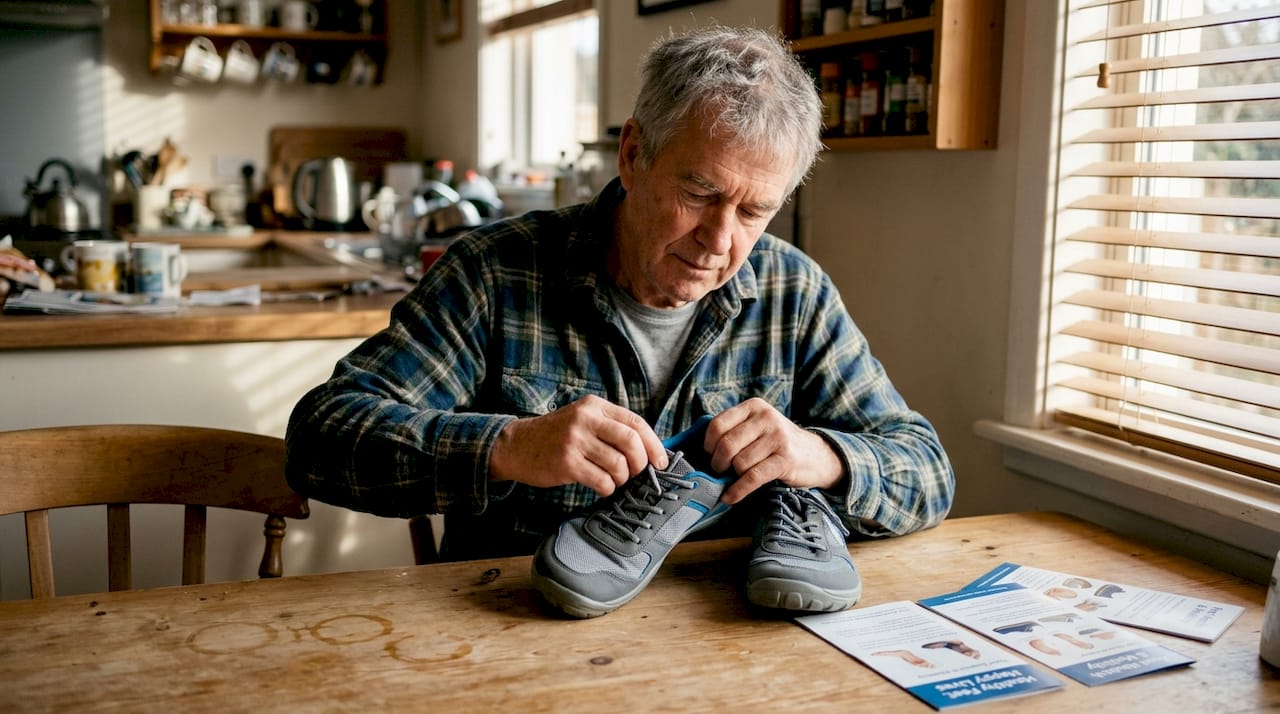
Beyond the toebox, foot-friendly design features matter enormously. Studies suggest 80% of adults need foot-friendly features in their everyday shoes, yet most never consider them until pain forces the issue.
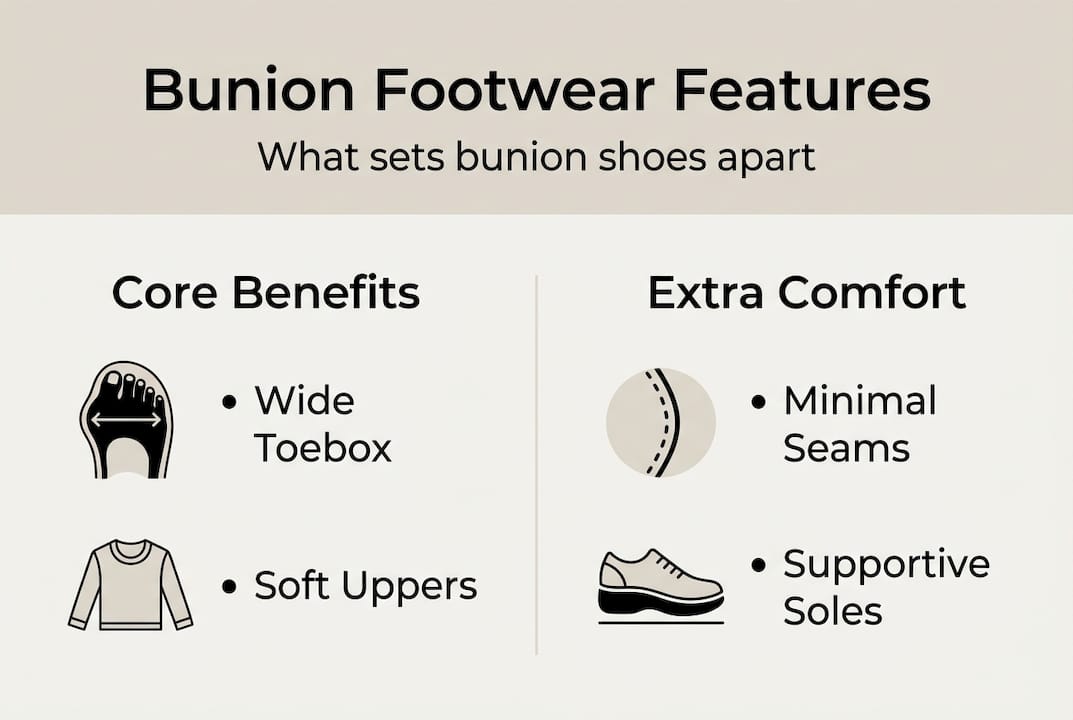
| Feature | Bunion protection shoe | Ordinary comfort shoe |
|---|---|---|
| Toebox width | Broad, rounded | Tapered or medium |
| Upper material | Soft, stretch mesh or leather | Stiff synthetic or leather |
| Internal lining | Seamless over bunion area | Seams may cross forefoot |
| Sole cushioning | Shock-absorbent, multi-layer | Single-layer foam |
| Fastenings | Adjustable straps or laces | Fixed or slip-on |
| Depth | Extra depth for orthotics | Standard depth |
For a deeper look at how these comfort features interact with conditions like plantar fasciitis and reduced mobility, it is worth exploring how each element supports the whole foot, not just the bunion area.
Questions to ask yourself when shoe shopping:
- Does the toebox allow my big toe to lie flat without touching the sides?
- Can I wiggle all five toes freely?
- Is there any internal stitching running over the bunion joint?
- Does the shoe have enough depth to fit an orthotic if needed?
- Are the fastenings adjustable enough to accommodate swelling?
Pro Tip: Measure your feet at the end of the day when they are at their largest. Foot volume can increase by up to 8% throughout the day, and a shoe that fits perfectly at 9am may feel tight and painful by 4pm. Always fit to your larger foot.
For bunion care at home, the right shoe is consistently the first recommendation from podiatrists, ahead of splints and pads.
Do wide toebox and other features really help? The evidence
With the must-have features covered, it is worth examining whether the science genuinely supports these claims, and where the picture becomes more nuanced.
Bunions are extraordinarily common. 64 million Americans are affected, and the numbers across the UK and Europe are similarly significant. The condition disproportionately affects women and older adults, though it is not exclusive to either group.
| Metric | Data point |
|---|---|
| Adults affected globally | Approximately 23% of adults aged 18 to 65 |
| Bunions in over-65s | Up to 36% prevalence |
| Wide toebox: bunion prevention | Reduces risk in up to 18% of cases |
| Shock absorption improvement | Measurably better in wide toebox designs |
The evidence on toebox width and pressure is largely positive, but not without nuance. Some studies find no direct correlation between habitual toebox shape and medial forefoot pressures in certain populations. The wide toebox benefits are real but context-dependent: they work best when combined with other protective features rather than in isolation.
“A wide toebox alone is not a treatment. It is one component of a system. When combined with appropriate cushioning, seamless construction, and proper fit, the cumulative effect on bunion comfort is substantial.”
What the evidence really tells us:
- Wide toeboxes reduce mechanical pressure on the bunion joint during walking.
- Seamless linings lower friction-related irritation significantly.
- Shock-absorbent soles reduce impact forces transmitted to the forefoot.
- No single feature works in isolation — the combination matters most.
- Consistent daily use of appropriate footwear produces better outcomes than occasional use.
For a broader view of how footwear choices affect various shoes for foot problems, the pattern is consistent: design specificity outperforms generic comfort every time.
Practical steps: choosing and using bunion protection footwear
Now that the evidence is clear, here is how to put this knowledge into action from selecting to wearing your ideal pair.
The Mayo Clinic advises combining footwear with orthotics or toe spacers for comprehensive daily bunion management, and measuring feet at the end of the day for the most accurate fit. That combination approach is worth taking seriously.
Buying and fitting checklist:
- Measure both feet while standing, at the end of the afternoon.
- Choose the size that fits your larger foot.
- Check the toebox: your longest toe should have at least a thumb’s width of space.
- Press the upper fabric over the bunion area — it should give without resistance.
- Walk around the shop for at least five minutes before deciding.
- Check whether the shoe accommodates an orthotic-friendly insole if you use one.
- Assess the fastenings: adjustable laces or straps allow for swelling throughout the day.
Common mistakes to avoid:
- Buying shoes that feel ‘almost right’ and assuming they will break in. Bunion footwear should feel comfortable immediately.
- Choosing style over structure. A stylish shoe with a narrow toe will undo any benefit.
- Ignoring depth. Shallow shoes compress the foot vertically, which is just as damaging as lateral compression.
For a structured footwear selection guide that covers similar principles across different foot conditions, the overlap with bunion management is significant. If you are unsure where to start, reading about buying shoes for foot pain gives a practical foundation.
Pro Tip: Pair your bunion shoes with a silicone toe spacer between the first and second toes. This gently realigns the big toe and reduces the angular pressure that drives bunion progression. It is a small addition that consistently makes a measurable difference to daily comfort.
Once you have the right shoes, wearing them consistently is what delivers results. Rotating between well-fitted pairs and learning to reduce foot pain with shoes through daily habits is where long-term improvement happens.
Why most people get bunion protection footwear wrong
Here is the uncomfortable insight that most guides skip: buying the right shoe is only the beginning. We see people invest in genuinely good bunion footwear, wear it for a week, then revert to their old shoes for ‘special occasions’ or because the new pair does not match an outfit. That inconsistency erases most of the benefit.
Fit is also about far more than length and width. The material of the upper, the type of fastening, and your daily activity level all determine whether a shoe that looks right on paper actually works for your foot. A soft leather upper that is perfect for a sedentary day may be insufficient for someone on their feet for eight hours.
The biggest trap is trusting marketing language over measured fit. Words like ‘bunion-friendly’ and ‘orthopaedic’ on a label mean nothing without the structural features to back them up. Try the shoe, walk in it, and assess it against the checklist above.
For guidance on choosing footwear for health in the long term, the principle is always the same: daily habits and consistent use outweigh any single purchase decision.
Find footwear that truly protects your bunions
You now have the knowledge to identify footwear that genuinely protects your bunions rather than simply looking the part. The next step is finding shoes built to those standards.
At YDA UK, the focus is on specialist shoes engineered for foot health, combining wide toeboxes, seamless linings, and advanced cushioning into everyday styles you will actually want to wear. The YDA shoe technology behind each design is built around real biomechanical principles, not marketing claims. If daily bunion discomfort is affecting your quality of life, exploring what purpose-built footwear can do for you is a genuinely worthwhile next step.
Frequently asked questions
What makes footwear suitable for bunion protection?
Specialised shoes with wide toeboxes, flexible uppers, and minimal internal seams help reduce pain and pressure on bunions by removing the friction and compression that cause irritation.
Do orthotics help when used with bunion protection shoes?
Yes. Combining orthotics or toe spacers with bunion footwear provides more comprehensive support and reduces discomfort more effectively than footwear alone.
How do I know if my shoes are making my bunions worse?
Redness, swelling, or increased pain after wearing are clear signals. The bunion overview explains how ongoing friction and pressure accelerate irritation and progression.
Does every person with bunions need specialist footwear?
Not strictly mandatory, but most people experience less pain and better mobility in purpose-built designs. Biomechanical testing consistently shows measurable comfort and performance improvements in well-designed bunion shoes.
Recommended
- Choosing Shoes for Daily Wear: Find Comfort and Style Easily – YDA UK
- Unisex Support Footwear: Comfort for Every Step – YDA UK
- 7 Examples of Foot Health Shoes for Everyday Comfort – YDA UK
- How to Reduce Foot Pain with Shoes for Everyday Comfort – YDA UK
- What is dynamic cushioning: comfort and recovery explained – Lunix