
How to Reduce Foot Pain with Shoes for Everyday Comfort
Finding shoes that actually ease foot pain can feel like an endless struggle for many living with sensitive feet or diabetes. Choosing the wrong footwear often leads to increased discomfort, missed activities and even long-term health issues. By focusing on proper shoe fit and tailored support, you can reduce daily pain and finally enjoy each step with greater confidence and style.
Table of Contents
- Step 1: Assess Your Foot Type and Needs
- Step 2: Select Shoes Prioritising Support and Fit
- Step 3: Adjust Lacing and Insoles for Custom Comfort
- Step 4: Test Footwear During Daily Activities
- Step 5: Monitor Pain Levels and Make Further Adjustments
Quick Overview
| Key Point | Explanation |
|---|---|
| 1. Assess your foot type carefully | Understand your unique foot characteristics using the wet foot test to determine necessary footwear support. |
| 2. Choose shoes for support and fit | Select footwear that prioritises stability, cushioning, and appropriate fit for your specific activities. |
| 3. Adjust lacing and insoles properly | Customise shoe fit through strategic lacing techniques and suitable insoles to enhance comfort. |
| 4. Test shoes during daily activities | Evaluate footwear performance in real-world scenarios to ensure comfort and support for your feet. |
| 5. Monitor and adjust for pain levels | Pay attention to any discomfort and adjust footwear choices or techniques to prevent long-term issues. |
Step 1: Assess Your Foot Type and Needs
Understanding your unique foot characteristics is the crucial first step in selecting comfortable, pain-reducing footwear. Your individual foot structure determines the type of support and cushioning you’ll need to minimise discomfort and prevent potential long-term issues.
To identify your foot type, you’ll want to perform a simple wet foot test for arch type. This diagnostic method reveals three primary arch categories:
- Neutral Arches: Require moderate stability shoes
- Flat Feet: Need motion control footwear
- High Arches: Demand extra cushioning for shock absorption
To conduct the wet foot test, simply wet the bottom of your foot and step onto a flat, dark surface. The footprint will reveal your arch characteristics:
Here is a quick guide to identifying your arch type and recommended shoe features:
| Arch Type | Typical Footprint | Recommended Shoe Feature |
|---|---|---|
| Flat | Most of foot visible | Motion control and firm support |
| Neutral | Moderate arch visible | Stability and balanced support |
| High | Narrow midfoot connection | Enhanced cushioning and flexibility |
- If you see most of your foot’s outline, you likely have flat feet
- If you see a narrow connection between heel and ball, you have high arches
- A balanced, moderate impression indicates neutral arches
Beyond arch type, consider other foot-specific needs like width, pronation tendencies, and any existing pain points. Some individuals might require additional orthotic support or specialised shoe features to address specific conditions.
Knowing your exact foot type helps prevent unnecessary strain and potential long-term foot health complications.
Expert recommendation: Consult a podiatrist for a professional foot assessment if you experience persistent foot pain or have complex foot structures.
Step 2: Select Shoes Prioritising Support and Fit
Choosing the right footwear is critical for managing foot pain and preventing future discomfort. Your shoes should act as a personalised support system, addressing your specific foot characteristics and daily activity requirements.
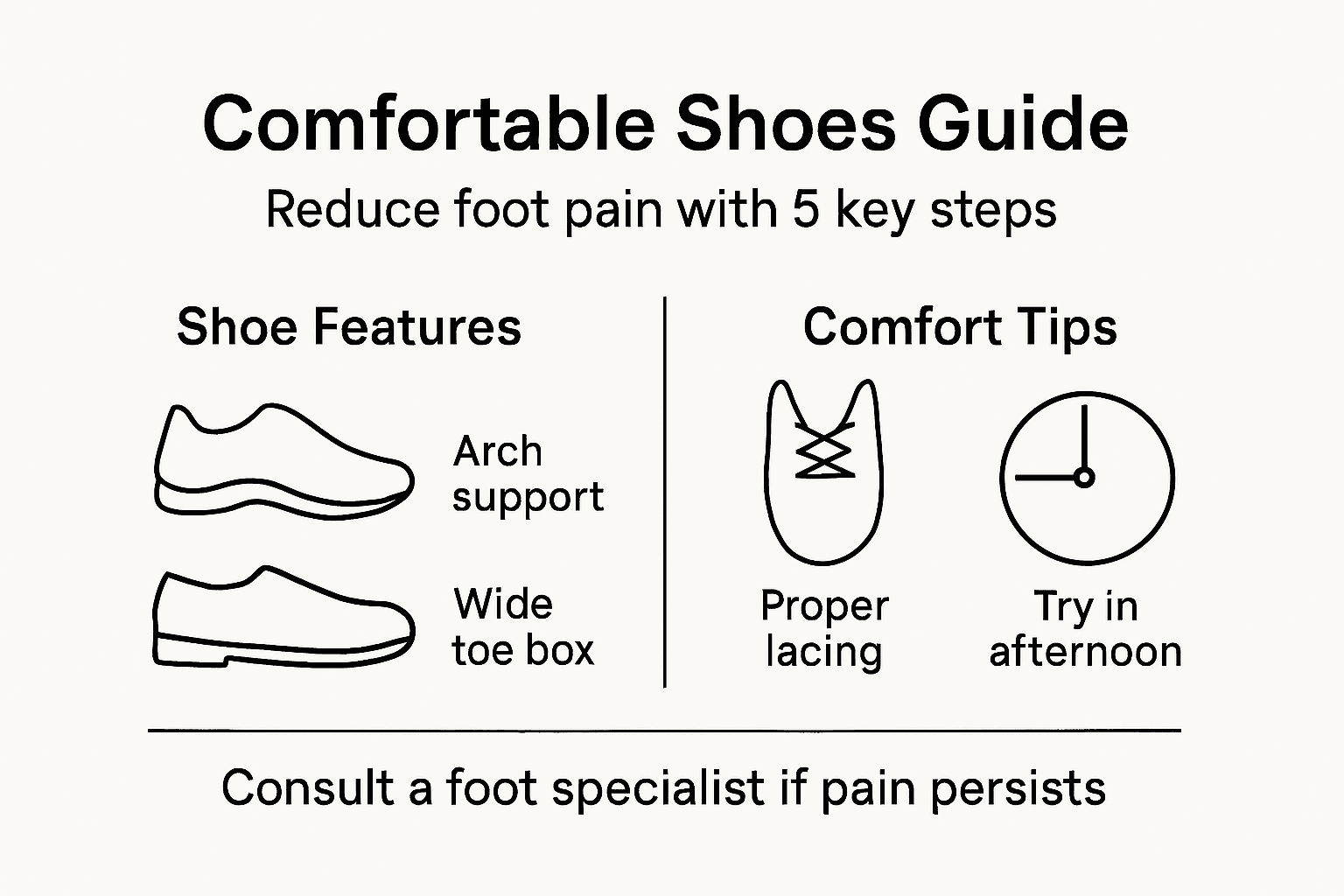
When selecting shoes, focus on essential shoe fit principles that ensure maximum comfort and support. The key elements include:
- Heel Stability: Ensures proper foot alignment
- Arch Support: Matches your unique foot structure
- Toe Box Space: Allows natural toe movement
- Cushioning: Absorbs shock during walking
To find the perfect fit, consider these practical steps:
- Measure your feet at the end of the day when they’re slightly larger
- Always fit shoes to your larger foot
- Ensure sufficient room in the toe area
- Check heel grip and overall shoe depth
Different activities demand specific shoe characteristics. Running shoes require more shock absorption, while walking shoes need consistent support. Shock-absorbing footwear can significantly reduce strain on your feet and joints.

To help you select the right footwear for your activity, see the comparison below:
| Activity | Key Shoe Feature | Common Benefit |
|---|---|---|
| Walking | Flexible sole, angled heel | Natural stride, reduced fatigue |
| Running | Thick, lightweight sole | Improved shock absorption |
| Prolonged Standing | Deep, supportive heel cup | Enhanced stability, less soreness |
Proper shoe selection is not just about comfort - it’s about preventing long-term foot health issues.
Expert recommendation: Try shoes on later in the day and walk around the store to ensure complete comfort and proper fit.
Step 3: Adjust Lacing and Insoles for Custom Comfort
Customising your footwear’s fit goes beyond simply choosing the right shoe. Strategic adjustments to lacing techniques and insole selection can dramatically improve comfort and reduce foot pain for your unique foot structure.
Mastering shoe lacing techniques for problem feet allows you to address specific pressure points and improve overall shoe fit. Different lacing methods can help manage various foot challenges:
- Pressure Relief: Skip specific eyelets to reduce discomfort
- Heel Stabilisation: Use lace locks to prevent slipping
- Width Accommodation: Adjust lacing for narrow heels or wide forefeet
When considering insole options, understand the critical differences:
- Over-the-counter inserts provide basic cushioning
- Custom orthotics offer personalised biomechanical correction
- Specialised insoles can address specific foot conditions
Professional assessment can help determine the most appropriate insole strategy for your specific foot anatomy and pain management needs.
Custom footwear adjustments can transform your walking experience and prevent long-term foot health issues.
Expert recommendation: Rotate between multiple pairs of well-fitted shoes to prevent repetitive stress on specific foot areas.
Step 4: Test Footwear During Daily Activities
The ultimate test of any shoe’s comfort and performance happens during real-world use. Simply trying on shoes in a shop provides limited insight compared to experiencing them through your actual daily movements and routines.
Proper shoe testing requires walking and moving to truly understand how they interact with your unique foot mechanics. Different activities demand specific shoe characteristics:
- Walking Shoes: Need flexible soles and angled heels
- Running Shoes: Require thicker, lighter soles
- Work Shoes: Must support prolonged standing
When testing footwear, pay attention to these critical factors:
- Check for heel slippage during movement
- Assess overall comfort across different surfaces
- Monitor any emerging pressure points
- Evaluate shock absorption during walking
To ensure comprehensive assessment, stand and walk extensively before purchasing. A shoe that feels comfortable in the first five minutes might reveal significant issues after extended wear.
Real-world testing reveals shoe performance far more accurately than static fitting room evaluations.
Expert recommendation: Walk on various surfaces and inclines to comprehensively assess your shoes’ comfort and support.
Step 5: Monitor Pain Levels and Make Further Adjustments
Pain is your body’s critical communication system, signalling when something isn’t working correctly with your footwear. Ignoring these signals can lead to more serious foot health complications and prolonged discomfort.
Monitoring foot pain requires consistent attention to prevent potential long-term issues. Your body provides several key indicators that suggest immediate footwear adjustments:
- Sharp Pain: Indicates immediate need for intervention
- Persistent Aching: Suggests systemic fit problems
- Localised Pressure: Points to specific shoe design issues
When experiencing foot discomfort, consider these strategic steps:
- Pause the activity causing pain
- Assess where and when pain occurs
- Examine shoe fit and potential pressure points
- Consider alternative lacing or insole modifications
Foot conditioning and monitoring programmes can help prevent recurring pain. Regular stretching, balance exercises, and early wound treatment contribute significantly to overall foot health.
Pain is not normal - it’s your body’s warning system for potential injury.
Expert recommendation: Track your pain patterns in a journal to identify consistent triggers and discuss them with a healthcare professional.
Experience Everyday Comfort with Shoes Designed for Foot Pain Relief
If you have followed the steps to reduce foot pain through proper shoe choice, you understand how vital arch support, heel stability, and perfect fit** are for long-lasting comfort. At YDAUK, we specialise in high-performance footwear that supports your unique foot type while blending style with advanced foot health technology. Whether you need shoes with enhanced cushioning for high arches or motion control for flat feet, our collection empowers you to move comfortably all day without compromise.
Discover how our innovative designs incorporate expert recommendations from foot care to manage pressure points and improve gait naturally. Don’t wait for pain to worsen. Explore our range, experience the difference, and take the first step toward pain-free days with comfortable, technologically advanced footwear. Visit YDAUK’s landing page now and find shoes tailored to your needs.
Frequently Asked Questions
How can I determine my foot type to choose the right shoes?
Understanding your foot type is essential for reducing foot pain. Perform the wet foot test to identify if you have flat feet, neutral arches, or high arches and choose footwear that accommodates your specific needs.
What features should I look for in shoes to improve everyday comfort?
When selecting shoes, prioritise features such as heel stability, adequate arch support, and sufficient toe box space. Test the fit by measuring your feet at the end of the day to ensure comfort during extended wear.
How can I adjust my shoe laces for better comfort?
Using specific lacing techniques can significantly enhance shoe fit and comfort. Experiment with skipping eyelets for pressure relief or using lace locks to stabilise your heel, tailoring the fit to your unique foot shape.
Should I wear insoles to help with foot pain?
Yes, insoles can provide additional cushioning and support based on your foot structure. Consider over-the-counter inserts for basic support or opt for custom orthotics if you have specific foot conditions.
How do I test new shoes effectively before wearing them?
To ensure that new shoes are suitable for your needs, walk extensively in them before purchase. Pay attention to potential pressure points, heel slippage, and overall comfort during your daily activities.
What should I do if I experience pain while wearing my shoes?
If you feel pain while wearing shoes, stop the activity immediately and assess the source of discomfort. Evaluate the shoe’s fit, check for pressure points, and consider making adjustments to lacing or insoles to alleviate the issue.