
Choosing Shoes for Daily Wear: Find Comfort and Style Easily
Nearly 80 percent of adults experience foot discomfort due to unsupportive shoes, yet stylish solutions remain within reach. Whether you are racing through London streets or navigating a busy office in New York, choosing the right footwear has a genuine impact on your health and confidence. This guide brings together proven steps for health-conscious British and international shoppers, helping you match modern shoe technology and classic style to your daily activity levels and unique support needs.
Table of Contents
- Step 1: Assess Your Daily Activity Needs
- Step 2: Evaluate Foot Shape and Support Requirements
- Step 3: Explore Suitable Footwear Technologies
- Step 4: Compare Available Styles and Materials
- Step 5: Test Fit and Comfort Before Purchase
- Step 6: Review Foot Health and Satisfaction
Quick Summary
| Key Point | Explanation |
|---|---|
| 1. Assess your daily activity needs | Track your daily movements for a week to understand the type of footwear that best supports your lifestyle and activities. |
| 2. Evaluate foot shape and support requirements | Identify your arch type using the wet test to find shoes that provide the appropriate support and cushioning for your foot structure. |
| 3. Explore suitable footwear technologies | Invest time in understanding advanced shoe technologies that can enhance comfort, support, and performance tailored to your daily activities. |
| 4. Compare available styles and materials | Consider the unique properties of various shoe materials, such as durability and breathability, to select footwear that fits your specific needs. |
| 5. Test fit and comfort before purchase | Always try shoes later in the day, assess for comfort indicators, and perform movement tests to ensure they are suitable for your needs. |
Step 1: Assess your daily activity needs
Understanding your daily movement patterns is crucial when selecting the right footwear. Your shoes are more than just fashion statements they are mechanical interfaces that support your body during locomotion. Research examining the biomechanical impacts of daily footwear highlights how critical shoe selection is for maintaining long-term foot health.
Start by mapping out your typical daily activities. Are you mostly sedentary with occasional walking? Do you spend hours standing at work? Are you a fitness enthusiast who transitions between multiple activity types? Each scenario demands different footwear characteristics. Studies exploring footwear comfort emphasise the need to match shoes with specific task requirements, recommending lightweight options with soft midsoles that adapt to varied movement patterns.
Consider tracking your daily step count and movement intensity for one week. Use a smartphone app or fitness tracker to gather precise data about your activity levels. This approach helps you understand not just how much you move, but the quality and variation of your movement patterns. By developing this awareness, you can make more informed decisions about the type of shoes that will support your unique lifestyle.
Top Tip: Record your daily activities for a full week to get an accurate picture of your true movement needs before investing in new footwear.
Step 2: Evaluate foot shape and support requirements
Understanding your unique foot anatomy is paramount when selecting shoes that provide optimal comfort and protection. Medical research exploring individual foot characteristics emphasises how variations in foot type directly impact shoe selection and potential injury prevention.
Begin by examining your foot shape and arch type. Most feet fall into three primary categories: flat feet (low arches), neutral arches, or high arches. Each type requires different levels of support and cushioning. Comprehensive studies on footwear biomechanics recommend personalised assessments that consider not just physical fit, but also the emotional and functional requirements of your specific foot structure.

To determine your arch type, try the wet test. Step onto a piece of dark paper with a damp foot and examine the footprint. A neutral arch shows a moderate curve along the inner foot, while flat feet leave nearly a full footprint and high arches show minimal middle connection. This simple diagnostic technique can guide you towards understanding which shoe features will provide the most appropriate support for your unique foot anatomy.
This table summarises how different arch types affect shoe selection:
| Arch Type | Common Support Needs | Recommended Features |
|---|---|---|
| Flat (Low) | Extra stabilisation, control | Firm midsoles, strong arch |
| Neutral | Standard comfort, balanced | Moderate cushioning, flexible |
| High | Enhanced cushioning required | Soft midsoles, arch support |
Pro Tip: Bring an old pair of shoes to a professional shoe fitting to help experts analyse your specific wear patterns and foot support needs.
Step 3: Explore suitable footwear technologies
Research on running shoe biomechanics reveals that modern footwear technologies go far beyond simple design aesthetics. Understanding the advanced features available can significantly improve your daily comfort and foot health by matching technological innovations to your specific movement patterns and lifestyle requirements.
Key footwear technologies to consider include shock absorption systems, sole flexibility, and advanced upper material constructions. Comprehensive guides on footwear technology highlight how different materials and design elements can dramatically impact shoe performance. Memory foam midsoles provide personalised cushioning that moulds to your foot shape, while breathable mesh uppers offer temperature regulation and lightweight support. Responsive cushioning technologies can help distribute impact energy more efficiently, reducing strain during prolonged walking or standing.
When exploring footwear technologies, pay attention to specific features like heel counter stability, arch support mechanisms, and material breathability. Consider how each technology translates into practical benefits for your daily activities. Some shoes incorporate moisture wicking fabrics, others feature anatomically designed insoles that provide targeted support for different foot pressure points.
Pro Tip: Visit a specialised footwear store and request a technology demonstration to understand how different shoe features actually perform in real world conditions.
Step 4: Compare available styles and materials
Comprehensive guides on everyday footwear reveal that selecting the right shoe materials is more nuanced than simply choosing what looks attractive. Understanding the unique properties of different materials can dramatically impact your comfort, durability, and overall wearing experience.
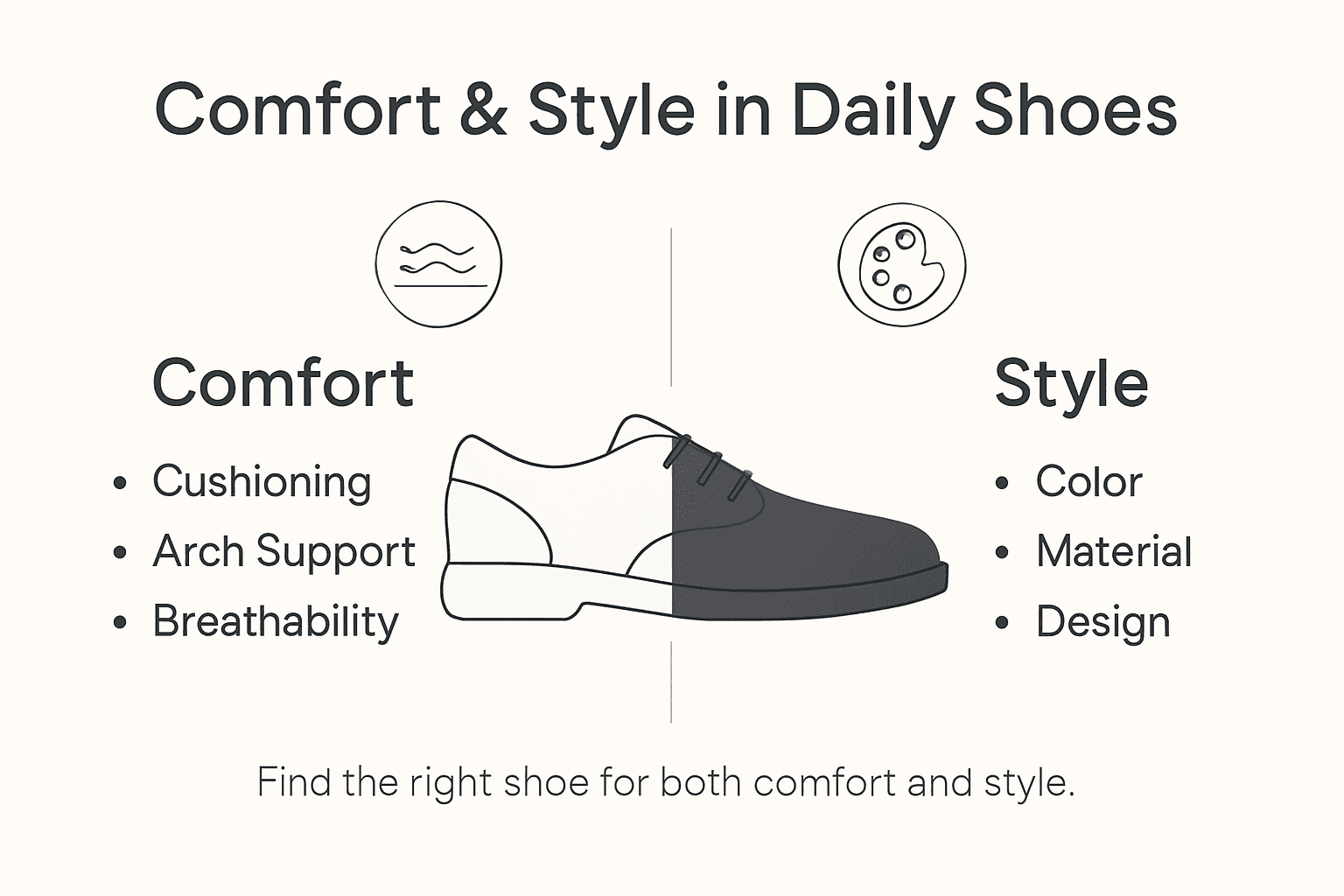
Leather, mesh, and synthetic materials each offer distinct advantages for daily wear. Leather provides exceptional durability and a classic aesthetic, forming to your foot over time and developing a personalised fit. Mesh materials excel in breathability, offering lightweight ventilation perfect for warmer conditions or active lifestyles. Synthetic uppers bring versatility with water resistant properties and often lighter weight compared to traditional materials.
When comparing styles, consider your primary activities and environmental conditions. Trainers with flexible mesh uppers work brilliantly for dynamic movement, while leather brogues might suit more formal professional environments. Some hybrid designs combine multiple material technologies to deliver comprehensive performance across different settings. Pay attention to details like stitching quality, material weight, and how each fabric responds to movement and pressure.
Here’s a comparison of typical shoe material options for everyday use:
| Material Type | Durability | Breathability | Best For |
|---|---|---|---|
| Leather | Long-lasting, resists wear | Moderate ventilation | Formal and professional wear |
| Mesh | Flexible, light abrasion | Excellent airflow | Active, warm conditions |
| Synthetic | Water resistant, lightweight | Varies by design | Versatile, outdoor settings |
| Hybrid | Combines benefits of materials | Adjustable performance | Multiple environments |
Pro Tip: Always test materials by flexing the shoe and checking how naturally it moves with your foot to ensure genuine comfort and adaptability.
Step 5: Test fit and comfort before purchase
Clinical assessments of footwear fit reveal that testing shoe comfort requires more than a casual walk around the shop. Understanding how to systematically evaluate shoe fit can prevent potential discomfort and long-term foot health issues.
Begin by trying shoes later in the day when your feet are naturally more swollen. Check for critical comfort indicators: adequate toe wiggle space, secure heel grip without slipping, and no pressure points across the top of your foot. Perform movement simulations in the shoes such as walking, slight jogging, and changing directions to assess real world performance. Pay special attention to how the shoe responds to different movements and whether it provides consistent support across various angles.
Beyond physical movement tests, comprehensive footwear assessment techniques recommend examining shoe flexibility, checking inner seam smoothness, and verifying that the shoe complements your natural foot shape. Bring the socks you typically wear to ensure an authentic fitting experience. Remember that shoes should feel comfortable immediately without requiring extensive breaking in periods.
Pro Tip: Perform a ‘walking test’ on different floor surfaces inside the store to simulate real walking conditions and assess the shoe’s genuine comfort level.
Step 6: Review foot health and satisfaction
Research exploring shoe fit impacts demonstrates that ongoing foot health assessment is crucial for maintaining overall physical wellbeing. Regularly evaluating your footwear’s performance goes beyond simple comfort it involves understanding how shoes influence your movement patterns and long term physical condition.
Conduct a comprehensive review every three to four months. Pay attention to physical indicators such as reduced muscle fatigue, absence of pressure points, and improved walking comfort. Note any changes in your gait or potential discomfort during daily activities. Comprehensive studies on footwear comfort highlight that psychological satisfaction is equally important shoes that make you feel confident can positively impact your overall physical performance and emotional state.
Document your findings systematically. Track metrics like walking distance, energy levels, and any emerging foot related concerns. Consider photographing the wear patterns on your shoe soles to understand your unique movement dynamics. This proactive approach allows you to make informed decisions about future footwear choices and address potential foot health issues before they become significant problems.
Pro Tip: Create a simple digital or physical journal to track your shoe performance and foot comfort over time, enabling more precise long term health insights.
Discover the Perfect Shoes That Combine Comfort and Style for Everyday Wear
Selecting shoes that truly support your daily activities and unique foot structure is essential to maintaining long-term foot health and comfort. This article highlights the importance of understanding your foot shape, daily movement needs, and the latest footwear technologies to avoid discomfort and fatigue. Are you ready to experience footwear designed with advanced support and cushioning that adapts perfectly to your lifestyle?

Explore our carefully curated collection at Shoes – YDA UK where each pair embodies comfort, style and the innovative YDA Technology. Step confidently every day by choosing shoes crafted to meet your personal support and activity demands. Visit YDA UK now to find your next favourite pair and enjoy immediate benefits for your foot health and daily performance. Embrace comfort without compromise and transform how you move today.
Frequently Asked Questions
How do I assess my daily activity needs for shoe selection?
Understanding your daily activity patterns is essential. Track your step count and movement intensity for a week to identify your typical activities. Adjust your shoe selection according to whether you’re mostly sedentary, standing a lot, or engaged in varied fitness activities.
What foot shape considerations should I keep in mind when choosing shoes?
Evaluating your foot shape is crucial for comfort and support. Identify your arch type—flat, neutral, or high—using the wet test. This will help you choose shoes that provide the right level of cushioning and stability specific to your foot structure.
Which footwear technologies can enhance daily comfort?
Look for specific shoe features like shock absorption, flexibility, and breathable materials that match your lifestyle needs. Prioritise technologies such as memory foam midsoles and moisture-wicking fabrics to improve comfort, especially if you spend a lot of time on your feet.
How can I determine the best materials for my shoes?
Consider the unique properties of materials like leather, mesh, and synthetics. Choose leather for durability, mesh for breathability, or synthetic materials for versatility. Evaluate how each material responds to movement and pressure to ensure long-lasting comfort.
What should I do to properly test the fit of new shoes?
Testing the fit requires more than a casual walk. Try on shoes later in the day when your feet are more swollen, and check for toe wiggle space and secure heel fit. Walk, jog, and change directions to ensure the shoes provide consistent support during various movements.
How often should I review my foot health and shoe satisfaction?
Perform a comprehensive review of your footwear every three to four months. Document indicators such as comfort levels and any emerging foot-related issues. Keeping track will help you make informed footwear choices that support your long-term foot health.
Recommended
- 7 Key Advantages of Stylish Comfort Shoes for Every Day – YDA UK
- Role of Footwear in Daily Comfort: Complete Guide – YDA UK
- How to Check Shoe Comfort for All-Day Wear Easily – YDA UK
- 7 Examples of Stylish Footwear for Foot Health and Comfort – YDA UK
- Essential Gear for City Walking Tours - Walking tours of oxford