
How to Check Shoe Comfort for All-Day Wear Easily
Over 60 percent of British adults report discomfort from wearing poorly fitted shoes, a problem that affects everything from daily movement to long-term health. The right footwear can make the difference between constant aches and truly comfortable days. This guide breaks down simple steps for choosing shoes that match the unique needs of British feet, revealing how small adjustments can lead to lasting comfort and support.
Table of Contents
- Step 1: Prepare By Selecting Relevant Footwear
- Step 2: Inspect Shoe Structure And Materials
- Step 3: Assess Fit And Immediate Feel
- Step 4: Test Walking Comfort On Various Surfaces
- Step 5: Evaluate Long-Term Support And Relief
Quick Summary
| Important Insight | Explanation |
|---|---|
| 1. Choose the Right Footwear | Select shoes that suit your foot shape and size for optimal comfort and health. |
| 2. Evaluate Shoe Structure | Inspect materials, flexibility, and support features to ensure long-term wearability. |
| 3. Assess Immediate Fit | Ensure shoes feel snug yet comfortable without pinching; try them on with your usual socks. |
| 4. Test Across Different Surfaces | Walk on various surfaces to evaluate comfort, grip, and stability in real-life conditions. |
| 5. Monitor Long-Term Comfort | Keep track of any pressure points or discomfort over time to assess overall support. |
Step 1: Prepare by Selecting Relevant Footwear
Selecting the right footwear is your foundational strategy for achieving all-day comfort and preventing potential foot problems. Understanding your unique foot characteristics will help you make an informed choice that supports your specific needs.
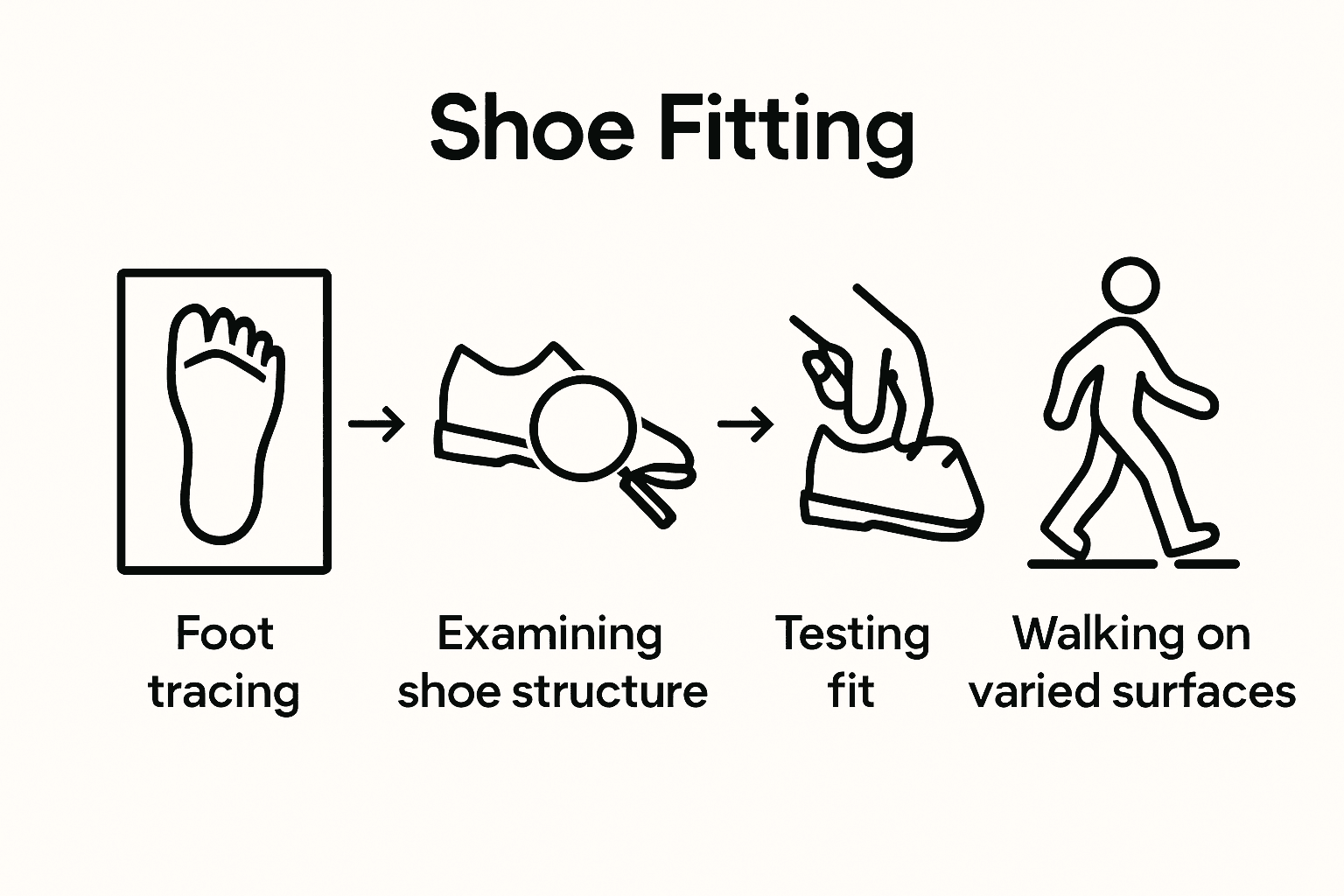
Begin by examining your foot shape and size carefully. Tracing your foot on paper can provide valuable insights into its precise dimensions and contours. This simple technique allows you to compare your foot outline with potential shoe designs, ensuring a more accurate fit. When shopping, look for shoes with smooth interiors and cushioned insoles that offer flexibility. Opt for footwear with adjustable fittings like laces or straps that can accommodate your foot’s unique shape and provide personalised comfort.
Additional factors to consider include the intended use of the shoe, your typical walking or standing duration, and any specific foot conditions you might have. Professional shoe fitting can offer precise measurements of both length and width, helping you select footwear that supports your feet effectively.
Pro Tip: Always try shoes on later in the day when your feet are slightly larger due to natural swelling, ensuring you select a pair that will remain comfortable during extended wear.
Step 2: Inspect Shoe Structure and Materials
Understanding the structural composition and materials of your shoes is crucial for ensuring all-day comfort and durability. This step will help you evaluate the key elements that contribute to a shoe’s overall performance and wearability.
High-quality materials like leather play a fundamental role in shoe comfort and longevity. When examining a shoe, look carefully at the construction details. Check the flexibility of the sole, the padding in the insole, and the overall stitching quality. Pay special attention to the heel structure be it a low block heel or a more standard design these elements significantly impact your walking comfort and stability.
Consider the shoe’s internal architecture as well. Examine the arch support, cushioning, and breathability of the materials. A well-constructed shoe should provide sufficient support for your foot’s natural contours while allowing adequate air circulation. Look for reinforced areas around high-stress points like the heel and toe box, which indicate better durability and long-term wear resistance.

Additionally, inspect the shoe from multiple angles. Run your hands inside to feel for any potential rough seams or uneven surfaces that might cause discomfort during extended wear. Check the material’s thickness and flexibility and how it responds to gentle bending and stretching.
Here is a summary of shoe structure elements and their impact on comfort:
| Shoe Component | Comfort Contribution | Durability Impact |
|---|---|---|
| Insole Padding | Absorbs shock, reduces fatigue | Prolongs insole longevity |
| Arch Support | Improves stability, prevents strain | Prevents deformation |
| Stitching | Reduces irritation, prevents chafing | Enhances overall strength |
| Sole Flexibility | Allows natural movement | Reduces risk of cracking |
| Heel Reinforcement | Adds stability and support | Prevents early wear |
Pro Tip: When possible, walk around the store in the shoes to assess their real-world comfort and how they respond to your specific walking style.
Step 3: Assess Fit and Immediate Feel
Evaluating the immediate fit and comfort of shoes is a critical step in determining their suitability for all-day wear. Your goal is to identify footwear that feels natural and supportive from the moment you put them on.
The ideal shoe should feel snug but not tight, providing enough room to wiggle your toes comfortably. Use the ‘pinch test’ by gently pressing the top of the shoe near your toes to ensure adequate space. When trying on shoes, pay close attention to how they feel across different areas of your foot. The toe box design is particularly crucial as it needs to accommodate the natural width of your foot without causing undue pressure, preventing potential issues like bunions or discomfort during extended wear.
Move around actively while trying the shoes to simulate real-world walking conditions. Walk on different surfaces if possible and observe how the shoe responds to your movement. Check for any areas of immediate friction or pressure points that might develop into blisters or discomfort during prolonged use. The shoe should feel supportive yet flexible, allowing natural foot movement without constraining your stride.
Remember that your feet can slightly change size throughout the day, so trying shoes later in the afternoon can provide a more accurate assessment of their true fit and comfort level.
Pro Tip: Wear the type of socks you intend to use with these shoes when trying them on to ensure the most accurate fit and comfort assessment.
Step 4: Test Walking Comfort on Various Surfaces
Testing shoe comfort across different surfaces is essential for understanding how your footwear performs in real-world conditions. This step will help you assess the shoe’s versatility and support during extended wear.
Walking shoes should be evaluated for their durability and performance on multiple surface types, ensuring they can handle diverse environments comfortably. When testing shoes, focus on key factors like cushioning, arch support, and outsole grip to determine their suitability for prolonged standing or walking. Begin by walking on different surfaces such as hardwood floors, carpets, tiles, and concrete to observe how the shoes respond to varying textures and firmness levels.
Pay close attention to how the shoes feel during different walking patterns. Simulate your typical daily movements climbing stairs, walking on uneven surfaces, and changing directions. Notice any areas of discomfort, potential pressure points, or lack of support. The ideal shoe should provide consistent comfort and stability across different walking scenarios, with minimal friction or unexpected movement.
Take your time during this assessment. Walk for at least 10 to 15 minutes in the shoes, if possible, to get a comprehensive sense of their long-term comfort and performance. Move naturally and pay attention to how your feet feel throughout different movements and surfaces.
For reference, here’s how testing shoes on various surfaces can reveal performance differences:
| Surface Type | Common Issues Detected | Insights Gained |
|---|---|---|
| Hardwood | Slippery grip, hard impacts | Shoes’ shock absorption, slip resistance |
| Carpet | Reduced stability | Sole flexibility, surface adaptation |
| Tiles | Potential slipping | Outsole material effectiveness |
| Concrete | Fatigue, impact stress | Long-term cushioning, arch support |
Pro Tip: Bring a pair of socks similar to those you typically wear to ensure the most accurate comfort assessment during your walking test.
Step 5: Evaluate Long-Term Support and Relief
Assessing the long-term comfort and support of your footwear requires a strategic approach that goes beyond initial impressions. This step will help you understand how shoes will perform during extended wear and support your feet’s unique needs.
Advanced research into foot morphology demonstrates the critical importance of understanding individual foot shape for optimal footwear comfort. Consider how the shoes interact with your specific foot structure, paying attention to areas of potential strain or pressure. Innovative sensor technologies are now exploring ways to monitor foot support and gait dynamics in real time, highlighting the growing understanding that shoe comfort is a complex biomechanical interaction.
To evaluate long-term support, simulate your most demanding daily activities. Walk on different surfaces, climb stairs, and perform movements that mimic your typical routine. Focus on how the shoes respond to sustained pressure and movement. Check for consistent cushioning, arch support, and the shoe’s ability to adapt to your natural foot movements without causing fatigue or discomfort.
Pay special attention to how your feet feel after extended periods of wear. Notice any developing pressure points, areas of increased warmth, or subtle shifts in comfort. A truly supportive shoe should maintain its initial comfort level throughout prolonged use, providing consistent relief and stability.
Pro Tip: Keep a comfort journal for the first week of wearing new shoes, noting any changes in support, pressure points, or overall foot comfort to track their long-term performance.
Discover All-Day Comfort with YDA’s Expertly Crafted Shoes
Finding the perfect shoe that delivers lasting comfort and excellent support can be challenging, especially when you want footwear that keeps you going through any surface and movement. This article highlighted the importance of correctly assessing shoe fit, cushioning, and structural support to prevent foot fatigue and discomfort. At YDA UK, we understand your goals to wear stylish, technologically advanced shoes that provide consistent relief and energy efficiency for everyday life.

Take the next step to experience footwear designed with your foot health in mind. Browse our wide selection of shoes featuring innovative YDA Technology that prioritises arch support, shock absorption, and breathable materials. Whether you want versatile shoes for walking on varied surfaces or everyday office wear from our womens collection, our range ensures a true custom fit and long-term comfort. Visit YDA UK today to find your ideal pair and transform your all-day shoe experience with confidence.
Frequently Asked Questions
How can I determine if a shoe is comfortable for all-day wear?
To determine if a shoe is comfortable for all-day wear, try them on and assess the fit. Ensure that they feel snug but not tight, allowing ample room to wiggle your toes, and check for any pressure points by performing a “pinch test”.
What factors should I consider when checking shoe comfort?
Consider the shoe’s structure, materials, and features such as arch support and cushioning. Also, reflect on your foot shape and size, and ensure that the shoe accommodates these characteristics while providing adequate support.
How do I test shoes on different surfaces for comfort?
To test shoes on different surfaces, walk on various flooring types like carpet, hardwood, and concrete. Observe how the shoes respond to changes in terrain over a minimum of 10–15 minutes to get a feel for their long-term comfort and support.
When is the best time to try on shoes for comfort assessment?
The best time to try on shoes is later in the day when your feet may be slightly larger due to natural swelling. This will help ensure that the shoes fit comfortably during extended periods of wear, reducing the likelihood of discomfort.
How can I evaluate long-term support from my shoes?
Evaluate long-term support by simulating your daily activities in the shoes, such as walking and climbing stairs. Pay attention to how the shoes feel after prolonged wear and keep a comfort journal for at least one week to track any changes in comfort or support.
What should I look for in shoe materials to ensure comfort?
Look for high-quality materials like leather that enhance comfort and durability. Ensure that the shoe has adequate cushioning, breathability, and flexibility to support your feet’s natural movements and contours.