
Types of orthopedic shoes for foot health and comfort
Finding the right orthopedic shoes can feel overwhelming when you need footwear that truly supports your feet without sacrificing style. Many people with diabetes, mobility challenges, or foot deformities struggle to identify which shoe type will best address their specific conditions whilst remaining comfortable for daily wear. Understanding the distinct categories of orthopedic footwear and their targeted benefits empowers you to make informed decisions that protect your foot health. This guide breaks down the main types of orthopedic shoes available, explaining how each design addresses different needs so you can confidently select footwear that combines therapeutic support with the aesthetics you desire.
Table of Contents
- Key takeaways
- Criteria for selecting orthopedic shoes
- Extra-depth orthopedic shoes
- Rocker-bottom shoes
- Custom-made and healing orthopedic shoes
- Functional orthotic-integrated shoes
- Discover YDA’s orthopedic footwear range
- Frequently asked questions
Key Takeaways
| Point | Details |
|---|---|
| Extra depth shoes | Extra depth shoes provide additional vertical space and wide toe boxes to accommodate orthotic inserts and deformities without compressing the foot against the upper. |
| Pressure relief | Pressure relief features reduce friction and distribute load to protect vulnerable areas and lower ulcer risk. |
| Motion control | Motion control elements such as firm heel counters and structured arch support help improve gait stability and alignment. |
| Style and durability | Style and durability matter, with contemporary designs and quality materials ensuring comfortable daily wear and long lasting performance. |
| Fitting tip | Always try orthopaedic shoes later in the day when feet are slightly swollen to ensure a proper fit for everyday activities. |
Criteria for selecting orthopedic shoes
Choosing orthopedic footwear requires evaluating several critical factors that directly impact your foot health and daily comfort. The right shoes must accommodate your specific condition whilst providing the support necessary to prevent complications.
Comfort and fit stand as the foundation of any orthopedic shoe selection. Your footwear must provide adequate space for deformities like bunions or hammertoes, and accommodate orthotic devices without creating pressure points. Shoes that pinch or restrict natural foot shape will cause discomfort and potentially worsen existing conditions. Look for adjustable closures and flexible uppers that adapt to swelling throughout the day.
Pressure relief mechanisms protect vulnerable areas of your feet from developing ulcers or sores. Extra-depth and seamless interiors reduce ulcer risk in diabetic feet by eliminating friction points and distributing weight evenly. Cushioned insoles and padded collars further minimise stress on sensitive regions.
Motion control features provide stability for those with gait abnormalities or balance concerns. Firm heel counters, supportive midsoles, and structured arch support correct improper foot mechanics that contribute to pain and injury. These elements work together to guide your foot through a healthier walking pattern.
Style considerations matter more than many realise because shoes you find unattractive will likely remain unworn. Modern orthopedic footwear increasingly blends therapeutic benefits with contemporary designs, allowing you to maintain your personal aesthetic whilst prioritising foot health. Exploring why choose orthopaedic shoes reveals how far the industry has progressed in combining function with fashion.
Durability and material quality determine how long your investment will serve you. Premium leathers, breathable meshes, and reinforced stitching ensure your shoes withstand daily wear whilst maintaining their supportive properties. High-quality materials also tend to mould better to your feet over time, enhancing comfort.
Pro Tip: Always try orthopedic shoes later in the day when your feet are slightly swollen to ensure proper fit throughout all daily activities.
Extra-depth orthopedic shoes
Extra-depth shoes represent one of the most prescribed orthopedic footwear categories, particularly valued by individuals managing diabetes and those requiring custom orthotics. These specialised shoes provide 1/4-1/2 inch additional depth with wide toe boxes and seamless interiors, earning Medicare approval for diabetic patients.
The additional vertical space serves multiple therapeutic purposes. It accommodates custom orthotic inserts without compressing your foot against the upper material, allowing these devices to function as intended. For those with foot deformities such as hammertoes, bunions, or Charcot foot, the extra room prevents painful rubbing and pressure that standard shoes would create.
Wide toe boxes distinguish extra-depth shoes from conventional footwear by providing ample width for toes to spread naturally. This design element reduces lateral pressure and friction that commonly leads to corns, calluses, and ulcers in vulnerable feet. The spacious forefoot area also improves circulation, which proves especially important for diabetic individuals whose compromised blood flow already puts them at risk.
Seamless interior construction eliminates the internal stitching and overlays found in regular shoes. These seemingly minor details can create significant problems for people with neuropathy who may not feel developing hot spots until serious damage occurs. Smooth linings protect sensitive skin from abrasion and irritation.
Medicare recognises extra-depth shoes under the therapeutic classification code A5500, acknowledging their medical necessity for qualifying diabetic patients. This designation often enables partial or full coverage when prescribed by a healthcare provider, making these essential shoes more accessible.
Many reputable brands now manufacture extra-depth shoes that challenge the outdated perception of orthopedic footwear as unstylish. Contemporary designs incorporate leather uppers, athletic styling, and modern colour palettes whilst maintaining all therapeutic benefits. Reviewing a comprehensive diabetic footwear selection guide helps you identify options that match both your medical needs and personal taste.
Pro Tip: When purchasing extra-depth shoes, bring your custom orthotics to ensure they fit properly with adequate room remaining for your foot, as depth requirements vary based on orthotic thickness.
Rocker-bottom shoes
Rocker-bottom shoes employ a distinctive curved sole design that fundamentally alters walking mechanics to reduce pressure on vulnerable areas of your foot. This innovative approach proves particularly effective for preventing diabetic ulcers and accommodating mobility limitations.
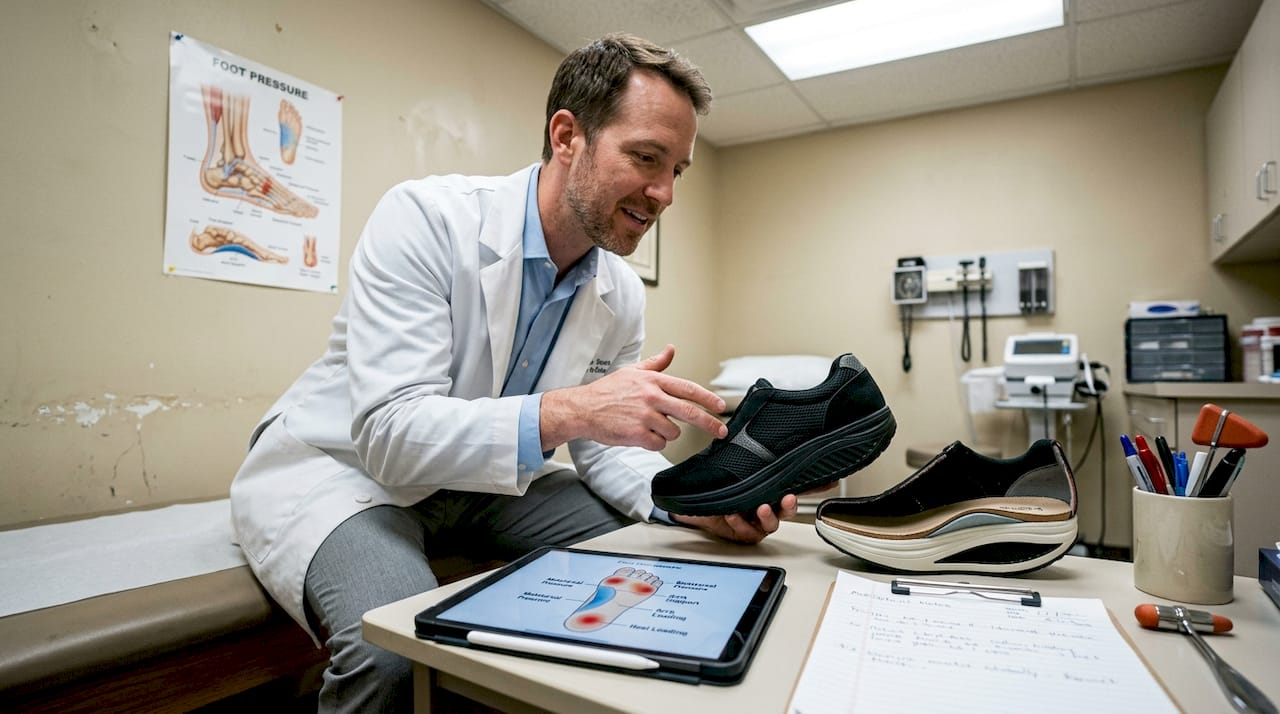
The rocker mechanism works by shifting your body weight through a rolling motion rather than the traditional heel-to-toe gait pattern. This redistribution significantly decreases the force concentrated on your forefoot during push-off, the phase of walking that typically generates the highest plantar pressures. For individuals with existing forefoot pain, metatarsalgia, or healed ulcers, this pressure reduction provides substantial relief.
Precise engineering determines rocker-bottom shoe effectiveness. Research demonstrates that optimal designs feature a 95° apex angle, with the apex positioned at 60% of shoe length and a 20° rocker angle, achieving forefoot pressure reductions up to 39%. Shoes lacking these specific parameters may provide minimal benefit or even create new pressure points.
Therapeutic applications extend beyond diabetes management. Rocker-bottom shoes benefit individuals recovering from forefoot surgery, those with arthritis affecting the toes or metatarsals, and people experiencing Achilles tendon issues. The altered gait pattern can also reduce knee and hip stress for some wearers.
Style variations accommodate different lifestyle needs:
- Athletic rocker shoes combine the therapeutic sole with sporty uppers and cushioning systems for active individuals
- Casual rocker footwear offers everyday styling suitable for work and social settings
- Sandal designs provide warm-weather options without sacrificing the rocker benefit
- Formal rocker shoes enable professional dress whilst maintaining pressure relief
Understanding rocker sole foot health principles helps you appreciate how this seemingly simple design modification delivers significant therapeutic impact.
The curved sole fundamentally changes how your foot interacts with the ground, creating a smoother transition that protects vulnerable areas whilst maintaining natural forward momentum.
| Feature | Standard shoe | Rocker-bottom shoe |
|---|---|---|
| Forefoot pressure | High during push-off | Reduced by up to 39% |
| Gait pattern | Heel-to-toe with distinct phases | Rolling motion with smooth transition |
| Best for | Healthy feet without pressure concerns | Diabetic feet, forefoot pain, ulcer prevention |
Custom-made and healing orthopedic shoes
When standard orthopedic footwear cannot adequately address your foot condition, custom-made and healing shoes provide advanced solutions for severe deformities and recovery situations. These specialised categories serve distinct but equally important therapeutic roles.
Custom-made shoes are individually crafted based on precise measurements, moulds, or casts of your feet. This personalised approach accommodates severe deformities that would be impossible to fit with even the most accommodating ready-made options. Conditions warranting custom footwear include advanced Charcot foot, significant limb length discrepancies, and complex multi-plane deformities.
The custom fabrication process typically involves your healthcare provider creating a detailed foot impression using plaster casts or digital scanning technology. Skilled craftspeople then build shoes specifically around your unique foot shape, ensuring perfect contouring and pressure distribution. Whilst expensive and time-consuming to produce, custom shoes often represent the only viable footwear option for individuals with extreme anatomical variations.
Healing shoes serve a different but equally critical function by protecting and supporting feet during recovery from ulcers or surgical procedures. These temporary-use shoes prioritise wound protection and pressure offloading over long-term durability. Heat-mouldable models can be shaped to accommodate dressings and avoid contact with healing tissue.
Custom sandal designs within the healing category allow healthcare providers to access wounds for treatment whilst keeping the foot supported and protected. Adjustable straps and removable sections enable modifications as healing progresses and swelling changes. Post-operative shoes often feature rigid soles that prevent forefoot bending, protecting surgical sites during the critical early recovery phase.
Both custom-made and healing shoes require professional fitting and ongoing monitoring. Your healthcare team will assess whether standard orthopedic options can meet your needs or if these advanced categories become necessary. Learning about defining orthotic shoes provides context for understanding when specialised solutions become appropriate.
Functional orthotic-integrated shoes
Functional orthotic-integrated shoes combine rigid structural support with accommodative features, creating versatile footwear suitable for active lifestyles whilst addressing specific biomechanical conditions. These shoes offer rigid control for motion correction and cushioning for diabetic insoles across various activity levels.
Motion control represents the primary therapeutic benefit of functional orthotic shoes. Firm medial posts, structured heel counters, and reinforced shanks work together to limit excessive pronation and guide your foot through a corrected gait cycle. This control proves essential for conditions like pes planovalgus, where the arch collapses inward during walking, creating stress throughout the lower kinetic chain.
The three-point pressure system employed in quality orthotic-integrated shoes stabilises the foot by applying corrective forces at the heel, arch, and forefoot simultaneously. This biomechanical approach prevents compensatory movements that lead to pain in the feet, knees, hips, and lower back. Athletes and active individuals particularly benefit from this stability during dynamic movements.
Accommodation for custom insoles distinguishes these shoes from purely corrective rigid orthotics. Removable sock liners and adequate depth allow you to insert prescribed orthotic devices whilst maintaining the shoe’s supportive structure. Enhanced cushioning systems protect sensitive feet, making these shoes suitable for diabetic individuals who require both control and pressure relief.
Style diversity within the functional category enables you to maintain foot health across all life activities:
- Dress orthotic shoes provide professional appearance with hidden support features
- Casual orthotic footwear blends therapeutic benefits with everyday styling
- Athletic orthotic shoes deliver performance features alongside motion control
- Walking-specific designs optimise the gait cycle for extended comfortable wear
Modern manufacturing techniques increasingly disguise the substantial support structures within more aesthetically pleasing designs. Exploring orthotic-friendly footwear benefits reveals how contemporary options balance therapeutic necessity with visual appeal.
| Orthotic type | Primary function | Activity suitability |
|---|---|---|
| Rigid control | Maximum motion correction | Low-impact daily wear |
| Semi-rigid | Moderate support with flexibility | Mixed activities |
| Cushioned orthotic | Pressure relief with mild control | Sensitive feet, diabetes |
Pro Tip: Break in functional orthotic shoes gradually, wearing them for just a few hours daily initially, as the corrective features may stress muscles unaccustomed to proper alignment.
Discover YDA’s orthopedic footwear range
Now that you understand the diverse types of orthopedic shoes and their specific benefits, finding footwear that truly supports your feet becomes straightforward. YDA offers a carefully curated range of orthopedic shoes for problem feet that combine therapeutic features with contemporary styling, ensuring you never compromise aesthetics for comfort.
Our innovative approach integrates advanced biomechanical principles into every design. The technology of YDA shoes focuses on pressure redistribution, energy return, and anatomical support that addresses the specific challenges faced by individuals with diabetes, mobility limitations, and foot deformities. Each pair undergoes rigorous testing to ensure it delivers measurable foot health benefits whilst remaining stylish enough for confident daily wear. Browse our collection to discover orthopedic footwear engineered specifically for your needs.
Frequently asked questions
What are orthopedic shoes and who should wear them?
Orthopedic shoes are specially designed footwear that supports foot health, corrects biomechanical issues, and accommodates deformities or medical conditions. They prove essential for people with diabetes, arthritis, bunions, hammertoes, plantar fasciitis, or mobility challenges. Anyone experiencing chronic foot pain or requiring custom orthotics benefits from orthopedic footwear’s therapeutic features.
How do rocker-bottom shoes relieve foot pressure?
Rocker-bottom shoes use a curved sole that creates a rolling motion during walking, shifting pressure away from vulnerable forefoot areas. This altered gait pattern reduces the force concentrated on metatarsal heads during push-off, decreasing plantar pressure by up to 39% when properly designed. The mechanism proves particularly effective for preventing diabetic ulcers and relieving forefoot pain.
Can orthopedic shoes be stylish as well as supportive?
Modern orthopedic footwear successfully combines therapeutic benefits with contemporary aesthetics, challenging outdated perceptions of medical shoes as unattractive. Leading manufacturers now offer orthopedic options in leather, athletic, casual, and formal styles that rival conventional footwear in appearance. Exploring stylish footwear for foot health demonstrates the wide range of attractive options available today.
How often should I replace my orthopedic shoes?
Orthopedic shoes typically require replacement every 6-12 months depending on usage frequency and activity level. Signs indicating replacement needs include compressed cushioning, worn outsoles, decreased support, and visible upper material deterioration. Diabetic individuals should inspect shoes monthly for interior defects that could cause injury.
Do I need a prescription for orthopedic shoes?
Most orthopedic shoes can be purchased without a prescription, though professional fitting ensures optimal benefit. Medicare coverage for diabetic shoes requires a prescription from your doctor and certification of medical necessity. Custom-made shoes always require healthcare provider involvement for proper casting and fabrication specifications.
Recommended
- 7 Examples of Foot Health Shoes for Everyday Comfort – YDA UK
- 7 Types of Health-Oriented Footwear and Their Key Benefits – YDA UK
- Defining Orthotic Shoes: Comfort Meets Innovation – YDA UK
- Why Choose Orthopaedic Shoes for Lasting Foot Health – YDA UK
- Orthopedic Aids - Medical Devices - Pharmacy | Mybestpharmacy.net | Online Pharmacy