
Top examples of orthopaedic shoes for foot health
TL;DR:
- Genuine orthopaedic shoes feature rocker soles deep heel cups wide toe boxes and seamless interiors.
- Proper fit is more important than brand reputation for effective foot support and relief.
- Condition-specific models like Orthofeet and Propét are ideal for diabetic and high-pressure foot conditions.
Finding the right orthopaedic shoe feels overwhelming when every brand promises miracles and every review contradicts the last. A poor choice does not just mean discomfort — it can worsen plantar fasciitis, increase diabetic ulcer risk, or leave you with chronic joint pain. Whether you are managing a long-term foot condition, standing on hard floors all day, or simply tired of shoes that fail you by lunchtime, this guide cuts through the noise. You will find real shoe examples, the features that actually matter, a side-by-side comparison, and condition-specific recommendations so you can make a confident, informed decision.
Table of Contents
- How to evaluate orthopaedic shoes: essential features
- Popular orthopaedic shoe models and brands
- How leading orthopaedic shoes compare
- Choosing the best orthopaedic shoes for your specific needs
- An overlooked truth about orthopaedic shoes: fit matters more than brand
- Comfort starts with the right orthopaedic shoes from YDA
- Frequently asked questions
Key Takeaways
| Point | Details |
|---|---|
| Key features matter | Choose orthopaedic shoes with proper support, wide fit, and adjustability for best results. |
| Top brands to consider | Trusted models like Hoka, Orthofeet, Dr. Comfort and Brooks offer proven benefits for various needs. |
| Fit is crucial | Ensuring the right fit and, when in doubt, consulting a podiatrist are more important than shoe brand. |
| Match shoe to need | Pair your foot condition or lifestyle with shoe features recommended for that purpose, especially for diabetes or chronic pain. |
How to evaluate orthopaedic shoes: essential features
Not every shoe labelled “orthopaedic” earns that title. The word gets used loosely in marketing, so knowing what separates a genuinely supportive shoe from a well-packaged ordinary one is your first line of defence.
The types of orthopaedic shoes available today range from clinical therapeutic footwear to everyday walkers with advanced support built in. Regardless of style, best orthopaedic shoes share a consistent set of mechanical features. Key mechanics include rocker soles, deep heel cups, firm counters, wide toe boxes, anatomical arch support, shock-absorbing EVA midsoles, seamless breathable interiors, and adjustable closures.
Here is what each feature actually does for your feet:
- Rocker sole: Rolls the foot forward naturally, reducing pressure on the ball of the foot and the toes. Particularly helpful for metatarsalgia and diabetic neuropathy.
- Deep heel cup: Cradles and stabilises the heel, which reduces strain on the plantar fascia and controls overpronation.
- Wide toe box: Prevents compression of the toes, which is critical for bunions, hammer toes, and swelling from conditions like oedema.
- Seamless interior: Eliminates friction points that can cause blisters or pressure sores, essential for diabetic feet with reduced sensation.
- Adjustable closures: Velcro straps or lace systems allow you to accommodate swelling that fluctuates throughout the day.
- EVA midsole: Ethylene-vinyl acetate foam absorbs shock with each step, protecting joints from repetitive impact.
When choosing shoes for daily wear, always check that the heel counter (the firm back section) does not flex easily when you squeeze it. A soft counter offers almost no real support.
Pro Tip: Try new orthopaedic shoes in the afternoon when your feet are at their largest due to natural daily swelling. This prevents buying a shoe that feels fine in the morning but becomes tight and painful by evening.
Popular orthopaedic shoe models and brands
With the right criteria in mind, here are real-world orthopaedic shoe examples and what makes them stand out.
Popular examples of orthopaedic shoes include the Hoka Clifton 9, Bondi 9, Brooks Adrenaline GTS, New Balance 608 V5, Skechers GO WALK Arch Fit, Birkenstock Arizona, Vionic sneakers, Orthofeet Verve and Coral, Propét Ultima series, Dr. Comfort Performance and Jay, and Kuru Atom 2. Each serves a slightly different need.
Here is a breakdown of the standout models and their primary strengths:
- Hoka Clifton 9 and Bondi 9: Maximalist cushioning with a meta-rocker sole. Excellent for high-impact walking and plantar fasciitis. The Bondi 9 is wider and softer, the Clifton 9 more responsive.
- Brooks Adrenaline GTS: A trusted arch support shoe with GuideRails technology that limits excess movement at the knee and ankle. Ideal for overpronators and those with flat feet.
- New Balance 608 V5: A versatile cross-trainer with a removable insole for custom orthotics. Budget-friendly and widely available in multiple widths.
- Orthofeet Verve and Coral: Clinically designed with extra depth, anatomical arch support, and a non-binding upper. Frequently recommended for diabetic and arthritic feet.
- Propét Ultima series: Medicare-approved diabetic footwear with a seamless interior and OrthoLite insole. Excellent for those requiring therapeutic-grade shoes.
- Dr. Comfort Performance and Jay: Designed specifically for diabetic patients, with a padded collar and wide fit options.
- Birkenstock Arizona: Contoured cork footbed that moulds to the foot over time. Great for everyday casual wear and mild arch support needs.
- Kuru Atom 2: Features KURUSOLE heel technology that dynamically hugs the heel with each step, reducing plantar fasciitis pain noticeably.
For examples of foot health shoes that balance clinical support with everyday style, models like the Vionic range and Skechers GO WALK Arch Fit are worth considering. You can also explore types of comfortable shoes that suit different foot shapes and activity levels.
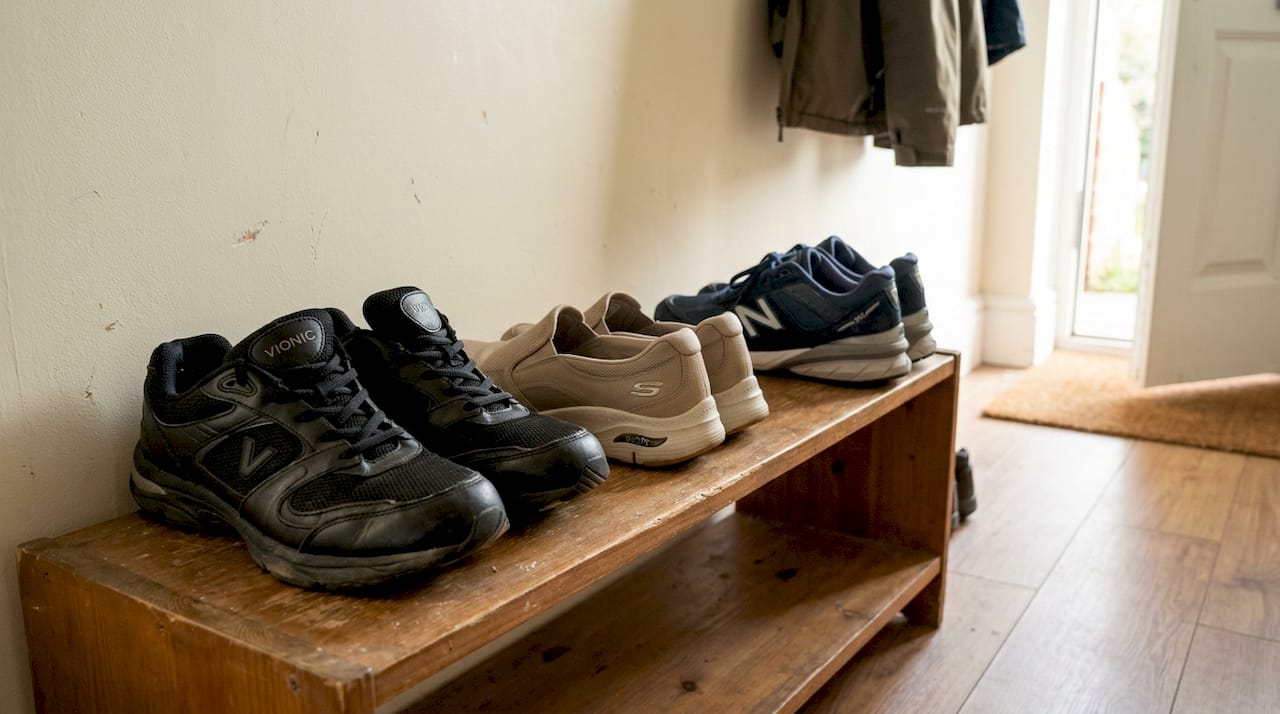
Pro Tip: If budget is a concern, the New Balance 608 V5 with an off-the-shelf OrthoLite insole offers surprisingly strong support at a fraction of the cost of clinical footwear.
How leading orthopaedic shoes compare
After reviewing individual examples, it helps to see how these shoes stack up directly against each other.
Therapeutic shoes reduce plantar pressure compared to athletic or generic shoes, and orthoses with heel plugs cut hindfoot pressure significantly. This matters when choosing between a clinical shoe and a high-performance trainer.
| Model | Support level | Width options | Adjustable closure | Price range | Best for |
|---|---|---|---|---|---|
| Hoka Bondi 9 | High | Standard, Wide | Lace | £140-£170 | Cushioning, plantar fasciitis |
| Brooks Adrenaline GTS | High | Standard to 2E | Lace | £120-£145 | Overpronation, flat feet |
| Orthofeet Verve | Clinical | Standard to 4E | Velcro/Lace | £100-£130 | Diabetes, arthritis |
| Propét Ultima | Therapeutic | Multiple | Velcro | £90-£120 | Diabetic, Medicare-eligible |
| New Balance 608 V5 | Moderate | Standard to 4E | Lace | £60-£85 | Budget, orthotics |
| Birkenstock Arizona | Moderate | Narrow to Wide | Buckle | £80-£110 | Casual, mild arch support |
“Therapeutic footwear consistently outperforms standard athletic shoes in reducing forefoot and hindfoot pressure, making it the preferred clinical choice for high-risk patients.” — Pressure relief study
For everyday use without a diagnosed condition, the Hoka and Brooks models perform comparably to clinical options. However, for high-risk diabetic feet or post-surgical recovery, Orthofeet and Propét remain the clinical preference. You can explore stylish orthopaedic footwear that does not sacrifice function for appearance.
Key takeaways from the comparison:
- Width options matter enormously. Narrow shoes in a clinical context can undo all other benefits.
- Velcro closures suit those with dexterity issues or fluctuating swelling better than laces.
- Price does not always predict performance. The New Balance 608 V5 punches well above its price point.
Choosing the best orthopaedic shoes for your specific needs
Now, let’s match these orthopaedic shoe options to your unique foot health and lifestyle requirements.
Different conditions demand different priorities. For diabetics, extra depth, seamless linings, and OrthoLite insoles are non-negotiable, as proper arch support can reduce ulcer risk by 92%. That is not a marginal improvement — it is potentially life-changing.
| Condition | Priority features | Recommended models |
|---|---|---|
| Diabetes | Extra depth, seamless lining, OrthoLite insole | Orthofeet Verve, Propét Ultima, Dr. Comfort Jay |
| Plantar fasciitis | Rocker sole, firm heel cup, arch support | Hoka Bondi 9, Kuru Atom 2, Brooks Adrenaline GTS |
| Flat feet | Motion control, wide base, firm counter | Brooks Adrenaline GTS, New Balance 608 V5 |
| Bunions | Wide toe box, soft upper, adjustable closure | Orthofeet Coral, Birkenstock Arizona |
| Standing all day | Shock-absorbing midsole, cushioned insole | Hoka Clifton 9, Skechers GO WALK Arch Fit |
Here is how to approach your selection by lifestyle:
- Diabetics: Prioritise Medicare-approved or clinically certified options. Consult your podiatrist before purchasing. Review diabetic footwear tips and shoe features for diabetes to understand what certifications to look for.
- Plantar fasciitis sufferers: Focus on heel cup depth and rocker geometry. Avoid flat, flexible soles entirely.
- Those standing all day: Prioritise energy-return midsoles and removable insoles so you can upgrade cushioning as needed.
- People with swelling or oedema: Velcro or wide-lace systems are essential. Rigid closures will cause pain as the day progresses.
Custom orthopaedic shoes offer the best fit but come at a significant cost. Prefabricated options from the brands above are clinically effective for most people and a practical starting point. Explore the broader benefits of foot health shoes before committing to a specific model. When trialling new shoes, wear them for short periods initially and gradually increase wear time over two weeks.
An overlooked truth about orthopaedic shoes: fit matters more than brand
Having seen model comparisons, it is worth stepping back to consider what truly makes an orthopaedic shoe effective.
Here is something the marketing rarely tells you: the brand name on the shoe matters far less than how precisely it fits your specific foot. We see this repeatedly. Someone spends £150 on a clinically recommended model, wears it for a month, and still has pain — because the width is slightly off, or the arch sits in the wrong place for their anatomy.
High confidence in pressure relief for plantar fasciitis and diabetes exists through orthopaedic shoes, but only when fit is precise and regularly assessed. “Regularly assessed” is the part people skip. Feet change with age, weight fluctuation, and health conditions. A shoe that fitted perfectly two years ago may no longer serve you well.
The most common mistake we observe is choosing a shoe based on reputation rather than personal trial. A shoe that works brilliantly for someone else may be entirely wrong for your foot shape. Always try before you buy when possible, and do not hesitate to consult a podiatrist if you are unsure. They can assess your gait, pressure points, and foot geometry in ways no online review can replicate. Fit is the feature no brand can sell you — it has to be found.
Comfort starts with the right orthopaedic shoes from YDA
If you are ready to find a comfortable fit or explore trusted orthopaedic shoes, here is where to start.
At YDA UK, we specialise in shoes for problem feet that combine advanced foot health technology with everyday wearability. Our range is built around the principle that support and style should never be a compromise.
Browse our orthopaedic shoes collection to find models designed with the features covered in this guide: rocker soles, deep heel cups, wide toe boxes, and seamless interiors. If you want to understand the science behind what makes our footwear different, the YDA shoe technology page explains our approach in detail. Your feet deserve footwear that is built for them.
Frequently asked questions
What makes a shoe ‘orthopaedic’?
Orthopaedic shoes are designed with rocker soles, deep heel cups, wide toe boxes, arch support, and seamless interiors to enhance comfort and relieve foot pressure. The term refers to a specific set of structural features rather than a regulated certification.
Can orthopaedic shoes help with plantar fasciitis?
Yes. Therapeutic shoes reduce plantar pressure compared to athletic or generic footwear, and orthoses with heel plugs specifically cut hindfoot pressure, making them effective for plantar fasciitis management.
Which orthopaedic shoes are best for diabetes?
Shoes with extra depth, seamless linings, and OrthoLite insoles such as Orthofeet Verve or Propét Ultima are ideal. Proper arch support reduces ulcer risk by up to 92%, making therapeutic footwear a clinical priority for diabetic patients.
Are orthopaedic shoes different from regular trainers?
Yes. Therapeutic shoes outperform standard athletic shoes in reducing forefoot and hindfoot pressure, and prefabricated orthopaedic options neutralise overpronation more effectively than most regular trainers.