
How to prevent foot injuries with high-performance footwear
TL;DR:
- Foot injuries are common but often preventable with proper footwear and strength routines.
- Matching shoes to foot type and activity reduces injury risk significantly.
- Ongoing assessment, gradual training, and targeted exercises are key to long-term foot health.
Missing a race because of plantar fasciitis, or watching your training fall apart after a sprained ankle, is genuinely demoralising. Foot injuries are the single most common reason active people lose weeks, sometimes months, of training time. Yet most of these setbacks are preventable. The right footwear, matched to your foot type and activity, combined with structured strengthening and smart training habits, dramatically cuts your injury risk. This guide walks you through every layer of prevention, from understanding your biomechanics and choosing the correct shoe technology, to building resilient feet that can handle whatever you throw at them.
Table of Contents
- Understand your foot type, activity, and footwear needs
- Master strength, flexibility, and movement routines
- Smart training: progression, surfaces, and recovery
- Extra support: orthotics and shoe technology updates
- Why prevention works best with personalisation and ongoing feedback
- Find the right footwear and support for your active lifestyle
- Frequently asked questions
Key Takeaways
| Point | Details |
|---|---|
| Match footwear to your feet | Select shoes based on your foot type, activity level, and replace them before they wear out. |
| Train for strength and flexibility | Build resilient feet and ankles through targeted exercise routines and stretching. |
| Progress slowly for injury prevention | Increase training load by no more than 10 percent each week to allow safe adaptation. |
| Use technology and orthotics wisely | Consider supportive innovations or custom orthotics if you have specific biomechanical needs. |
| Prevention is ongoing | Regularly reassess your choices and adjust as your activity, age, and footwear technology evolve. |
Understand your foot type, activity, and footwear needs
Every prevention strategy starts with knowing your own feet. Foot shape directly alters your injury risk profile, and ignoring it is one of the most common mistakes active people make. If you have a high arch, your foot is typically more rigid and absorbs shock poorly, leaving you vulnerable to stress fractures and lateral ankle sprains. Flat feet, on the other hand, tend to overpronate, placing excess strain on the plantar fascia, Achilles tendon, and knees. A neutral arch sits in the middle and tolerates a wider range of shoe types, though it is by no means injury-proof.
Matching footwear to your activity matters just as much as your arch type. A trail runner needs a grippy, protective outsole. A court sports player needs lateral stability. A daily walker prioritises long-term cushioning and breathability. Gait analysis, available at most specialist running shops, takes the guesswork out of shoe selection and can reveal subtle overpronation or supination you might not notice yourself. Understanding the role of footwear in injury prevention can save you from costly trial and error.
Key footwear features to look for:
- Stack height: The distance between your foot and the ground; higher stacks offer more cushioning but can affect stability.
- Carbon plates: Stiffen the midsole and propel the foot forward, reducing energy loss.
- Heel-to-toe drop: Lower drops encourage midfoot striking; higher drops reduce Achilles strain.
- Pronation control: Motion-control or stability shoes guide the foot through a safer strike pattern.
- Upper fit: A snug but not tight fit prevents blistering and lateral slippage.
Technologically advanced running shoes (TARS) deserve particular attention. Research shows that TARS with carbon plates reduce peak ankle joint reaction force by 1.84 BW and soleus force by 1.10 BW, shifting the strike pattern towards the forefoot and lowering certain injury risks. That is a meaningful biomechanical advantage, especially for runners logging serious weekly mileage. Knowing which key shoe features to prioritise helps you invest wisely rather than simply chasing brand names.
Shoe lifespan is another critical, often overlooked variable. Cushioning materials compress and lose their shock-absorbing properties well before the outsole visibly wears out. Replacing shoes every 300-500 miles maintains the structural support that prevents stress fractures, plantar fasciitis, and Achilles tendonitis.
| Foot type | Common risk | Recommended shoe feature |
|---|---|---|
| High arch | Stress fractures, lateral sprains | Extra cushioning, neutral or curved last |
| Flat foot | Plantar fasciitis, overpronation | Motion control, arch support |
| Neutral arch | General overuse injuries | Stability or neutral shoe |
Pro Tip: Keep a simple mileage log for each pair of shoes, even a basic note on your phone. You will be surprised how quickly 300 miles arrives, especially during peak training blocks.
Master strength, flexibility, and movement routines
The best shoe in the world cannot fully compensate for weak intrinsic foot muscles or stiff ankles. Footwear supports your feet; strength and flexibility protect them. These two strategies work together, and neglecting either one leaves a gap in your prevention plan.
Dynamic warm-ups prepare the muscles and joints for load by increasing blood flow and range of motion. Warm up with dynamic stretches like leg swings and high knees before activity, then cool down with static stretches targeting the calves, Achilles, and plantar fascia to reduce injury risk and improve long-term flexibility. Skipping this step is like revving a cold engine at full throttle.
“The feet are the foundation of the entire kinetic chain. Weakness there sends stress rippling upward through the ankles, knees, and hips.” This is why improving foot support through targeted exercise pays dividends far beyond the foot itself.
Top 5 strength exercises for feet and ankles:
- Toe raises: Stand flat, lift all toes off the floor, hold for two seconds, lower slowly. Three sets of 15 reps builds intrinsic foot strength rapidly.
- Ankle circles: Seated or standing, rotate each ankle through its full range of motion, 10 circles in each direction. Do this daily.
- Single-leg balance: Stand on one foot for 30 seconds, eyes open, then progress to eyes closed. This directly reduces ankle sprain risk.
- Calf raises: On a step for full range, rise onto the balls of your feet, lower slowly below the step level. Three sets of 20 reps strengthens the entire posterior chain.
- Towel scrunches: Sit barefoot, place a small towel on the floor, and scrunch it towards you using only your toes. Fifteen reps per foot activates neglected intrinsic muscles.
Strengthening intrinsic foot muscles through exercises like these, alongside ankle circles and balance training, builds the stability needed to prevent sprains and strains during high-impact activities.
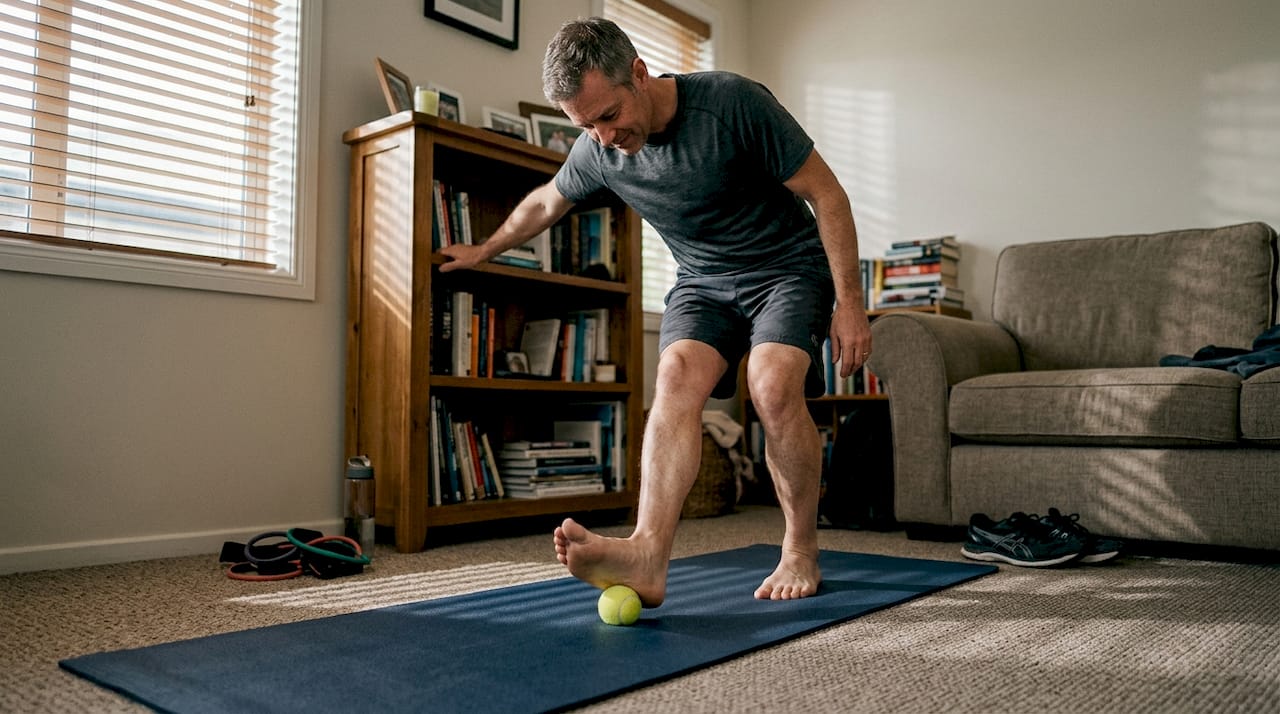
Pro Tip: Balance training is the most consistently underused injury shield in any active person’s toolkit. Even five minutes of single-leg balance work, three times per week, produces measurable improvements in ankle proprioception within four weeks.
Smart training: progression, surfaces, and recovery
How you build your training load is every bit as important as what you wear on your feet. Overuse injuries do not happen suddenly; they accumulate quietly over weeks of doing too much, too fast. The body needs time to adapt to new stresses, and rushing that process is a reliable route to the physio’s chair.
The 10% rule is the clearest, most evidence-backed guideline in this space. Increase weekly mileage or intensity by no more than 10% to allow tissue adaptation and prevent overuse injuries like stress fractures and tendinopathy. This feels frustratingly slow when you are motivated and feeling strong, but the tissues most prone to injury, tendons and bone cortex, adapt more slowly than cardiovascular fitness. Your lungs will always be ready before your feet are.
Surface variety is an underrated training tool. Running exclusively on hard tarmac concentrates repetitive stress through the same biomechanical pathways. Mixing in grass, trails, and softer tracks distributes load across different muscle groups and strengthens the ankle stabilisers in ways that flat surfaces simply cannot. Using varied footwear selection for comfort on different surfaces further reduces cumulative strain.
| Strategy | Benefit | Common mistake |
|---|---|---|
| Gradual progression | Prevents stress fractures, tendinopathy | Increasing mileage more than 10% per week |
| Surface variety | Distributes load, builds stabilisers | Training only on hard tarmac |
| Active recovery | Reduces inflammation, speeds repair | Skipping rest days entirely |
| Foam rolling | Improves tissue quality, reduces tightness | Rolling too aggressively on acute injuries |
Recovery habits that make a measurable difference:
- Ice affected areas within 20 minutes of noticing discomfort to limit inflammation.
- Use a foam roller on calves, peroneals, and the plantar fascia after hard sessions.
- Schedule at least one full rest day per week, and consider an easy active recovery day as well.
- Sleep is the most powerful recovery tool available. Seven to nine hours per night directly supports tissue repair.
Progressive training and recovery strategies including foam rolling, icing, and surface variety prevent the overload that leads to chronic conditions. Choosing features for plantar fasciitis in your recovery footwear also reduces strain between sessions.
Extra support: orthotics and shoe technology updates
For some people, footwear and exercise alone are not enough. Biomechanical issues like significant flat feet, high arches, or leg length discrepancies create movement patterns that even the best off-the-shelf shoe cannot fully address. This is where custom orthotics become genuinely valuable.
Custom orthotics for biomechanical issues like flat feet or high arches correct alignment and provide targeted support, working best alongside a structured strengthening programme rather than as a standalone fix. They are not a permanent crutch; many people use them during rehabilitation and then gradually reduce dependency as muscle strength improves. The role of stability in footwear matters here too, since orthotics function best inside shoes that already offer a stable platform.
High-tech shoe innovations are evolving rapidly, and the research is nuanced. Carbon plate shoes offer genuine biomechanical advantages for certain runners, as noted earlier. However, the story with maximum cushioning is more complicated. High stack height shoes above 40-50mm may increase ankle eversion, vertical oscillation, and ground contact time, actually reducing stability and raising injury risk for some foot types despite their comfort appeal. More cushioning is not automatically safer.
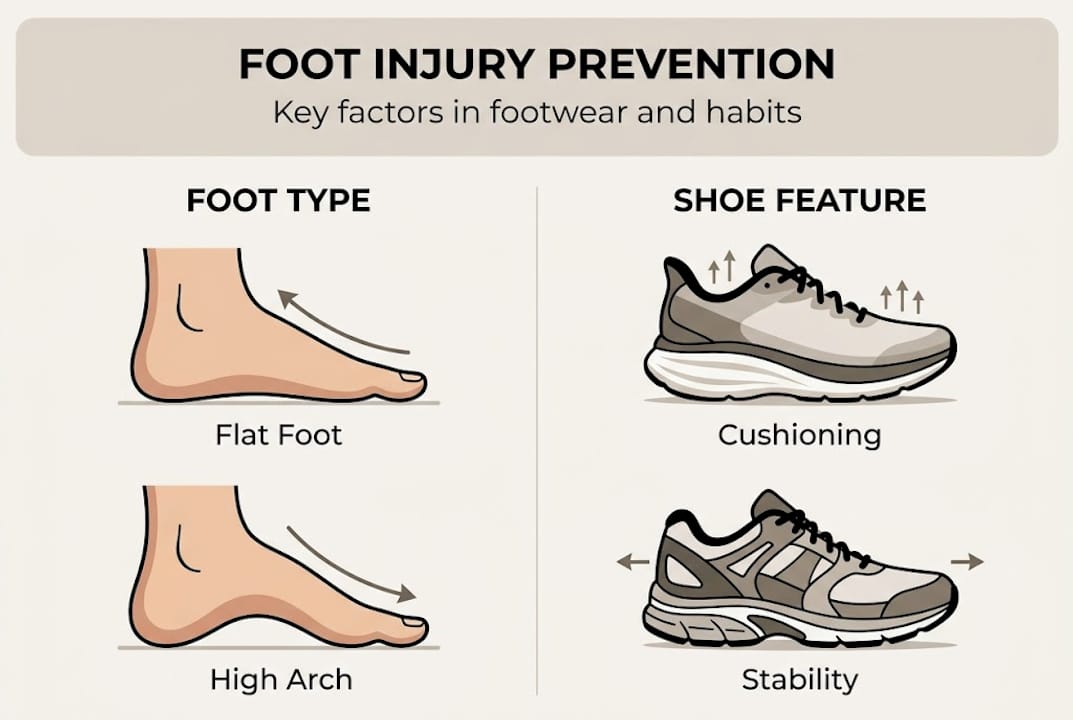
Professional perspectives vary, which is worth knowing before you make decisions based purely on a shop assistant’s recommendation. Cushioning is valued highly by 94-99% of both retailers and clinicians, but views on pronation control differ significantly, with retailers recommending it 82% of the time compared to only 55% among podiatrists. This gap tells you that professional podiatric advice is worth seeking before investing in motion-control shoes. Exploring footwear innovations for 2025 and beyond can help you navigate what the market offers with a more critical eye.
When to consider professional assessment or orthotics:
- You have recurring injuries despite changing shoes and adjusting training.
- A clinician has identified a structural foot issue such as flat feet or high arches.
- You experience persistent foot fatigue after moderate activity; solutions for foot fatigue can also guide your next steps.
- Your running gait analysis shows significant overpronation or supination.
Pro Tip: Not every shoe innovation suits every foot. Before spending on carbon-plated or maximum-stack shoes, get a professional fit assessment and, ideally, a short trial period. What works brilliantly for one runner can aggravate another.
Why prevention works best with personalisation and ongoing feedback
Most people treat injury prevention as a one-time event. They buy a decent pair of shoes, learn a few stretches, and consider the job done. Real-world results tell a different story. The active people who stay consistently injury-free are those who treat prevention as an ongoing, evolving process, not a fixed formula.
Your feet change. Your training volume changes. Your age, weight, and activity type all shift over time, and a prevention plan built around your needs at 30 may not serve you well at 40. Regular gait reassessments, annual reviews of your footwear stack, and periodic updates to your strength routine are what keep the strategy effective. The impact of footwear on injury prevention is not static; as shoe technology advances and your biomechanics evolve, your choices should too.
Feedback loops matter enormously. Pain is data. A new ache after switching surfaces or adding mileage is your body signalling that something needs adjustment. Ignore it, and a minor irritation becomes a three-month setback. Act on it promptly, and you redirect the situation in days. Staying injury-free is a process driven by attention, curiosity, and willingness to adapt.
Find the right footwear and support for your active lifestyle
You now have a clear, evidence-backed framework for keeping your feet healthy through smart footwear choices, targeted strength work, and intelligent training habits. Putting that framework into practice starts with having the right shoes beneath you.
At YDAUK, we design high-performance footwear built around foot health, combining advanced cushioning, stability features, and the latest biomechanical thinking. Whether you are managing a recurring niggle or simply want to protect feet that work hard for you, browse our full range of shoes for problem feet and discover how the technology of YDA Shoes translates the science in this guide into every step you take. Your next injury-free mile starts here.
Frequently asked questions
How often should I replace my high-performance shoes to avoid injury?
Replace shoes every 300-500 miles or when you notice decreased cushioning, support, or visible outsole wear, whichever comes first.
Do custom orthotics prevent all types of foot injuries?
They help correct biomechanical issues like flat feet or high arches, but orthotics work best alongside a structured programme of strengthening and mobility exercises rather than as a standalone solution.
Is maximum cushioning always best for injury prevention?
Not always. High stack height shoes above 40-50mm can reduce stability and increase certain injury risks, so comfort must be balanced against your specific foot type and gait.
What is the most important habit to reduce foot injury risk as an active person?
Combining proper footwear with gradual training increases and regular strength and flexibility work is the most protective approach, since no single habit addresses all the risk factors involved.