
Why shoe rotation matters for foot health and performance
Many active individuals rely on a single pair of shoes for all their runs, walks, and workouts, assuming one high-quality pair is sufficient. Research reveals a different story: rotating between multiple pairs reduces injury risk by 39% and extends shoe lifespan significantly. This guide explains the science behind shoe rotation, how it protects your feet and joints, and practical strategies for implementing rotation based on your activity level and goals.
Table of Contents
- Key takeaways
- How shoe rotation lowers injury risk and improves foot health
- Extending shoe lifespan and material recovery through rotation
- Practical shoe rotation strategies for different activities
- When shoe rotation might not be necessary
- Explore footwear solutions designed for comfort and durability
- Frequently asked questions about shoe rotation
Key Takeaways
| Point | Details |
|---|---|
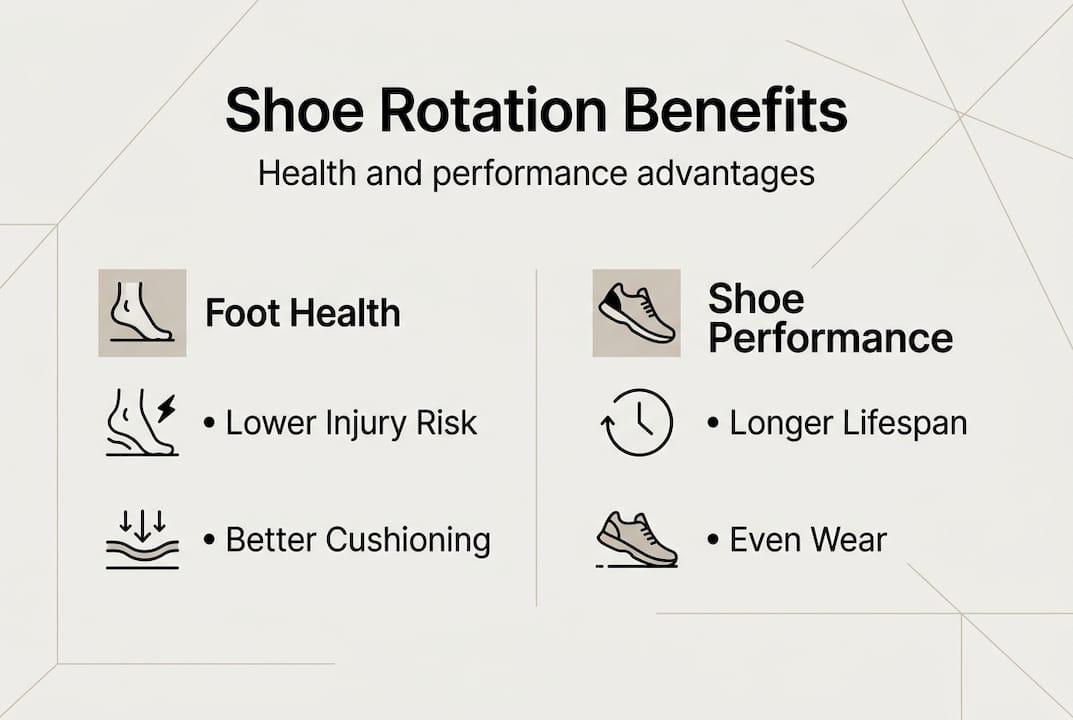
| Injury risk reduction | Rotating between multiple shoe pairs lowers injury risk by about 39 percent compared with using a single pair. |
| Lifespan extension | Rotating shoes allows midsole foam to recover between uses, extending overall shoe life to roughly 300 to 500 miles per pair. |
| Stress redistribution | Different shoes alter stride mechanics and redistribute biomechanical stress to help prevent overuse injuries. |
| Rotation guidance | For best results, rotate two to four pairs matched to your workout type. |
How shoe rotation lowers injury risk and improves foot health
A landmark study tracking runners over 22 weeks found that those who rotated between multiple shoe pairs reduced injury risk by 39% compared to single-shoe users. This dramatic reduction stems from how different shoes alter your biomechanics with each stride. Every shoe model features unique characteristics: heel-to-toe drop, cushioning density, midsole stiffness, and outsole geometry. These variations subtly change how forces travel through your feet, ankles, knees, and hips.
When you wear the same shoes daily, your body experiences identical stress patterns repeatedly. This repetition creates concentrated wear on specific tissues, tendons, and joints. Rotating shoes redistributes these forces, allowing overworked areas to recover whilst engaging different muscle groups. The science behind running shoes demonstrates how even minor differences in shoe construction significantly affect gait mechanics and joint loading.
“Varying your footwear changes the repetitive stress on muscles, tendons, and joints. This variation reduces the likelihood of overuse injuries by preventing any single structure from bearing excessive, unrelenting load.”
Shoe rotation particularly helps prevent these common overuse injuries:
- Achilles tendonitis from constant tension at identical angles
- Plantar fasciitis caused by repetitive heel strike patterns
- Stress fractures resulting from concentrated impact forces
- Patellofemoral pain syndrome from unchanging knee tracking
- Shin splints triggered by consistent tibial loading
Pro Tip: Watch for early warning signs like persistent morning stiffness, localised tenderness after runs, or discomfort that worsens with continued activity. These symptoms often indicate repetitive stress that footwear rotation and proper injury prevention strategies can address before they develop into serious injuries requiring extended rest.
Extending shoe lifespan and material recovery through rotation
Your shoes undergo significant physical stress with every step. Midsole foam, the cushioning layer between your foot and the ground, compresses under body weight and impact forces. This compression isn’t instantly reversible. Midsole foam requires 24-48 hours to rebound fully after use, returning to its original shape and cushioning properties. When you wear the same shoes daily, the foam never fully recovers, leading to premature compression set and reduced shock absorption.
Rotating between pairs allows each shoe’s midsole adequate recovery time between uses. This recovery period maintains cushioning effectiveness and structural integrity far longer than continuous wear. Most running shoes deliver optimal performance for 300-500 miles before midsole degradation compromises cushioning. Rotation extends this lifespan by preventing cumulative compression damage.
| Usage pattern | Average shoe lifespan | Injury risk level | Cushioning retention |
|---|---|---|---|
| Single pair, daily use | 300-400 miles | High | Degrades 30% faster |
| Two-pair rotation | 400-500 miles per pair | Moderate | Maintains 85% longer |
| Three-pair rotation | 450-550 miles per pair | Low | Optimal recovery |
The consequences of worn-out shoes extend beyond reduced comfort. Research shows that shoes with degraded midsoles increase heel stress and injury risk substantially. Compressed foam loses its ability to absorb impact forces, transferring more shock directly to your joints and connective tissues. This increased stress accelerates wear on your body whilst simultaneously wearing out your shoes faster.
Pro Tip: Track mileage for each shoe pair using a running app or simple spreadsheet. Record the date you start using each pair and log miles after every workout. Most shoes show visible wear indicators on the outsole, but internal midsole compression occurs before external signs appear. Replace shoes at 400-500 miles even if they look acceptable, as cushioning degrades before visible wear becomes obvious.
Beyond midsole recovery, rotation prevents other forms of premature degradation. Outsole rubber wears more evenly when given rest periods. Upper materials dry thoroughly between uses, preventing bacterial growth and material breakdown from constant moisture. Even the insole benefits from drying time, maintaining its shape and antimicrobial properties longer.
Practical shoe rotation strategies for different activities
Implementing effective rotation requires matching shoe characteristics to workout demands. Sports medicine experts recommend a 2-4 pair rotation system matched to workout type for optimal performance and injury prevention. This approach ensures you’re wearing appropriate footwear for each training session’s specific biomechanical requirements.
Here’s how to structure your rotation based on workout intensity and purpose:
- Daily trainer for easy runs and general mileage: Choose shoes with balanced cushioning and moderate stability for comfortable, everyday training sessions
- Tempo or speed shoe for faster workouts: Select lighter, more responsive shoes with firmer midsoles that provide energy return during quick turnover
- Maximum cushioning shoe for long runs: Opt for heavily cushioned models that prioritise shock absorption over responsiveness for extended distances
- Trail or terrain-specific shoe if applicable: Include shoes with aggressive tread and protective features for off-road or varied surface training
Your rotation strategy should align with training volume and variety. Consider these factors when building your rotation:
- Weekly mileage determines how many pairs you need; higher volume runners benefit from three or four pairs whilst moderate runners do well with two
- Surface variety requires specialised shoes; rotating between road, track, trail, and treadmill demands different outsole patterns and cushioning
- Workout intensity variations call for shoes matched to pace; easy runs need different support than interval sessions or tempo efforts
- Foot strike pattern influences shoe selection; heel strikers benefit from different cushioning distribution than midfoot or forefoot strikers
Understanding different types of athletic footwear helps you select complementary pairs that provide genuine biomechanical variety rather than simply owning multiple similar shoes. The goal is meaningful difference in how each pair affects your gait and joint loading.
Beginners should introduce rotation gradually rather than immediately switching between multiple new pairs. Start with two shoes and alternate them every other day, allowing your feet and legs to adapt to each pair’s characteristics. Breaking in all shoes simultaneously prevents blisters and discomfort from unfamiliar pressure points. Once comfortable with both pairs, you can expand your rotation if training volume warrants additional shoes.
Podiatrists emphasise that rotation benefits extend beyond running. Walking shoes experience similar degradation from daily standing and movement stress. If you walk extensively for work or exercise, rotating between two pairs of comfortable daily wear shoes provides the same recovery and longevity benefits as rotating running shoes.
When shoe rotation might not be necessary
Whilst rotation offers substantial benefits for many active individuals, it’s not universally essential. Certain usage patterns and activity levels don’t require multiple pairs. Understanding when single-shoe use suffices prevents unnecessary expense and complexity.
Shoe rotation provides minimal benefit in these situations:
- Running fewer than 20 miles weekly with adequate rest days between sessions allows shoes sufficient recovery time naturally
- Training exclusively on consistent surfaces like indoor tracks or treadmills reduces biomechanical variation benefits
- Experiencing no discomfort or injury history suggests your current single-shoe approach works for your biomechanics
- Walking casually rather than training intensively places less repetitive stress on shoes and body
- Using shoes infrequently for occasional activity rather than regular training schedules
Excessive rotation can actually create problems. Constantly switching between dramatically different shoes prevents your body from adapting to any particular model. This lack of adaptation increases blister risk and reduces efficiency as your gait continuously adjusts. Introducing rotation too quickly leads to niggles from unfamiliar pressure points and altered biomechanics.
Pro Tip: When adding new shoes to your rotation, break them in gradually by wearing them for short, easy sessions initially. Limit new shoes to 20-30 minutes for the first few uses, then progressively increase duration as your feet adapt. Never debut new shoes during long runs, races, or intense workouts where blisters or discomfort could derail your training. This incremental approach prevents the common mistake of wearing brand-new shoes for extended periods before they’ve moulded to your feet.
Some runners find that rotating between too many pairs (five or more) creates logistical challenges without additional benefits. Tracking mileage becomes complicated, and shoes may deteriorate from age before accumulating enough miles to justify replacement. The sweet spot for most people sits at two to four pairs, providing variety without excessive complexity.
Individual biomechanics matter enormously. Consultation with podiatrist-recommended footwear specialists helps determine whether rotation suits your specific foot structure, gait pattern, and injury history. Some individuals with particular biomechanical needs benefit more from finding one perfect shoe and using it consistently rather than introducing variation. Others with complex foot issues require carefully selected rotation to address multiple concerns.
The frequency of switching between shoes depends on your training schedule and preferences. Daily alternation works well for high-volume runners, whilst others prefer rotating based on workout type. Experiment to find what feels natural and sustainable for your routine.
Explore footwear solutions designed for comfort and durability
Implementing effective shoe rotation starts with selecting quality footwear engineered for lasting performance and foot health. YDA UK specialises in shoes that embody the principles discussed throughout this guide: advanced cushioning systems that recover between uses, biomechanically optimised designs that support natural movement, and durable construction that maintains protective properties throughout their lifespan.
Whether you’re building your first rotation system or replacing worn pairs, exploring footwear designed for problem feet and active lifestyles ensures you’re investing in shoes that complement rotation strategies. Understanding the technology behind YDA shoes reveals how modern footwear engineering addresses the recovery and durability factors that make rotation effective. Choose shoes aligned with expert recommendations to maximise the injury prevention and performance benefits rotation provides.
Frequently asked questions about shoe rotation
How many pairs of shoes should I rotate?
Most active individuals benefit from rotating 2-4 pairs matched to different workout types and intensities. Two pairs work well for moderate-volume runners logging 20-40 miles weekly, whilst three or four pairs suit high-volume athletes exceeding 50 miles per week or those training across varied surfaces and paces.
Can I rotate shoes if I only run 10 miles a week?
Rotation provides minimal benefit at very low mileage since shoes naturally get adequate recovery time between infrequent uses. If you run just two or three times weekly with rest days between, a single quality pair suffices unless you experience recurring discomfort or injuries that biomechanical variation might address.
How do I know when to replace a shoe if I rotate?
Track mileage for each pair individually and replace shoes at 400-500 miles regardless of external appearance. Midsole cushioning degrades internally before visible wear appears. Press the midsole firmly with your thumb; if it doesn’t spring back quickly or feels noticeably softer than when new, cushioning has deteriorated and replacement is due.
Will rotating shoes prevent all running injuries?
Shoe rotation reduces injury risk by approximately 39% but doesn’t eliminate injuries entirely. Proper training progression, adequate recovery, strength training, and appropriate mileage increases remain essential. Rotation addresses biomechanical repetition but can’t compensate for overtraining, poor running form, or inadequate conditioning.
Is shoe rotation also important for walking or everyday shoes?
Yes, rotation benefits extend to walking shoes if you spend extensive time on your feet daily. Rotating between two pairs of everyday shoes allows midsole recovery and prevents premature compression, particularly valuable for people who stand or walk throughout their workday. The same 24-48 hour recovery principle applies to walking shoes as running shoes.