
Role of Shoe Flexibility – Impact on Foot Health and Performance
Finding shoes that actually support your foot’s natural movement can feel surprisingly tricky, whether you’re training for a marathon or just managing daily discomfort. The quest for comfort and performance often comes down to one key detail: shoe flexibility is a core design component influencing both movement efficiency and injury risk. Modern footwear now adapts to your unique gait and biomechanics, so you get the benefits of protection while keeping your stride natural. This guide helps you unlock the strengths of advanced flexible shoes for healthier, more comfortable steps.
Table of Contents
- Meaning of Shoe Flexibility in Modern Footwear
- Types of Shoe Flexibility and Key Variations
- Shoes, Flexibility, and Foot Biomechanics
- Performance Benefits for Athletes and Individuals
- Risks, Limitations, and Choosing the Right Flex
Key Takeaways
| Point | Details |
|---|---|
| Shoe Flexibility Importance | Flexibility in footwear enhances natural movement, improves biomechanics, and reduces injury risk during various activities. |
| Types of Flexibility | Shoes vary in flexibility types—ultraflexible, midflex, and stiff—affecting performance and comfort for different users. |
| Biomechanics and Comfort | Appropriate flexibility supports foot function and comfort, ensuring efficient movement and reducing compensatory strain on the body. |
| Choosing the Right Flex | Selecting footwear requires assessing individual needs and activities, as overly flexible or stiff shoes can lead to injury or discomfort. |
Meaning of Shoe Flexibility in Modern Footwear
Shoe flexibility refers to the shoe’s ability to bend, twist, and move in response to your foot’s natural motions. Rather than being a rigid structure that dictates how your foot should move, modern flexible footwear responds to your biomechanics. This means the shoe adapts to your unique walking or running pattern, not the other way around.
Shoes significantly affect human movement and injury risk during activities by their mechanical properties, with flexibility being a core design component. When your shoe allows proper bending at the forefoot, permits slight twisting in the midfoot, and supports natural heel movement, you’re experiencing well-engineered flexibility. This isn’t about flimsy, unsupportive footwear. True flexibility works alongside structure to protect your foot whilst allowing it to function properly.
Modern footwear brands have moved beyond the “stiffer means better” philosophy that dominated earlier shoe design. Today’s approach recognises that footwear comfort involves structural and functional design aspects like flexibility, shaped by task requirements and individual anatomical differences. A runner needs different flexibility than someone walking on pavement. A person with flat feet requires different support than someone with a high arch.
The practical benefit is straightforward: proper flexibility supports efficient movement patterns, reduces injury risk, and enhances comfort throughout your day. Your foot naturally wants to pronate slightly, your arch needs to compress and rebound, and your toes require room to flex. Shoes that force your foot to move unnaturally create compensatory stress throughout your ankles, knees, and hips.
Flexibility in modern footwear isn’t one single feature. It’s a carefully balanced combination of material choice, sole construction, midsole composition, and upper design. Some areas need more rigidity for support, whilst others need more give to accommodate natural motion. This nuanced approach is what separates technologically advanced footwear from standard shoes.
Pro tip: Test shoe flexibility by holding it in your hands and gently bending it at the ball of your foot—it should flex naturally at that point, not bend in the middle of your arch or refuse to bend at all.
Types of Shoe Flexibility and Key Variations
Shoe flexibility comes in different forms, and understanding these variations helps you choose footwear matched to your specific needs. The main categories depend on how the shoe bends lengthways and twists side to side. These mechanical properties directly influence how your foot moves and how forces distribute across your sole during activity.
Shoe flexibility varies by sole torsional rigidity and longitudinal bending stiffness, creating distinct categories. Ultraflexible shoes offer maximum bending with minimal resistance, ideal for natural movement and ground feel. Midflex options balance support with reasonable flexibility, suitable for everyday activities. Stiff shoes provide maximum support and control, often preferred for stability or specific foot conditions.
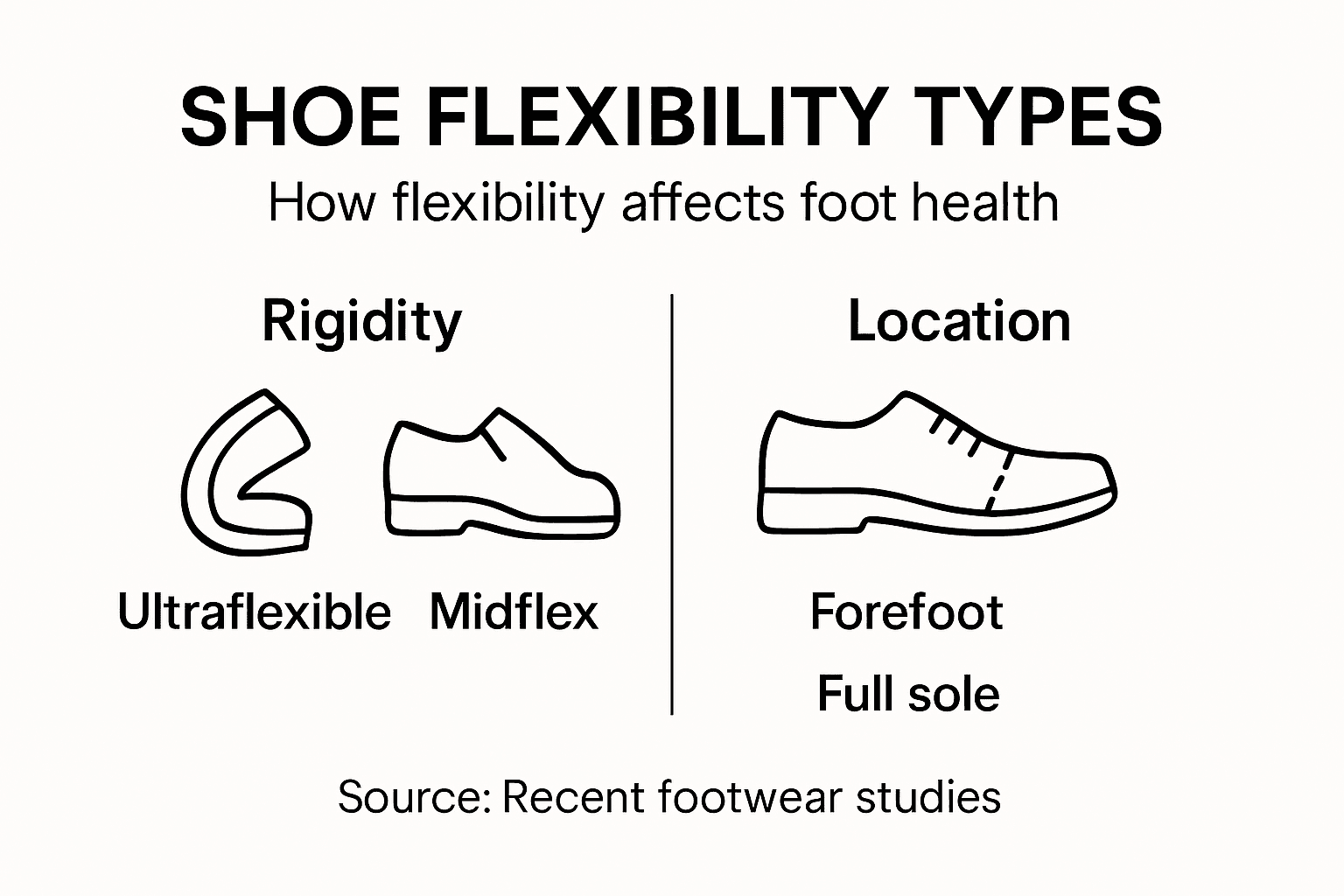
Each category affects your gait differently. Ultraflexible designs allow your foot to move naturally through each phase of walking or running, reducing compensatory strain. Midflex shoes offer a compromise, providing enough structure to guide your foot whilst permitting natural motion. Stiff shoes control foot motion more rigidly, which benefits people requiring additional support but may restrict natural movement patterns.
Research identifies flat-flexible shoes characterised by low pitch and multidirectional sole flexibility that improve ankle energy efficiency and walking performance. The materials used matter significantly. Soft midsoles absorb shock and adapt to uneven surfaces, whilst harder compounds provide more propulsion and durability. Sole hardness, bending stiffness, and upper construction all work together to create the overall flexibility profile.
Variations also depend on where flexibility occurs. Some shoes flex primarily at the forefoot, others distribute flexibility throughout the sole, and some concentrate it at the heel. Your activity level, foot structure, and personal preference should guide your selection. A runner might prefer concentrated forefoot flexibility for natural propulsion, whilst someone managing foot pain might benefit from distributed flexibility that reduces pressure points.
This summary shows how flexibility at different shoe regions influences movement and comfort:
| Flexibility Location | Movement Impact | Comfort Outcome |
|---|---|---|
| Forefoot | Promotes natural push-off | Improved toe splay and propulsion |
| Midsole | Allows foot adaptation | Reduces pressure on arches |
| Heel | Assists with shock absorption | Smoother landings and transitions |
Here’s a quick comparison of the main types of shoe flexibility and their ideal uses:
| Flexibility Type | Key Characteristics | Best Suited Users | Typical Benefits |
|---|---|---|---|
| Ultraflexible | Bends easily, minimal resistance | Natural runners, barefoot advocates | Enhanced ground feel, agility |
| Midflex | Moderate bend, balanced support | Everyday walkers, casual athletes | Comfort with stability |
| Stiff | High rigidity, structured support | Those needing control, foot support | Injury prevention, controlled gait |
Pro tip: When comparing shoes, test flexibility in multiple directions: bend them lengthways, twist them side to side, and press your thumb on the sole to gauge midsole softness.
Shoes, Flexibility, and Foot Biomechanics
Your foot is a marvel of engineering with 26 bones, 33 joints, and over 100 muscles and tendons working together. When you wear shoes, you’re not just putting on protection—you’re altering how all these structures interact with the ground. Shoe flexibility plays a direct role in whether your foot can function naturally or whether it’s forced into compensatory patterns.
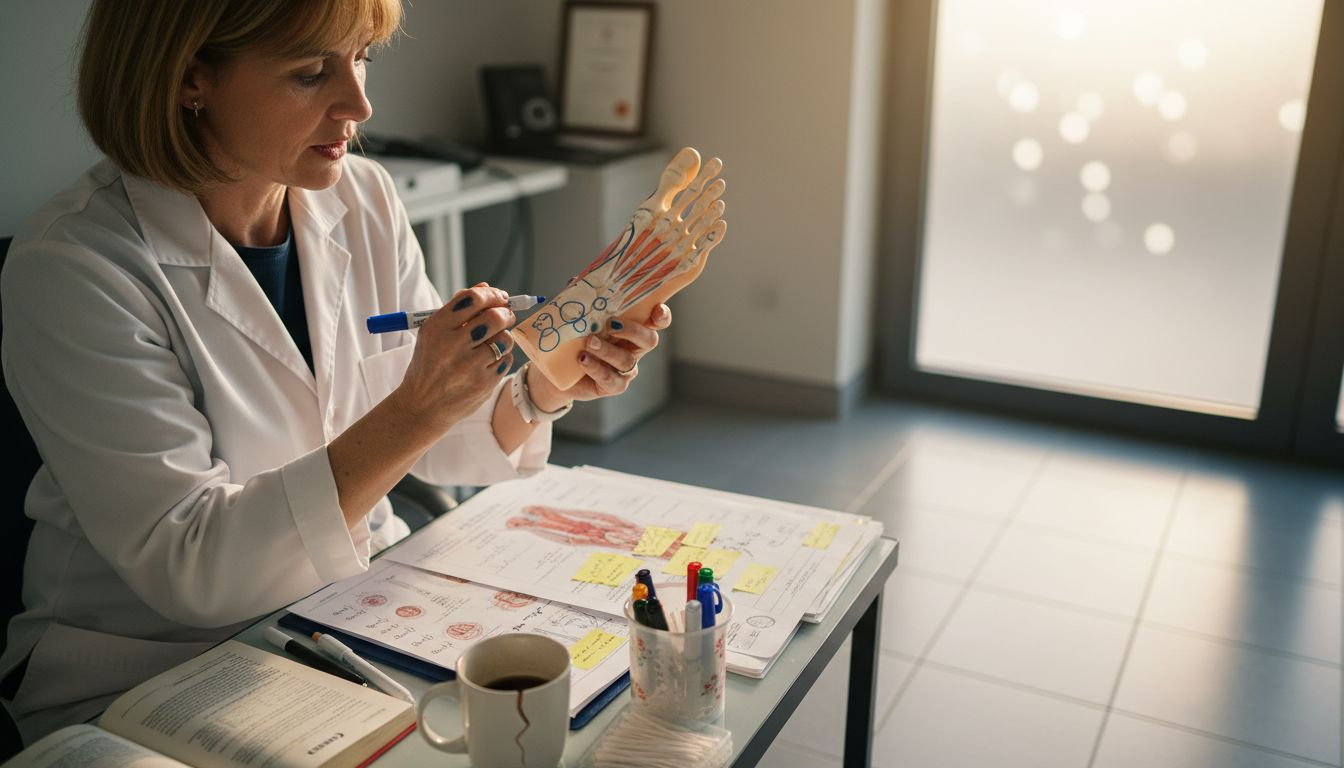
Footwear impacts biomechanical strategies and gait throughout life, altering forces on the foot and overall locomotor health. Flexible shoes allow your foot to perform its natural movements: pronation during landing, arch compression during midstance, and push-off during propulsion. Your foot needs to adapt to uneven terrain, absorb shock, and generate propulsive force. Rigid shoes restrict these movements, forcing other joints and muscles to compensate.
Consider what happens during a normal walking cycle. Your heel strikes the ground first, and your foot needs to roll inward slightly to absorb impact. Your arch compresses to dissipate forces, and your muscles engage to stabilise your ankle. As you push off, your forefoot needs to flex and your toes need to extend. Appropriate shoe flexibility facilitates natural foot function, improving shock absorption and propulsion during locomotion, whilst inappropriate flexibility disrupts these mechanics.
Misaligned biomechanics create real consequences. When shoes restrict natural foot motion, your lower leg muscles work harder to compensate. Your knees receive abnormal loading patterns. Your hips alter their positioning. These compensations accumulate over time, leading to pain in places far removed from your feet—your knees, hips, and lower back all suffer.
Flexible footwear promotes engagement of your intrinsic foot muscles, the small stabiliser muscles within your foot itself. These muscles weaken when shoes restrict motion, which eventually reduces your foot’s natural stability and proprioception. Conversely, shoes allowing appropriate flexibility encourage these muscles to work, maintaining foot strength and control throughout your life.
Pro tip: Notice how your feet feel after wearing different shoes for a day; pain or fatigue in your knees, hips, or back often signals that your shoe flexibility doesn’t match your biomechanical needs.
Performance Benefits for Athletes and Individuals
Whether you’re running a marathon, playing football, or simply walking through your day, shoe flexibility directly impacts how efficiently your body moves. The right flexibility in your footwear doesn’t just feel better; it measurably improves performance and reduces injury risk across all activity levels.
Athletic footwear flexibility affects performance by optimising energy efficiency, enhancing running mechanics, and reducing injury risk. When your shoe flexes at the right points with the right amount of resistance, your muscles work more efficiently. You expend less energy moving the same distance, which means you can go further or faster with the same effort. Runners experience improved running economy, meaning they use less oxygen at the same pace. That translates directly to better times and less fatigue.
Flexibility also enhances your agility and adaptive movement patterns. Your foot encounters uneven surfaces constantly, whether you’re trail running, playing sports, or walking on varied terrain. Shoes that flex appropriately allow your foot to adjust instantly to these changes, maintaining stability whilst responding naturally. Rigid shoes force your foot into predetermined patterns, limiting your ability to adapt quickly.
Properly flexible shoes minimise energy expenditure by better accommodating individual gait patterns. This personalised approach means that footwear working with your specific biomechanics rather than against it produces measurable performance gains. Two people with different gait patterns need different flexibility profiles. Understanding your own movement patterns helps you select shoes that work with your body rather than restricting it.
For athletes specifically, the performance benefits compound over time. Better energy efficiency in every training session accumulates into improved fitness gains. Reduced compensatory stress means fewer nagging injuries that derail training. Improved proprioception from natural foot engagement enhances balance and coordination. These factors combine to create athletes who perform better and stay healthier throughout their careers.
Pro tip: Pay attention to your performance metrics after switching shoes; if your running pace feels easier at the same effort level or your legs feel fresher after activity, your new shoes are likely better matched to your biomechanical needs.
Risks, Limitations, and Choosing the Right Flex
Shoe flexibility isn’t a simple “more is better” equation. Too much flexibility creates problems just as real as too little. Finding your optimal flex point requires understanding both the risks and your personal needs.
Overly flexible shoes can increase plantar loading, potentially raising injury risk, whilst stiff shoes reduce peak pressures but may restrict natural motion. This trade-off sits at the heart of footwear design. Excessive flexibility forces your foot’s intrinsic muscles to work constantly, generating abnormally high pressures under your heel and forefoot. Over time, these elevated pressures cause pain and increase injury risk. Conversely, stiff shoes protect against high pressures but force your foot into unnatural movement patterns, creating compensatory strain elsewhere.
Age and developmental stage matter significantly. Young children learning to walk need different flexibility than adolescents or adults. Their gait patterns are still developing, and their bones are still mineralising. Excessive flexibility may promote increased plantar pressures and altered gait parameters in early walkers, whilst stiff shoes can limit natural foot movements. What works for an adult may actually hinder a child’s development.
Your activity level shapes your ideal flexibility. A runner needs different characteristics than someone with arthritis walking for rehabilitation. Trail athletes benefit from flexibility that accommodates uneven terrain, whilst someone managing plantar fasciitis may need more structure. There’s no universal answer because individual anatomical differences create vastly different needs.
Choosing the right flex involves honest assessment of your situation. Consider your foot structure, activity demands, any existing pain or conditions, and your personal movement patterns. Testing shoes through extended wear before committing helps reveal whether a particular flex profile suits you. Some people thrive in highly flexible shoes whilst others develop pain. Neither response is wrong. Both reflect individual differences.
Pro tip: If pain develops after switching to new shoes with different flexibility, give yourself at least two weeks of gradual wear before concluding they’re unsuitable; your feet and muscles need time to adapt to different flex patterns.
Discover Footwear That Truly Supports Your Natural Movement
Understanding the critical role that shoe flexibility plays in foot health and performance reveals one clear challenge: finding shoes that balance support with natural motion. If you struggle with discomfort or pain caused by rigid shoes restricting your foot’s biomechanics, or if you seek enhanced energy efficiency and injury prevention through smarter footwear choices, you deserve shoes designed with these needs in mind. At YDAUK, we specialise in high-performance footwear that embraces advanced flexibility technology tailored to your unique foot structure and activity demands.
Step into comfort and confidence today by exploring our range of stylish, comfortable shoes engineered to promote natural foot function while maximising stability and support. Whether you need ultraflexible designs for athletic performance or balanced midflex options for everyday wear, find your perfect fit now at YDAUK. Don’t let unsuitable footwear hold your feet back – visit our homepage to start your journey towards healthier and more efficient movement.
Explore more at YDA Technology to discover how innovation transforms shoe flexibility for your benefit.
Frequently Asked Questions
What is shoe flexibility and why is it important?
Shoe flexibility refers to a shoe’s ability to bend, twist, and move with your foot’s natural motion. It is crucial for foot health, as proper flexibility reduces injury risk, supports efficient movement patterns, and enhances overall comfort.
How does shoe flexibility affect performance during physical activities?
Shoe flexibility impacts performance by optimising energy efficiency and enhancing movement mechanics. Flexible shoes allow your foot to adapt to different surfaces, improving agility and reducing fatigue during activities like running or walking.
What types of shoe flexibility are there and which is right for me?
There are three main types of shoe flexibility: ultraflexible, midflex, and stiff. Ultraflexible shoes allow maximum movement, suitable for natural runners; midflex offers a balance, ideal for everyday use; while stiff shoes provide maximum support, beneficial for those with specific foot conditions.
Can too much flexibility in shoes lead to foot problems?
Yes, overly flexible shoes can increase plantar loading and lead to injury risks, such as pain in the heel or forefoot. It is essential to find the right balance of flexibility to suit your anatomical needs and activity level.