
Role of Shoes in Joint Health – Impact and Solutions
Every british adult takes around 5,000 to 7,000 steps a day, yet most are unaware that their shoe choice can directly impact long-term joint health. The wrong footwear does more than just cause sore feet. Research shows certain shoes can significantly increase knee and hip stress, raising the risk of lasting joint problems. Understanding how daily footwear affects your posture and movement helps you make smarter choices your joints will thank you for.
Table of Contents
- How Footwear Influences Joint Alignment
- Types of Footwear and Joint Support
- Key Features for Healthy Joint Mechanics
- Risks of Inappropriate Shoe Choices
- Comparing Footwear Alternatives for Joint Health
Key Takeaways
| Point | Details |
|---|---|
| Impact of Footwear on Joint Health | Footwear significantly influences joint alignment and health, with inappropriate choices leading to misalignment and joint stress. |
| Features for Optimal Support | Shoes should provide adequate arch support, cushioning, flexibility, and a proper fit to maintain healthy joint mechanics. |
| Risks of Poor Footwear | Wearing incorrectly designed shoes can accelerate joint degradation and increase the risk of conditions like osteoarthritis. |
| Informed Shoe Selection | Understanding individual biomechanics and selecting orthotic-friendly footwear is critical for preventing long-term musculoskeletal complications. |
How Footwear Influences Joint Alignment
The relationship between footwear and joint health is far more complex than most people realise. When walking or standing, our shoes act as critical biomechanical interfaces that directly impact body alignment and joint mechanics. Research examining biomechanical effects reveals that shoe characteristics can significantly alter lower limb joint angles and loading patterns.
When shoes are worn improperly or are structurally inappropriate, they can cause substantial disruptions to natural joint mechanics. A comprehensive study demonstrated that worn or poorly designed shoes can decrease ankle plantarflexion angles while simultaneously increasing knee adduction moments and hip abduction moments. These subtle changes might seem insignificant, but they can progressively lead to misalignment, increased joint stress, and potential long-term musculoskeletal complications.
The impact varies across different shoe types. Biomechanical research using instrumented knee implants highlighted that dress shoes, in particular, generate the most unfavourable joint loading conditions compared to other footwear styles. Specific shoe features that contribute to joint misalignment include:
- Inadequate arch support
- Insufficient heel cushioning
- Rigid sole structures
- Inappropriate width or fit
Understanding these nuanced interactions between footwear and joint health is crucial for making informed choices about everyday shoes. Individuals seeking optimal joint alignment should prioritise shoes with proper biomechanical design, focusing on support, flexibility, and personalised fit.
Types of Footwear and Joint Support
Footwear plays a crucial role in joint health, with different types offering varying levels of biomechanical support. Research exploring adult footwear and lower limb osteoarthritis risks underscores the significant impact shoe selection can have on long-term joint wellness. Not all shoes are created equal, and understanding their distinct characteristics is essential for maintaining optimal joint alignment and preventing potential musculoskeletal complications.

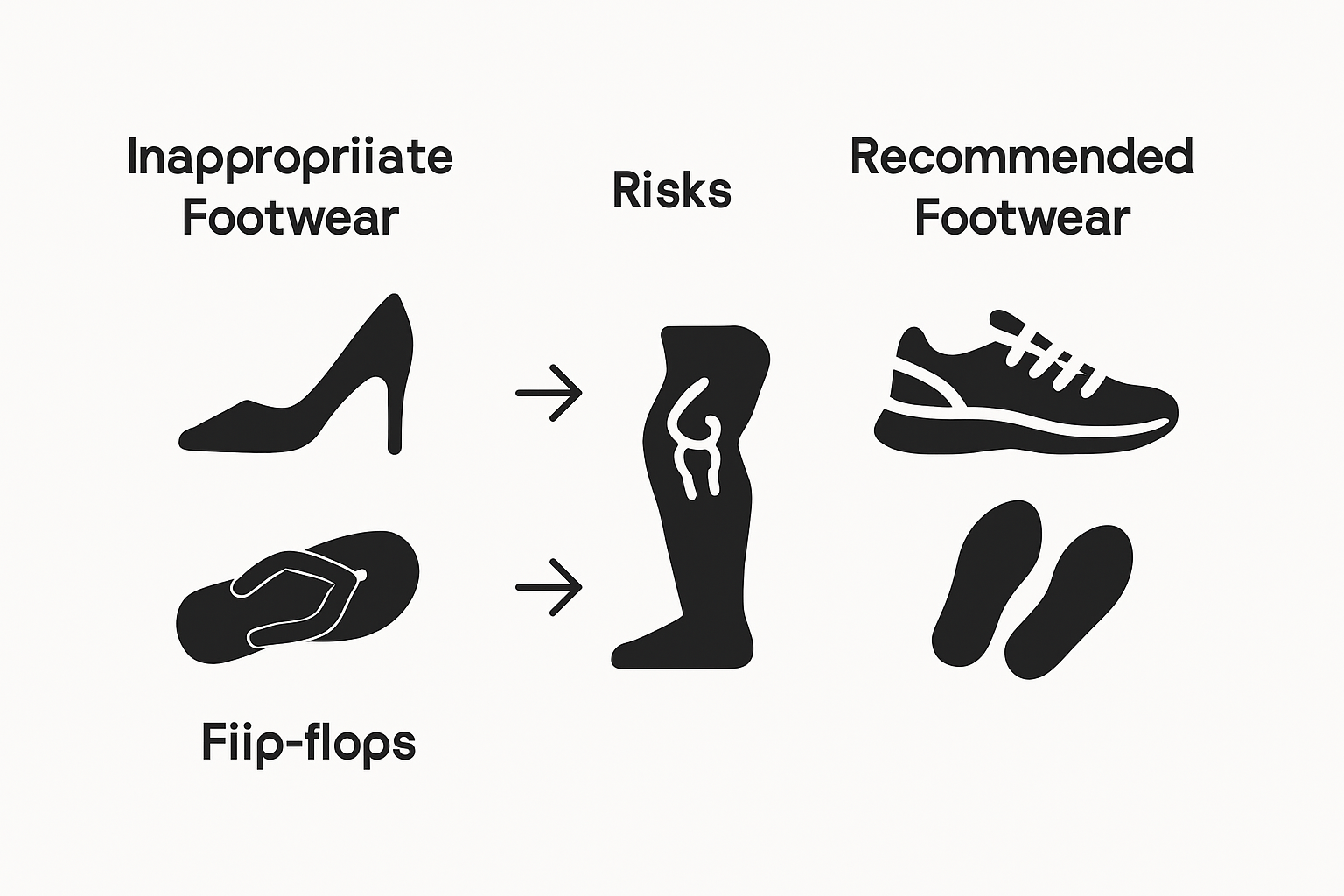
Certain footwear types pose greater challenges to joint health. Casual shoes like flip-flops and sandals, for instance, often lack critical structural support, leading to increased postural instability and potential joint stress. These lightweight, minimally structured shoes can contribute to abnormal walking patterns and increased strain on ankles, knees, and hips.
Comprehensive joint support requires careful consideration of footwear characteristics. Key features that promote healthy joint mechanics include:
- Robust arch support
- Appropriate heel cushioning
- Flexible yet stable sole design
- Proper width and fit
- Shock absorption capabilities
Professional recommendations emphasise selecting orthotic-friendly footwear that accommodates individual foot structures and walking patterns. Specialised shoes designed with biomechanical principles can significantly mitigate joint stress, providing essential support during daily activities and potentially reducing long-term musculoskeletal wear and tear.
Key Features for Healthy Joint Mechanics
Joint biomechanics represent a complex interplay between footwear design and human movement. Research examining structural support in footwear highlights the critical importance of specific shoe characteristics in maintaining optimal joint function and preventing potential musculoskeletal complications.
Advanced biomechanical studies reveal that specific footwear features can significantly influence joint movement and stability. Bionic shoe technologies have demonstrated remarkable potential in reducing joint range of motion during high-impact activities like running. These innovative design approaches focus on creating shoes that actively support natural movement patterns while minimising unnecessary joint stress.
Essential features for maintaining healthy joint mechanics include:
- Dynamic heel support to distribute body weight evenly
- Flexible arch reinforcement that adapts to individual foot structures
- Shock absorption systems that reduce impact during movement
- Anatomically designed toe boxes allowing natural foot expansion
- Precise ankle stabilisation mechanisms
Professional biomechanical experts emphasise that selecting footwear is not a one-size-fits-all approach. Individual factors such as foot shape, walking pattern, body weight, and specific physical activities play crucial roles in determining the most appropriate joint-supportive footwear design. Personalised assessment and careful selection can dramatically improve overall joint health and mobility.
Risks of Inappropriate Shoe Choices
The consequences of wearing incorrect footwear extend far beyond temporary discomfort. Scientific research on shoe-related biomechanical changes demonstrates that inappropriate shoe choices can trigger profound alterations in joint mechanics, potentially leading to long-term musculoskeletal complications. Worn-out or poorly designed shoes can fundamentally disrupt the body’s natural movement patterns, creating cascading negative effects on joint health.
Particularly concerning are the biomechanical shifts induced by certain footwear types. Dress shoes and minimally supportive footwear significantly increase knee joint loading compared to walking barefoot, placing unprecedented stress on critical joint structures. These mechanical changes can precipitate a range of potential health risks, including:
- Accelerated joint cartilage degradation
- Increased risk of osteoarthritis
- Chronic ankle and knee instability
- Abnormal gait patterns
- Reduced shock absorption capabilities
- Potential long-term musculoskeletal misalignment
Understanding the biomechanical implications of footwear choices is crucial. Each step taken in inappropriate shoes represents a potential micro-trauma to joint structures, gradually accumulating damage that may not become immediately apparent. Professional healthcare practitioners emphasise the importance of selecting footwear that supports natural movement, provides adequate cushioning, and maintains proper body alignment to mitigate these potential risks.
Comparing Footwear Alternatives for Joint Health
Navigating the landscape of footwear alternatives requires a nuanced understanding of biomechanical implications. Research comparing different footwear types reveals significant variations in how shoes impact joint loading and overall musculoskeletal health. Traditional dress shoes, for instance, demonstrate markedly higher knee joint stress compared to more ergonomically designed alternatives.
Bionic footwear technologies have emerged as a promising solution for addressing joint health challenges. These innovative shoe designs specifically target biomechanical efficiency, demonstrating the ability to reduce joint range of motion during high-impact activities like running. The key differentiators among footwear alternatives include:
- Orthotic support levels
- Shock absorption capabilities
- Flexibility of sole design
- Anatomical foot accommodation
- Weight distribution mechanisms
- Material compression characteristics
Professional biomechanical experts emphasise that selecting appropriate footwear is not simply about comfort, but about understanding individual movement patterns and physiological requirements. Joint-conscious shoe selection involves comprehensive assessment of personal biomechanics, activity levels, and specific musculoskeletal needs. The goal is not just protection, but proactive joint health maintenance through strategic footwear choices.
Protect Your Joints With the Right Footwear Today
The article highlights the critical challenge many face when wearing shoes that do not support proper joint alignment or fail to absorb shock effectively. If you experience discomfort or worry about long-term joint damage caused by inadequate arch support, rigid soles, or poor cushioning, it is time to take control of your foot health. Prioritising footwear designed with biomechanical principles can reduce the risk of misalignment and chronic joint stress.

Discover advanced footwear options that combine style with scientifically-backed support at YDA UK. Our collection emphasises features such as dynamic heel support and flexible arch reinforcement to actively enhance natural movement. Dons wait for joint pain to set in before acting because investing in the right shoes now can safeguard your comfort and mobility for years ahead. Explore the innovative designs and technology behind our shoes on the YDA Technology page and start your journey toward better joint health by browsing our full range at YDA UK. Your joints will thank you for it.
Frequently Asked Questions
How does footwear affect joint alignment?
Footwear can significantly influence joint alignment by affecting lower limb joint angles and loading patterns. Improper or poorly designed shoes can cause misalignment, increased joint stress, and long-term musculoskeletal issues.
What are the key features of shoes that promote healthy joint mechanics?
Key features for healthy joint mechanics include robust arch support, appropriate heel cushioning, flexible yet stable sole design, proper width and fit, and shock absorption capabilities that cater to individual foot structures.
What types of shoes should be avoided to protect joint health?
Casual shoes like flip-flops and sandals are best avoided, as they often lack structural support and can lead to postural instability and increased strain on the joints. Similarly, dress shoes may induce unfavourable loading conditions on joints compared to more supportive footwear.
How can I assess if my shoes are suitable for joint health?
To assess shoe suitability, consider factors such as arch support, cushioning, the flexibility of the sole, and whether they accommodate your foot shape. Professional assessments can also help determine if shoes meet your specific biomechanical needs.