
Podiatrist Recommended Footwear: Lasting Comfort and Health
Most british adults with diabetes or foot issues struggle to find shoes that deliver both style and proper support. The truth is, over 85 percent of individuals with chronic foot conditions experience pain due to poorly chosen footwear. Selecting podiatrist recommended shoes matters more than ever, impacting not just daily comfort but long-term health and independence. This guide shows how the right footwear can protect your feet, fit your lifestyle, and support your overall well-being.
Table of Contents
- What Is Podiatrist Recommended Footwear?
- Types of Supportive Shoes for Foot Health
- Key Features of Health-Driven Footwear
- How Proper Shoes Impact Chronic Conditions
- Common Pitfalls and Safer Alternatives
Key Takeaways
| Point | Details |
|---|---|
| Importance of Podiatrist Recommended Footwear | Specialised shoes are essential for optimal foot health, tailored to individual needs based on biomechanics and conditions. |
| Types of Supportive Footwear | Different shoe types, like walking or athletic shoes, provide specific support to prevent injuries and accommodate various foot conditions. |
| Role of Proper Footwear in Chronic Conditions | Appropriate shoes can alleviate symptoms of chronic conditions such as diabetes or arthritis, enhancing stability and reducing pain. |
| Common Footwear Pitfalls | Avoid incorrect sizing and inadequate support, as these can lead to serious foot issues; prioritise professional fittings and evaluate shoe needs regularly. |
What Is Podiatrist Recommended Footwear?
Podiatrist recommended footwear represents a specialised category of shoes meticulously designed to support optimal foot health and comfort. These shoes go far beyond standard footwear, incorporating scientific insights from foot care professionals to address individual biomechanical needs. Podiatric sports medicine experts emphasise that appropriate footwear is critical for preventing injury and maintaining long-term foot wellness.
At its core, podiatrist recommended footwear prioritises three fundamental elements: comfort, support, and activity-specific design. Unlike generic shoes, these specialised footwear options are selected based on precise criteria that consider an individual’s unique foot structure, existing conditions, and movement patterns. Experts highlight the importance of matching shoes to specific activities, recognising that different movements require distinct types of support and cushioning.
The selection process for podiatrist recommended footwear involves comprehensive assessment of multiple factors, including:
- Foot arch type
- Potential pronation or supination tendencies
- Existing medical conditions like diabetes or arthritis
- Specific activity requirements
- Individual biomechanical movement patterns
Pro tip: When shopping for podiatrist recommended footwear, always prioritise professional fitting and bring any existing orthotic inserts to ensure maximum compatibility and support.
Types of Supportive Shoes for Foot Health
Supportive shoes represent a critical component of comprehensive foot health, designed to address diverse biomechanical needs and prevent potential injuries. Supportive footwear features are carefully engineered to provide stability, comfort, and protection across various activities and individual foot conditions.
Professional podiatrists categorise supportive shoes into several key types, each tailored to specific foot health requirements:
- Walking Shoes: Feature firm heel collars and secure fastening systems
- Athletic Training Shoes: Provide enhanced lateral support and cushioning
- Orthopedic Shoes: Designed for individuals with specific medical foot conditions
- Diabetic Footwear: Include extra depth and reduced pressure points
- Stability Shoes: Offer corrective support for pronation or supination
Comprehensive shoe design considers multiple critical elements to ensure optimal foot support. Ideal supportive shoes should incorporate a wide toe box allowing natural toe movement, a moderate heel height between 1/2 to 1 inch to minimise Achilles strain, and soles that provide strategic flexibility and rigidity. The toe area requires flexibility for natural movement, while the midfoot section demands increased structural support to maintain proper foot alignment.
Custom-fit considerations become paramount when selecting supportive footwear, particularly for individuals with existing foot conditions or specific mobility requirements. Factors such as arch type, potential biomechanical irregularities, and daily activity levels significantly influence the most appropriate shoe selection.
To better understand the unique benefits of each supportive shoe type, see the comparison below:
| Shoe Type | Main Benefit | Typical User | Notable Design Element |
|---|---|---|---|
| Walking Shoes | All-day comfort | Daily walkers | Firm heel collar |
| Athletic Training | Shock absorption | Sport participants | Enhanced cushioning |
| Orthopaedic Shoes | Condition relief | Arthritic or injured feet | Custom-fit options |
| Diabetic Footwear | Pressure minimisation | Diabetic individuals | Extra depth design |
| Stability Shoes | Gait correction | Overpronators/supinators | Structured midfoot support |
Pro tip: When trying on supportive shoes, always test them later in the day when feet are slightly larger and bring your existing orthotic inserts to ensure perfect compatibility and comfort.
Key Features of Health-Driven Footwear
Health-driven footwear represents a sophisticated approach to personal mobility, combining advanced biomechanical design with targeted support for individual foot requirements. Advanced health footwear innovations are transforming how we perceive shoe functionality, integrating cutting-edge technologies that extend far beyond traditional comfort considerations.
The core features of health-driven footwear encompass several critical elements:
- Biomechanical Support: Precision engineering for natural foot movement
- Pressure Distribution: Even weight allocation across foot surfaces
- Material Technology: Breathable, adaptive fabrics
- Ergonomic Design: Customised arch and heel support
- Medical Accommodation: Specific adaptations for diverse foot conditions
Comprehensive footwear design prioritises individual foot health through strategic features. These include cushioned insoles that promote proper foot alignment, targeted support for arch and heel structures, and materials engineered to provide durability and comfort. The goal extends beyond mere protection, focusing on reducing stress, preventing potential injuries, and supporting individuals with specific medical requirements such as arthritis or foot deformities.
Modern health-driven footwear increasingly incorporates smart technologies, enabling real-time health monitoring and personalised biomechanical analysis. These innovations range from embedded pressure sensors to advanced gait tracking mechanisms, transforming shoes from passive protection to active health management tools.
Pro tip: Invest in professional foot measurements annually, as foot shape and size can change significantly with age, weight fluctuations, and lifestyle modifications.
How Proper Shoes Impact Chronic Conditions
Footwear’s impact on chronic conditions represents a critical intersection between mobility, health management, and quality of life. Specialised shoes serve as more than simple protective gear, functioning as essential medical interventions that can dramatically influence an individual’s daily experience with chronic health challenges.
For individuals managing specific chronic conditions, appropriate footwear becomes a fundamental component of comprehensive health management:
- Diabetes: Reducing pressure points and preventing ulceration
- Arthritis: Providing enhanced joint support and reducing inflammation
- Neuropathy: Minimising nerve compression and improving sensory feedback
- Balance Disorders: Enhancing stability and reducing fall risks
- Neurological Conditions: Supporting consistent movement patterns
Neurological disorder footwear strategies demonstrate the nuanced approach required for complex medical needs. Shoes designed for conditions like Parkinson’s disease incorporate specific features such as lightweight construction, secure fastenings, wide toe boxes, and flexible soles that accommodate unique movement challenges. These specialised designs address critical concerns like foot dystonia, gait instability, and fall prevention, transforming footwear from a basic necessity to a sophisticated mobility support system.
Beyond immediate physical support, proper footwear plays a profound role in psychological well-being. By providing increased confidence, reducing pain, and maintaining independence, carefully selected shoes become instrumental in helping individuals with chronic conditions navigate daily life with greater dignity and reduced physical limitation.
Here is a summary of how proper footwear can assist with chronic foot-related conditions:
| Condition | Footwear Role | Example Feature | Improvement Area |
|---|---|---|---|
| Diabetes | Reduces ulcer risk | Cushioned insole | Skin protection |
| Arthritis | Decreases joint stress | Supportive midsole | Pain reduction |
| Neuropathy | Enhances nerve comfort | Smooth lining | Improved sensation |
| Balance Disorders | Increases stability | Textured outsole | Fall prevention |
| Parkinson’s Disease | Aids in gait uniformity | Flexible sole | Mobility enhancement |
Pro tip: Consult a podiatrist or specialist annually to reassess your specific footwear needs, as chronic conditions and individual biomechanics can change over time.
Common Pitfalls and Safer Alternatives
Footwear safety considerations reveal numerous critical mistakes that can compromise foot health and overall mobility. Understanding these common pitfalls is essential for preventing potential injuries and maintaining long-term foot wellness.
Common footwear mistakes that individuals frequently encounter include:
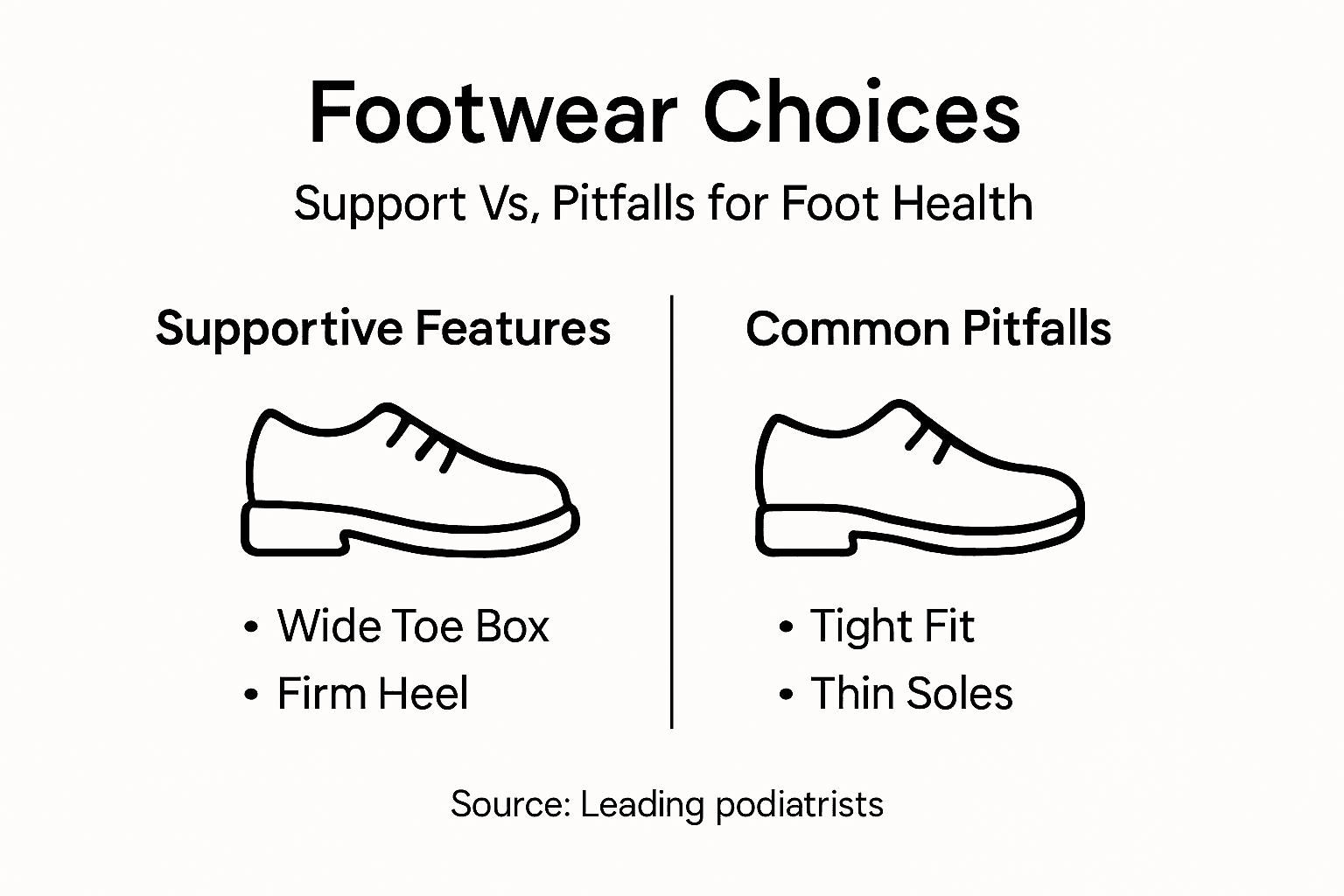
- Incorrect Sizing: Shoes that are too tight or too loose
- Poor Structural Support: Worn-out or overly flexible soles
- Inadequate Traction: Smooth or slippery shoe bottoms
- Inappropriate Heel Heights: Extremely high or unstable heels
- Limited Toe Box Space: Narrow shoes restricting natural toe movement
Shoe-related foot problems can develop from persistent wearing of inappropriate footwear. Tight shoes particularly pose significant risks, potentially leading to serious conditions such as bunions, corns, hammer toes, and crossover toes. These issues arise when shoes compress toes, restrict natural foot movement, and create unnatural pressure points that gradually deform foot structures.
Safer alternatives require a comprehensive approach to shoe selection. This involves choosing footwear with wide toe boxes, secure fastenings, textured soles for enhanced traction, and designs that accommodate natural foot biomechanics. Professional fittings, periodic foot measurements, and understanding individual foot characteristics become crucial in selecting shoes that protect rather than damage foot health.
Pro tip: Replace athletic shoes every 500-700 kilometres or every six months, whichever occurs first, to maintain optimal support and prevent hidden structural degradation.
Discover Lasting Comfort with Podiatrist Recommended Footwear
Struggling with foot pain or seeking shoes that truly support your unique biomechanical needs can feel overwhelming. The article highlights critical pain points like incorrect sizing, poor arch support, and limited toe box space which often lead to discomfort or worsen chronic conditions. At YDA UK, we understand how essential it is to prioritise comfort, support, and ergonomic design in every pair of shoes you wear. Our collection features advanced footwear options crafted with innovative YDA Technology to promote natural foot movement and reduce pressure points, helping you maintain healthy, comfortable feet all day.
Take control of your foot health today by exploring our range of specialised, health-driven footwear. Whether you need shoes for balance, stability, or everyday wear designed with foot health in mind, you will find solutions that marry style with function at YDA UK. Don’t wait until discomfort takes hold. Visit us now to experience the difference that podiatrist recommended footwear can make for your daily comfort and wellbeing.
Frequently Asked Questions
What are podiatrist recommended footwear features?
Podiatrist recommended footwear prioritises comfort, support, and activity-specific design, with features like sufficient arch support, cushioning, and a wide toe box to accommodate natural foot movement.
How do I choose the right supportive footwear for my foot conditions?
Consider factors like your foot arch type, any existing medical conditions, and specific activities when selecting supportive shoes. A professional fitting can also help ensure compatibility with any orthotic inserts you may have.
What types of footwear are best for chronic conditions such as diabetes or arthritis?
Specialised footwear for chronic conditions includes diabetic shoes that reduce pressure points and arthritis shoes that offer enhanced joint support. Such footwear is designed to minimise discomfort and promote proper foot alignment.
How can improper shoe choices affect my foot health?
Wearing shoes that are incorrectly sized or lacking structural support can lead to various foot problems, including bunions, corns, and hammer toes. Choosing shoes with a wide toe box and good traction is essential for safeguarding foot health.
Recommended
- 7 Types of Health-Oriented Footwear and Their Key Benefits – YDA UK
- Role of Footwear in Daily Comfort: Complete Guide – YDA UK
- Orthotic-Friendly Footwear: Enhancing Comfort and Foot Health – YDA UK
- 7 Key Benefits of Foot Health Shoes for Everyday Comfort – YDA UK
- Bald Spot on Leg: Causes, Solutions, and Prevention | MyHair