
How insoles improve diabetic foot health: key facts
TL;DR:
- Diabetic insoles are specially engineered to redistribute pressure, reduce friction, and support healing.
- Proper fitting, regular review, and stylish designs increase insole wearability and foot health protection.
- Custom-moulded insoles provide targeted offloading, crucial for ulcer prevention and healing.
Most people assume any insole from a chemist will do the job. For diabetics, that assumption carries real risk. Specialist diabetic insoles are not simply thicker versions of standard ones; they are engineered to redistribute pressure, reduce friction, and actively support healing. Insoles scientifically reduce pressure and boost healing for diabetics in ways that generic foam simply cannot replicate. This article walks you through why diabetic feet need this level of care, what the science says, which insole types suit which needs, and how to get the most out of wearing them every single day.
Table of Contents
- Why foot care is vital for diabetics
- How specialist insoles work: the science explained
- Types of diabetic insoles and their functions
- Getting the most from insoles: fit, adherence, and pitfalls
- A fresh perspective: what most diabetics miss about insoles
- Discover stylish solutions for diabetic foot health
- Frequently asked questions
Key Takeaways
| Point | Details |
|---|---|
| Specialist insoles matter | Customised insoles help prevent and manage serious foot problems in diabetics beyond what regular insoles can offer. |
| Evidence supports their use | Clinical studies show specialist insoles reduce harmful pressure, speed healing, and lower ulcer risk. |
| Choose and use properly | Fitting, adherence, and ongoing review are key to getting the most from diabetic insoles every day. |
| Style is not sacrificed | You do not have to choose between healthy feet and stylish footwear—modern solutions offer both. |
Why foot care is vital for diabetics
Diabetes affects the feet in ways that are not always visible or felt. Peripheral neuropathy, which is nerve damage caused by persistently high blood sugar, reduces sensation in the feet. This means a small blister or a rubbing seam can go unnoticed for days, quietly becoming an open wound. Poor circulation compounds the problem by slowing the body’s natural ability to heal. The result is that minor injuries can escalate into serious infections with alarming speed.
These are not rare edge cases. Foot ulcers affect a significant proportion of people living with diabetes, and they are one of the leading causes of lower limb amputation in the UK. What makes this particularly troubling is that many of these outcomes are preventable with the right footwear and insole support.
Specialist insoles work by doing several things at once:
- Redistributing plantar pressure away from high-risk areas such as the ball of the foot and the heel
- Reducing friction and shear forces that cause skin breakdown
- Providing cushioning that compensates for the loss of the foot’s natural fat padding, which thins over time in diabetics
- Supporting the arch to maintain correct foot alignment during walking
“Diabetic footwear, including specialist insoles, excels in prevention and post-healing for those at risk of diabetic foot complications.”
Insoles are not just for people who already have wounds. They are a proactive tool. Someone with neuropathy but no current ulcer still benefits enormously from pressure offloading, because the damage from repeated stress accumulates invisibly before any wound appears. Reading up on footwear tips for diabetics can help you understand how insoles fit into a broader foot care routine. It is also worth understanding the full range of types of diabetic footwear available, so insoles are not considered in isolation.
The invisible risks are the most dangerous ones. You may feel fine today, but without the right support, your feet are absorbing cumulative stress that compounds over months and years.
How specialist insoles work: the science explained
Not all insoles are created equal, and the difference is not just marketing. The science behind diabetic insoles involves pressure mapping, material engineering, and increasingly, computational modelling to predict how different designs perform under real walking conditions.
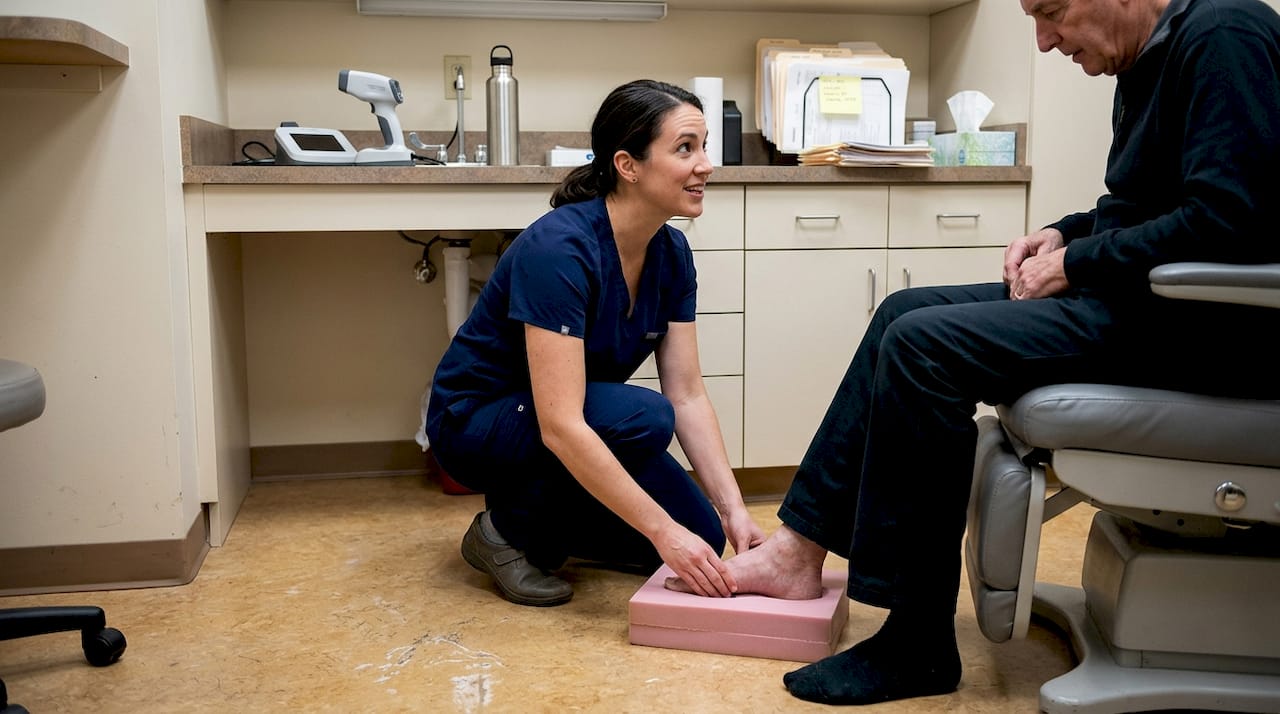
Custom-moulded insoles are shaped directly to your foot using either a foam impression box or a 3D scan. This means pressure is spread across the entire plantar surface rather than concentrated at vulnerable points. Custom insoles using pressure-mapping technology such as Boyner systems have been shown to reduce plantar pressure and aid healing in real diabetic cases.
The numbers behind this are striking. Research using finite element analysis, a computer modelling method that simulates how forces travel through the foot, found that optimised insoles can reduce peak foot stresses by up to 72.42%. That is not a marginal improvement. It represents a fundamental change in how much mechanical load your skin and soft tissue must absorb with every step.
| Feature | Standard insole | Specialist diabetic insole |
|---|---|---|
| Pressure redistribution | Minimal | Targeted and mapped |
| Cushioning material | Basic foam | Multi-density or viscoelastic |
| Custom fit | No | Yes (moulded or semi-custom) |
| Temperature management | None | Some designs include this |
| Shear force reduction | None | Incorporated in advanced models |
Modern insoles also consider temperature. Elevated foot temperature is an early warning sign of inflammation and ulcer formation. Some advanced designs incorporate materials that help stabilise skin temperature across the sole.
Pro Tip: Ask your podiatrist for a pressure map of your foot before selecting an insole. This simple test shows exactly where your high-risk zones are, so you can choose a design that targets those areas specifically.
Shear-reducing insoles, which aim to reduce the sideways friction forces that tear at skin layers, are a promising area of development. They work well in controlled conditions but require further refinement for consistent real-world performance. When selecting diabetic footwear, understanding these distinctions helps you ask better questions. The shoe technology benefits built into modern diabetic footwear often complement insole performance significantly.
Types of diabetic insoles and their functions
With the science established, the practical question is which insole suits your specific situation. There is no single answer, because the right choice depends on your foot shape, your neuropathy level, your ulcer history, and the shoes you wear every day.
| Insole type | Best suited for | Key benefit |
|---|---|---|
| Custom-moulded | History of ulcers, significant deformity | Precise offloading of problem areas |
| Semi-custom (prefabricated) | Mild neuropathy, general prevention | Good fit without clinical referral |
| Dimple insoles | Temperature monitoring, early prevention | Stabilises foot temperature |
| Shear-reducing | Active lifestyles, high friction areas | Reduces skin layer stress |
| Arch support insoles | Flat feet, overpronation | Corrects alignment, reduces fatigue |
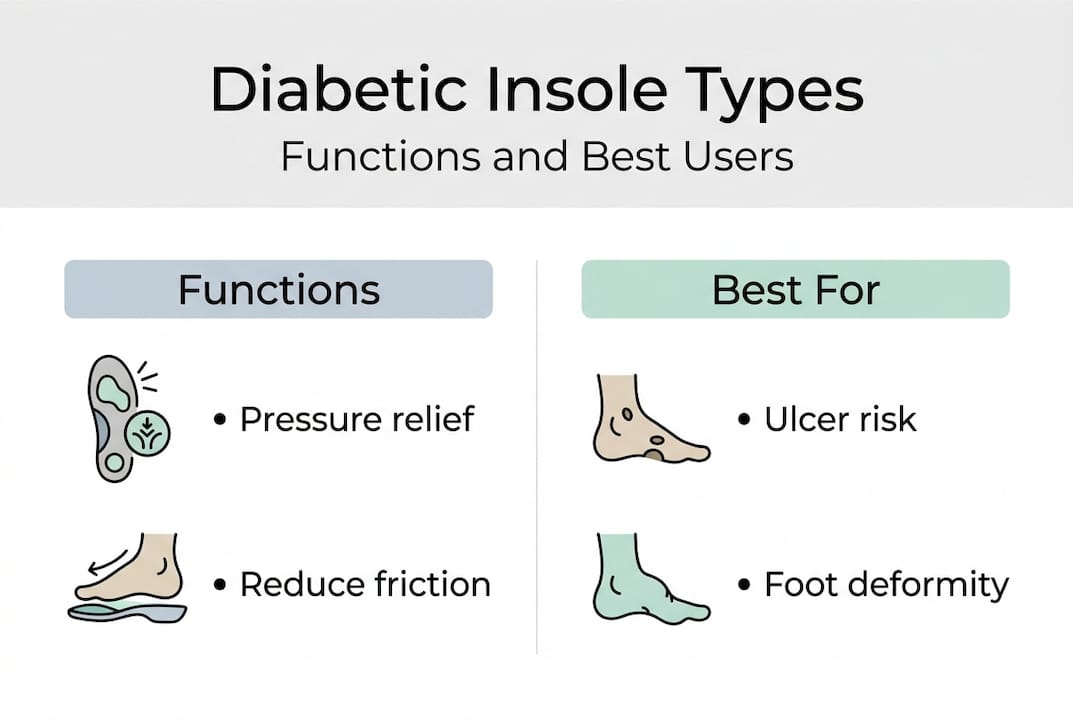
Dimple insoles deserve particular attention. These textured insoles are designed to improve airflow and microclimate beneath the foot. Research shows that dimple insoles help stabilise foot temperature and may reduce ulcer risk by keeping the skin environment more consistent throughout the day.
Here is how to match your situation to the right type:
- Neuropathy without ulcer history: A semi-custom insole with good cushioning and arch support is a strong starting point
- Previous ulcer or current wound: Custom-moulded insoles with targeted offloading are essential, ideally prescribed by a podiatrist
- Active lifestyle or long working hours: Look for shear-reducing properties combined with cushioning
- Concerns about foot temperature changes: Dimple or ventilated insoles add a useful layer of monitoring benefit
For those managing footwear for diabetics with neuropathy, the insole is only one part of the equation. The shoe itself must have enough depth and width to accommodate the insole without creating new pressure points. Understanding what makes shoes diabetic-friendly helps you avoid the common mistake of fitting a specialist insole into a shoe that undermines its benefits.
Getting the most from insoles: fit, adherence, and pitfalls
Having the right insole is only half the battle. The other half is wearing it correctly, consistently, and in the right footwear. This is where many people fall short, not through negligence, but through a lack of practical guidance.
Here is a step-by-step approach to making insoles work for you:
- Ensure your shoe has adequate depth. An insole adds volume inside the shoe. If your shoe is already snug, adding an insole will create pressure rather than relieve it.
- Remove the existing sock liner. Most shoes come with a thin removable liner. Take it out before inserting your diabetic insole.
- Check the fit after 30 minutes of wear. New insoles can feel unfamiliar. Mild adjustment is normal; pain or new pressure points are not.
- Inspect your feet daily. Because neuropathy reduces sensation, visual checks are your best early warning system.
- Follow up with your podiatrist every 6 to 12 months. Feet change over time, and an insole that worked well two years ago may no longer be appropriate.
Adherence is a genuine challenge. Insole use averages 60 to 70% in practice, and improving this requires both education and a proper fit. The most common reason people stop wearing their insoles is discomfort, which almost always traces back to a poor fit between the insole, the foot, and the shoe.
Pro Tip: Pair your insole review with your annual diabetic foot check. This makes it a routine rather than an afterthought, and ensures your insoles are always matched to your current foot health.
Avoiding common pitfalls matters too. Do not assume that one insole type suits all your shoes. A walking insole may not transfer well into a dress shoe. Getting shoe fit right is as important as the insole itself, and shoe width for diabetics is often overlooked. Wider shoes accommodate insoles without creating new problems. For those managing nerve-related discomfort, guidance on choosing shoes for neuropathy offers practical direction on pairing footwear with the right insole support.
A fresh perspective: what most diabetics miss about insoles
Conventional advice on diabetic insoles focuses almost entirely on offloading pressure and preventing ulcers. That is important, but it misses something equally significant: the role of confidence and daily wearability.
An insole you find uncomfortable, ugly, or inconvenient is an insole you will not wear. And an insole you do not wear offers zero protection. The best clinical insole in the world is useless if it sits in a drawer because it only fits one pair of shoes you never put on.
Style and foot health are not mutually exclusive. Modern diabetic footwear has moved far beyond the clunky, institutional look of previous decades. Footwear innovations for diabetics now combine genuine clinical performance with designs people actually want to wear. When you feel good in your shoes, you wear them more. When you wear them more, your feet are protected more consistently.
The other overlooked truth is that foot health requires regular review, not a one-off fix. Your feet change with age, weight, and disease progression. An insole chosen three years ago may be working against you today. Treating insoles as a permanent solution rather than a regularly reviewed tool is one of the most common and costly mistakes in diabetic foot care.
Discover stylish solutions for diabetic foot health
If this article has made one thing clear, it is that the right insole inside the right shoe makes a measurable difference to your foot health, your comfort, and your confidence. The science is solid. The practical steps are clear. What remains is finding footwear that brings all of this together without asking you to sacrifice style.
At YDA UK, we have built our range around exactly this challenge. Our YDA shoe technology is designed to support diabetic foot health from the ground up, combining advanced pressure management with footwear you will genuinely want to wear every day. Explore our collection and take the next step towards foot health that works with your life, not against it.
Frequently asked questions
Do all diabetics need special insoles?
Most diabetics benefit from specialist insoles, especially those with neuropathy or a history of ulcers. Specialised insoles excel at prevention and ongoing maintenance for high-risk patients, making them a worthwhile investment for the majority.
How do I know if my insoles are working?
Signs of effective insoles include fewer sore spots, improved comfort during and after walking, and no new skin breakdown or wounds. If problems persist, a podiatrist can assess whether your insoles reduce pressure adequately for your specific foot profile.
Are custom insoles better than over-the-counter options?
For ulcer prevention or healing, custom insoles generally outperform prefabricated ones because they are shaped to your exact foot. Custom insoles perform better than pre-made options for offloading specific ulcer sites in diabetics.
How often should insoles be replaced?
Replace diabetic insoles every 6 to 12 months, or sooner if they show visible wear, loss of cushioning, or no longer feel supportive. Regular replacement ensures the insole continues to perform as intended.