
Why good shoe grip matters: Safety and health
TL;DR:
- Grip depends on materials, design, fit, and testing standards, not just tread appearance.
- Shoes should be regularly replaced as tread wear reduces slip resistance over time.
- For high-risk individuals like diabetics, specific grip features are essential for safety and foot health.
Most people assume that if a shoe looks rugged and has a chunky tread, it must be safe. That assumption is dangerously wrong. Over 60% of workplace slips happen even when workers believe their footwear provides adequate grip. The reality is that grip is far more nuanced than tread depth alone. It depends on materials, fit, surface conditions, and whether the shoe has been tested to recognised standards. This article breaks down what grip actually means, which factors affect it most, why it is critical for people with diabetes or foot conditions, and how to choose and maintain footwear that genuinely keeps you safe.
Table of Contents
- What shoe grip really means: The science and standards
- Factors influencing grip: Outsole, fit, and environment
- Health and safety implications: Who needs grip most?
- Maximising shoe grip: Real-world care and buying advice
- A fresh perspective: Why environment trumps generic grip claims
- Ready for better grip? Explore solutions
- Frequently asked questions
Key Takeaways
| Point | Details |
|---|---|
| Grip prevents accidents | Good shoe grip dramatically reduces slips and falls in both dry and wet environments. |
| Rubber outsoles perform best | Shoes with rubber soles offer up to 70% better slip resistance compared to synthetics. |
| Importance of fit and tread | Secure fit and deep, well-designed treads are essential for safe slip-resistant footwear. |
| Special needs require extra features | Diabetics and others with foot conditions need shoes with grip plus extra depth and seamless interiors. |
| Replace worn shoes regularly | Grip fades as shoes wear out, so frequent replacement and tread maintenance are vital for safety. |
What shoe grip really means: The science and standards
Grip is not a feeling. It is a measurable physical property called the coefficient of friction (CoF). The CoF describes the resistance between two surfaces in contact. The higher the CoF, the less likely your foot is to slide. A shoe with a CoF below 0.2 on a wet floor is considered dangerously slippery. Most safety standards require a minimum CoF of 0.4 or above for acceptable slip resistance.
Not all outsole materials perform equally. Rubber outsoles provide up to 70% better slip resistance compared to synthetic alternatives. Rubber deforms slightly on contact with a surface, creating more grip area and better energy transfer. Synthetics are often harder, which reduces that contact and lowers friction dramatically on wet or smooth floors.
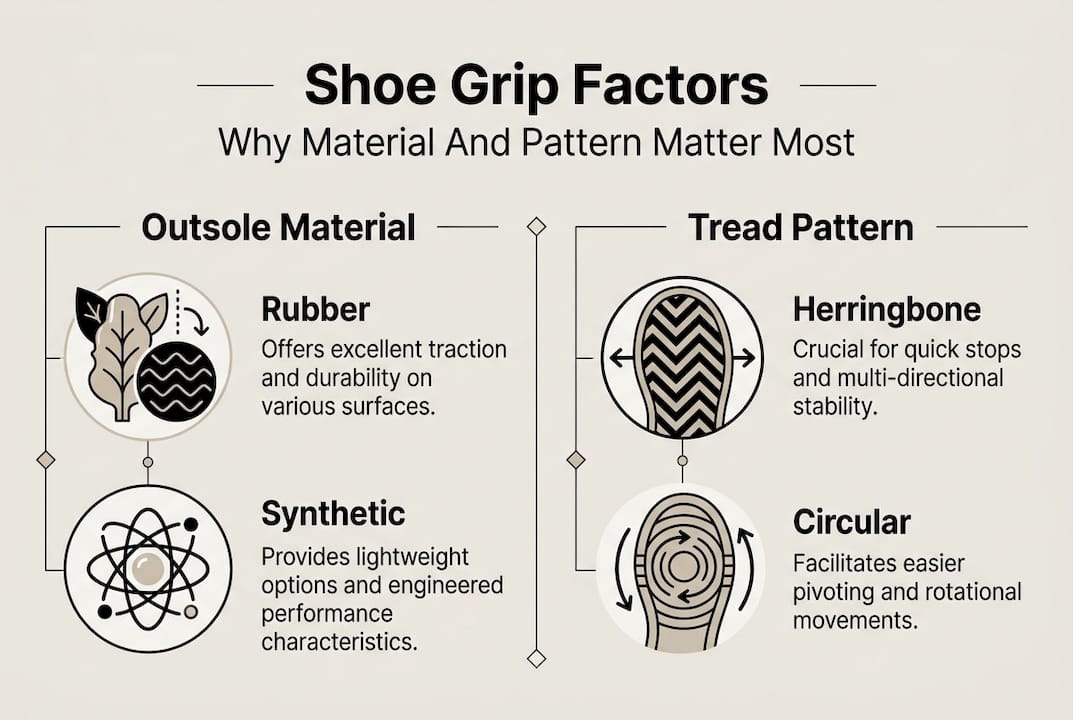
Tread pattern matters just as much as material. Herringbone and circular tread patterns are particularly effective because they channel water and contaminants away from the contact zone, maintaining surface contact. Close-packed treads work well indoors on smooth floors. Open, deeper treads suit outdoor and uneven terrain.
EN ISO and ASTM standards measure whole-shoe CoF under varied conditions, including wet ceramic tiles and steel surfaces. The key ratings to look for are:
- SRA: Tested on ceramic tile with a sodium lauryl sulphate solution
- SRB: Tested on smooth steel with glycerol
- SRC: Passes both SRA and SRB tests, the highest rating
“A shoe labelled SRC has passed the most rigorous slip resistance testing available under European standards. It is the benchmark for anyone working in high-risk environments or managing foot health conditions.”
| Outsole material | Tread type | Dry CoF | Wet CoF |
|---|---|---|---|
| Rubber | Herringbone | 0.85 | 0.55 |
| Rubber | Flat | 0.70 | 0.35 |
| Synthetic (PU) | Herringbone | 0.60 | 0.25 |
| Synthetic (PVC) | Flat | 0.45 | 0.18 |
| Leather | Flat | 0.40 | 0.15 |
These figures illustrate why material and tread design work together. A rubber herringbone outsole on a wet surface still outperforms a flat synthetic on a dry one. When you are shopping, do not just look at the pattern. Check the material and the rating.
Factors influencing grip: Outsole, fit, and environment
Knowing how grip is measured is useful. Understanding what undermines it in daily life is essential. Three factors dominate real-world grip performance: outsole compound, tread design, and how well the shoe fits your foot.
Fit is often overlooked in grip discussions, but proper fit reduces slips by 30%, while wet surfaces can cut traction by up to 50%. A shoe that is too loose allows your foot to shift inside it, which destabilises your stride and reduces the outsole’s ability to maintain consistent contact with the ground. The importance of shoe fit cannot be overstated, particularly for people whose feet change shape due to swelling or conditions like diabetes.
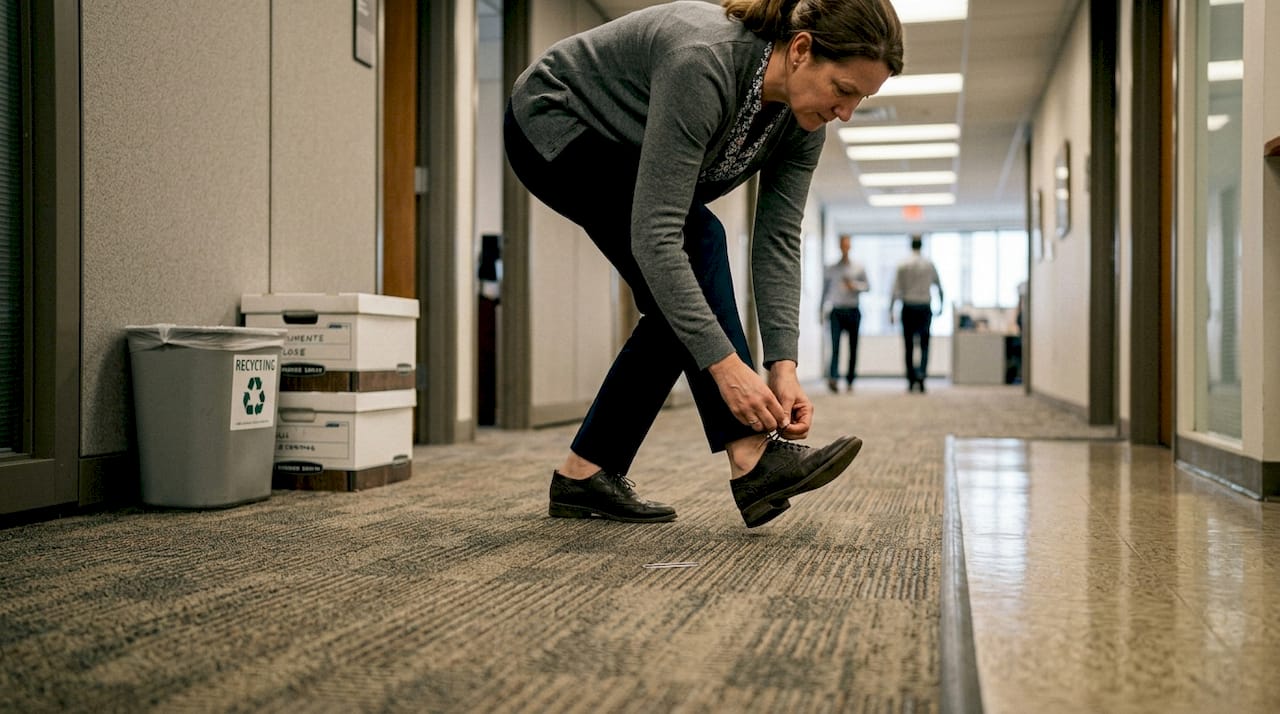
Environment is the variable most people ignore entirely. A shoe that grips brilliantly on dry office carpet may perform dangerously on a wet kitchen floor. Slip resistance research consistently shows that surface contamination, including water, oil, and fine dust, dramatically alters CoF values regardless of outsole quality.
| Environment | Best tread type | Worst tread type |
|---|---|---|
| Dry indoor floors | Close-packed, flat | Open lug |
| Wet indoor surfaces | Herringbone, channelled | Flat synthetic |
| Outdoor uneven terrain | Open lug, deep tread | Close-packed |
| Oily surfaces | Nitrile rubber, channelled | PVC flat |
Here is what typically affects grip day to day:
- Outsole compound hardness: Softer rubber grips better but wears faster
- Tread depth: Deeper treads channel more liquid but may feel unstable indoors
- Shoe weight: Heavier shoes can reduce stride control and increase slip risk
- Surface temperature: Cold surfaces reduce rubber flexibility and lower CoF
- Contamination type: Oil is far more dangerous than water on most outsole materials
Pro Tip: Before committing to a pair of shoes for a specific environment, wear them for 10 minutes on the actual surface you use most. No rating replaces a real-world trial in your specific conditions.
Health and safety implications: Who needs grip most?
Slip accidents are not evenly distributed across the population. Certain groups face significantly higher risk, and for them, grip is not a comfort preference. It is a health necessity.
Slips and trips account for around 20% of workplace accidents, and for people living with diabetes, the consequences of a fall are far more severe. Peripheral neuropathy, a common complication of diabetes, reduces sensation in the feet, meaning a person may not notice they are losing balance until they have already fallen. Reduced circulation also slows wound healing, so even a minor injury from a slip can become a serious medical concern.
Understanding diabetic footwear grip technology reveals why specialist shoes go far beyond standard non-slip soles. The best options combine grip with extra depth for orthotics, a wide toe box to prevent pressure points, and seamless interiors that eliminate friction against fragile skin. Poorly designed footwear, including some widely worn casual styles, has been linked to significant numbers of slip-related injury claims.
For anyone with neuropathy, reduced mobility, or diabetes, here are the features to prioritise:
- Non-slip rubber outsole with SRC or EN ISO certification
- Extra depth to accommodate custom insoles or orthotics
- Wide toe box to prevent pressure-related skin breakdown
- Seamless interior lining to reduce friction and blister risk
- Firm heel counter to stabilise the foot and improve balance
- Lightweight construction to reduce fatigue and improve stride control
For comfort and foot health, the right shoe does not just prevent falls. It actively supports the foot’s structure throughout the day.
Pro Tip: For people with neuropathy, textured insoles that provide gentle sensory feedback underfoot can improve balance and reduce sway during walking, even when sensation is diminished.
Maximising shoe grip: Real-world care and buying advice
Buying a well-rated shoe is only the beginning. Grip is not permanent. It deteriorates with use, and most people replace their shoes far too late.
Grip deteriorates with wear, and shoes used daily should be replaced every 6 to 12 months to maintain reliable slip resistance. Tread depth reduces with every step. Once the pattern wears flat, even the best rubber compound loses its ability to channel liquid or maintain adequate CoF. Clogged treads, packed with dirt or debris, are equally dangerous because they behave like a flat sole on contact surfaces.
Here is a practical buying checklist for grip-focused footwear:
- Check for SRA, SRB, or SRC certification on the product label or specification sheet
- Confirm the outsole is rubber, not PVC or standard synthetic
- Look for channelled or herringbone tread patterns suited to your main environment
- Ensure the shoe fits snugly at the heel with adequate toe room
- Test flex: the shoe should bend at the ball of the foot, not the arch
- For health conditions, check for extra depth and removable insoles
A good selection guide for diabetic shoes will always include grip as a primary criterion alongside fit and interior construction.
Pro Tip: Prioritise shoes tested to SRA, SRB, or SRC standards. Marketing terms like “non-slip” or “anti-skid” have no standardised definition and offer no guarantee of performance.
| Feature | Why it matters | What to look for |
|---|---|---|
| Outsole material | Determines baseline CoF | Natural or nitrile rubber |
| Tread pattern | Channels liquid, maintains contact | Herringbone or channelled |
| Certification | Proves tested performance | SRA, SRB, SRC, EN ISO |
| Fit | Stabilises stride, reduces sway | Snug heel, wide toe box |
| Tread depth | Sustains grip over time | At least 3mm depth |
| Insole type | Supports balance and posture | Removable, textured |
Clean your treads regularly with a stiff brush and mild soapy water. Inspect the outsole monthly. If the tread pattern is no longer visible in any area, replace the shoes without delay.
A fresh perspective: Why environment trumps generic grip claims
Here is something most footwear articles will not tell you: a high grip rating on a label means very little if the shoe was never tested in conditions that resemble your daily life. Environment-specific testing is critical because generic claims frequently fail under real-world conditions.
The footwear industry has a habit of presenting grip as a universal feature. A shoe is either grippy or it is not. That framing is misleading. A shoe rated SRA performs on wet ceramic tile with a specific detergent solution. That is not your kitchen floor, your hospital corridor, or your garden path.
There is also a less obvious issue: over-cushioning. Thick, soft midsoles that feel comfortable can actually reduce the sensory feedback your foot receives from the ground. That feedback is part of how your nervous system maintains balance. Reduce it too much, and you may feel more comfortable but react more slowly to surface changes. For people with neuropathy, this trade-off deserves serious consideration.
The most useful advice we can offer is this: match your grip features to your actual surfaces, not to a marketing claim. Explore health-oriented footwear benefits with that lens, and you will make far better decisions than by trusting a label alone.
Ready for better grip? Explore solutions
If this article has changed how you think about grip, the next step is finding footwear that genuinely delivers on it. At YDA, we design shoes around the science of foot health and slip resistance, not around marketing language.
Our YDA shoe technology is built to support people who need real performance from their footwear, whether that means managing a health condition, staying safe on demanding surfaces, or simply walking further with less fatigue. Browse our range of specialist footwear and find a shoe that matches your environment, your health needs, and your daily life. Grip should never be an afterthought.
Frequently asked questions
How can I tell if a shoe has good grip?
Look for shoes with rubber outsoles, deep channelled tread patterns, and SRC or EN ISO ratings, which confirm the shoe has been independently tested for slip resistance under standardised conditions.
Does shoe grip deteriorate over time?
Yes. Worn or clogged treads lose their ability to channel liquid and maintain friction, so shoes used daily should be replaced every 6 to 12 months to remain reliably safe.
Why do diabetics need special shoe grip?
Diabetics face higher slip risk due to neuropathy and balance issues, and benefit from non-slip soles with extra depth and seamless interiors that protect fragile skin while maintaining stability.
Are oil-resistant shoes always slip-resistant?
No. Oil-resistant does not mean slip-resistant, and some shoes labelled this way still perform poorly on slick or contaminated surfaces without a verified CoF rating to back the claim.