
Role of Non-Slip Soles – Safeguarding Everyday Mobility
Slipping on a wet floor remains one of the most common causes of workplace injuries, yet many people mistakenly believe all rubber shoes deliver real slip resistance. British organisations place a strong focus on safety, driving innovation in non-slip sole technology for both public and professional use. By exploring what truly sets non-slip footwear apart from standard options, this guide uncovers the myths, science, and key design factors shaping safer steps for everyone.
Table of Contents
- Defining Non-Slip Soles And Common Myths
- Types Of Non-Slip Sole Technologies Explained
- How Non-Slip Soles Prevent Slips And Falls
- Design Factors Influencing Non-Slip Performance
- Comparing Non-Slip Versus Standard Shoe Soles
Key Takeaways
| Point | Details |
|---|---|
| Non-Slip Soles Enhance Safety | Non-slip soles are designed with advanced materials and tread patterns that significantly reduce slip risks across various surfaces. |
| Material Matters | Effective non-slip footwear incorporates high-friction rubber compounds and specialised surface texturing to optimise grip. |
| Design Factors Impact Performance | Key design elements, such as tread patterns and sole flexibility, are crucial for maximising slip resistance and adaptability on different terrains. |
| Not a Complete Guarantee | While non-slip soles provide improved safety, they should be seen as part of a broader safety strategy, considering surface conditions and environmental factors. |
Defining Non-Slip Soles and Common Myths
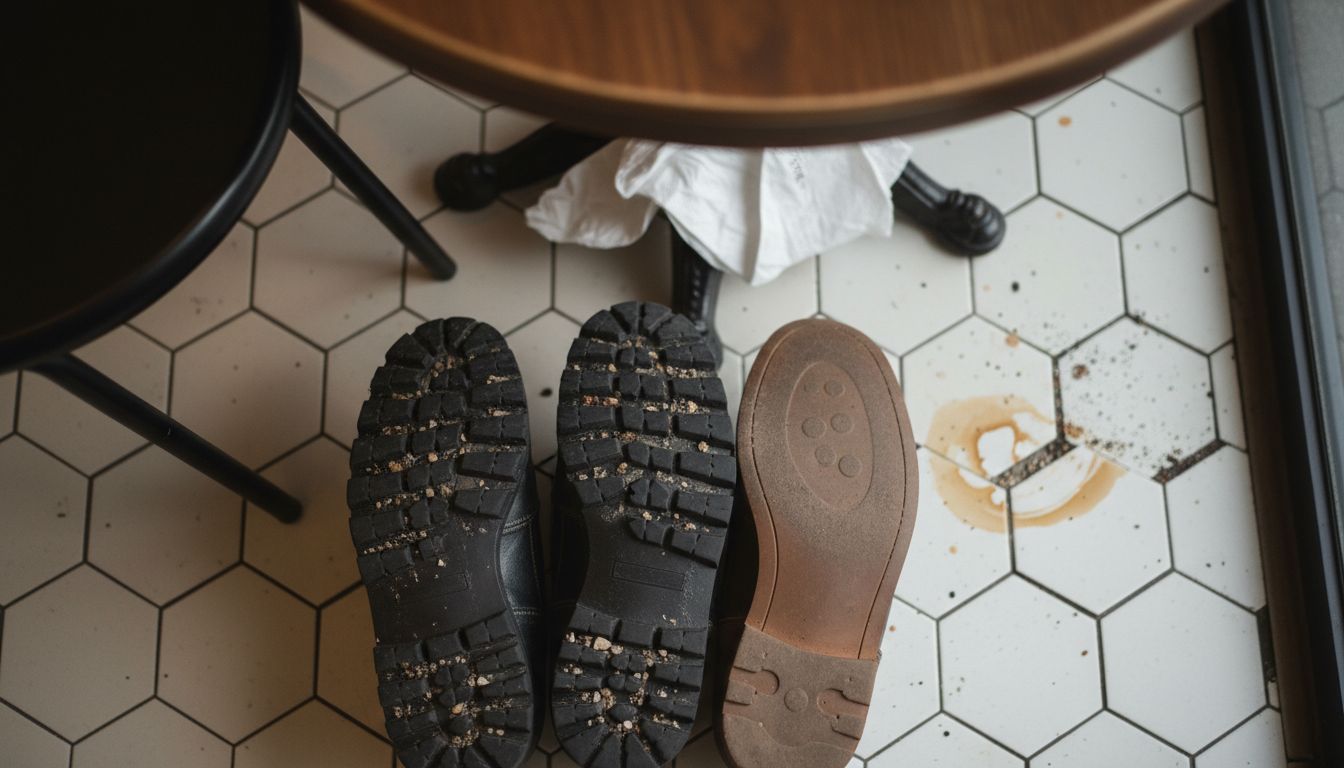
Non-slip soles are specialised footwear components engineered to provide superior grip and safety across various surfaces. Unlike standard shoe bases, these technological marvels incorporate advanced design principles that dramatically reduce the risk of accidental slips and falls. Outsole technology plays a critical role in creating these protective features.
The fundamental mechanism behind non-slip soles involves strategic tread patterns and specific material compositions. Research from the Fall Prevention Foundation reveals that effective slip-resistant footwear requires more than just rubber material. The key components include:
- Unique multi-directional tread designs
- High-friction rubber compounds
- Specialised surface texturing
- Precision-engineered sole patterns
Contrary to popular misconception, not all rubber-soled shoes provide genuine slip resistance. The British Safety Council emphasises that while non-slip footwear is essential, it represents just one aspect of comprehensive safety strategies. Surface conditions, maintenance, and environmental factors also significantly influence slip prevention. Understanding these nuanced considerations helps consumers make more informed choices about protective footwear.
Types of Non-Slip Sole Technologies Explained
Non-slip sole technologies represent a sophisticated approach to improving footwear safety and performance. Footwear technology continues to evolve, offering increasingly advanced solutions for preventing accidental slips and enhancing user stability across diverse environments.
Research from workwear organisations highlights several key materials used in non-slip sole technologies, each with unique characteristics:
- Rubber: Provides natural grip and excellent traction
- Polyurethane: Offers superior cushioning and enhanced durability
- Thermoplastic Polyurethane (TPU): Combines flexibility with impressive abrasion resistance
Additional innovative materials are transforming non-slip technologies. Advanced research in material science reveals emerging technologies like thermoplastic rubber (TPR) and plasticised PVC. TPR ingeniously blends synthetic rubber’s durability with remarkable elasticity, while injection-moulded PVC soles deliver extraordinary strength and wear resistance. These developments demonstrate the ongoing commitment to creating footwear that prioritises safety without compromising comfort or performance.
How Non-Slip Soles Prevent Slips and Falls
Slip prevention is a critical aspect of footwear design that goes far beyond simple traction. Adaptive footwear technology has revolutionised our understanding of how shoe soles can effectively reduce the risk of accidental falls across various surfaces and conditions.
Scientific research demonstrates that sole material plays a pivotal role in preventing slips. Softer shoe soles increase available friction, significantly reducing the probability of slip initiation. This counterintuitive finding highlights the nuanced engineering behind effective non-slip technologies:
- Soft materials create better surface contact
- Enhanced friction reduces slip potential
- Material flexibility influences grip performance
- Sole composition directly impacts safety
Cutting-edge innovations continue to emerge in slip prevention. Advanced material research reveals remarkable technologies like outsoles embedded with activated carbon and sodium chloride. These sophisticated materials enhance friction on challenging surfaces such as wet or icy environments by creating negative pressure effects, dramatically reducing slip rates and improving user safety. The ongoing evolution of non-slip technologies demonstrates a remarkable commitment to protecting individuals from potential mobility-related accidents.
Design Factors Influencing Non-Slip Performance
Non-slip shoe design represents a complex engineering challenge that goes beyond simple surface considerations. The Essential Guide to Footwear Technology highlights the intricate balance between material science, ergonomic design, and safety performance.
Research from fall prevention experts reveals critical design factors that enhance slip resistance:
- Tread Patterns: Engineered to channel liquids away from contact surfaces
- Sole Flexibility: Enables adaptive grip across varied terrain
- Material Composition: Utilises inherently grippy substances like rubber
- Surface Interaction: Maximises real contact points between shoe and ground
Safety research demonstrates that composite materials like rubber and polyurethane offer exceptional performance. These sophisticated sole units provide unprecedented stability, dramatically reducing slip risks even in challenging environments such as oily or wet surfaces. The ongoing evolution of non-slip technologies continues to push boundaries, transforming footwear from mere protection to a scientifically engineered safety solution.
Comparing Non-Slip Versus Standard Shoe Soles
Performance differences between non-slip and standard shoe soles represent a critical safety consideration for everyday mobility. Why Shoes Wear Out provides insights into how sole design directly impacts user safety and comfort.
Scientific comparative studies reveal fundamental distinctions in shoe sole performance:
-
Friction Characteristics:
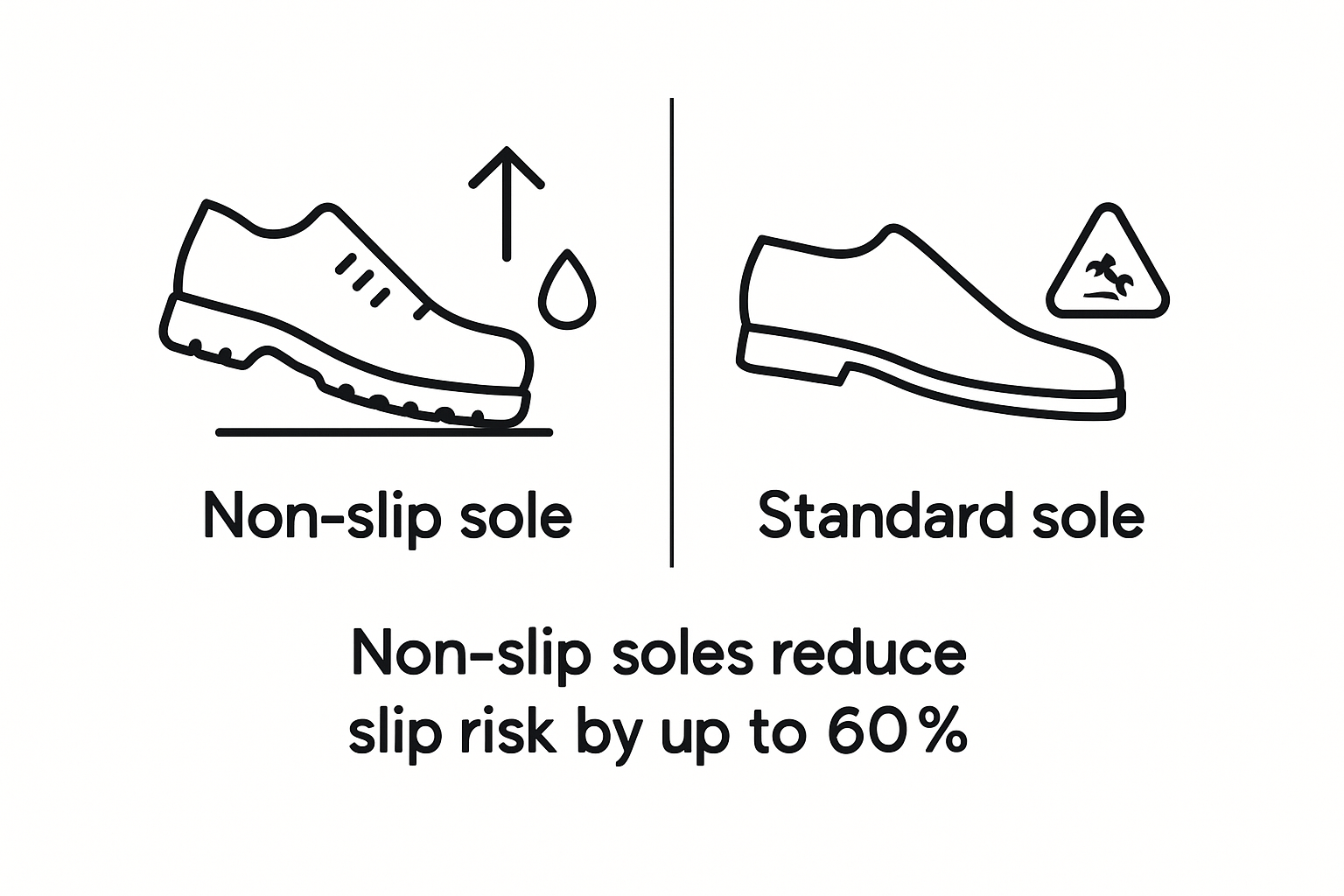
- Non-slip soles: Higher friction coefficients
- Standard soles: Lower friction, increased slip risk
-
Material Composition:
- Non-slip soles: Softer, more adaptable materials
- Standard soles: Harder, less responsive compositions
-
Surface Interaction:
- Non-slip soles: Enhanced contact and grip
- Standard soles: Reduced surface engagement
Safety experts emphasise that while non-slip footwear provides superior protection, it should not be considered an absolute guarantee against accidents. The specialised design of non-slip soles – incorporating advanced materials and intricate tread patterns – offers significantly improved stability compared to standard shoe soles, making them a critical choice for individuals prioritising personal safety across diverse environmental conditions.
Discover True Safety with Advanced Non-Slip Soles for Everyday Mobility
Ensuring your footwear offers genuine slip resistance is essential to prevent falls and maintain confidence with every step. As discussed in the article, simply having rubber soles is not enough. Effective non-slip shoes depend on cutting-edge materials, precise tread patterns, and sole flexibility to provide superior grip across wet, oily, or icy surfaces. If you are seeking footwear that combines these science-backed features with comfort and style look no further than YDA. Our collection is thoughtfully engineered with innovative YDA Technology to deliver enhanced stability and foot health without compromising appearance or comfort.
Take control of your everyday safety now by choosing footwear that truly safeguards your mobility. Explore the full range of high-performance shoes at YDA UK and step into confidence with soles designed to keep you firmly grounded no matter the environment. Don’t wait risk slipping while you can invest in lasting protection today.
Frequently Asked Questions
What are non-slip soles?
Non-slip soles are specialised footwear components designed to provide superior grip and prevent slips on various surfaces. They incorporate advanced tread patterns and materials to enhance safety.
How do non-slip soles prevent slips and falls?
Non-slip soles use softer materials that increase friction, providing better surface contact. This enhances grip and reduces the likelihood of slipping, especially on wet or uneven surfaces.
What materials are commonly used in non-slip sole technologies?
Common materials include rubber, polyurethane, and thermoplastic polyurethane (TPU). Advanced materials like thermoplastic rubber (TPR) and plasticised PVC are also utilised for their durability and flexibility.
How do non-slip soles compare to standard shoe soles?
Non-slip soles typically have higher friction coefficients and are made from softer, more adaptable materials, offering significantly improved stability and grip compared to standard shoe soles.
Recommended
- Outsole Technology Explained: Features, Types, Benefits – YDA UK
- 7 Key Benefits of Foot Health Shoes for Everyday Comfort – YDA UK
- 7 Essential Features of Performance Shoes for Foot Health – YDA UK
- Complete Guide to the Role of Adaptive Footwear – YDA UK
- What Makes Cookware Nonstick: Complete Guide – Brass & Steel
- 7 Smart Shoe Storage Solutions for Every Home – BLUSHBEES USA