
Why accommodate foot deformities: comfort, support, mobility
TL;DR:
- Proper footwear accommodation can significantly reduce pain and prevent serious foot complications.
- Custom orthotics and specialized shoes help support, cushion, and redistribute pressure for deformities.
- Addressing foot deformities early with tailored footwear preserves mobility and independence long-term.
Many people with bunions, hammertoes, or flat feet quietly accept daily pain as an unavoidable part of life. That belief is simply wrong. The right footwear accommodation can transform how you move, reduce pain dramatically, and protect against serious complications down the line. Accommodation means designing or selecting shoes and insoles that work with your foot’s shape rather than forcing it into a standard mould. This article explains what accommodation involves, why the evidence behind it is compelling, and how you can apply it practically to reclaim comfort and independence.
Table of Contents
- The impact of foot deformities on daily life
- Why accommodation is essential: The scientific case
- Types of accommodation: Orthotics and footwear solutions
- Special considerations for different foot deformities
- Our view: Why proper accommodation is more than just comfort
- Explore specialist footwear for your needs
- Frequently asked questions
Key Takeaways
| Point | Details |
|---|---|
| Early accommodation prevents pain | Choosing supportive footwear early stops minor deformities becoming disabling. |
| Custom solutions work best | Custom orthotics and shoes offer superior comfort and reduce complications. |
| Different deformities need different care | Rigid, flexible, and post-surgical feet each benefit from tailored accommodation approaches. |
| Professional advice is vital | A healthcare professional can prescribe the most effective solutions based on your needs. |
The impact of foot deformities on daily life
Foot deformities are far more common than most people realise. Bunions, hammertoes, flat feet, claw toes, and Charcot foot all alter the way your foot contacts the ground. That altered contact changes everything: your gait, your posture, the load on your knees and hips, and ultimately your ability to stay active and independent.
The symptoms are wide-ranging. Pain is the most obvious, but reduced mobility, skin breakdown, and pressure sores follow quickly when deformities go unaddressed. For people with diabetes or circulatory problems, the stakes are even higher. Foot deformities impair gait, mobility, and predispose to falls, ulcers, and infections, making early action critical rather than optional.
Common deformities include:
- Bunions: A bony prominence at the base of the big toe, causing the toe to angle inward
- Hammertoes: Abnormal bending of the middle toe joint, creating friction and pressure
- Flat feet (pes planus): Collapsed arches that redistribute load unevenly across the foot
- Claw toes: Toes that curl downward, increasing pressure on the tips and tops
- Charcot foot: A serious condition where bones weaken and fracture, common in diabetic neuropathy
“Neglecting foot deformities does not just mean living with discomfort. It means accepting a progressive loss of mobility, increasing fall risk, and in severe cases, the threat of amputation.”
The consequences of ignoring these conditions compound over time. A bunion that causes mild discomfort at 40 can become a debilitating problem at 60. Hammertoes that rub against standard shoe uppers develop painful corns and ulcers. Flat feet that go unsupported lead to knee and back pain that seems unrelated to the foot at all.
Understanding reducing foot pain starts with acknowledging that the right footwear is not a luxury. It is a clinical necessity for anyone living with a structural foot condition.
Why accommodation is essential: The scientific case
Accommodation is not just about feeling more comfortable on a long walk. The clinical evidence shows it directly prevents serious medical events. Accommodating foot deformities with specialised footwear and orthotics relieves pain, prevents complications, and improves mobility across a range of conditions and severity levels.
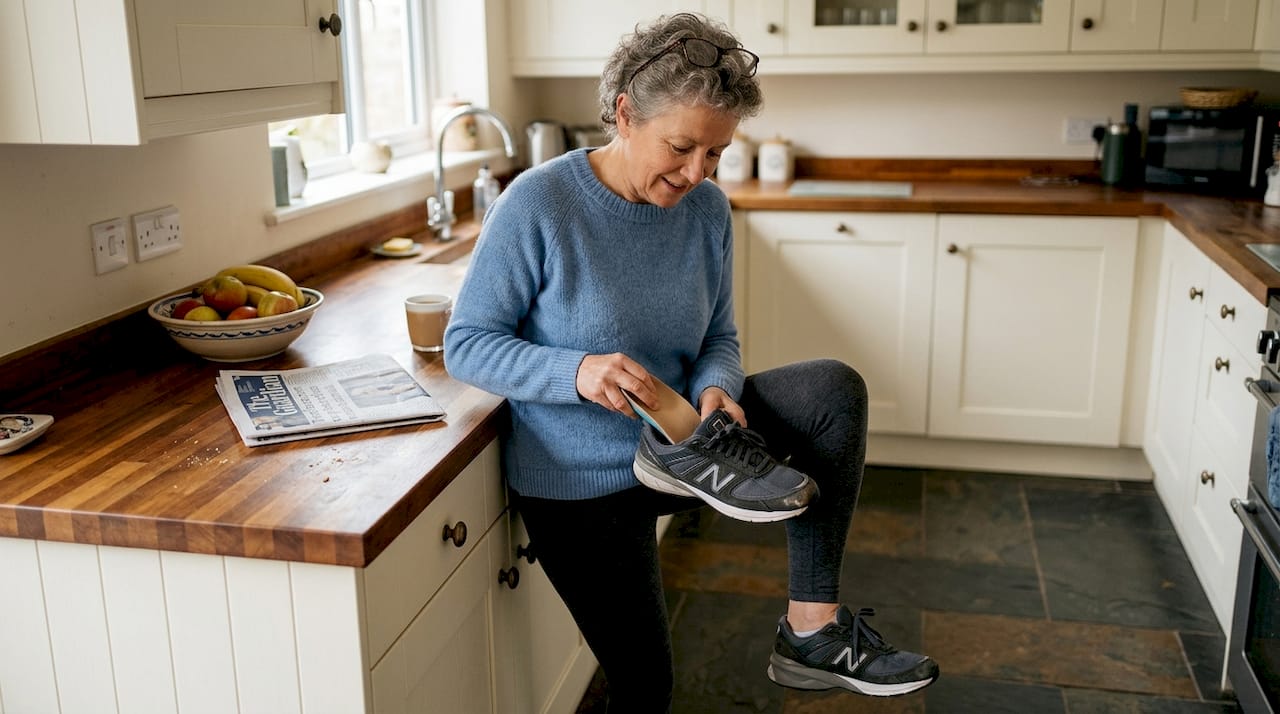
Research into orthotics specifically shows measurable physical changes. Custom orthotics reduce plantar pressure, improve foot morphology, and decrease pain, giving clinicians a concrete tool rather than a comfort measure.
| Outcome | Without accommodation | With accommodation |
|---|---|---|
| Pain levels | High, often worsening | Significantly reduced |
| Plantar pressure | Concentrated on deformity | Redistributed evenly |
| Ulcer risk | Elevated | Substantially lowered |
| Gait quality | Altered, compensatory | Closer to natural pattern |
| Mobility | Restricted | Improved over time |
The table above illustrates why accommodation is a clinical priority rather than an optional upgrade. Redistributing plantar pressure alone reduces the risk of ulcers, which for diabetic patients can be the difference between keeping and losing a limb.
Pro Tip: The earlier you address a foot deformity with proper footwear, the better your outcomes. Waiting until pain becomes severe means more tissue damage, more compensatory movement patterns, and a longer road to recovery.
Learning about custom insoles is a practical first step. The science consistently shows that the combination of well-fitted shoes and appropriate insoles outperforms either solution used alone.
Types of accommodation: Orthotics and footwear solutions
Accommodation covers a broad range of solutions, from off-the-shelf insoles to fully bespoke footwear. Understanding what each option does helps you make an informed choice rather than guessing at the pharmacy.

Accommodative orthotics cushion and protect existing deformities, while functional or semi-rigid orthotics provide support and control. Accommodative types suit conditions like diabetes, arthritis, and post-surgical feet. Functional types work better for flexible deformities where some correction is still possible.
Common footwear modifications include:
- Extra width and depth: Prevents compression of bunions and hammertoes
- Rocker soles: Reduce forefoot pressure and simulate natural toe-off motion
- Flared soles: Improve lateral stability for those with balance concerns
- Cushioned midsoles: Absorb impact and reduce joint stress
- Removable footbeds: Allow custom insoles to be fitted inside the shoe
| Accommodation type | Best suited for | Key benefit |
|---|---|---|
| Wide-fit shoes | Bunions, swollen feet | Reduces compression and friction |
| Rocker sole | Arthritis, diabetic foot | Offloads forefoot pressure |
| Custom insole | Flat feet, plantar fasciitis | Redistributes load evenly |
| Depth shoe | Hammertoes, claw toes | Provides vertical space for toes |
| Ankle foot orthosis | Post-surgical, neurological | Stabilises ankle and foot |
Exploring customised footwear options gives you a clearer picture of what is available beyond standard high-street shoes. For those managing diabetes, reviewing the types of diabetic footwear available is particularly worthwhile.
Pro Tip: A professional gait analysis identifies exactly where your foot is under pressure and which accommodation strategy will work best for your specific deformity. It takes the guesswork out of the process entirely.
Special considerations for different foot deformities
Not all foot deformities respond to the same approach. The key distinction clinicians draw is between rigid and flexible deformities, and this shapes every accommodation decision.
For fixed or rigid deformities, accommodation is preferred; for flexible deformities, some structural support is possible. Rocker soles and SACH (solid ankle cushion heel) heels simulate motion where the foot itself can no longer produce it naturally.
Here is a stepwise approach for different scenarios:
- Flexible deformities: Start with supportive insoles and well-fitted shoes. Functional orthotics can guide the foot toward a more neutral position during movement.
- Rigid deformities: Focus on accommodation rather than correction. Extra-depth shoes, cushioned rocker soles, and soft orthotics protect the foot without attempting to force structural change.
- Post-surgical feet: Footwear must account for altered anatomy. Bespoke shoes or modular orthoses are often necessary in the months following surgery.
- Diabetic neuropathy: Pressure relief is the priority. Total contact insoles and seamless interiors prevent skin breakdown in feet that cannot feel damage occurring.
- Post-polio or fused joints: Where ankle or subtalar motion is absent, rocker soles become essential to restore a functional walking pattern.
For anyone managing diabetes, the diabetic footwear guide is a detailed resource worth reading before making any footwear decision. Getting shoe fit for diabetics right is not simply about comfort. It is about preventing wounds that may not heal.
Multidisciplinary care matters here too. Podiatrists, orthotists, and physiotherapists each bring a different perspective. When deformities are complex or rapidly progressing, working with a team produces better outcomes than relying on any single professional or product.
Our view: Why proper accommodation is more than just comfort
Most conversations about accommodating foot deformities focus on pain relief. That framing, while understandable, misses the bigger picture. Pain relief is the immediate benefit. The real value is what comes after: preserved mobility, maintained independence, and a significantly lower risk of the kind of complications that change lives permanently.
We see people delay proper footwear solutions because they assume it means sacrificing style or spending a great deal of money. In reality, waiting almost always costs more, in clinical treatment, in lost activity, and in quality of life.
Generic shoes are designed for average feet. If your foot is not average, a generic shoe is not neutral. It is actively working against you. Choosing accommodation early is not a sign of giving in to a condition. It is a proactive investment in staying mobile and healthy for longer.
The benefits of custom insoles extend well beyond cushioning. They represent a commitment to treating your feet as the structural foundation they genuinely are.
Explore specialist footwear for your needs
If you have read this far, you already understand that the right footwear is not optional when you are managing a foot deformity. The next step is finding shoes built to accommodate your specific needs.
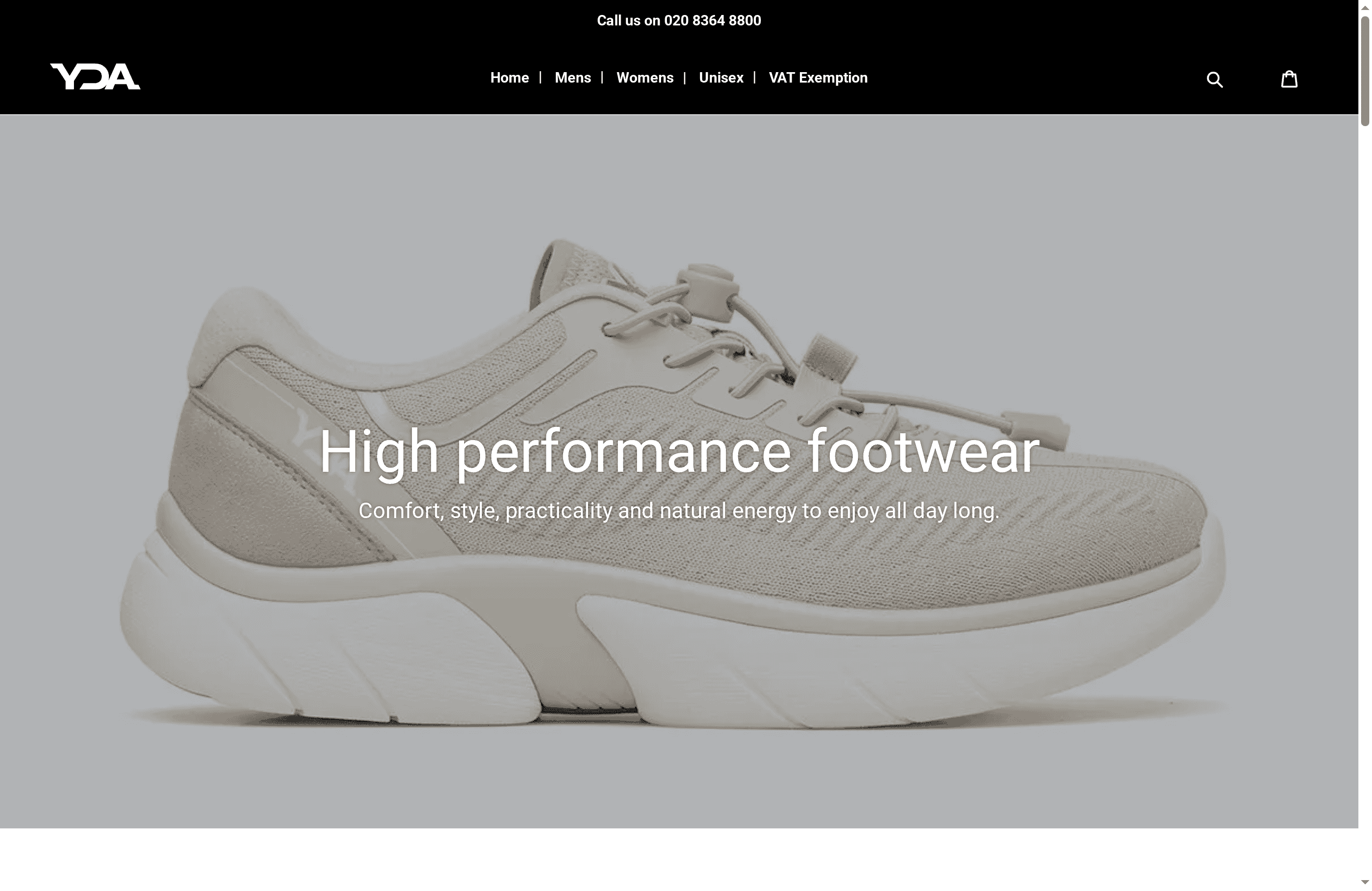
At YDAUK, our range of specialist shoes for foot deformities is designed with width, depth, and support in mind. Whether you need extra room for a bunion or a removable footbed for your custom insole, the features are built in from the start. Browse our trainers for problem feet for everyday options that combine genuine foot health technology with a style you will actually want to wear. Your feet deserve footwear that works for them.
Frequently asked questions
Can accommodating footwear really help prevent further complications?
Yes. Proper footwear prevents complications including ulcers and mobility loss, particularly for those with diabetes or circulatory conditions where foot health is closely tied to overall wellbeing.
What is the difference between accommodative and corrective footwear?
Accommodative footwear supports and protects existing deformities without attempting to change foot structure, while corrective footwear aims to realign the foot. Accommodative orthotics cushion and protect; functional types provide support and control for flexible conditions.
How do I know if I need custom orthotics or specialist shoes?
If you have persistent pain, pressure points, or a diagnosed deformity, a professional fitting is the best starting point. Gait analysis and clinical evaluation are advised before any orthotic or specialist shoe is prescribed.
Are there specific features to look for in shoes for foot deformities?
Prioritise extra width and depth, cushioned and rocker soles, seamless interiors to prevent rubbing, and removable footbeds that allow your own orthotics to fit comfortably inside the shoe.
Recommended
- Orthotic-Friendly Footwear: Enhancing Comfort and Foot Health – YDA UK
- Why avoid ill-fitting shoes for foot health comfort – YDA UK
- How to improve foot support for lasting comfort – YDA UK
- 7 Examples of Foot Health Shoes for Everyday Comfort – YDA UK
- Adaptive Fashion Style and Dignity - STOMART.CO.UK