
What is EVA foam? Your guide to footwear comfort
TL;DR:
- EVA foam is a lightweight, closed-cell material with customizable formulation that provides cushioning, support, and moisture resistance in shoes. Its performance depends on specific properties like density and hardness, which influence comfort and durability. Properly specified EVA foam combined with thoughtful shoe design promotes foot health rather than relying solely on softness.
If you have ever bought a pair of trainers and wondered why the midsole feels bouncy in one shoe and rock-solid in another, the answer almost always comes back to EVA foam. EVA foam is a closed-cell cellular material made from the ethylene-vinyl acetate copolymer, and it sits beneath your foot in the majority of performance shoes on the market today. Most people treat it as a single, uniform material. It is not. The formulation varies enormously, and those variations determine whether your shoes genuinely support your feet or simply feel soft for the first few weeks before compressing into nothing.
Table of Contents
- What EVA foam is and how it’s made
- Key physical and mechanical properties of EVA foam
- EVA foam versus other foam materials in footwear
- Selecting the right EVA foam footwear for foot health and comfort
- Safety and environmental considerations of EVA foam in footwear
- Rethinking EVA foam: beyond cushioning to foot health optimisation
- Explore YDA shoes technology for enhanced comfort and support
- Frequently asked questions
What EVA foam is and how it’s made
EVA stands for ethylene-vinyl acetate, a copolymer produced under heat and pressure that combines two chemical building blocks: ethylene and vinyl acetate. The ratio of those two components is the first critical variable. A higher vinyl acetate content makes the foam softer and more pliable. A lower ratio produces a firmer, denser material better suited to structural support.
The manufacturing process introduces a blowing agent into the polymer mix. When the material is heated in a mould, the blowing agent releases gas, expanding the polymer into a foam. What you end up with is a closed-cell structure, meaning each gas pocket is sealed within its own wall. This is the detail that separates EVA foam from open-cell foams like the type inside a sponge, and it matters enormously for shoe materials performance.
Here is what the closed-cell structure actually delivers in practice:
- Cushioning without collapse. Sealed gas cells compress under load and spring back, giving you rebound energy with every step.
- Moisture resistance. Water cannot penetrate sealed cells, so the foam does not absorb sweat or external moisture.
- Consistent weight. Because no liquid is absorbed, the shoe stays light throughout its life.
- Thermal insulation. The gas-filled cells slow heat transfer, keeping your foot at a more stable temperature.
- Shape retention. Closed cells resist permanent deformation better than open alternatives under moderate load.
Understanding this structure makes everything else about EVA foam’s behaviour predictable rather than mysterious.
Key physical and mechanical properties of EVA foam
The closed-cell structure is the foundation, but the actual performance numbers are what matter when you are choosing footwear for everyday wear or a specific foot condition. EVA foam density ranges from 20 to 150 kg/m³, Shore A hardness spans 25 to 75, and thermal conductivity sits at roughly 0.033 W/m·K, which is low enough to genuinely influence comfort in varying temperatures.
| Property | Typical range | What it means for your feet |
|---|---|---|
| Density | 20 to 150 kg/m³ | Higher density = more support and durability |
| Shore A hardness | 25 to 75 | Lower = softer cushioning; higher = firmer support |
| Thermal conductivity | ~0.033 W/m·K | Low value = better insulation, more stable foot temperature |
| Water absorption | Near zero (closed-cell) | Resists sweat and external moisture |
| Resilience | Moderate to high | Determines energy return with each step |
The Shore A hardness figure is the one most relevant to shoe cushioning choices. A midsole at Shore A 30 will feel noticeably plush underfoot. At Shore A 60, the same material provides structural resistance, which is what many people with overpronation or plantar fasciitis actually need. Softness and support are not the same thing, and the marketing language around “cushioned” footwear rarely tells you which one you are actually getting.
Pro Tip: When shopping for EVA foam footwear, ask the retailer or check product specifications for density and Shore A hardness values. A soft EVA at low density may feel good initially but fatigue quickly. For all-day wear, look for medium-density formulations in the 35 to 55 Shore A range paired with advanced cushioning features.
EVA foam versus other foam materials in footwear
EVA is not the only foam midsole material on the market. The most common alternative is polyurethane, or PU foam. EVA is lighter and more flexible than PU but generally less durable under heavy or sustained use, making each material suited to different types of footwear and activity levels.
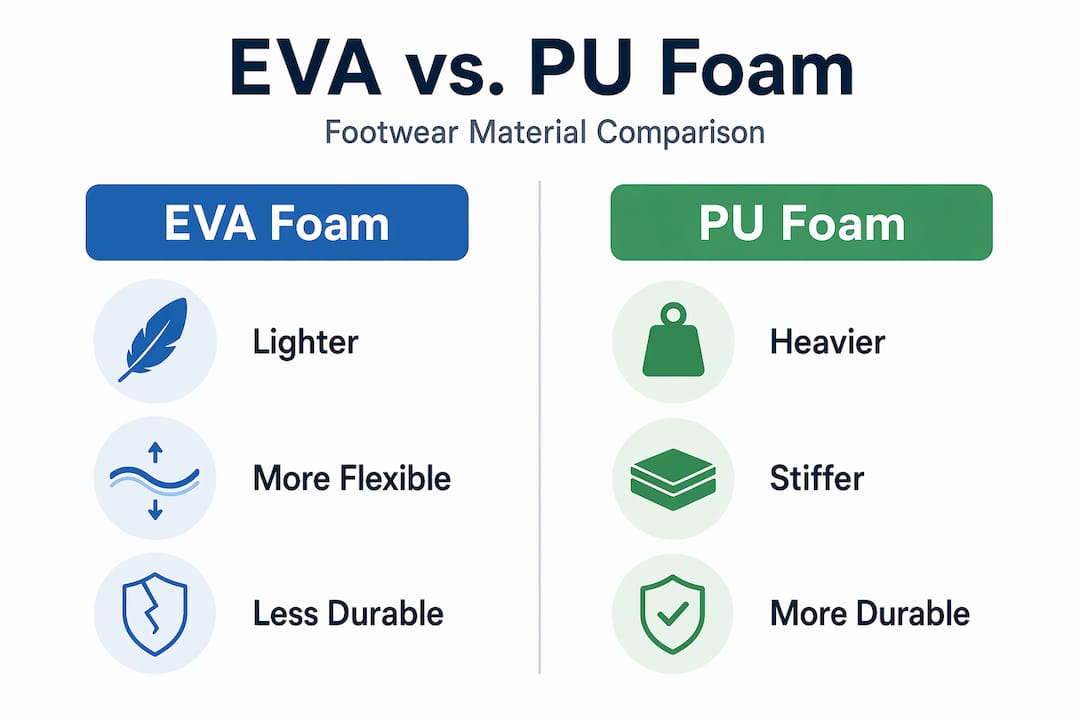
| Feature | EVA foam | Polyurethane foam |
|---|---|---|
| Weight | Lighter | Heavier |
| Flexibility | Higher | Lower |
| Durability | Moderate | Higher |
| Cushioning quality | Excellent initially | Consistent over time |
| Cost | Lower | Higher |
| Moisture resistance | Excellent (closed-cell) | Moderate |
| Best suited to | Everyday wear, sports, comfort shoes | Work boots, heavy-duty use |
The comparison is not as simple as “EVA vs PU.” In reality, shoe technology choices often involve layered systems where EVA provides lightweight cushioning while a denser outer sole handles abrasion. Some premium footwear uses EVA for the midsole and PU for a stabilising heel counter, combining the benefits of both.
Key practical differences worth knowing:
- EVA compresses over time. A pair of EVA-soled shoes will feel different after 300 miles than they did on day one. This is not a flaw, it is physics. Factor it into how often you replace footwear.
- PU holds its shape longer but adds weight, which accumulates as fatigue on longer walks.
- EVA’s lighter weight makes it the preferred choice for footwear where cushioning and performance both matter.
- For sensitive or neuropathic feet, EVA’s initial compliance is a benefit, though firmness needs to be calibrated carefully.
Selecting the right EVA foam footwear for foot health and comfort
Here is where most consumers make their mistake. They see “EVA midsole” on the product description and assume the job is done. But EVA foam grade significantly affects whether a shoe cushions or supports, and getting that wrong can aggravate rather than relieve foot problems.
For people with plantar fasciitis, the instinct is to seek the softest possible shoe. In practice, a very soft EVA with no arch support structure can increase strain on the plantar fascia by allowing the foot to sink and pronate. A medium-firm EVA combined with a contoured footbed is typically the more useful configuration.
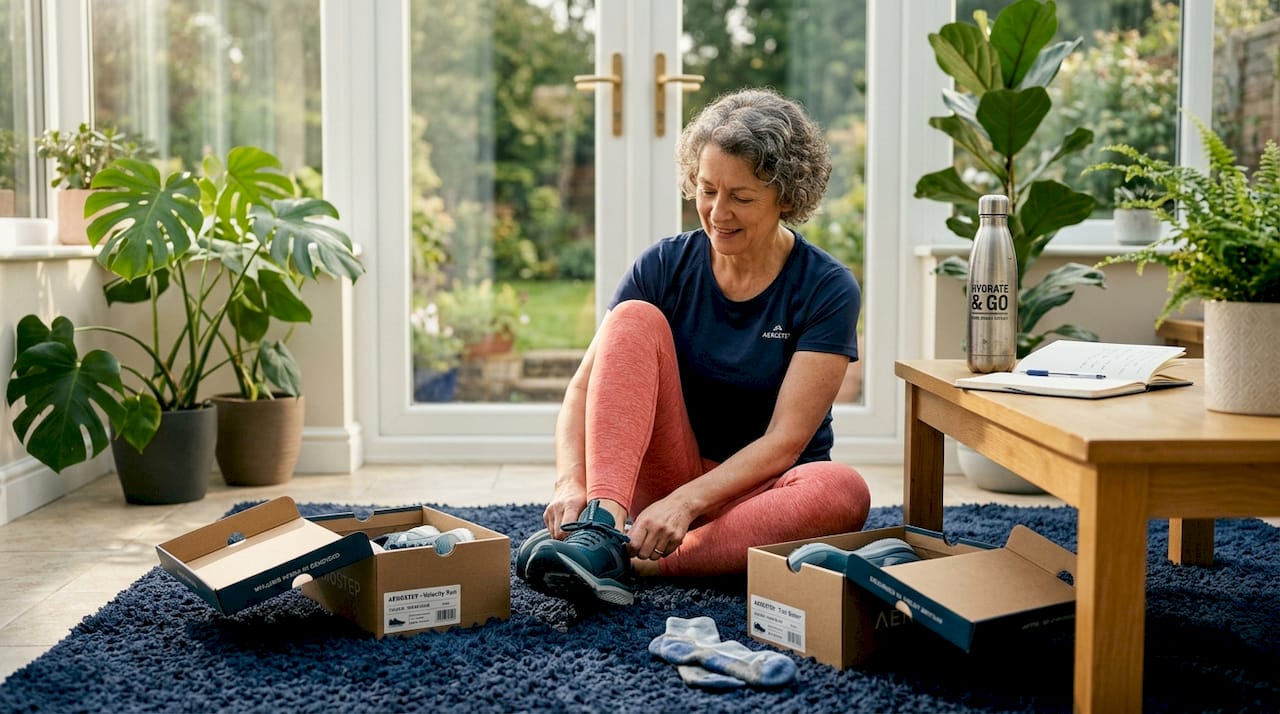
For neuropathic feet, where sensation is reduced, the priority shifts to pressure distribution rather than cushioning softness. A denser EVA insole with a broader contact surface spreads load more evenly, reducing the risk of pressure points that the wearer may not feel until damage has occurred.
Practical guidance for choosing EVA footwear for foot health:
- Ignore the word “soft” in marketing copy. Ask for hardness and density figures instead.
- Look for footwear combining EVA with structural arch support, not just a flat foam bed.
- Check that insoles are replaceable. The ability to swap a worn EVA insole extends the effective life of the shoe considerably.
- Prioritise tested, skin-safe formulations if you have sensitive skin, dermatitis, or wear shoes for extended periods.
- Consider footwear designed for health rather than general athletic use if you have a diagnosed foot condition.
Pro Tip: If you cannot find hardness specifications for a shoe you are considering, press the midsole firmly with your thumb. You should feel resistance rather than immediate collapse. If your thumb sinks easily more than halfway through the midsole depth, the foam density is likely too low for sustained support. Use the shoe comfort guide to cross-reference other comfort indicators before purchasing.
Safety and environmental considerations of EVA foam in footwear
Safety is a legitimate concern, particularly for people wearing shoes for long periods, those with skin sensitivities, or parents choosing footwear for children. The good news is that rigorous testing consistently puts EVA foam in the clear.
A 2025 chemical safety assessment of footwear-grade EVA foam found cadmium and lead below detection limits, phthalates undetectable, and pH values within the skin-friendly range of 4.7 to 5.1. That pH figure matters because skin sits at roughly pH 4.5 to 5.5, meaning properly formulated EVA foam is chemically compatible with prolonged skin contact.
Key safety considerations for footwear EVA foam:
- Heavy metals. Cadmium and lead must be absent in quality-tested products. Reputable footwear brands test to EN ISO 17075 or equivalent standards.
- Phthalates. These plasticiser chemicals are associated with endocrine disruption. High-quality EVA foam formulations exclude them entirely.
- Skin pH compatibility. Foam that is too alkaline can disrupt the skin’s acid mantle, particularly relevant for people with eczema or diabetic foot complications.
- Recycling limitations. EVA foam is not straightforwardly recyclable in standard municipal streams due to the cross-linked polymer structure. Some specialist programmes accept it, but this remains an area where the industry has further to go.
“The combination of undetectable heavy metals, absence of phthalates, and skin-compatible pH in tested footwear EVA foam indicates that well-manufactured EVA products present a low chemical risk for prolonged foot contact.”
On the environmental side, EVA foam’s durability is a double-edged quality. It resists breakdown, which is useful during a shoe’s life but complicates end-of-life disposal. If environmental impact matters to you, look for brands working on closed-loop programmes or offering take-back schemes. You can also extend shoe life by maintaining shoe comfort naturally through proper storage and regular insole replacement.
Rethinking EVA foam: beyond cushioning to foot health optimisation
There is a persistent assumption in footwear marketing that EVA foam is EVA foam. Softer is better. More of it is more comfortable. After years of watching consumers choose shoes based on that logic and then struggle with fatigue, pain, and early shoe replacement, we think that framing deserves a serious challenge.
The truth is that EVA foam is a platform, not a solution. What sits between your foot and the ground needs to match your specific biomechanics, your weight, the duration of wear, and the surface you are walking on. A retired professional on their feet for two hours a day has entirely different EVA requirements from a retail worker standing on concrete for eight hours. Both might buy a shoe labelled “EVA cushioned.” One will be fine. The other will not.
EVA foam hardness and density are the critical specifications, not the EVA name itself. We would go further and say that a shoe with a well-specified medium-firm EVA midsole combined with a proper heel counter and contoured arch support will outperform a shoe with ultra-soft EVA and no structural design in virtually every real-world comfort scenario. Softness without structure is comfort theatre. It feels good in a shop and fails in daily use.
The other overlooked factor is shoe design integration. The best EVA foam formulation is partially wasted if the upper does not hold the foot correctly, or if the last shape does not match human foot geometry. Foam does the cushioning work. Design does the positioning work. They are not interchangeable, and cushioning science supports this distinction clearly. When you next evaluate a shoe, assess the whole system rather than reaching for the midsole and pressing it.
Explore YDA shoes technology for enhanced comfort and support
Understanding EVA foam properly changes the way you shop for footwear. It shifts the question from “does this feel soft?” to “is this formulated correctly for what my feet actually need?” That is precisely the question that YDA’s approach to footwear engineering is built around.
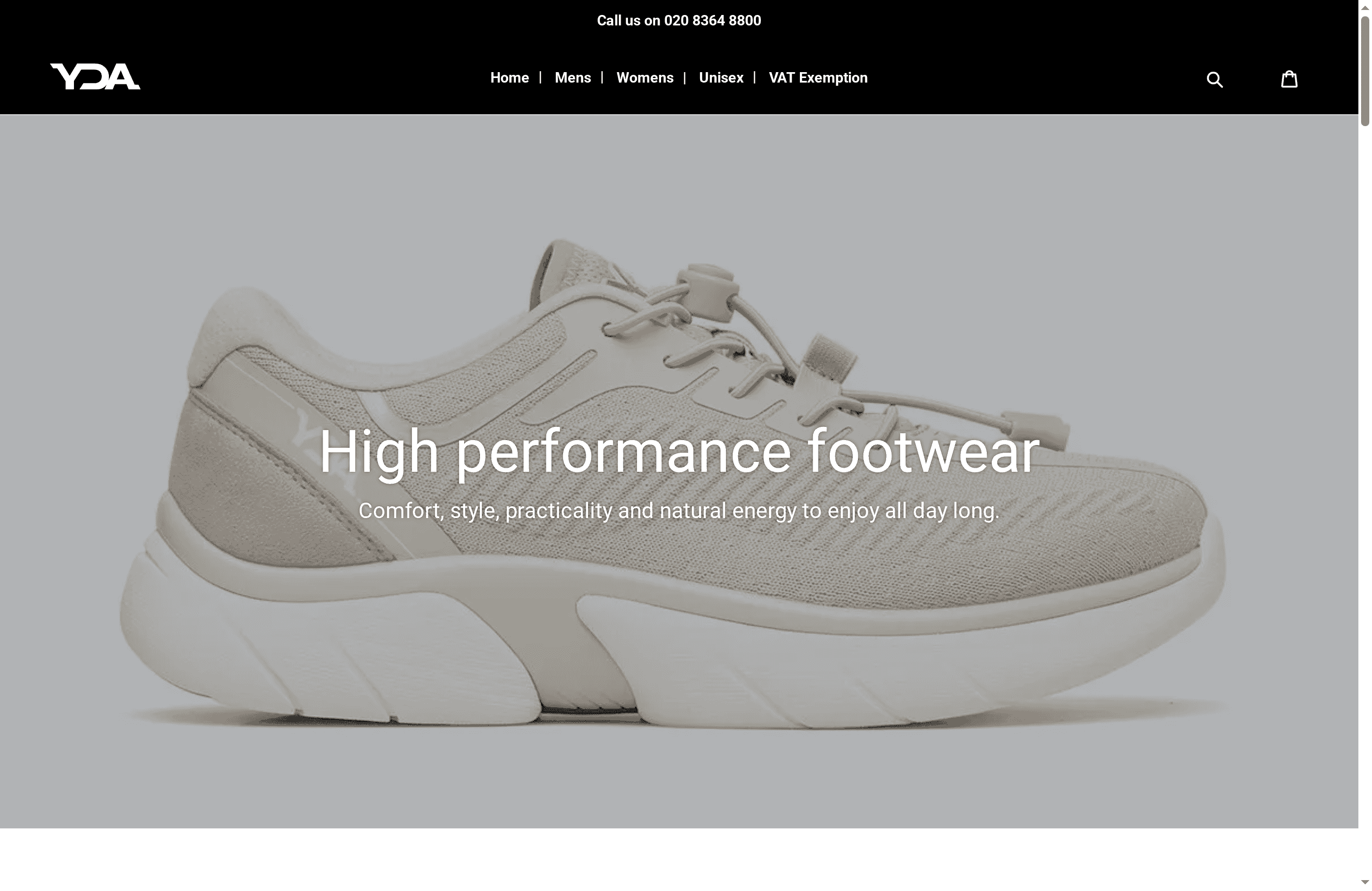
YDA footwear integrates carefully specified EVA foam formulations with structural midsole design, combining cushioning with genuine biomechanical support rather than treating them as separate concerns. The result is footwear that addresses foot health as seriously as it addresses style. If you are looking for shoes that reflect everything this article has covered, from correct EVA hardness to tested materials and considered design, the YDA shoes technology page is the right place to start. It details the engineering decisions behind each design and helps you match the right shoe to your specific comfort and foot health needs.
Frequently asked questions
What makes EVA foam different from other shoe cushioning materials?
EVA foam’s closed-cell structure traps sealed gas pockets, making it lighter and more flexible than polyurethane, though polyurethane generally offers greater durability under heavy sustained use. The moisture resistance and low weight of EVA make it the dominant choice for everyday and performance footwear.
Is EVA foam safe for people with sensitive skin or foot conditions?
Yes. Tested EVA foam samples consistently show cadmium and lead below detection limits, undetectable phthalates, and a pH of 4.7 to 5.1, which is within the skin-compatible range for prolonged contact. Always choose footwear from brands that test to recognised chemical safety standards.
How can I tell if the EVA foam in my shoes is supportive enough for my foot health needs?
Look for hardness and density specifications rather than relying on descriptive marketing language. Firmer EVA grades provide more support and are often more appropriate for foot conditions, while softer grades suit cushioning-focused applications. Footwear that combines correctly graded EVA with arch support structure delivers the most reliable outcome.
Does EVA foam absorb water and affect shoe durability?
No. The closed-cell structure prevents absorption by sealing each gas pocket within its own wall, so water and sweat cannot penetrate the foam. This keeps the midsole light, hygienic, and dimensionally stable throughout the shoe’s life.