
Advanced Shoe Cushioning Technologies: Impact on Comfort and Foot Health
Sore feet at the end of a busy day can make even the most stylish footwear feel like a mistake, but finding shoes that truly support your health should not mean sacrificing design. Choosing the right pair matters for daily comfort and long-term joint protection, especially for active adults who expect more than basic cushioning. This guide explains the essentials of advanced shoe cushioning technologies, revealing how engineered systems and innovative materials help you stay comfortable and energised on your feet wherever life takes you.
Table of Contents
- Defining Advanced Shoe Cushioning Technologies
- Types and Materials of Cushioning Systems
- How Cushioning Technologies Enhance Comfort and Health
- Innovations Driving Energy Efficiency and Performance
- Risks, Limitations, and Common Mistakes
Key Takeaways
| Point | Details |
|---|---|
| Advanced cushioning technologies enhance performance | These systems improve energy return and reduce fatigue, supporting natural foot biomechanics. |
| Material choice impacts comfort and durability | EVA offers consistency, while PEBA provides superior performance initially, making hybrid systems a beneficial option. |
| Proper shoe selection is crucial | Individuals should consider their unique biomechanics and activities to avoid injury and ensure optimal cushioning. |
| Regular monitoring and replacement of footwear are essential | Evaluate shoes for wear patterns and comfort improvements; replace them when cushioning effectiveness diminishes. |
Defining Advanced Shoe Cushioning Technologies
Advanced shoe cushioning represents a significant shift from traditional foam soles to engineered systems that actively manage impact forces. These technologies combine innovative materials with biomechanical design to protect your feet and joints during daily wear.
At their core, advanced cushioning technologies are designed to protect lower limb joints from impact injuries by improving shock-absorbing performance in shoe midsoles. Rather than relying on simple foam compression, modern systems incorporate multiple layers and strategic structural elements that work together.
The key distinction is how energy moves through the shoe. Traditional soles absorb and dissipate impact energy inefficiently, wasting motion and effort. Modern cushioning systems recapture and redirect that energy back into your stride, reducing fatigue while maintaining comfort.
Think of it like the difference between a trampoline and a sponge. A sponge absorbs and holds water; a trampoline bounces it back. Advanced cushioning does both—absorbs harmful shock whilst returning usable energy to your foot.
What Makes These Technologies “Advanced”
Several features distinguish cutting-edge cushioning from conventional shoe design:
- Multi-zone impact absorption – Different areas cushion differently based on foot strike patterns
- Energy return mechanisms – Systems that rebound to reduce energy loss during walking or running
- Adaptive materials – Soles that respond to varying impact forces and adjust on the fly
- Biomechanical alignment – Design that supports natural foot motion rather than forcing artificial patterns
- Lightweight construction – Protective cushioning without excessive weight
Combining lightweight, resilient midsoles with components like curved carbon fibre plates maximises energy return whilst providing shock absorption. These aren’t static structures—they’re engineered systems that evolve with your movement.
Real-World Application
Consider what happens when your foot hits the ground. Your heel contacts first, followed by your midfoot and then your forefoot. Each zone experiences different force patterns. Advanced cushioning technologies account for this through strategic placement of shock-absorbing and energy-returning materials in specific regions.
Some systems even draw inspiration from nature. Bionic designs modelled on animal foot structures incorporate cushioning units in the forefoot and heel areas to enhance overall shock absorption and comfort.
Modern cushioning technologies have evolved beyond simple spring-like mechanisms to become adaptive systems that better support your natural foot biomechanics.
Understanding these technologies helps you evaluate whether shoes will genuinely support your foot health or simply feel soft underfoot. Real advanced cushioning improves both comfort and function, reducing injury risk whilst enhancing energy efficiency.
Pro tip: When shopping for cushioned footwear, press the midsole with your thumb—quality advanced cushioning rebounds immediately rather than staying compressed, indicating genuine energy-return technology rather than basic foam.
Types and Materials of Cushioning Systems
Not all cushioning materials perform the same way. Your shoe’s midsole determines how impact forces travel through your foot and whether energy gets wasted or returned to your stride.

Modern cushioning systems rely on specific foam compounds engineered for different performance characteristics. The most common materials are ethylene vinyl acetate (EVA) and polyether block amide (PEBA), each offering distinct advantages for comfort and foot health.
EVA vs PEBA: Understanding the Difference
EVA has dominated shoe manufacturing for decades. It’s lightweight, affordable, and provides reliable cushioning for everyday wear. However, EVA and PEBA foams differ significantly in resilience and energy return, with PEBA offering superior performance when shoes are new.
Here’s what sets them apart:
- EVA (Ethylene Vinyl Acetate) – Consistent performance over time, affordable, widely available
- PEBA (Polyether Block Amide) – Better energy return initially, slightly heavier, can deteriorate with extended wear
- Hybrid systems – Combine both materials strategically to maximise benefits of each
PEBA tends to provide better running economy when new compared to EVA, but this advantage diminishes as the material ages. If you’re active daily, this matters for your long-term comfort and injury prevention.
The following table contrasts advanced shoe cushioning materials based on durability, cost, and best use cases:
| Material | Durability | Cost Level | Ideal Activity |
|---|---|---|---|
| EVA | Long-lasting under daily use | Lower cost | Walking, all-day comfort |
| PEBA | Higher initial performance, degrades faster | Premium price | Competitive running, fast training |
| Hybrid EVA/PEBA | Balances durability and rebound | Mid-range | Regular mixed-activity |
How Cushioning Gets Evaluated
Manufacturers don’t just guess at cushioning quality. Shoe cushioning systems are measured by energy absorption and force attenuation properties, which determine how effectively they protect your feet from impact.
Think of cushioning evaluation in three categories:
- Over-designed cushioning – Absorbs impact well but feels mushy and unstable
- Well-designed cushioning – Balances protection with responsiveness for optimal comfort
- Under-designed cushioning – Feels firm but doesn’t adequately protect joints
The best shoes fall into the middle category. They absorb harmful forces while maintaining enough structure for stability and natural foot motion.
Material Properties That Matter
Cushioning quality depends on specific material characteristics. Compression resilience determines how quickly foam bounces back after impact. Strain rate insensitivity means the material performs consistently whether you walk slowly or run fast. Displacement characteristics control how much the sole compresses under your weight.
The optimum energy-to-force ratio distinguishes truly protective footwear from shoes that simply feel soft underfoot.
When evaluating how different shoe materials affect comfort, remember that resilient materials return energy to your stride, reducing fatigue during long days on your feet.
Pro tip: Check the midsole composition when shopping—look for PEBA or advanced EVA blends if you need long-term durability, but prioritise well-designed EVA if you want consistent performance throughout the shoe’s lifespan.
How Cushioning Technologies Enhance Comfort and Health
Advanced cushioning does more than make shoes feel soft. It actively works to reduce injury risk, improve your energy efficiency, and allow you to stay active longer without discomfort.
When you walk or run, your body absorbs tremendous forces with every step. Advanced running shoes reduce oxygen cost and cumulative tibial loading, meaning your body works less hard and your leg bones experience less stress. This combination matters significantly for long-term foot health.
Direct Comfort Benefits
Modern cushioning systems provide immediate comfort improvements you notice straight away:
- Reduced impact shock – Thick, resilient foams absorb force before it reaches your joints
- Better weight distribution – Forces spread across a wider area rather than concentrating in painful spots
- Improved responsiveness – Stiff carbon fibre plates help your muscles work more efficiently
- Sustained comfort – Quality cushioning maintains performance throughout long days
These aren’t just pleasant sensations. They represent real biomechanical improvements happening beneath the surface.
Long-Term Health Advantages
Advanced footwear technologies enhance comfort through adaptive cushioning materials that distribute impact forces more evenly, reducing strain on joints and soft tissues. This even distribution prevents the overload injuries that develop from repeated stress on the same areas.
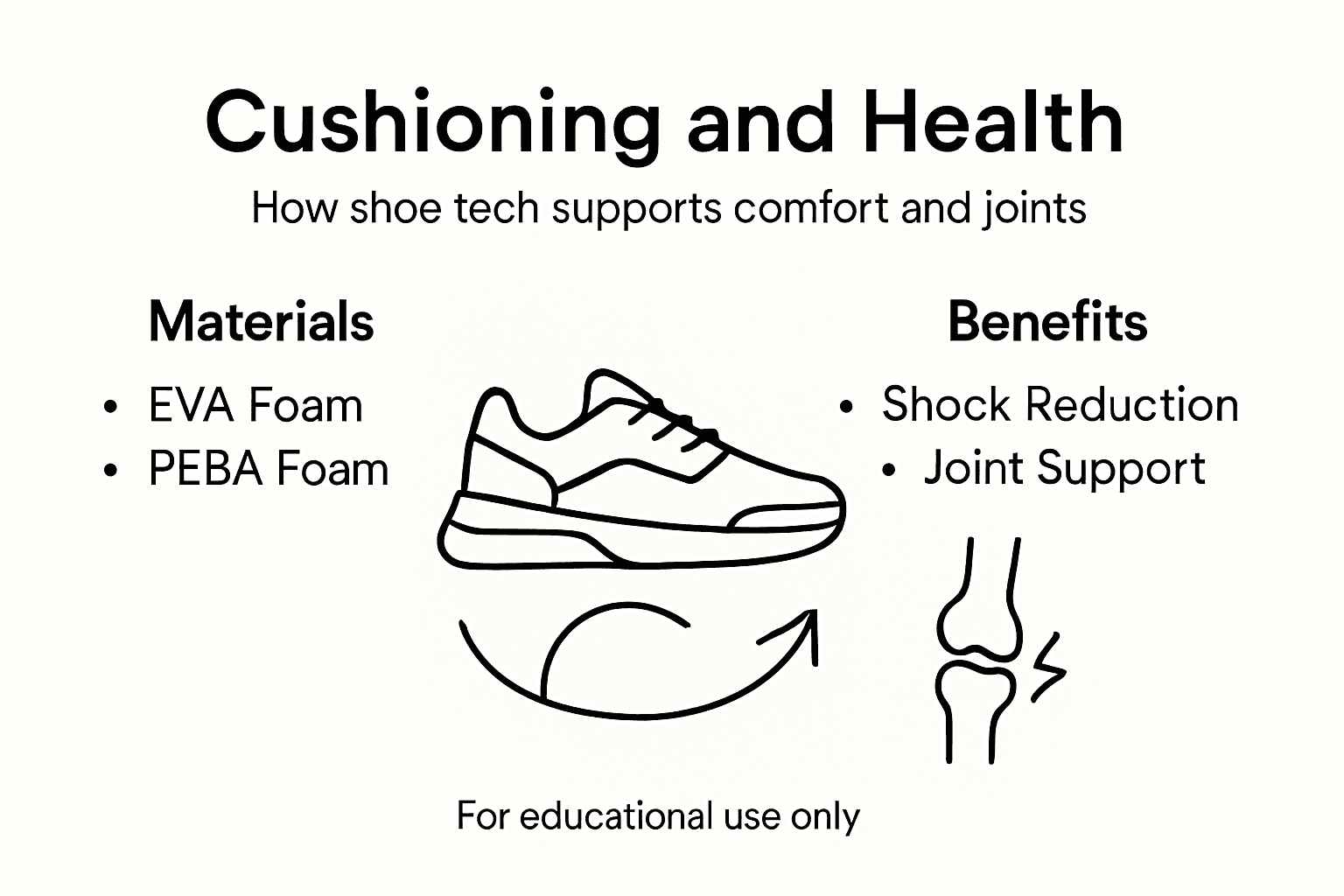
Consider what happens without proper cushioning. Uncontrolled impact forces travel directly through your heel, ankle, and knee. Over time, this creates inflammation, pain, and potential injury. Good cushioning interrupts this cycle.
Here is a summary of how shoe cushioning design directly affects user comfort and long-term health:
| Design Focus | Immediate Comfort Effect | Long-Term Health Benefit |
|---|---|---|
| Impact shock reduction | Less joint pain while moving | Reduced injury risk |
| Even force distribution | Fewer pressure points | Lower stress on joints |
| Biomechanical alignment | Natural foot motion | Minimised overuse injuries |
Performance and Endurance
Better cushioning directly extends how long you can stay active comfortably. The reduction in biomechanical stress allows your body to recover faster and maintain performance over longer distances. You’re not just more comfortable—you’re actually performing better.
Adaptive cushioning technologies provide measurable benefits by minimising overuse injuries whilst offering superior shock absorption tailored to different activities.
The technology works whether you’re walking to work, standing all day, or running regularly. Understanding how to evaluate shoe technology for foot health helps you choose footwear that genuinely supports these benefits rather than just claiming them.
Pro tip: Notice how your feet and legs feel during the evening after wearing cushioned shoes versus regular footwear—reduced soreness and fatigue indicate that the technology is actually working to protect your joints and muscles.
Innovations Driving Energy Efficiency and Performance
The most exciting development in shoe technology is how modern designs return energy to your stride rather than simply absorbing it. This shift from passive cushioning to active energy return fundamentally changes how your feet feel and how efficiently your body works.
Innovation focuses on one key insight: shoes don’t need to be soft to be comfortable. Instead, they need to be strategically engineered to manage energy flow through your foot during movement.
Carbon Fibre Plate Technology
Optimising longitudinal bending stiffness using curved carbon fibre plates embedded in resilient midsoles improves running economy by minimising energy loss at foot joints. These plates work by controlling how your foot bends, ensuring movement happens efficiently rather than wasting energy in unnecessary motion.
The innovation isn’t simply making shoes stiffer. Research shows moderate stiffness levels outperform both very rigid and overly flexible designs:
- Too flexible – Your foot bends excessively, wasting energy
- Moderate stiffness – Optimal energy return and comfort balance
- Too rigid – Feels unnatural and strains muscles unnecessarily
Finding this sweet spot is what separates advanced technology from basic shoe design.
Energy Return System Dynamics
Energy return technologies reduce the metabolic cost of running through advanced cushioning design dynamics rather than relying on single material properties. Modern systems layer multiple materials strategically, creating an integrated mechanism that captures impact force and redirects it forward.
This approach enables shoes to be lightweight yet highly resilient. You get superior cushioning with enhanced elastic properties without the bulk of traditional designs.
Real-World Performance Impact
These innovations directly translate to measurable benefits. Your muscles work less hard during daily activities, reducing fatigue and soreness. The cumulative effect matters significantly over hours of standing or walking.
Moderate stiffness levels in shoe soles maximise energy efficiency, outperforming both very stiff and flexible designs during movement.
Understanding energy efficiency in shoes and how it boosts everyday comfort helps you appreciate why certain technologies cost more—the engineering complexity creates genuine functional advantages.
Pro tip: Test shoes by walking slowly and then quickly—well-designed energy return systems feel noticeably more responsive at faster speeds, indicating the technology is actively contributing to your movement rather than just providing passive cushioning.
Risks, Limitations, and Common Mistakes
Advanced cushioning technology sounds like a cure-all, but the reality is more nuanced. Wrong shoe choices can actually increase injury risk, even with cutting-edge technology built in.
The fundamental problem: no single shoe suits everyone perfectly. Your body, weight, running style, and foot structure are unique. A shoe engineered for one person might actively harm another.
The Over-Design and Under-Design Problem
Many shoe designs do not optimally correspond to the range of physiological ground reaction forces experienced during running. Shoes that are over-designed or under-designed relative to your individual biomechanics may inadvertently increase injury risk rather than reduce it.
Think of it like suspension in a car. Too soft and the vehicle wallows and feels unstable. Too stiff and every bump transfers directly to passengers. The correct stiffness depends on the car’s weight and intended use.
Common mismatch scenarios include:
- Heavy people in lightweight shoes – Insufficient cushioning causes joint stress
- Light people in maximum-cushioned shoes – Feels unstable and strains stabiliser muscles
- Neutral runners in motion-control shoes – Creates unnatural movement patterns
- High-impact athletes in minimal shoes – Leads to cumulative overuse injuries
Material Limitations and Wear Patterns
Cushioning materials deteriorate. PEBA foams lose resilience faster than EVA. Repeated impact compresses foam permanently, reducing effectiveness over time. A shoe that felt perfect at purchase might provide inadequate protection after six months of regular use.
Improper shoe selection and misuse can lead to biomechanical imbalances and increased injury risk. Common mistakes include ignoring wear patterns that alter cushioning effectiveness and neglecting comfort preferences in favour of trend-following.
Critical Mistakes to Avoid
These errors compromise foot health despite advanced technology:
- Ignoring your unique biomechanics – Get a gait analysis before investing heavily
- Chasing marketing hype – Technology alone doesn’t guarantee the right shoe for you
- Neglecting break-in periods – New shoes need gradual adjustment time
- Overlooking wear patterns – Replace shoes when cushioning visibly compresses
- Choosing style over function – A beautiful shoe that causes pain defeats the purpose
Proper testing methods and individualised fitting are essential to avoid mistakes that could compromise foot health and comfort.
The technology works brilliantly when matched correctly to your body and activities. Mismatches, however, turn advantages into liabilities.
Pro tip: Monitor your shoes’ actual performance after two weeks of regular wear—if pain emerges or comfort decreases rather than improves, the cushioning level is wrong for your body, regardless of the shoe’s specifications.
Discover Footwear That Matches Advanced Cushioning Technology
Understanding the importance of advanced shoe cushioning technology means knowing your shoes should offer more than just softness. Your footwear needs to provide real impact protection, adaptive comfort, and energy return that supports your natural foot motion every step of the day. If you are seeking shoes designed with multi-zone impact absorption and biomechanical alignment in mind, explore the selection at Shoes – YDA UK where innovation meets health-focused performance.
Don’t settle for ordinary footwear when your feet deserve advanced protection tailored to long-term comfort and joint support. Visit https://ydauk.com to find shoes and trainers engineered with cutting-edge cushioning materials like EVA and PEBA foams combined with energy return systems. Shop now to experience footwear designed for durability, responsiveness and every-day energy efficiency. Your feet will thank you.
Frequently Asked Questions
What are advanced shoe cushioning technologies?
Advanced shoe cushioning technologies refer to engineered systems that manage impact forces, using innovative materials and designs to improve shock absorption and energy return compared to traditional foam soles.
How do EVA and PEBA cushioning materials differ?
EVA (Ethylene Vinyl Acetate) is lightweight, affordable, and consistent in performance, while PEBA (Polyether Block Amide) offers superior energy return initially but may degrade faster over extended wear. Hybrid systems can combine both materials for optimal benefits.
What are the benefits of advanced cushioning for foot health?
Advanced cushioning technologies reduce impact shock, distribute weight more evenly, and help align the foot biomechanically. This decreases injury risk and enhances overall comfort during physical activities.
How can I evaluate the quality of cushioning in shoes?
Evaluate cushioning quality by pressing the midsole; high-quality cushioning should rebound quickly instead of staying compressed. Also, consider the shoe’s material properties and how well they suit your specific foot biomechanics.