
Types of Shoe Materials – How They Affect Comfort
Finding shoes that deliver all-day comfort and vital support can feel impossible when you have unique foot health needs. For many health-conscious consumers, especially those managing diabetes or sensitive conditions, the choice of materials determines everything from breathability to durability. With up to 40 different materials used in a single shoe, each component brings a set of benefits and potential drawbacks. This overview helps you understand how the right shoe materials make a real difference in both style and well-being.
Table of Contents
- Defining Shoe Materials And Their Importance
- Natural And Synthetic Shoe Materials Compared
- Innovative And Eco-Friendly Material Trends
- Effects On Comfort, Support, And Foot Health
- Making Informed Choices For Specific Needs
Key Takeaways
| Point | Details |
|---|---|
| Importance of Materials | Shoe materials influence performance, durability, and comfort, impacting factors like breathability and flexibility. |
| Natural vs. Synthetic | Natural fibres offer breathability and eco-friendliness, while synthetic materials excel in durability and moisture resistance. |
| Sustainability Trends | Eco-friendly materials are becoming prevalent, providing reduced environmental impact while maintaining performance. |
| Tailored Footwear Selection | Understanding individual foot needs and using material characteristics can lead to better shoe choices that support foot health. |
Defining Shoe Materials And Their Importance
Shoe materials represent the foundational elements that determine the performance, durability, and overall comfort of footwear. In contemporary manufacturing, shoes can incorporate up to 40 different materials during production, each serving a unique functional purpose.
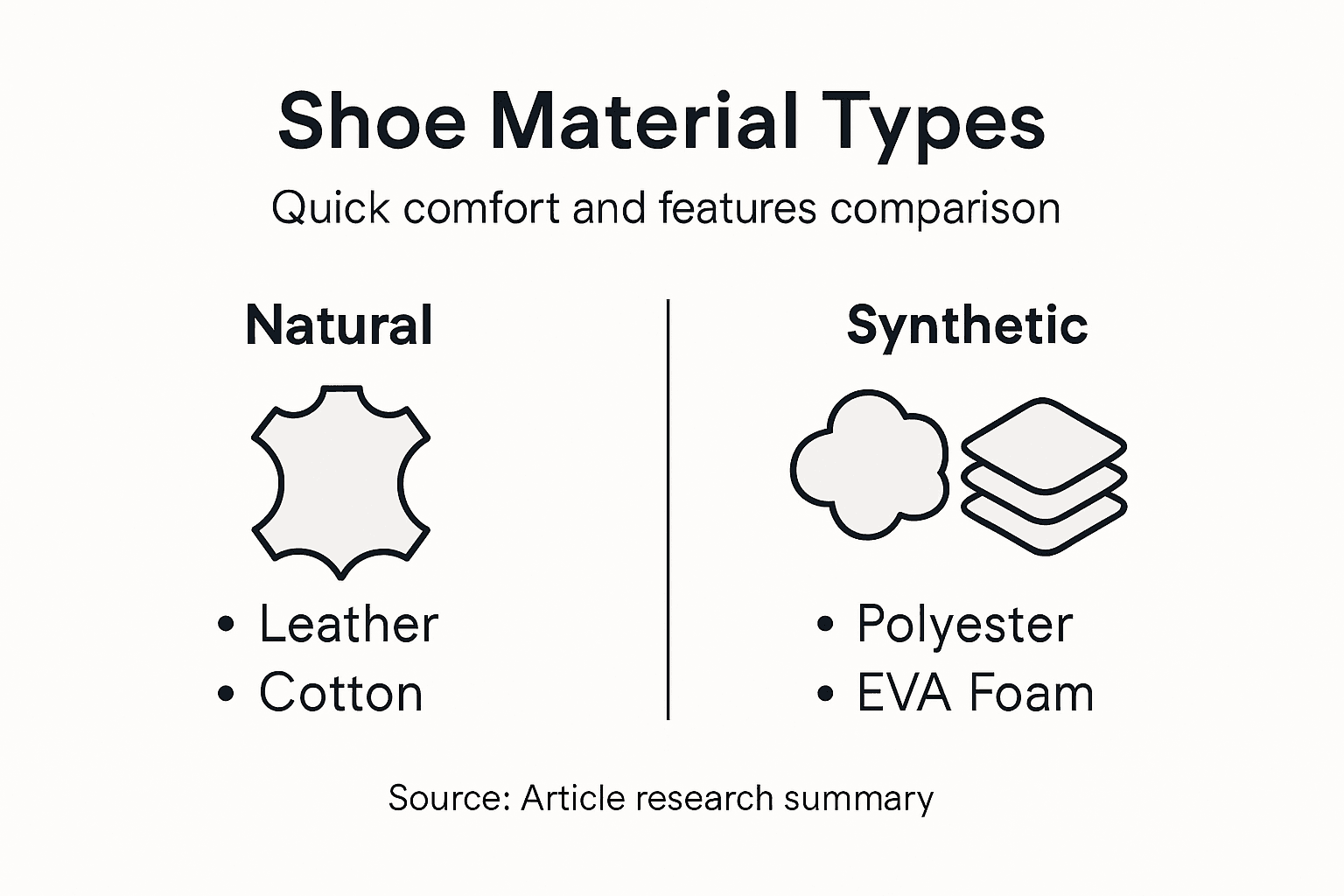
The critical role of shoe materials extends far beyond aesthetic considerations. These components directly influence crucial aspects such as breathability, flexibility, weight, structural integrity, and wearer comfort. Natural materials like leather and cotton offer distinct properties different from synthetic alternatives such as polyester and polyurethane. Understanding these material characteristics helps consumers make informed decisions about their footwear choices, particularly for individuals with specific foot health requirements.
Modern shoe design incorporates a complex interplay of materials strategically selected to enhance performance. Footwear material selection involves balancing multiple factors including durability, manufacturing feasibility, cost-effectiveness, and environmental sustainability. Manufacturers must consider how different materials interact, their weight distribution, moisture management capabilities, and long-term wear resistance. This intricate selection process ensures that shoes meet both functional performance standards and consumer expectations.
Pro Tip: When selecting shoes, examine the material composition closely and consider how each material contributes to overall comfort, breathability, and foot support.
Natural And Synthetic Shoe Materials Compared
Footwear materials can be categorised into two primary groups: natural fibres and synthetic materials, each offering distinct performance characteristics that significantly impact shoe functionality. Textile material comparisons reveal a complex landscape of advantages and limitations across different shoe components.
Natural materials like leather, cotton, and wool provide exceptional breathability and biodegradability. These fibres offer inherent thermal regulation and moisture-wicking properties, making them particularly suitable for comfort-focused footwear. In contrast, synthetic materials such as polyester, nylon, and polyurethane excel in durability, moisture resistance, and structural consistency. Modern synthetic textiles are engineered to enhance performance while maintaining lightweight characteristics, addressing many limitations of traditional natural materials.

The selection between natural and synthetic materials depends on specific performance requirements. Sports shoes might prioritise synthetic materials for their strength and quick-drying capabilities, while casual and formal footwear might leverage natural materials for aesthetic appeal and breathability. Advanced shoe designs increasingly incorporate hybrid approaches, blending natural and synthetic fibres to optimise comfort, performance, and sustainability.
Here is a concise comparison of common shoe materials and their typical applications:
| Material Type | Key Properties | Typical Footwear Applications |
|---|---|---|
| Leather | Breathable, durable, flexible | Formal, business, and luxury shoes |
| Cotton | Soft, absorbent, eco-friendly | Casual sneakers, summer and indoor footwear |
| Polyester | Lightweight, moisture-resistant | Sports trainers, running shoes |
| Nylon | Strong, abrasion-resistant | Hiking boots, sports and athletic footwear |
| Polyurethane (PU) | Flexible, water-resistant | Fashion trainers, budget-friendly shoes |
| Wool | Thermally insulating, soft | Winter boots, slippers, comfort-oriented shoes |
Pro Tip: When selecting shoes, examine the material composition and consider how the blend of natural and synthetic materials impacts overall comfort, durability, and intended usage.
Innovative And Eco-Friendly Material Trends
The footwear industry is experiencing a remarkable transformation driven by sustainable manufacturing innovations, which are revolutionising material development and environmental responsibility. Contemporary shoe designers are increasingly exploring cutting-edge materials that minimise ecological impact while maintaining exceptional performance standards.
Emerging eco-friendly materials now include innovative alternatives such as organic cotton, recycled plastics, bamboo fibres, hemp, and bio-based synthetic compounds. These materials offer significant environmental advantages, including reduced carbon footprints, enhanced biodegradability, and lower resource consumption. Manufacturers are developing sophisticated techniques that transform waste materials into high-performance shoe components, demonstrating how technological innovation can address sustainability challenges.
The environmental performance of footwear materials is now a critical consideration for conscientious consumers. Green material comparisons reveal that sustainable materials can significantly reduce environmental impacts while providing comparable or superior functional characteristics. Advanced biomaterials and circular design principles are enabling shoe manufacturers to create products that are not only environmentally responsible but also technologically sophisticated and aesthetically appealing.
The table below summarises key sustainable shoe materials and their environmental benefits:
| Eco-Friendly Material | Environmental Benefit | Performance Feature |
|---|---|---|
| Organic cotton | Reduced pesticide use | Excellent breathability |
| Recycled plastics | Diverts waste from landfill | Lightweight and moisture resistant |
| Bamboo fibre | Fast-growing, renewable resource | Naturally antibacterial and soft |
| Hemp | Minimal water requirement | Durable and robust texture |
| Bio-based synthetics | Lower carbon footprint | Maintains flexibility and support |
Pro Tip: When shopping for shoes, prioritise brands that transparently communicate their material sourcing and demonstrate genuine commitment to sustainable manufacturing practices.
Effects On Comfort, Support, And Foot Health
Shoe materials play a critical role in determining overall foot health, with biomechanical interactions deeply influencing comfort, support, and potential injury prevention. Different materials interact uniquely with human anatomy, creating complex relationships between footwear design and physiological function.
Research demonstrates that material properties directly impact muscle activation, joint stress, and movement mechanics. Running shoe material variations can substantially alter lower limb muscle activity, affecting everything from cushioning effectiveness to potential injury risks. Midsole hardness, shoe weight, and structural components collectively determine how effectively a shoe supports natural foot movement and distributes biomechanical loads.
The selection of appropriate shoe materials becomes particularly crucial for individuals with specific foot health requirements. Factors such as material flexibility, breathability, shock absorption, and structural integrity contribute to creating footwear that not only provides comfort but actively supports foot health. Advanced material technologies now enable the development of shoes that can adapt to individual biomechanical needs, offering personalised support through intelligent design and responsive materials.
Pro Tip: Consider your specific foot anatomy and movement patterns when selecting shoes, prioritising materials that provide targeted support and accommodate your unique biomechanical requirements.
Making Informed Choices For Specific Needs
Selecting appropriate footwear materials requires a nuanced understanding of individual needs and digital technology’s transformative potential. The contemporary approach to shoe selection moves beyond generic sizing, emphasising personalised solutions that address unique biomechanical requirements and lifestyle demands.
Different activities and environments necessitate specific material characteristics. Footwear material selection becomes a strategic process involving careful evaluation of performance attributes. Athletic shoes might prioritise lightweight, breathable synthetic fabrics, while professional footwear could require more durable leather compositions. Factors such as moisture management, flexibility, shock absorption, and thermal regulation become critical considerations that vary dramatically across different user needs.
Consumers now have unprecedented access to sophisticated material technologies that can be tailored to specific contexts. Whether managing chronic foot conditions, preparing for intense physical activities, or seeking everyday comfort, understanding material properties enables more informed decision-making. Advanced manufacturing techniques now allow for unprecedented customisation, enabling shoes that adapt to individual foot anatomy, movement patterns, and performance requirements.
Pro Tip: Conduct a personal assessment of your foot shape, typical activities, and comfort requirements before selecting footwear, treating shoe materials as a functional investment rather than a simple fashion choice.
Discover Footwear Engineered for Your Comfort and Foot Health
Understanding how different shoe materials affect comfort and support is the first step towards making better footwear choices. This article highlights the crucial role materials play in breathability, flexibility and overall foot health, especially for those seeking shoes that align with their unique biomechanical needs. At YDA UK, we appreciate these challenges and are dedicated to offering high-performance shoes that combine innovative materials with advanced foot health technology.
Explore our carefully curated Shoes collection designed to enhance comfort and energy efficiency every day.

Experience the difference that thoughtfully selected materials and cutting-edge design can make. Visit YDA UK now to find stylish, health-oriented footwear tailored to your needs. For women seeking the perfect blend of style and support, our Womens range offers exclusive options you should not miss. Take your step towards better foot health today and shop smart with YDA UK.
Frequently Asked Questions
What are the main types of shoe materials?
Shoe materials can be categorised into natural fibres, such as leather, cotton, and wool, and synthetic materials, including polyester, nylon, and polyurethane. Each type has unique properties that affect comfort and function.
How do shoe materials impact comfort and support?
Shoe materials directly influence breathability, flexibility, shock absorption, and overall structural integrity. These factors contribute to how well a shoe supports natural foot movement and provides comfort during wear.
What is the difference between natural and synthetic shoe materials in terms of performance?
Natural materials like leather and cotton offer excellent breathability and comfort, while synthetic materials provide enhanced durability and moisture resistance, making them suitable for various footwear applications, including sports shoes.
Why is it important to consider eco-friendly shoe materials?
Eco-friendly materials, such as organic cotton and recycled plastics, not only reduce environmental impact but also offer comparable performance features. They represent a more sustainable choice for consumers concerned about environmental responsibility.