
Shoe cushioning explained: Science, comfort, and choice
Most people assume softer shoes are always healthier and more comfortable. Yet softer midsoles may actually increase peak impact, despite reducing loading rates. This surprising finding challenges conventional wisdom about footwear comfort and safety. Understanding how shoe cushioning truly works, its effects on injury risk, and how to choose wisely can transform your foot health and daily comfort. This guide reveals the science behind cushioning, debunks common myths, and shows you how to select footwear that genuinely supports your needs.
Table of Contents
- What is shoe cushioning and why does it matter?
- The science: How cushioning works underfoot
- Does more cushioning mean more comfort or less injury?
- Cushioning technologies: Materials, stacks, and recent innovations
- How to choose cushioning for your foot needs and lifestyle
- Common questions about shoe cushioning myths and issues
- Explore advanced cushioning solutions with YDA UK
- Frequently asked questions
Key Takeaways
| Point | Details |
|---|---|
| Cushioning isn’t one-size-fits-all | Personal comfort and specific foot needs are more important than just picking the softest shoe. |
| Right materials enhance comfort | Advanced foams like PEBA offer better comfort and improve running economy for active users. |
| Too much cushioning may reduce stability | Very thick or soft shoes can increase the risk of ankle instability or imbalance. |
| Perception matters for injury prevention | Shoes that feel comfortably cushioned to you are more likely to help prevent injuries. |
| Check shoes regularly | Replace footwear when cushioning feels compressed or loses its springiness. |
What is shoe cushioning and why does it matter?
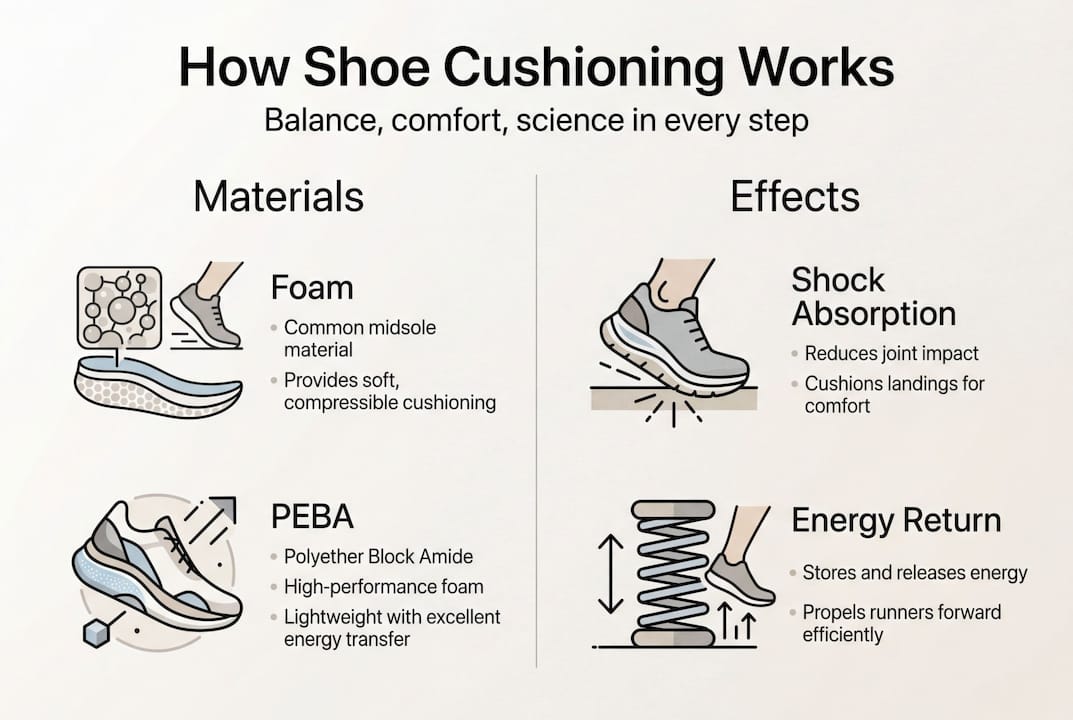
Shoe cushioning refers to the materials and structures within footwear that absorb impact forces when your foot strikes the ground. These systems aim to reduce stress on your feet, enhance comfort during movement, and prevent injury over time. Different users require different cushioning approaches based on their activity levels, foot structure, and existing conditions.
The main cushioning materials in today’s shoes include:
- EVA foam: Lightweight and affordable, offering moderate shock absorption
- Polyurethane (PU): Denser and more durable, providing firmer support
- PEBA-based foams: Advanced materials delivering superior energy return
- Gel inserts: Targeted cushioning in high-impact zones
- Air pockets: Pressurised chambers that compress and rebound
Research shows cushioned shoes reduce peak vertical impact by approximately 12% and loading rate by 11% in female runners. These reductions matter because they decrease the repetitive stress your feet, ankles, and knees experience during daily activities. For individuals with foot conditions like plantar fasciitis or arthritis, proper cushioning can mean the difference between manageable discomfort and debilitating pain.
Active lifestyle enthusiasts benefit from cushioning that balances shock absorption with responsiveness. Too little cushioning leaves feet vulnerable to impact stress. Too much can reduce ground feel and stability. Understanding how cushioning improves comfort helps you make informed choices that support your specific movement patterns and foot health goals.
The science: How cushioning works underfoot
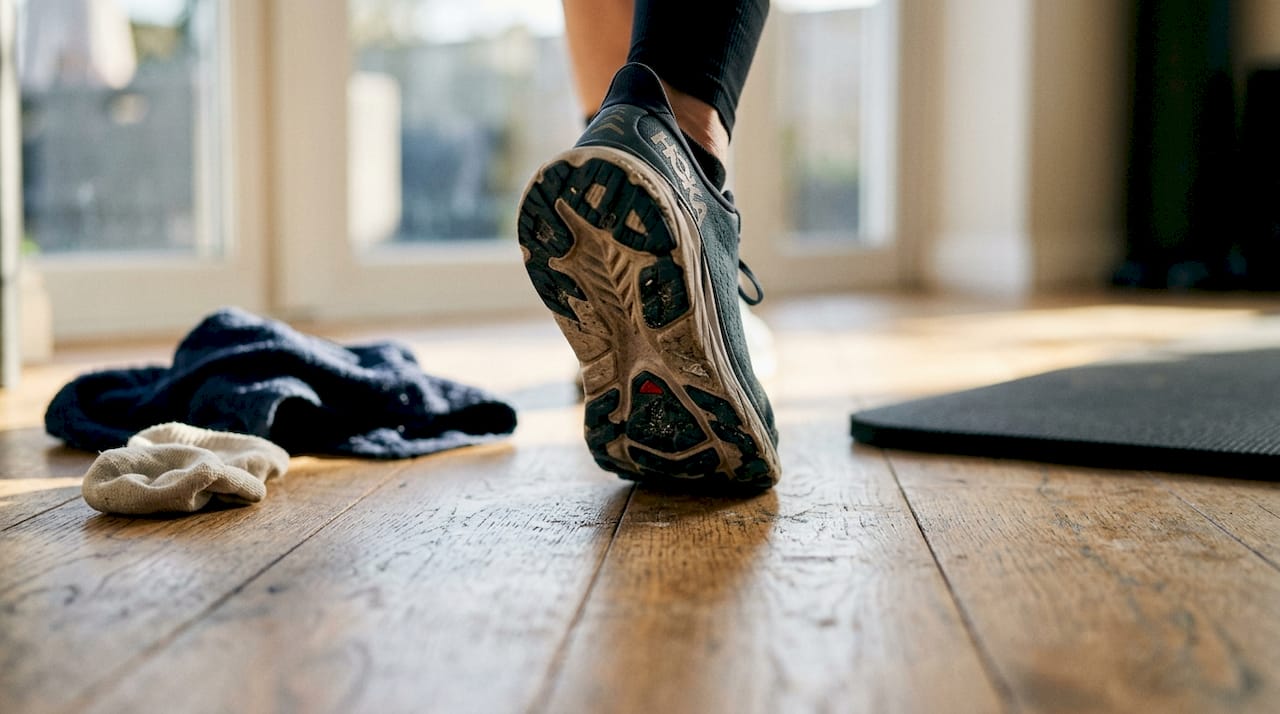
When your foot strikes the ground, cushioning materials compress and deform, converting kinetic energy into heat and distributing forces across a larger surface area. This process reduces the magnitude and rate of force transmission to your skeletal system. Different foam densities and compositions create distinct mechanical responses that affect how your body adapts to each footstrike.
Two critical biomechanical measures define cushioning performance:
Impact peak (IP): The maximum vertical force experienced during initial ground contact. Higher peaks mean greater instantaneous stress on joints and soft tissues.
Loading rate (LR): How quickly force increases from initial contact to peak. Rapid loading rates correlate with higher injury risk in some populations.
Interestingly, softer midsoles decrease loading rate but may increase impact peak. This counterintuitive finding occurs because runners unconsciously adjust their gait when wearing softer shoes, often landing with slightly different mechanics that produce higher peak forces despite the cushioning’s presence.
| Midsole Type | Impact Peak Change | Loading Rate Change | Energy Absorption |
|---|---|---|---|
| Firm | Baseline | Baseline | Moderate |
| Medium | +3-5% | -8-10% | Good |
| Soft | +6-8% | -12-15% | Excellent |
| Minimal | +15-20% | +10-12% | Poor |
Studies demonstrate that cushioned shoes provide much higher energy absorption compared to minimal footwear, particularly benefiting women who typically experience greater impact forces relative to body mass. This absorption capacity protects against cumulative microtrauma that can develop into stress fractures, tendinitis, or chronic pain conditions.
“The relationship between cushioning softness and injury prevention isn’t linear. Runners adapt their movement patterns based on perceived underfoot conditions, creating complex interactions between shoe properties and biomechanical responses.”
Modern advanced cushioning technologies leverage these principles by engineering foams with specific compression curves, rebound characteristics, and durability profiles. Understanding these mechanics helps you evaluate whether a shoe’s cushioning system matches your biomechanical needs rather than simply choosing based on initial comfort impressions. The footwear technology explained guide offers deeper insights into how these systems integrate with other shoe components.
Does more cushioning mean more comfort or less injury?
The relationship between cushioning amount and injury prevention is more nuanced than most people realise. Research reveals that greater perceived cushioning and comfort linked to lower injury risk in recreational runners. Notice the emphasis on perceived cushioning rather than laboratory-measured properties. Your subjective experience of comfort and support matters more than technical specifications alone.
This finding challenges the assumption that objective cushioning measurements predict injury outcomes. A shoe rated as highly cushioned in lab tests might feel uncomfortable to you, negating its protective benefits. Conversely, a moderately cushioned shoe that feels perfect for your foot structure and gait pattern may provide superior injury protection.
Pro Tip: When testing shoes, walk or jog for at least 10 minutes rather than making decisions based on initial impressions. True comfort and support become apparent only after your feet warm up and your gait normalises.
Who benefits most from extra cushioning?
- Individuals with plantar fasciitis or heel pain
- People spending long hours standing on hard surfaces
- Runners with higher body mass or impact forces
- Those with arthritis or joint sensitivity
- Anyone recovering from lower limb injuries
Who should consider less cushioning?
- Individuals with excellent proprioception seeking ground feel
- Those with ankle instability requiring firmer platforms
- People transitioning to more natural movement patterns
- Athletes prioritising agility over shock absorption
The myth that maximum cushioning always equals maximum safety ignores individual biomechanics and adaptation. Your nervous system constantly adjusts movement patterns based on sensory feedback from your feet. Excessive cushioning can dull this feedback, potentially compromising balance and proprioception in some individuals.
Understanding cushioning and foot health requires considering your complete activity profile, existing conditions, and personal comfort preferences rather than following generic recommendations.
Cushioning technologies: Materials, stacks, and recent innovations
Footwear manufacturers continuously develop new foam formulations and structural designs to optimise cushioning performance. These innovations aim to balance competing demands: soft enough for comfort, responsive enough for efficiency, stable enough for safety, and durable enough for extended use.
Current foam technologies include:
- Supercritical PEBA: Nitrogen-infused foam offering exceptional energy return and lightweight cushioning
- Thermoplastic polyurethane (A-TPU): Durable material providing consistent performance across temperature ranges
- Dual-density EVA: Layered construction combining soft comfort with firmer stability
- Encapsulated air or gel: Targeted cushioning pods in high-impact zones
Research shows advanced foams improve running economy by 3-4%, whilst thicker stacks exceeding 40mm may enhance efficiency by an additional 0.6-0.7%. These improvements translate to reduced energy expenditure during prolonged activity, allowing you to move further with less fatigue.
Stack height refers to the thickness of cushioning material between your foot and the ground. Higher stacks provide more cushioning material to compress and absorb shock. However, they also raise your foot further from the ground, potentially compromising stability and proprioception.
Pro Tip: If you have a history of ankle sprains or balance issues, prioritise shoes with moderate stack heights (20-30mm) rather than maximum cushioning (40mm+). The stability trade-off matters more than marginal comfort gains.
The footwear innovations emerging in 2026 focus on personalisation and adaptability. Some systems now adjust cushioning firmness based on activity type or fatigue levels. Others incorporate sensors that provide feedback about your gait patterns and cushioning effectiveness. These technology trends 2025 represent significant advances beyond traditional foam-based approaches.
Choosing the right technology depends on matching foam properties to your specific needs. PEBA excels for energy return during running. TPU provides consistent support for all-day wear. Dual-density constructions offer versatility across different activities. Understanding these distinctions helps you select footwear that genuinely enhances your movement quality and comfort.
How to choose cushioning for your foot needs and lifestyle
Selecting appropriate cushioning requires assessing your individual circumstances rather than following generic advice. Your foot structure, activity patterns, existing conditions, and personal preferences all influence which cushioning approach serves you best.
Follow these steps to find your ideal cushioning:
- Identify your primary use case: Walking, running, standing, or mixed activities each demand different cushioning characteristics.
- Assess your foot structure: High arches typically benefit from more cushioning, whilst flat feet may require firmer support with targeted cushioning.
- Consider existing conditions: Plantar fasciitis, arthritis, or previous injuries often necessitate specific cushioning approaches.
- Test multiple options: Wear candidate shoes for extended periods, ideally during your typical activities.
- Evaluate stability alongside cushioning: Ensure adequate support prevents excessive foot motion despite soft cushioning.
- Monitor comfort over time: Initial impressions can mislead; true suitability emerges after several wears.
- Replace shoes proactively: Cushioning degrades with use, typically requiring replacement every 500-800 kilometres for runners.
Research confirms that optimal cushioning is individual, with perception guiding selection for injury prevention over laboratory metrics alone. Trust your subjective experience whilst remaining aware of biomechanical principles that might not be immediately apparent.
For those managing foot conditions, align cushioning properties with specific needs. Plantar fasciitis often responds well to generous heel cushioning combined with arch support. Metatarsalgia benefits from forefoot cushioning that reduces pressure on the ball of the foot. Arthritis typically requires overall shock absorption to minimise joint stress.
The best shoes for an active lifestyle balance cushioning with other critical features like breathability, flexibility, and durability. Don’t fixate solely on cushioning whilst neglecting these complementary attributes. Similarly, understanding the role of stability in footwear helps you avoid excessive cushioning that compromises necessary support.
Common questions about shoe cushioning myths and issues
Several persistent misconceptions about shoe cushioning lead people toward suboptimal choices. Addressing these clarifies how to maximise the benefits whilst avoiding potential drawbacks.
Can you have too much cushioning? Absolutely. Excessive cushioning can reduce proprioception, compromise stability, and create a disconnect between your nervous system and the ground. This matters particularly for activities requiring quick direction changes or balance. Studies show high stacks improve economy but risk instability, requiring careful consideration of this trade-off.
How long does modern cushioning last? Foam cushioning degrades gradually through repeated compression cycles. Most cushioning systems maintain optimal performance for 500-800 kilometres of running or 6-12 months of daily walking. Visual wear on outsoles often appears before cushioning degradation becomes noticeable, so track usage rather than relying solely on appearance.
Does cushioning prevent all injuries? No cushioning system eliminates injury risk entirely. Proper cushioning reduces impact-related stress but cannot compensate for training errors, biomechanical abnormalities, or inadequate recovery. View cushioning as one component of injury prevention alongside appropriate training progression, strength development, and rest.
Key considerations for balancing cushioning and stability:
- Wider platforms provide more stable bases for high-stack shoes
- Firmer midsole perimeters can enhance stability whilst maintaining soft central cushioning
- Lower heel-to-toe drops improve stability compared to high drops with equivalent stack heights
- Shoes designed for your specific foot type integrate cushioning with appropriate support features
Understanding why shoes matter for active lifestyles extends beyond cushioning alone. The integration of cushioning with other design elements determines overall performance and injury prevention. Modern athletic innovations for foot health demonstrate how manufacturers increasingly view cushioning as part of comprehensive support systems rather than isolated features.
Explore advanced cushioning solutions with YDA UK
Choosing footwear with appropriate cushioning technology transforms your daily comfort and long-term foot health. The right combination of foam materials, stack heights, and support features addresses your unique biomechanical needs whilst enhancing movement efficiency.
YDA UK specialises in footwear that integrates advanced cushioning with comprehensive foot health technology. Our range addresses diverse needs, from managing specific foot conditions to supporting active urban lifestyles. Each design balances shock absorption, energy return, and stability to deliver genuine performance benefits.
Explore our collection of shoes for problem feet engineered with precision cushioning systems that adapt to individual requirements. Discover how YDA shoe technology combines innovative materials with biomechanical insights to create footwear that genuinely supports your foot health goals. Whether you’re managing existing conditions or simply seeking superior comfort, our expert-designed solutions provide the cushioning performance you need.
Frequently asked questions
How does shoe cushioning actually reduce injury risk?
It reduces the impact and loading forces your feet experience, lowering injury likelihood, especially when the cushioning feels comfortable to you.
What’s the best cushioning material for foot conditions?
PEBA and advanced foams offer high comfort and energy return, but optimal choice depends on your specific condition and shoe fit.
Can too much cushioning be harmful?
Yes, excessive cushioning can reduce stability, increasing the risk of ankle twists or balance issues.
How can I tell when my shoes’ cushioning needs replacing?
If shoes feel less springy, more compressed, or less comfortable, it’s time for a new pair. Most cushioning degrades after 500-800 kilometres.
Are minimal shoes less healthy because they have no cushioning?
Minimal shoes increase foot forces and don’t suit everyone; those needing support or shock absorption are better with cushioned options.
Recommended
- How cushioning in footwear improves comfort and health – YDA UK
- How cushioning supports foot health and comfort in 2026 – YDA UK
- Shoe shopping tips 2026: choose comfort, style and tech – YDA UK
- How to Evaluate Shoe Technology for Better Foot Health – YDA UK
- Role of comfort in seating: 30% less fatigue outdoors – Sitpack