
How cushioning supports foot health and comfort in 2026
Believing that more cushioning always protects your feet better is a costly oversimplification. Recent research reveals that excessive cushioning can actually reduce stability and increase injury risk, whilst insufficient cushioning fails to protect vulnerable foot structures. The relationship between cushioning, foot stress, and comfort is far more nuanced than many realise. Understanding how cushioning materials work biomechanically allows you to choose footwear that genuinely supports your foot health rather than compromising it.
Table of Contents
- The Science Behind Cushioning And Foot Health
- How Cushioning Affects Running Biomechanics And Injury Risk
- Choosing The Right Cushioning For Your Foot Needs
- Explore Footwear Designed For Foot Health And Comfort
- FAQ On Cushioning And Foot Health
Key takeaways
| Point | Details |
|---|---|
| Optimal cushioning reduces stress | Heel cushioning pads with tailored elastic moduli reduce peak compressive stress by up to 66.91%, protecting vulnerable foot structures. |
| Excessive cushioning harms stability | High stack shoes increase ground contact time and reduce step frequency, compromising balance and raising injury risk. |
| Material stiffness matters | Selecting materials with elastic moduli just before the plateau maximises protection without over stiffening feet. |
| Individual needs vary | Diabetic individuals and runners require different cushioning strategies based on pressure distribution and biomechanics. |
| Custom solutions deliver results | 3D printed orthotics based on dynamic gait data improve foot support beyond standard insoles. |
The science behind cushioning and foot health
Cushioning materials in footwear work by absorbing and distributing forces across your foot during movement. The elastic modulus of these materials, which measures their stiffness, directly affects how much pressure concentrates at vulnerable points like your heel and forefoot. Softer materials compress more easily, spreading forces over larger areas, whilst stiffer materials provide stability but less pressure dispersion.
Finite element analysis research demonstrates that heel cushioning pads with tailored elastic moduli reduce peak compressive stress by up to 66.91% compared to barefoot conditions. This dramatic reduction proves particularly valuable for diabetic foot management, where high plantar pressures contribute to ulcer formation. The research validated these computational predictions against experimental plantar pressure measurements, confirming the accuracy of biomechanical modelling.
However, cushioning benefits don’t increase linearly with material softness. Studies reveal that optimal elastic moduli ranges yield best stress reductions, beyond which benefits plateau. This plateau effect occurs because excessively soft materials allow too much foot displacement, reducing support and potentially destabilising your gait. The sweet spot balances pressure reduction with adequate support.
Key factors affecting cushioning performance include:
- Material elastic modulus and thickness
- Pressure distribution patterns during stance and gait
- Foot displacement and deformation under load
- Shear stress reduction at vulnerable interfaces
- Integration with shoe geometry and upper construction
Pro Tip: Look for footwear cushioning benefits that specify material properties rather than just marketing claims about softness. The technical specifications tell you whether the cushioning actually matches your biomechanical needs.
Increasing material stiffness reduces foot displacement but requires careful calibration. Too stiff, and pressure concentrates at contact points. Too soft, and your foot sinks excessively, compromising stability. The most effective cushioning systems use graduated stiffness, with softer materials at initial contact zones and firmer support under the midfoot arch.
How cushioning affects running biomechanics and injury risk
Running places forces of two to three times your body weight through your feet with each stride. Cushioning influences how your body manages these repeated impacts, affecting everything from ankle stiffness to stride patterns. Surprisingly, more cushioning doesn’t always mean less injury risk.
Research shows that runners with greater cushioning show higher ankle joint stiffness, aiding dynamic stability during the stance phase. Your body compensates for softer midsoles by tensing ankle muscles more, creating a natural stiffening strategy. This adaptation helps maintain balance but increases muscular effort and energy cost. Softer cushioning reduces impact peaks but may increase loading rates, creating a complex trade off.
Stack height, the total thickness of cushioning between your foot and ground, introduces additional biomechanical effects. Studies demonstrate that high stack shoes increase ground contact time and reduce step frequency but compromise stability. The elevated platform raises your centre of gravity and reduces proprioceptive feedback, making it harder to sense ground contact and adjust your gait precisely.
Critical biomechanical effects of cushioning include:
- Impact peak attenuation during heel strike
- Loading rate changes affecting tibial stress
- Ankle joint stiffness adjustments for stability
- Ground contact time and stride frequency alterations
- Proprioceptive feedback reduction with thick midsoles
- Balance and lateral stability compromises
Pro Tip: If you’re transitioning to shoes with significantly different cushioning, reduce your mileage by 30 to 50 percent for the first two weeks. Your body needs time to recalibrate motor patterns and muscular responses to the new mechanical properties.
Research indicates that midsole thickness around 35 millimetres offers optimal balance between comfort and control for most runners. Below this, impact forces may feel harsh. Above this, stability concerns emerge. However, individual biomechanics vary, and some runners thrive in minimal shoes whilst others need more cushioning. The key is matching cushioning properties to your specific gait patterns and foot structure.
Excessive cushioning particularly affects runners with existing stability issues or those recovering from overuse injuries. The soft, thick platforms can exacerbate pronation control problems and slow your ability to make rapid adjustments during uneven terrain. Advanced cushioning technologies address these concerns by using firmer medial posts or variable density foams that provide cushioning without sacrificing stability.
Choosing the right cushioning for your foot needs
Selecting appropriate cushioning requires assessing your specific foot conditions, activity patterns, and biomechanical characteristics. Generic recommendations fail because feet vary enormously in structure, function, and vulnerability to injury. A systematic approach helps you identify cushioning that protects without compromising performance.
Start by evaluating your primary concerns. Diabetic individuals prioritise pressure reduction to prevent ulceration. Active runners balance impact protection with ground feel and stability. People with arthritis need cushioning that reduces joint loading without destabilising gait. Each scenario demands different material properties and construction approaches.
Research confirms that selecting materials with elastic moduli just before the plateau is most effective for diabetic foot ulcer prevention. This targeted approach maximises pressure reduction whilst maintaining adequate support. Going softer provides minimal additional benefit but increases foot displacement and reduces stability.
Follow these steps to evaluate cushioning suitability:
- Identify your primary foot health concerns and activity requirements
- Assess current footwear for pressure points and discomfort patterns
- Test shoes with varied cushioning levels, noting stability and comfort
- Check for adequate arch support integrated with cushioning systems
- Verify proper fit, as poor sizing negates cushioning benefits
- Consider custom orthotics if standard cushioning proves insufficient
Clinical studies support that custom 3D printed orthotics based on dynamic gait data improve foot support beyond standard insoles. These personalised solutions account for your unique pressure patterns, foot geometry, and movement characteristics. The investment proves worthwhile for individuals with complex foot conditions or those who haven’t found relief from off the shelf options.
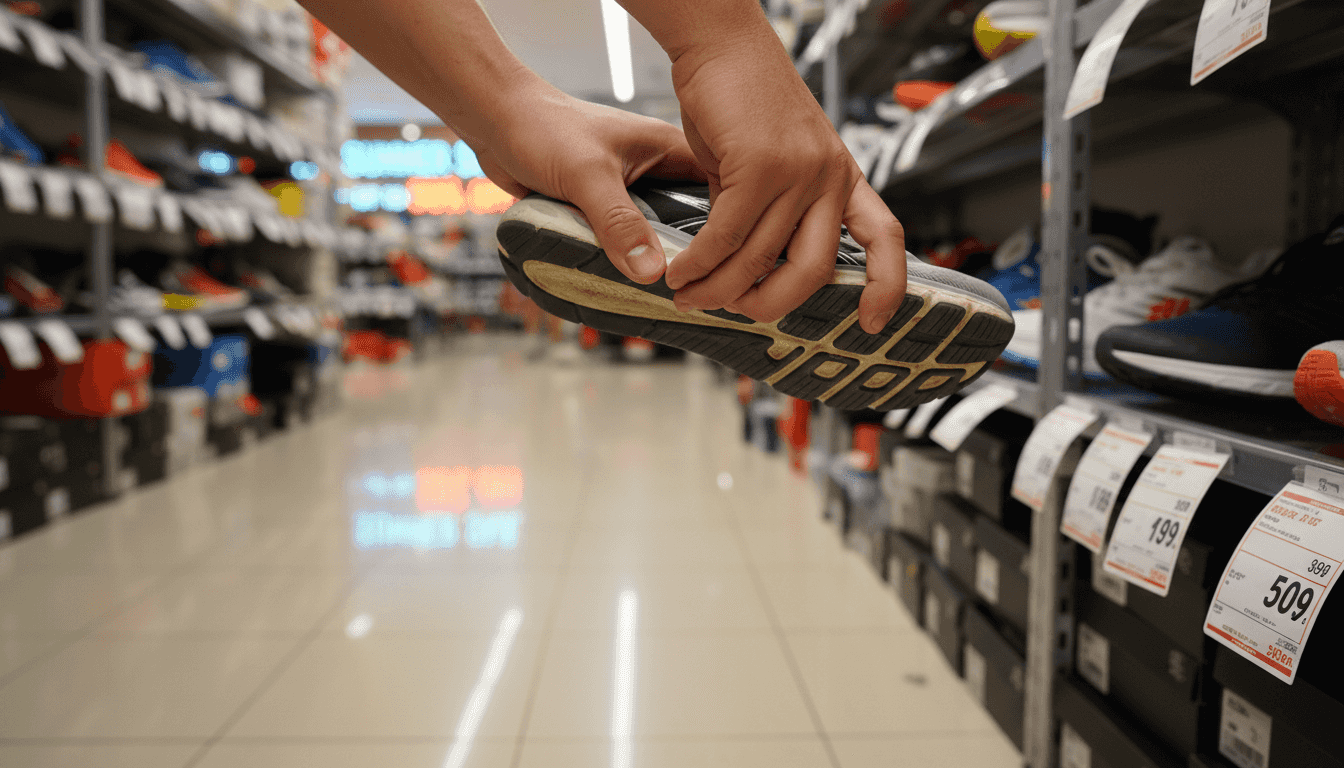
Pro Tip: Walk on different surfaces when testing shoes. Cushioning that feels perfect on shop carpet may prove too soft on concrete or too firm on trails. Real world testing reveals how cushioning performs across varied conditions.
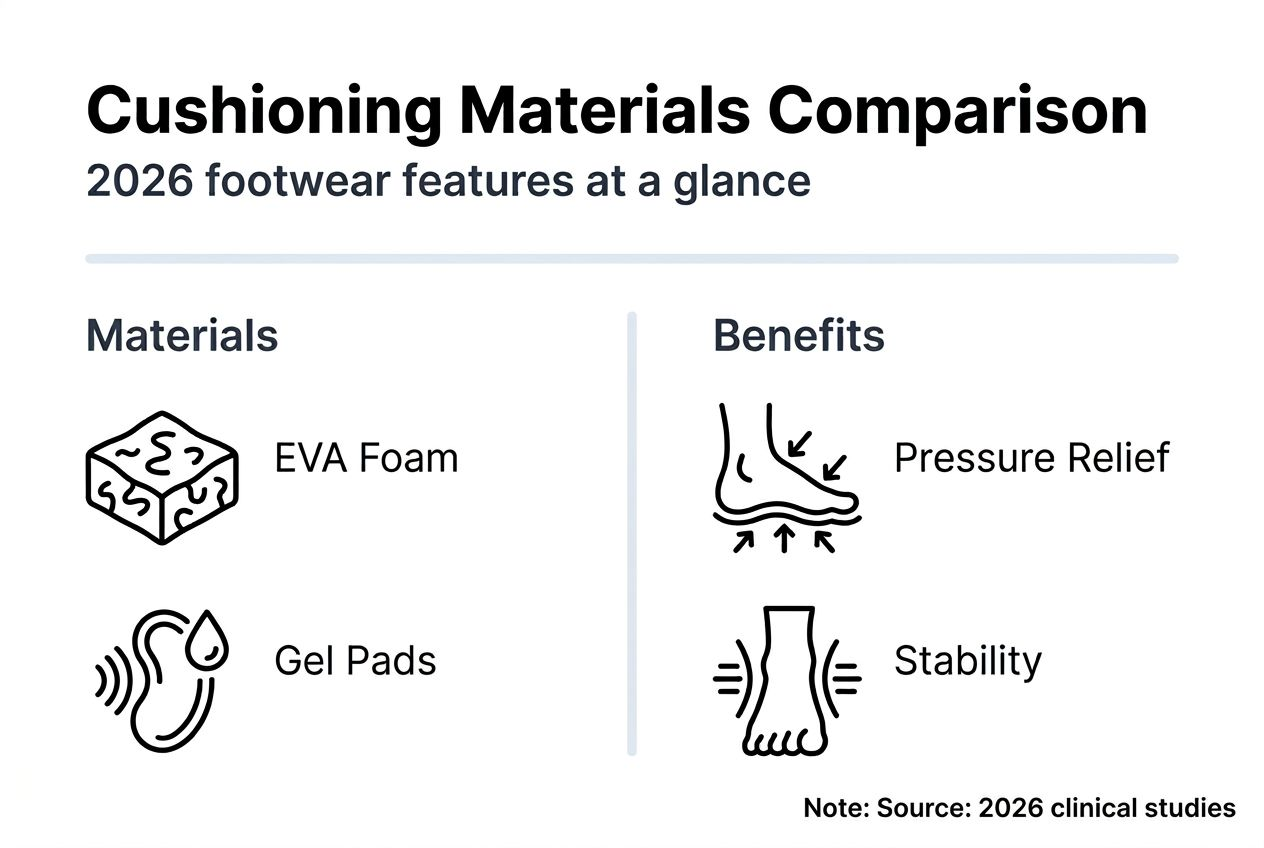
| Material type | Elastic modulus range | Best applications | Key benefits |
|---|---|---|---|
| EVA foam | Low to medium | General comfort, everyday wear | Lightweight, affordable, good initial cushioning |
| Polyurethane | Medium | Diabetic footwear, support shoes | Durable, consistent compression, pressure distribution |
| TPU | Medium to high | Athletic shoes, stability footwear | Responsive, maintains properties, excellent energy return |
| Gel inserts | Variable | Targeted cushioning, heel cups | Precise pressure reduction, customisable placement |
| Custom orthotics | Tailored | Complex foot conditions, diabetic care | Personalised support, optimal pressure mapping |
Proper shoe fit amplifies cushioning effectiveness. A shoe that’s too tight compresses cushioning unevenly, creating pressure points. Too loose, and your foot slides within the shoe, generating friction and negating cushioning benefits. Measure both feet whilst standing, as foot dimensions change with weight bearing. Choose shoes that accommodate your larger foot comfortably.
For diabetic individuals specifically, diabetic footwear selection requires extra depth to house custom orthotics, seamless interiors to prevent irritation, and materials that mould to foot contours. Standard cushioning alone rarely suffices. The combination of appropriate cushioning materials, proper fit, and custom insoles provides comprehensive protection. Understanding types of diabetic footwear helps you navigate options and make informed choices.
Regular reassessment ensures your cushioning remains appropriate as your feet change. Ageing, weight fluctuations, and activity level changes all affect cushioning requirements. What worked perfectly last year may need adjustment now. Shoe fit for diabetics emphasises annual professional assessments to catch subtle changes before they cause problems.
Explore footwear designed for foot health and comfort
YDA UK specialises in high performance footwear that integrates the cushioning principles discussed throughout this article. Our shoes combine advanced materials with biomechanically sound designs to support foot health without compromising style or comfort.
Every YDA shoe incorporates cushioning technologies calibrated to reduce plantar pressures whilst maintaining stability. We focus particularly on diabetic friendly features, including seamless interiors, extra depth construction, and materials with optimal elastic properties. Our designs reflect current research on pressure distribution and gait biomechanics.
Explore our range of shoes for problem feet to find options suited to your specific needs. Whether you require diabetic protection, athletic performance, or everyday comfort, our collection addresses diverse foot health requirements. Learn more about the technology of YDA shoes to understand how engineering and materials science combine to create footwear that genuinely supports your feet.
FAQ on cushioning and foot health
What level of cushioning works best for diabetic foot protection?
Moderate cushioning with elastic moduli just before the performance plateau provides optimal diabetic foot protection. Materials that are too soft allow excessive foot displacement, whilst too firm materials concentrate pressure. Research shows properly calibrated cushioning reduces peak stresses by up to 66.91 percent, significantly lowering ulcer risk.
Does high stack height improve comfort or increase injury risk?
High stack shoes offer greater impact absorption but compromise stability and proprioception. They increase ground contact time and reduce step frequency, which may feel comfortable initially but can increase overuse injury risk. Stack heights around 35 millimetres balance cushioning benefits with adequate ground feel and stability for most individuals.
How does material stiffness affect foot displacement during walking?
Softer materials allow more foot displacement, spreading pressure over larger areas but potentially reducing stability. Stiffer materials limit displacement, providing firmer support but concentrating pressure at contact points. The optimal stiffness balances pressure distribution with adequate support, varying based on individual foot structure and activity level.
When should I consider custom orthotics instead of standard cushioning?
Consider custom orthotics when standard cushioning fails to relieve discomfort, you have complex foot conditions like severe pronation or diabetic neuropathy, or you’ve experienced recurrent injuries. Clinical evaluations show 3D printed orthotics based on gait data significantly improve support beyond off the shelf options for these situations.
What features make shoes truly diabetic friendly beyond cushioning?
Diabetic friendly shoes require seamless interiors to prevent friction, extra depth to accommodate orthotics and swelling, breathable materials to manage moisture, and wide toe boxes to avoid compression. These features work together with appropriate cushioning to prevent ulcers and support compromised circulation. Learn what makes diabetic friendly shoes effective beyond basic cushioning.
How do advanced cushioning technologies differ from standard foam?
Advanced cushioning technologies use variable density foams, responsive materials like TPU, and strategic placement to optimise pressure distribution. Unlike standard foam that compresses uniformly, these systems provide targeted support where needed whilst maintaining flexibility elsewhere. They maintain cushioning properties longer and adapt better to individual gait patterns.