
Shoe technologies transforming comfort and performance in 2026
TL;DR:
- Choosing the right shoes requires understanding advanced foam and adaptive midsole technologies that support performance, foot health, and comfort. High-energy return foams like PEBA improve efficiency for efficient runners, while adaptive midsoles personalize cushioning, benefiting long-term foot health. Selecting footwear should be based on activity, foot shape, and individual needs rather than marketing hype or technology trends.
Choosing the right pair of shoes has never been more technically demanding. Walk into any specialist retailer or browse any high-performance footwear site and you’re confronted with a wall of acronyms, material names, and engineering claims that would challenge even a seasoned sports scientist. The difference between well-designed modern footwear and a pair bought purely on looks isn’t just feel underfoot. It’s energy efficiency, joint load, and how your feet hold up after eight hours on them. This guide cuts through the noise to give you a clear, evidence-based look at the shoe technologies that genuinely matter in 2026.
Table of Contents
- How to evaluate shoe technologies in 2026
- Highlight: Puma NITROFOAM Elite and advanced foam midsole systems
- Adaptive midsole technology: Custom comfort in every step
- Comparing the leading shoe technologies
- How to choose the right shoe technology for your needs
- Our take: Why the latest isn’t always the greatest
- Looking for advanced comfort and support? Discover more
- Frequently asked questions
Key Takeaways
| Point | Details |
|---|---|
| Know your priorities | Focus on comfort, performance, and personal foot needs when choosing new tech. |
| Advanced foams boost speed | Technologies like NITROFOAM can improve running economy for the right user. |
| Adaptive midsoles evolve with you | Emerging adaptive designs personalise cushioning and support for daily comfort. |
| Comparison is critical | Directly weighing each technology’s pros and cons makes selection easier. |
| Go beyond the hype | Latest isn’t always best—choose what truly fits your lifestyle and health. |
How to evaluate shoe technologies in 2026
With the overwhelming number of choices available, clarity on what actually separates advanced shoes from marketing-heavy ones is essential. Technology in footwear now spans materials science, biomechanics, and even computational design, so knowing which features deserve your attention will save you both money and discomfort.
When assessing any shoe’s technology, consider these key areas:
- Comfort: Look beyond just softness. True comfort involves well-engineered cushioning materials, a fit that adapts to your foot shape, and breathability that prevents heat build-up during extended wear.
- Performance: Energy return (how much of your stride’s energy is given back to you), overall stability, and the shoe’s weight all contribute to how efficiently you move.
- Foot health: Arch support, heel containment, and the ability to accommodate different gait patterns are critical, particularly for people who spend long hours on their feet.
- Durability and materials: Sustainable, long-lasting materials reduce both environmental impact and replacement costs over time.
- Everyday suitability: The best performance tech is useless if the shoe doesn’t transition well between activities, environments, or outfit styles.
Understanding cushioning technology basics will help you make sense of what each material is actually doing beneath your foot. You should also keep an eye on emerging footwear trends because the industry is evolving faster than most people realise.
It’s worth noting that advanced foams and carbon-fibre plates excel in performance, delivering 3 to 4% running economy gains, but they demand an efficient, midfoot-dominant running form to truly shine. Heel strikers and slower-paced runners can actually find these setups feel unstable.
Pro Tip: Before focusing on a shoe’s headline material or plate technology, identify your primary activity. A daily commuter and a sub-20-minute 5K runner need entirely different feature sets, even if they both want comfort and performance.
Highlight: Puma NITROFOAM Elite and advanced foam midsole systems
Understanding the key criteria, let’s explore individual technologies starting with the cutting-edge midsoles that are redefining what foam can do. For years, EVA (ethylene-vinyl acetate) foam dominated footwear cushioning. Today’s elite options leave it well behind.
Puma’s NITROFOAM Elite, found in the Fast-R Nitro Elite 3, is among the most significant recent advances. This foam is built on PEBA (polyether block amide) chemistry, which produces a lighter, more resilient cell structure than traditional materials. Unlike denser, heavier foams, PEBA-based compounds bounce back almost immediately after compression, returning energy to the runner rather than absorbing and wasting it as heat.
The data behind it is compelling. In controlled treadmill testing with 15 sub-21-minute 5K runners, NITROFOAM Elite delivered a 3.5 to 3.6% improvement in running economy over competing shoes including the Nike Alphafly 3 and Adidas Adios Pro Evo 1, measured via oxygen consumption. That’s a meaningful margin at elite level and even significant for regular performance runners.
The core benefits of advanced foam midsoles include:
- High energy return: PEBA and A-TPU foams return significantly more energy per stride than conventional EVA, reducing fatigue over longer distances.
- Low weight: These materials are exceptionally light, which reduces the metabolic cost of lifting the foot with every step.
- Superior cushioning depth: They can be built thicker without adding disproportionate weight, offering more protection underfoot.
- Longevity of responsiveness: Unlike older foams that compress and flatten over time, next-generation foams maintain their properties across hundreds of kilometres.
The trade-offs are real, though. These top athletic innovations work best for runners whose biomechanics complement the plate and foam geometry. A heel striker landing heavily on a stiff carbon plate does not engage the system efficiently. The result can feel unstable or, in some cases, increase strain on the Achilles tendon and calf.
“The performance gains from advanced foams are real, but they require you to move the way the shoe expects you to. If your form isn’t there yet, the shoe might not carry you as far as the marketing suggests.” This is the key nuance that separates informed purchasing from impulse buying.
For a deeper look at the science of cushioning and why material density and rebound rate matter so much, the underlying physics is surprisingly accessible once broken down properly.
Pro Tip: If you’re curious whether a PEBA-based shoe will suit your stride, try running at race pace on a treadmill in store. The instability that heel strikers feel is almost immediately apparent, and it’s far better to discover that before purchase.
Adaptive midsole technology: Custom comfort in every step
Advanced foams have set the standard, but midsole adaptability is changing personal comfort in a fundamentally different way. Rather than optimising one fixed level of cushioning and stiffness for every user, adaptive midsoles literally change their behaviour based on how you use them.
The MIT Self-Assembly Lab’s adaptive midsole is the most scientifically rigorous example currently in development. It uses a process called granular convection, where small particles within the midsole shift and reorganise in response to repeated loading patterns. Over time, the midsole develops a variable stiffness profile that reflects your specific gait, weight distribution, and activity style. In plain terms: the shoe learns how you walk and adjusts accordingly.
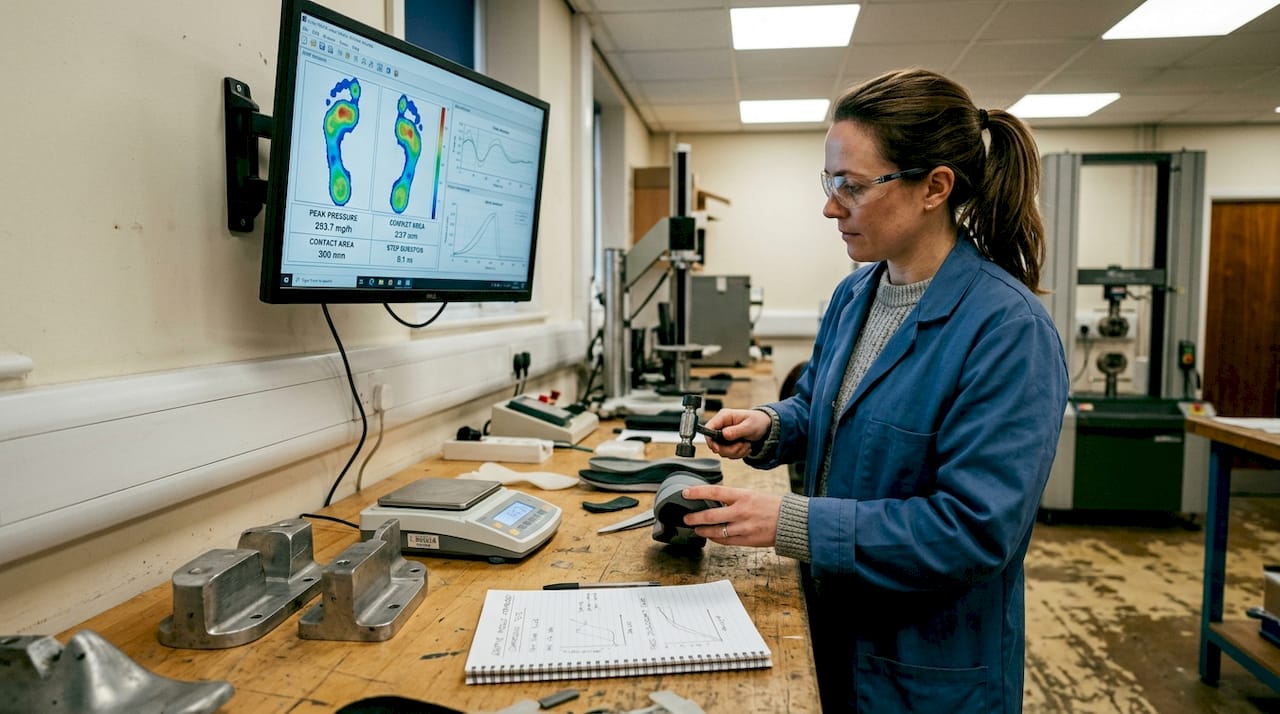
This is distinct from simple break-in periods where traditional foam merely softens from compression. Granular convection creates zones of genuinely different stiffness, providing more support where your foot lands heavily and more flexibility where it needs to flex naturally.
Here’s how adaptive and static midsoles compare in practice:
| Property | Adaptive midsole | Static advanced foam | Conventional EVA |
|---|---|---|---|
| Cushioning personalisation | Evolves with use | Fixed from manufacture | Fixed, degrades over time |
| Energy return | Moderate to high | Very high | Low to moderate |
| Stability for different gaits | Adjusts over time | Optimised for one style | Generalised |
| Suitability for foot health concerns | Excellent | Moderate | Basic |
| Best for | All-day wear, mixed activity | Performance running | Casual/budget use |
The real-world benefits of adaptive fit shoes extend well beyond running. For people who spend long hours standing, walking on varied surfaces, or managing conditions like plantar fasciitis or overpronation, a midsole that responds to their specific loading pattern is more clinically relevant than one engineered around a hypothetical average foot.
Key user benefits include:
- Personalised cushioning that develops naturally without any manual adjustments
- Support that evolves as your foot strength and gait change over months of use
- Reduced risk of pressure points from a midsole that accommodates your individual foot shape
- Long-term foot health benefits from consistent, appropriate support rather than a one-size-fits-all approach
“The idea isn’t just to make a comfortable shoe from day one. It’s to make a shoe that becomes more right for you the more you wear it,” which is the core principle behind the MIT Self-Assembly Lab’s research approach.
Comparing the leading shoe technologies
Having examined the top technologies individually, let’s put them side by side to clarify which suits which type of user.
| Technology | Performance gains | Foot health support | Everyday suitability | Learning curve |
|---|---|---|---|---|
| NITROFOAM Elite / PEBA foams | 3.5 to 3.6% economy gain | Low to moderate | Moderate | High (needs efficient form) |
| MIT adaptive midsole | Moderate | Very high | Excellent | None |
| Conventional designs | Minimal | Generalised | High | None |
Based on this comparison, here’s who benefits most from each technology type:
- Performance-focused runners with efficient form will gain the most from advanced PEBA and A-TPU foams. The energy return advantage is measurable and significant at competitive paces.
- People with specific foot health concerns such as overpronation, plantar fasciitis, or uneven pressure distribution will find adaptive midsole technology the most personally relevant and clinically supportive option.
- Everyday commuters and all-day walkers may get the best value from adaptive designs or well-engineered conventional shoes, which offer broad comfort without requiring a specific biomechanical profile.
- Casual wearers on a budget still benefit from conventional designs if they prioritise fit, breathability, and basic arch support over performance data.
Staying informed about footwear innovations 2025 and understanding 2026 sneaker trends will help you anticipate when a category becomes genuinely mature and worth your investment.
Pro Tip: Don’t assume the most expensive shoe automatically serves your needs best. Map the technology’s intended user profile against your actual activity, foot shape, and usage frequency before committing.
How to choose the right shoe technology for your needs
Knowing the strengths of each technology, here’s how to make a personalised, informed choice rather than following trend cycles or flagship product launches.
When selecting your next pair based on technology, work through these considerations:
- Activity type: High-mileage runners need energy return and durability. Walkers and commuters need sustained cushioning and adaptability. Casual wearers need comfort and suitability for varied conditions.
- Foot shape and health concerns: Wider feet, high arches, flat feet, or existing conditions like bunions or neuromas all affect which midsole and upper construction will actually help rather than hinder you.
- Frequency of use: A shoe worn every day will need to maintain its properties over a much longer period than one reserved for weekly runs. Adaptive materials perform better with regular use, whilst performance foams may compress more quickly under heavy daily use.
- Budget and replacement cycle: PEBA foams degrade in ways that aren’t always visible. Many experts suggest replacing high-performance foam shoes every 400 to 600 kilometres, which affects the true cost of ownership significantly.
Balancing trends with long-term comfort matters. The shoe shopping tips for 2026 that genuinely serve you well centre on fit, support, and consistency. It’s easy to be drawn in by a 3 to 4% performance economy gain without considering whether your form can actually unlock that benefit. Similarly, understanding how cushioning improves health over the long term helps you weigh short-term performance claims against lasting wellbeing.
Pro Tip: Technology cycles in footwear typically run 18 to 24 months before a meaningful upgrade appears. If a shoe meets your needs well now, there’s rarely a reason to upgrade mid-cycle purely for novelty.
Our take: Why the latest isn’t always the greatest
Here’s an uncomfortable truth the footwear industry rarely promotes: the most technically advanced shoe on the market is not the right shoe for most people. That’s not cynicism. It’s biomechanics.
The performance gains from elite foam systems and carbon plates are real, and the MIT adaptive midsole research is genuinely exciting. But these technologies are built around specific assumptions. PEBA foams assume you run at a pace and with a form that activates the energy return mechanism properly. Adaptive midsoles assume you’ll wear the shoe long enough and consistently enough for the granular convection effect to personalise meaningfully. Neither assumption fits every consumer.
What we consistently see is that people who prioritise shock absorption benefits and proper arch support over headline materials report better day-to-day satisfaction. A well-constructed shoe with moderate cushioning, solid heel containment, and a fit that genuinely matches the foot’s width and volume will outperform a technically superior shoe that fits poorly or demands a running style the wearer doesn’t have.
Foot shape varies enormously. Gait patterns vary even more. A shoe engineered for a 65kg elite runner with a midfoot strike and a 180 steps-per-minute cadence will perform very differently on a 90kg casual walker. Marketing glosses over this. Good shoe buying doesn’t.
Our advice is straightforward: use the technical comparisons in this guide as a filter, not a ranking. Identify what your feet and your lifestyle actually need, then find the technology that serves those needs. Classic, well-engineered cushioning still wins for all-day comfort. Sustainable materials still matter for long-term value. And sometimes the shoe you’ve been wearing comfortably for two years is exactly the right shoe, regardless of what launched last month.
Looking for advanced comfort and support? Discover more
Ready to step up your comfort and foot support with the latest advancements? The technologies covered in this guide aren’t just abstract concepts. They’re being built into footwear that real people wear every day, from high-performance athletes to those managing long-standing foot health challenges.
At YDA UK, we’ve built our entire approach around the principle that shoes should work with your foot, not against it. Our YDA technology combines foot health science with everyday wearability, addressing the gaps that most performance-focused brands overlook. Whether you’re looking for sustained comfort through a long working day or targeted support for a specific foot concern, explore our full range of health-oriented footwear to find shoes engineered around your needs.
Frequently asked questions
What is the difference between advanced foam and adaptive midsole technologies?
Advanced foams such as NITROFOAM Elite focus on energy return and lightness, whilst adaptive midsoles customise cushioning and support by evolving with your foot’s specific loading pattern over time.
Who benefits most from advanced foam midsoles?
Runners with efficient midfoot form looking for maximum energy return gain the most, whilst heel strikers or slower runners may find these systems feel unstable and don’t deliver the marketed economy gains.
Are adaptive midsoles suitable for everyday wear?
Yes, MIT’s adaptive midsole adjusts over time to your individual walking and loading patterns, making it particularly well-suited to daily comfort and supporting long-term foot health.
Which shoe technology is best for people with foot problems?
Adaptive technologies that personalise fit and cushioning to your specific gait are most beneficial for foot health concerns, as they respond to changing support needs rather than applying a fixed, generalised solution.