
Beginner's guide to shoe comfort: style and support
Your feet carry you through thousands of steps every day, yet most people give their shoes less thought than they give their morning coffee order. The result is familiar: aching arches by lunchtime, blisters after a short walk, and a growing pile of stylish shoes that never quite get worn. This guide changes that. We walk you through the science of shoe comfort, a practical buying workflow, common pitfalls to avoid, and how to keep your footwear performing at its best. Style and foot health are not a trade-off. With the right knowledge, you can have both.
Table of Contents
- Assessing shoe comfort: Key factors every beginner should know
- Step-by-step buying workflow: Preparing for comfort, style and technology
- Troubleshooting comfort: Common mistakes and special considerations
- Verifying comfort: How to test, monitor and maintain shoe performance
- Explore innovative comfort solutions with YDA
- Frequently asked questions
Key Takeaways
| Point | Details |
|---|---|
| Fit rules matter | Proper fit prevents major discomfort and reduces risk of foot health problems. |
| Immediate comfort is key | Shoes must feel right from the start; painful ‘break-in’ is never necessary. |
| Choose tech-backed features | Podiatrist-approved comfort technologies make stylish shoes safer for daily wear. |
| Replace worn shoes promptly | Cushioning degrades after 300-500 miles, so timely replacement preserves health and comfort. |
| Adapt minimalist wisely | Minimalist shoes need gradual transition to avoid injury—never rush the process. |
Assessing shoe comfort: Key factors every beginner should know
Comfort is not a feeling you stumble upon by luck. It is the result of specific design features working together with your unique foot shape. Understanding those features puts you in control from the moment you step into a shop or browse online.
Start with fit. Proper shoe fit requires at least a thumb’s width of space between your longest toe and the end of the shoe. Always fit to your larger foot, since most people have a slight size difference between left and right. Try shoes on in the afternoon or evening, when your feet are at their most swollen after a day of activity.
Beyond sizing, the essential shoe comfort features that genuinely matter include a structured heel counter, torsional rigidity through the midfoot, forefoot flex grooves, and a wide toe box. Removable insoles are a bonus if you use custom orthotics. Breathable uppers prevent heat build-up, which is a surprisingly common cause of discomfort on longer walks.
Key comfort features at a glance:
- Structured heel counter: Keeps the heel stable and reduces rolling
- Midfoot rigidity: Prevents the shoe from twisting underfoot
- Forefoot flex grooves: Allow natural toe-off movement
- Wide toe box: Lets toes splay naturally without compression
- Cushioned heel: Absorbs impact on hard surfaces
- Arch support: Matched to your foot type (flat, neutral, or high arch)
- Breathable upper: Reduces heat and moisture build-up
The American Podiatric Medical Association (APMA) seal of acceptance is a reliable shortcut when assessing whether a shoe genuinely supports foot health. Podiatrist-approved features are not marketing language. They reflect clinical evidence that the shoe reduces strain on joints and soft tissue.
| Feature | Comfort-focused shoe | Fashion-focused shoe |
|---|---|---|
| Heel counter | Firm and structured | Soft or absent |
| Toe box | Wide and rounded | Narrow and pointed |
| Midsole cushioning | Multi-density foam | Thin or decorative |
| Arch support | Contoured to foot type | Flat or minimal |
| Flex grooves | Present at forefoot | Often absent |
| Insole | Removable for orthotics | Fixed and thin |
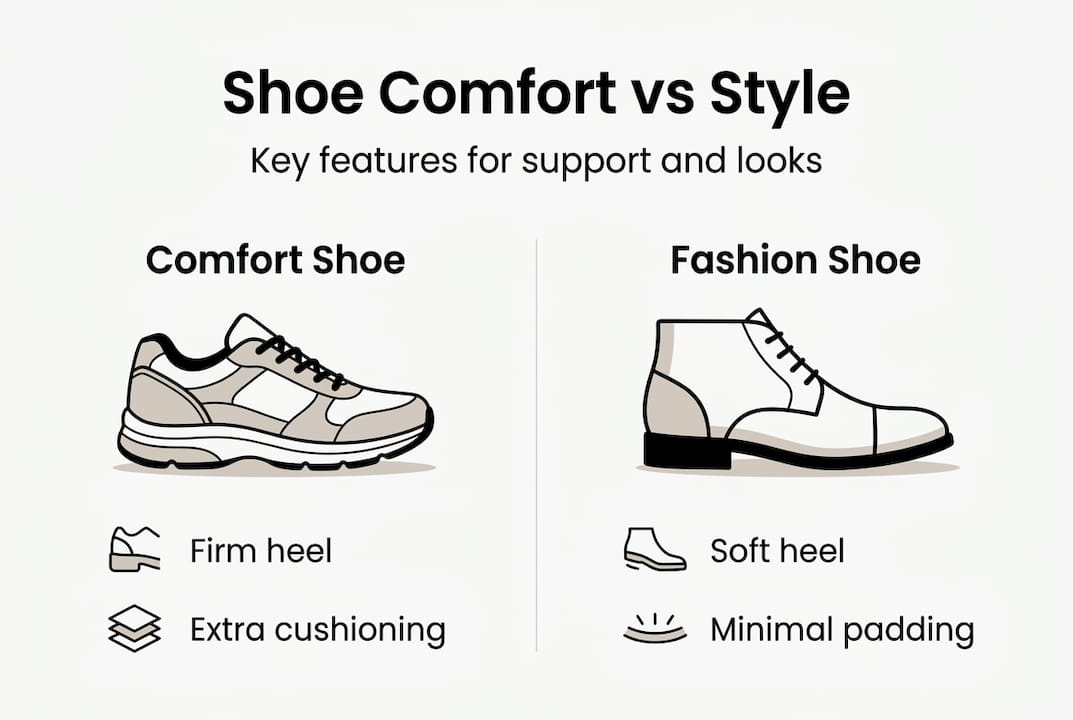
One rule overrides all others: a shoe must feel comfortable the moment you put it on. There is no such thing as a worthwhile painful break-in period. If it hurts in the shop, it will hurt on the street. Following a clear buying workflow for style and support from the start saves you money and your feet.
Step-by-step buying workflow: Preparing for comfort, style and technology
Having understood what defines shoe comfort, let us walk through the buying process step by step. A structured approach stops impulse decisions and ensures you leave with shoes that genuinely serve you.
Step 1: Measure your feet properly. Do this standing up, at the end of the day. Foot size changes with age and weight, so do not rely on a measurement from five years ago.
Step 2: Research shoe technologies before you shop. Brands such as Brooks Ghost and HOKA Bondi have built strong reputations for combining cushioning with everyday wearability. Look for APMA-approved models as a baseline.
Step 3: Apply the immediate comfort test. Shoes should feel comfortable immediately; no pain is acceptable on first wear. Walk around the shop, stand still for a minute, and flex your foot. If anything pinches or rubs, move on.
Step 4: Match style to foot health priorities. Colour, silhouette, and material all matter. The good news is that choosing shoes for daily wear no longer means sacrificing aesthetics. Many technologically advanced shoes now come in clean, contemporary designs.
Step 5: Plan for replacement. Replace walking shoes every 300 to 500 miles as cushioning degrades. For someone walking 30 minutes a day, that is roughly every 8 to 12 months.
Pro Tip: Cushioning is consistently rated highest for comfort at 99% in consumer studies. If you are unsure which feature to prioritise, start with the midsole. A well-cushioned shoe forgives a multitude of minor fit imperfections.
| Step | Action | Key tip |
|---|---|---|
| 1 | Measure feet | Standing, end of day |
| 2 | Research technologies | Look for APMA seal |
| 3 | Immediate comfort test | No pain allowed |
| 4 | Match style to health needs | Aesthetics and function together |
| 5 | Plan replacement schedule | Every 300 to 500 miles |
Using a clear workflow for finding right shoes removes the guesswork. It also means you spend less time returning purchases and more time actually enjoying your footwear. A good shoe selection guide will always bring you back to these fundamentals.
Troubleshooting comfort: Common mistakes and special considerations
With buying steps covered, it is vital to know how to troubleshoot common and special comfort issues. Even well-intentioned shoppers make mistakes that cost them dearly in foot health.
The most widespread error is accepting a poor fit. Improper fit increases foot problems by 60%, whether the shoe is too tight or too loose. Tight shoes compress the toes and accelerate bunion formation and hammertoe deformities. Loose shoes cause the foot to slide, creating friction blisters and placing excessive strain on tendons.
Warning signs your shoes do not fit correctly:
- Pain or numbness in the toes or ball of the foot
- Blisters forming on the heel or little toe
- Visible bunion irritation or redness
- Heel slipping out with each step
- Arch pain after short periods of standing
For people with specific foot conditions, standard shoes often fall short. Those with diabetes need shoes for foot problems that feature seamless interiors to prevent pressure sores, extra depth for swelling, and wider widths to accommodate sensitive tissue. Orthotics can redistribute pressure effectively when paired with removable insoles. If you have bunions, wider toe boxes are non-negotiable. Explore the best shoes for problem feet before committing to a style.
Minimalist shoes deserve a special mention. They can improve natural foot mechanics and reduce rearfoot impact forces, but the transition must be gradual. Research shows an 86% injury rate when people switch too quickly from traditional to minimalist footwear. Stress fractures, tendon injuries, and calf strains are the most common outcomes.
“Low-drop and minimalist shoes reduce rearfoot forces and contact time, but require a slow, structured transition to avoid serious injury. Rushing this process dramatically increases risk.” — Research published in PMC, 2025
Pro Tip: If you are curious about minimalist shoes explained, start by wearing them for just 20 to 30 minutes per day and increase by no more than 10% weekly. Your muscles and connective tissue need time to adapt. The contrasting shoe styles debate is ongoing, but the evidence on gradual transition is clear.
Verifying comfort: How to test, monitor and maintain shoe performance
Finally, verifying and maintaining shoe comfort ensures your footwear keeps pace with your health and style goals. Buying the right shoe is only half the job.
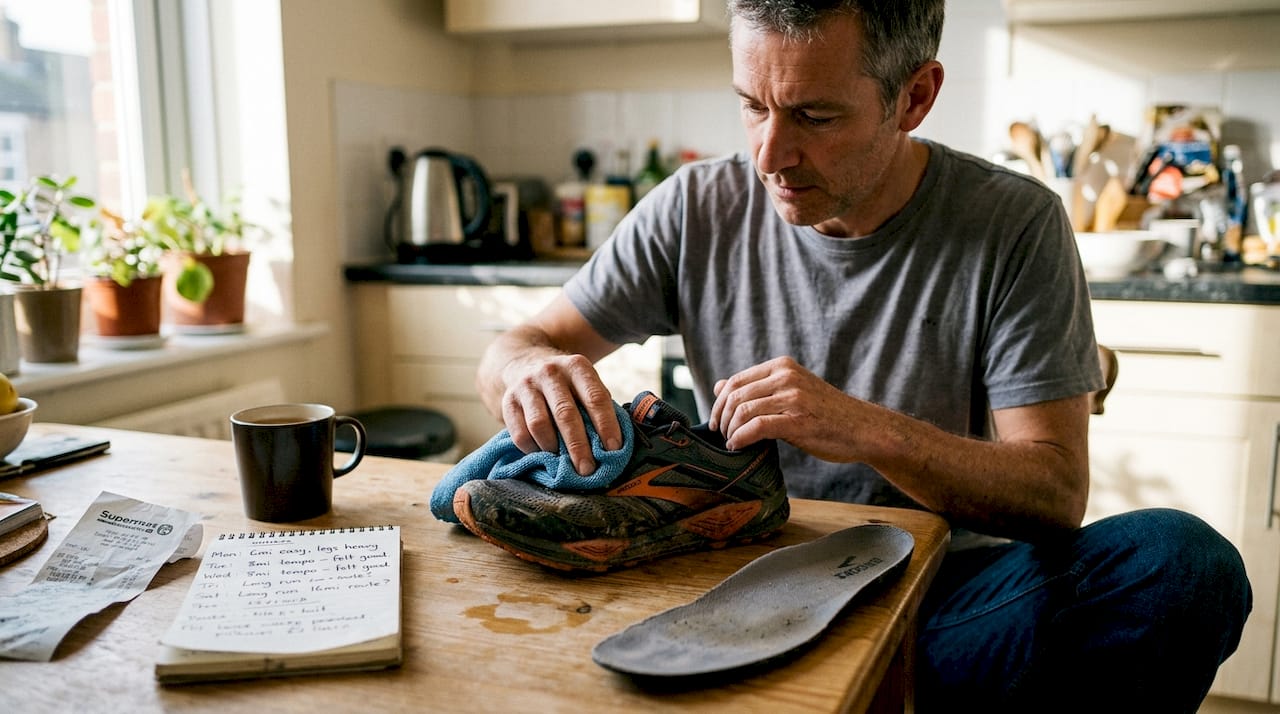
The initial test is straightforward: walk on different surfaces, stand still, and flex your foot in multiple directions. Comfort should be immediate and consistent. Any pressure point that appears within the first five minutes will only worsen with extended wear.
Ongoing checks to build into your routine:
- Inspect the midsole monthly: Press your thumb into the foam. If it does not spring back, cushioning has degraded.
- Check the outsole for uneven wear: Excessive wear on one side signals a gait issue worth addressing.
- Monitor fit changes: Feet change shape over time. A shoe that fitted perfectly last year may not fit as well today.
- Assess upper integrity: Tears or collapsing sides reduce lateral support significantly.
Research confirms that comfort perception links to better movement economy and may reduce fatigue during activity. In practical terms, a shoe that feels good encourages you to move more, which compounds the health benefit over time.
For cleaning, remove insoles after each wear to allow them to air out. Wipe the upper with a damp cloth and allow shoes to dry naturally away from direct heat. Rotating between two pairs extends the life of each significantly, as foam needs 24 hours to fully recover its shape.
Pro Tip: Mark the date of purchase on the insole with a marker. Pair this with a rough mileage tracker on your phone and you will never be caught wearing shoes that are long past their best. The APMA shoe maintenance guidance recommends replacement every 300 to 500 miles regardless of how the shoe looks on the outside. Cushioning fails invisibly.
For more practical advice, explore shoe comfort maintenance tips and browse more footwear tips to keep your knowledge current.
Explore innovative comfort solutions with YDA
After mastering the essentials, the natural next step is finding footwear that actually delivers on every principle covered here. That is precisely where YDA comes in.
At YDA, every shoe is designed around the intersection of style, foot health, and advanced technology. The technology behind YDA shoes draws on podiatric research to deliver features like structured heel counters, energy-return midsoles, and wide toe boxes in designs that look as good as they feel. Whether you are managing a specific foot condition or simply want to move through your day without discomfort, YDA’s range is built to support you from the first step. Browse the collection and experience what genuinely comfortable, stylish footwear feels like.
Frequently asked questions
How do I know if shoes really fit comfortably?
A good fit leaves at least a thumb’s width of space at the toes, feels instantly comfortable, and requires no painful break-in period. If you feel any pinching or pressure in the shop, the shoe is not the right fit.
How often should I replace my walking shoes for best comfort?
Walking shoes should be replaced every 300 to 500 miles as cushioning wears out and comfort decreases. For most people, this means a new pair roughly every 8 to 12 months.
Are minimalist shoes a good option for beginners?
Minimalist shoes can improve natural foot mechanics but carry an 86% injury risk if the transition is rushed. Beginners should introduce them gradually over several weeks rather than switching overnight.
What features should people with foot issues look for?
Extra depth, seamless interiors, wider widths, and removable insoles for orthotics are the most important features. These elements help redistribute pressure effectively and accommodate sensitive or problem feet.
Does shoe comfort influence my activity levels and performance?
Yes. Comfort perception links to better economy and reduced fatigue in several studies, meaning comfortable shoes can genuinely help you move more and feel better doing it.