
Comfortable shoe buying workflow for style and support
Finding shoes that genuinely support your feet whilst looking stylish feels like an impossible task. You try on dozens of pairs, yet nothing quite fits right or addresses your specific foot needs. Whether you manage bunions, diabetes, or simply want footwear that keeps up with an active lifestyle, the wrong choice leads to discomfort and potential health issues. This guide presents a proven workflow for 2026 that helps you confidently select footwear combining proper support, comfort, and style. You’ll learn to assess your feet, shop strategically, and maintain long-term foot health through informed purchasing decisions.
Table of Contents
- Preparing For A Comfortable Shoe Purchase: Know Your Feet And Needs
- Executing The Shoe Buying Workflow: Shopping Smart For Comfort And Support
- Selecting Footwear For Specific Foot Health Needs And Active Lifestyles
- Verifying Your Shoe Choice And Maintaining Comfort Long Term
- Discover Shoes That Combine Comfort And Style At YDA UK
- Frequently Asked Questions About Buying Comfortable Shoes
Key takeaways
| Point | Details |
|---|---|
| Assess before shopping | Identify your foot type, arch height, pronation pattern, and any medical conditions to guide your selection |
| Time your shopping right | Visit shops late afternoon when feet are naturally swollen, bringing your regular socks and orthotics |
| Prioritise function first | Focus on fit, support, and comfort over aesthetics; consult a podiatrist for persistent issues |
| Match shoes to needs | Diabetes requires extra-depth designs, bunions need anatomical toe boxes, active lifestyles demand durability |
| Rotate and maintain | Alternate between multiple pairs to extend shoe life and preserve cushioning support |
Preparing for a comfortable shoe purchase: know your feet and needs
Successful shoe shopping begins long before you enter a shop. Self-assessing foot type, medical conditions, and activity level creates a foundation for making informed decisions. Understanding whether you have high arches, flat feet, or neutral arches directly influences which shoes provide adequate support. Your pronation pattern matters equally; overpronators need stability features whilst supinators require cushioning.
Medical conditions transform shoe selection from preference to necessity. If you manage plantar fasciitis, arthritis, or neuropathy, specific design features become non-negotiable rather than optional extras. Document any pain points, swelling patterns, or discomfort you experience with current footwear. This information guides you towards solutions rather than repeating past mistakes.
Your activity level shapes durability and support requirements significantly. Someone walking 15,000 steps daily needs different construction than someone primarily seated. Consider whether you stand on hard surfaces, navigate uneven terrain, or participate in specific sports. Each scenario demands distinct cushioning, traction, and stability features. Review your footwear selection guide to understand how these factors interconnect.
Timing your shopping trip strategically improves fit accuracy dramatically. Feet naturally swell throughout the day, reaching their largest size by late afternoon. Shopping during this window ensures shoes accommodate your feet at their maximum volume. Bring the socks you typically wear with the shoe style you’re purchasing; thickness variations affect fit substantially.
Pro Tip: Measure both feet every time you shop, as many people have a half-size difference between left and right. Always fit shoes to your larger foot to prevent cramping and discomfort.
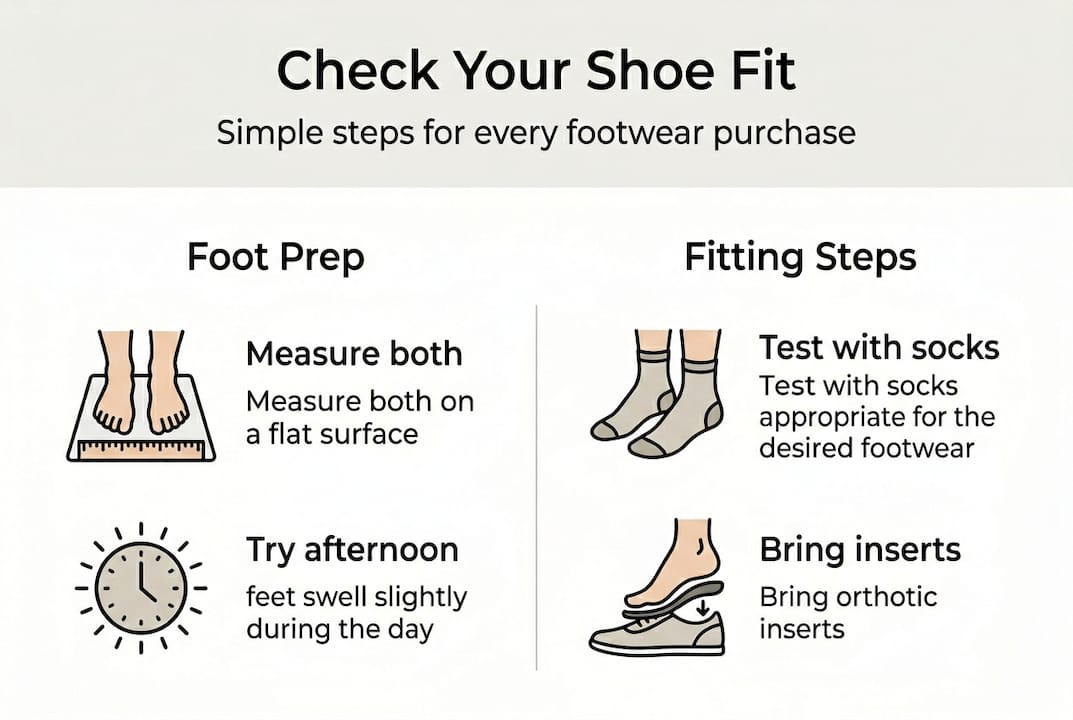
If you use orthotic inserts, bring them to every fitting. The shoe shopping guide by Blackwood Podiatry emphasises testing shoes with your actual orthotics inside, as they occupy space and alter how the shoe fits. Removable insoles in shoes accommodate custom orthotics better than fixed footbeds. This preparation step prevents discovering fit issues only after purchasing.
Executing the shoe buying workflow: shopping smart for comfort and support
The in-shop experience determines whether your preparation translates into a successful purchase. Shopping end-of-day, bringing orthotics and socks, and walking 10 minutes in-store forms the core testing protocol. This approach reveals comfort issues that static standing cannot detect. Request assistance from knowledgeable staff who understand foot biomechanics rather than just fashion trends.
Begin by trying your measured size, but remain open to adjustments. Different brands and styles fit differently even within the same numerical size. Insert your orthotics if applicable, then stand up and walk naturally around the shop. Your heel should remain secure without slipping, whilst your toes need adequate wiggle room. Press down on the toe box; you should have a thumb’s width of space beyond your longest toe.
Follow this systematic checking process:
- Check arch support aligns with your foot’s natural arch position
- Ensure the widest part of your foot matches the widest part of the shoe
- Verify the heel counter provides firm support without causing pressure points
- Test flexibility by bending the shoe; it should flex at the ball, not the arch
- Walk on different surfaces if available to assess traction and stability
- Perform typical movements like climbing stairs or standing on tiptoes
Pro Tip: Test shoes on both feet simultaneously and compare comfort levels directly. Subtle differences often emerge only through side-by-side comparison during extended walking.
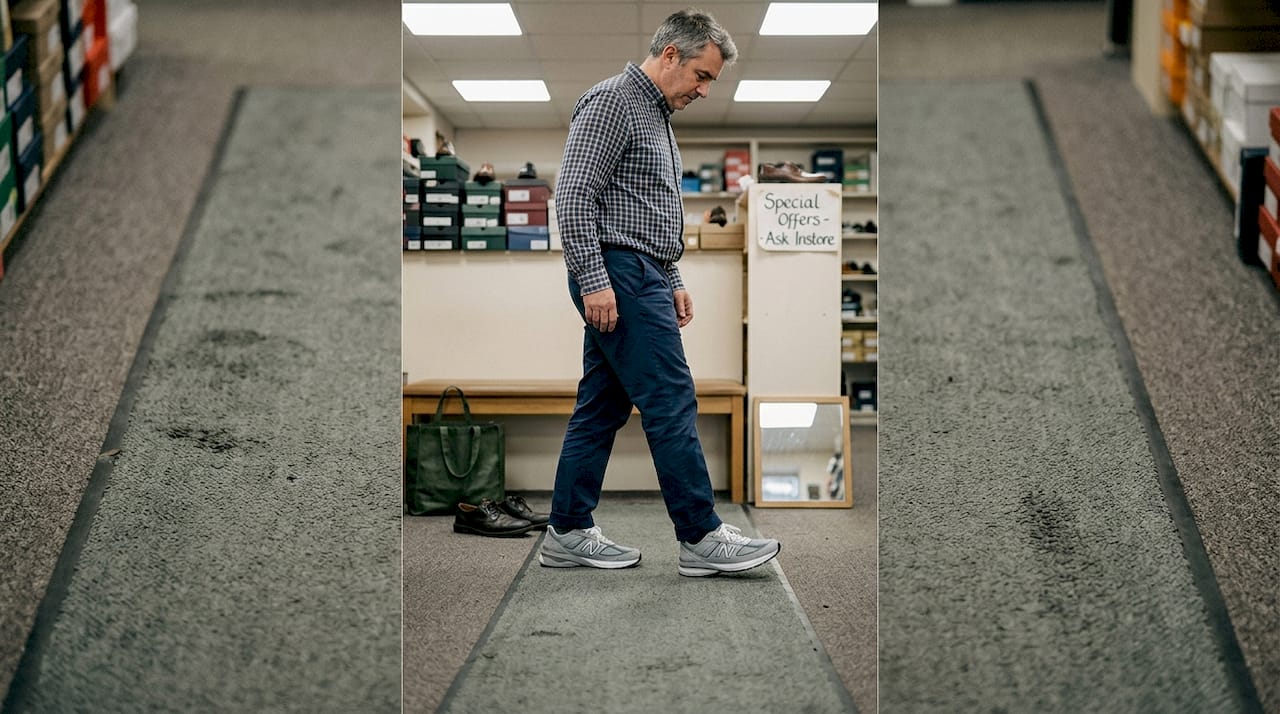
This shoe fit guide by Michigan foot doctors recommends spending at least 10 minutes walking in each potential pair. Brief trials miss developing pressure points or rubbing that appears after several minutes. Pay attention to any pinching, numbness, or discomfort. Quality shoes feel comfortable immediately; they don’t require a “breaking in” period that causes blisters or pain.
| Fit Criteria | What to Check | Common Issues |
|---|---|---|
| Toe Box | Thumb’s width space beyond longest toe | Cramping, black toenails, numbness |
| Heel Counter | Firm without pressure, no slipping | Blisters, instability, heel pain |
| Arch Support | Matches natural arch height and position | Plantar fasciitis, arch strain, fatigue |
| Width | Widest foot part matches widest shoe part | Bunions, pinching, circulation issues |
| Flexibility | Bends at ball of foot, not midfoot | Arch collapse, inefficient gait, discomfort |
Consider how the shoes integrate with your daily routine. If you wear them for work, ensure they meet any dress codes whilst maintaining support features. For choosing shoes for daily wear, versatility matters as much as comfort. Shoes that work for multiple contexts reduce the total number of pairs you need whilst ensuring consistent foot support.
Selecting footwear for specific foot health needs and active lifestyles
Certain conditions demand specialised features beyond general comfort considerations. Diabetes requires Medicare-approved extra-depth shoes whilst bunions need anatomical toe shapes beyond just wide widths. These aren’t optional upgrades; they’re essential protections against serious complications. Understanding your specific requirements prevents purchasing shoes that look appropriate but lack critical features.
Diabetic footwear addresses circulation issues and neuropathy through seamless interiors and protective depth. Standard shoes often contain internal seams that create pressure points, potentially leading to ulcers in people with reduced sensation. Extra depth accommodates swelling and custom orthotics without compression. Look for shoes specifically labelled as diabetic-appropriate rather than assuming regular comfortable shoes suffice. The diabetic footwear guide details these technical specifications.
Bunion-friendly shoes require more than simply sizing up or choosing wide widths. The toe box shape matters critically; a wide but pointed toe box still compresses the big toe joint. Anatomical or round toe boxes allow toes to spread naturally without forcing them together. Soft, stretchy uppers in the toe area prevent additional pressure on the bunion prominence. Avoid shoes with tight, rigid materials across the forefoot regardless of their width designation.
Active lifestyles introduce durability and performance requirements alongside comfort needs. Running, hiking, or standing for extended periods demands responsive cushioning that doesn’t compress quickly. Breathable materials prevent moisture buildup that causes blisters and fungal infections. Supportive midsoles maintain stability during dynamic movements. Review options for the best shoes for active lifestyles in 2026 to understand current technology.
| Condition/Need | Essential Features | Avoid |
|---|---|---|
| Diabetes | Seamless interior, extra depth, protective toe box, breathable materials | Tight fits, internal seams, rigid uppers, inadequate depth |
| Bunions | Anatomical toe box, soft stretchy uppers, wide forefoot, low heel | Pointed toes, rigid materials, narrow widths, high heels |
| Active Lifestyle | Responsive cushioning, durable outsoles, breathable mesh, stability features | Fashion-focused designs, minimal support, non-breathable materials |
Key design considerations for problem feet include:
- Removable insoles that accommodate custom orthotics without compromising fit
- Adjustable closures like laces or straps that adapt to swelling throughout the day
- Rocker soles that facilitate natural gait patterns and reduce joint stress
- Lightweight construction that minimises fatigue during extended wear
- Antimicrobial linings that control odour and prevent infections
Don’t compromise on medical requirements for aesthetic preferences. Fortunately, modern footwear technology increasingly combines therapeutic features with contemporary styling. Many brands now offer shoes that address specific conditions whilst maintaining professional or fashionable appearances. This evolution means you rarely face a binary choice between health and style.
Verifying your shoe choice and maintaining comfort long term
Purchasing shoes marks the beginning, not the end, of ensuring proper foot support. Wear new shoes at home for several hours before committing to full-time use. Walk on carpeted surfaces that won’t mark the soles, allowing you to return them if discomfort develops. This trial period reveals issues that brief in-shop testing might miss. Pay attention to any rubbing, pressure points, or fatigue that emerges during extended wear.
If pain or discomfort persists beyond initial adjustment, consult a podiatrist rather than pushing through. Professional assessment identifies whether the shoes lack necessary features or whether underlying foot issues require treatment. Podiatrists can recommend specific modifications, orthotic adjustments, or alternative shoe styles. Don’t assume discomfort is normal or will resolve with time; proper shoes feel comfortable from the start.
Rotating between multiple pairs extends shoe life significantly whilst maintaining consistent support. Alternating shoes allows materials to decompress and dry between wears. This practice prevents premature breakdown of cushioning and structural elements. Aim for at least two pairs for regular use, switching daily if possible. The investment in multiple quality pairs costs less long-term than frequently replacing single worn-out shoes.
Monitor your shoes for signs of degradation that compromise support:
- Compressed or flattened cushioning in the heel or forefoot
- Worn tread patterns that reduce traction and stability
- Stretched or torn uppers that no longer secure your foot properly
- Visible creasing or cracking in the midsole structure
- Uneven wear patterns indicating gait issues requiring assessment
Pro Tip: Keep a shoe diary tracking purchase dates, wear frequency, and comfort changes over time. This record helps you identify when replacement becomes necessary and which brands provide the best longevity for your needs.
Replace shoes before support completely fails rather than waiting for obvious breakdown. Most athletic and walking shoes require replacement every 500 to 800 kilometres, depending on your weight, gait, and surfaces. Dress shoes with proper construction last longer but still need retirement when cushioning compresses. Learn how to reduce foot pain with shoes through proper maintenance and timely replacement.
Store shoes properly to maintain their structure. Use shoe trees or stuff them with paper to preserve shape. Keep them in a cool, dry location away from direct heat sources that degrade materials. Clean them regularly according to manufacturer instructions. These simple maintenance steps extend functional life whilst keeping shoes looking presentable. Quality footwear represents a significant investment; proper care maximises your return.
Discover shoes that combine comfort and style at YDA UK
After mastering the shoe buying workflow, finding footwear that meets your specific requirements becomes simpler with the right retailer. YDA UK specialises in shoes that don’t force you to choose between foot health and contemporary style. Their range incorporates advanced support features within designs suitable for professional and casual settings alike.
The technology behind YDA shoes addresses common foot health challenges through engineered cushioning, anatomical shaping, and energy-efficient construction. Whether you manage specific conditions or simply prioritise comfort during active days, their collection offers solutions tailored to diverse needs. Browse shoes for problem feet to discover options that align with the assessment and requirements you’ve identified through this guide. Their approach combines podiatric principles with modern aesthetics, proving that supportive footwear can look as good as it feels.
Frequently asked questions about buying comfortable shoes
How do I know my foot type and why does it matter?
Your foot type includes arch height and pronation pattern, which determine what support features you need. Visit a podiatrist or specialised shoe shop for a professional gait analysis that reveals these characteristics. High arches require cushioning whilst flat feet need stability features; wearing inappropriate shoes for your type causes pain and potential injury over time.
When is the best time of day to shop for shoes?
Shop for shoes in late afternoon or early evening when your feet have naturally swollen to their largest size. Feet expand throughout the day due to activity and gravity, so morning purchases often result in shoes that feel tight by afternoon. This timing ensures your shoes accommodate your feet at their maximum volume for consistent all-day comfort.
What features should I look for if I have bunions?
Bunions require anatomically shaped toe boxes that allow your big toe to rest in its natural position rather than being forced inward. Look for round or square toe shapes with soft, stretchy materials across the forefoot. Simply choosing wide widths isn’t sufficient; the toe box shape matters more than overall width. Avoid pointed toes and rigid uppers that create pressure on the bunion prominence.
How can I ensure shoes remain comfortable over time?
Rotate between multiple pairs to allow materials to decompress between wears, extending cushioning life significantly. Monitor shoes for signs of wear like compressed cushioning or worn treads, replacing them before support completely fails. Keep a usage diary tracking comfort changes and mileage to identify optimal replacement timing. Proper storage and regular cleaning according to manufacturer instructions also preserve structural integrity and comfort features.
Are stylish shoes ever a good choice over comfort?
Modern footwear technology increasingly eliminates this false choice by incorporating support features into stylish designs. However, if forced to choose, prioritise comfort and foot health over aesthetics to prevent long-term damage and chronic pain. Many brands now offer shoes that meet both criteria, so explore options through guides like choosing shoes for daily wear before compromising on either aspect. Your feet carry you through life; their health deserves priority in every purchasing decision.