
Minimalist Shoes Explained: Health, Comfort, Performance
Finding footwear that truly supports your health goals can feel confusing, especially with so many strong opinions about comfort and injury risk. For those dealing with sensitive feet or searching for shoes that let your body move more naturally, the world of minimalist shoes offers intriguing possibilities. This guide unpacks the key concepts and common myths surrounding minimalist footwear and delivers practical advice for choosing a pair that matches your unique needs.
Table of Contents
- Defining Minimalist Shoes And Common Myths
- Key Styles And Design Features Compared
- Impact On Foot Health And Movement
- Potential Risks And Who Should Avoid Them
- How To Select The Right Minimalist Footwear
Key Takeaways
| Point | Details |
|---|---|
| Definition of Minimalist Shoes | Minimalist shoes are designed for natural foot mechanics with features such as low heel-to-toe drop, lightweight construction, and minimal cushioning. |
| Biomechanical Benefits | These shoes enhance intrinsic foot muscle activation and proprioception, potentially reducing the risk of repetitive stress injuries. |
| Need for Gradual Transition | Transitioning to minimalist footwear should be gradual to avoid injury, with a focus on increasing duration as muscle strength improves. |
| Caution for Certain Individuals | People with existing lower leg injuries or chronic foot conditions should exercise caution when considering minimalist footwear. |
Defining Minimalist Shoes and Common Myths
Minimalist shoes represent a revolutionary approach to footwear design, focusing on providing minimal interference with natural foot mechanics. Expert consensus defines minimalist shoes as lightweight footwear engineered to support the foot’s intrinsic movement patterns.
Typical characteristics of minimalist shoes include:
- Extremely lightweight construction
- High flexibility in sole and upper materials
- Low heel-to-toe drop (typically 0-4mm)
- Thin, responsive sole design
- Minimal arch support and cushioning
- Wide toe box allowing natural toe splay
Contrary to popular misconceptions, minimalist shoes are not simply thin or flimsy athletic footwear. Scientific research highlights that these shoes are carefully engineered to mimic barefoot movement while providing essential protection.
Common myths surrounding minimalist shoes often stem from misunderstandings about biomechanics and foot health. Many people incorrectly believe that minimal cushioning automatically leads to increased injury risk. However, emerging research suggests that proper transition and individual foot mechanics play a more significant role in preventing potential discomfort.
Biomechanical Considerations:
- Minimalist shoes encourage natural foot movement
- They promote stronger intrinsic foot muscles
- Potential reduction in repetitive stress injuries
- Enhanced proprioception and sensory feedback
Pro tip: Transition gradually to minimalist footwear by starting with short walking periods and progressively increasing duration to allow your feet and lower leg muscles to adapt.
Key Styles and Design Features Compared
Minimalist footwear represents a diverse category of shoes designed to mimic natural foot movement while offering unique structural approaches. Comparative studies highlight significant variations in design philosophies between traditional and minimalist shoe styles.
Key design characteristics distinguishing minimalist shoes include:
- Near-zero heel-to-toe drop (0-4mm)
- Extremely thin, flexible sole construction
- Lightweight materials
- Wider toe boxes allowing natural toe splay
- Minimal internal cushioning
- Enhanced ground sensory feedback
Biomechanical research reveals that these design features promote more natural walking and running mechanics. Unlike traditional athletic footwear with extensive cushioning and structural support, minimalist shoes encourage proprioceptive engagement and muscle strengthening.
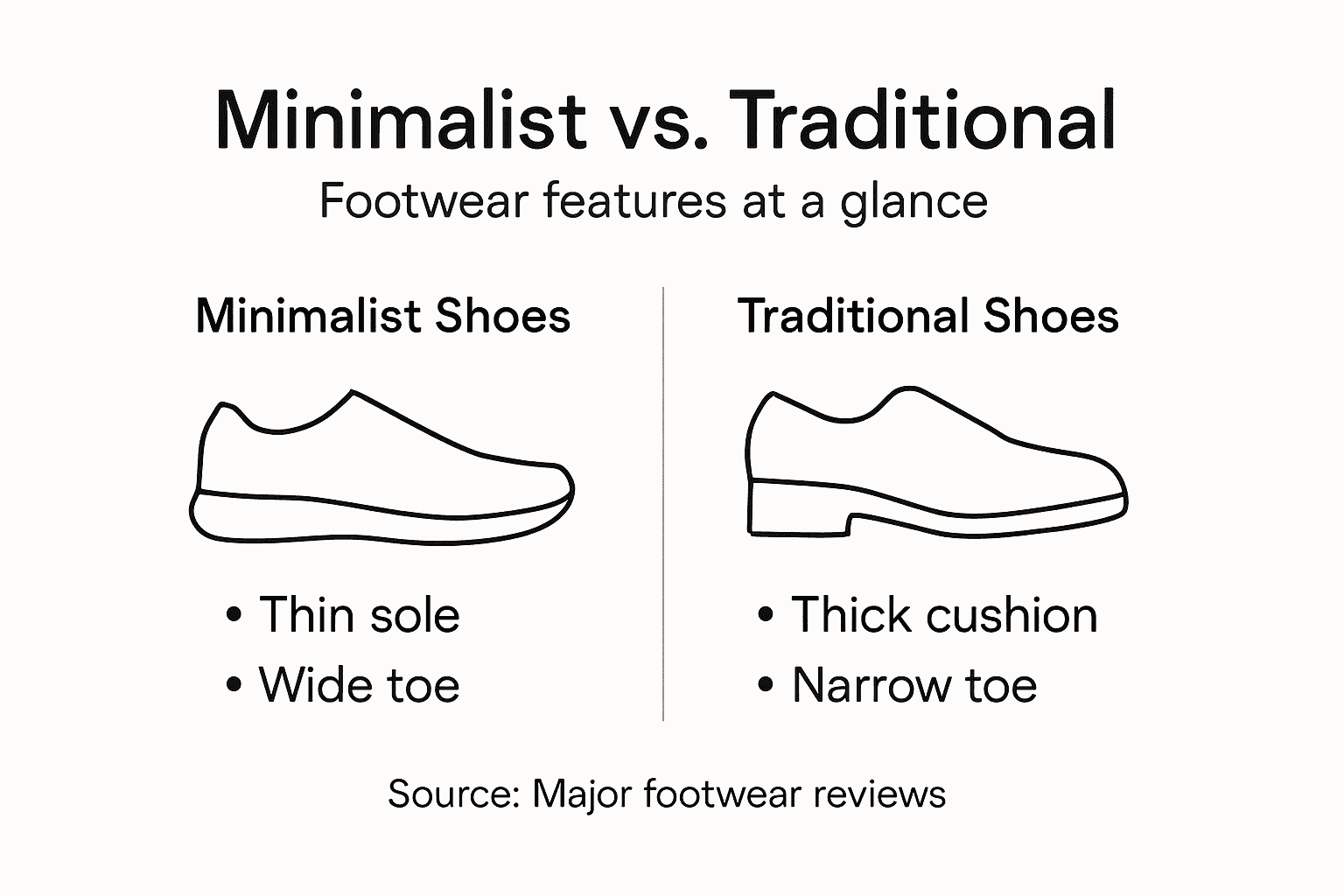
Here’s a summary comparing minimalist and traditional footwear design principles:
| Aspect | Minimalist Shoes | Traditional Shoes |
|---|---|---|
| Structure | Flexible, minimal support | Stiff, maximum support |
| Cushioning | Barely cushioned | Heavily cushioned |
| Toe Box | Wide for toe splay | Narrow, restricts toe movement |
| Sole Thickness | Thin and responsive | Thick and dampening |
| Movement Encouraged | Natural foot mechanics | Restricted, guided movement |
The design spectrum of minimalist shoes ranges from ultra-minimalist models with essentially barefoot characteristics to transitional minimalist styles offering slightly more structural support. These variations cater to different user preferences and adaptation levels, ensuring individuals can find appropriate footwear for their specific biomechanical needs.
Minimalist Shoe Design Categories:
- Zero-drop barefoot simulators
- Lightweight performance minimalist shoes
- Transitional minimalist designs
- Minimalist trail and outdoor shoes
- Everyday minimalist walking footwear
Pro tip: Select minimalist shoes incrementally, starting with models offering moderate flexibility and gradually progressing to more minimal designs as your foot strength and movement patterns improve.
Impact on Foot Health and Movement
Minimalist footwear represents a transformative approach to understanding foot biomechanics and natural movement patterns. Biomechanical research demonstrates significant changes in gait mechanics and muscular engagement when transitioning to minimalist shoe designs.
Key impacts on foot health and movement include:
- Enhanced intrinsic foot muscle activation
- Improved proprioceptive sensory feedback
- More natural walking and running mechanics
- Increased foot muscle strength and flexibility
- Reduced dependency on artificial structural support
- Potential reduction in repetitive strain injuries
Scientific systematic reviews reveal remarkable physiological adaptations associated with minimalist footwear. Research indicates potential muscle volume increases up to 10.6% and strength gains ranging between 9-57%, suggesting substantial biomechanical improvements for individuals adopting these innovative shoe designs.
The transition to minimalist footwear fundamentally challenges traditional shoe design philosophies by promoting natural foot movement. Unlike conventional shoes that restrict foot mechanics, minimalist designs encourage muscular engagement, improved balance, and more efficient energy transfer during locomotion. This approach supports the foot’s inherent biomechanical capabilities rather than artificially constraining its natural functional patterns.
Below is a quick reference guide to biomechanical adaptation stages when switching to minimalist footwear:
| Stage | Main Focus | Typical Benefit |
|---|---|---|
| Initial | Gradual load introduction | Reduced injury risk |
| Strengthening | Intrinsic muscle activation | Greater foot strength |
| Sensory | Improved proprioception | Enhanced balance and feedback |
| Efficiency | Refined foot mechanics | More effective movement |
| Sustainability | Maintenance of adaptation | Long-term performance gains |
Biomechanical Adaptation Stages:
- Initial adaptation period
- Muscle strengthening phase
- Proprioceptive skill development
- Advanced movement efficiency
- Sustained performance improvement
Pro tip: Gradually introduce minimalist footwear by initially wearing them for short walking sessions, progressively increasing duration to allow your feet to adapt and develop necessary muscular strength.
Potential Risks and Who Should Avoid Them
Minimalist footwear demands careful consideration, particularly regarding individual biomechanical variations and injury susceptibility. Clinical research highlights significant potential risks associated with improper transitions and individual physiological limitations.
Individuals who should exercise caution or potentially avoid minimalist shoes include:
- Runners with existing lower leg injuries
- People with unstable ankle biomechanics
- Individuals with chronic foot conditions
- Those with significant muscle weakness in feet and lower legs
- Patients recovering from recent lower limb injuries
- Individuals with high-impact athletic backgrounds
Biomechanical experts emphasize that abrupt transitions can dramatically increase injury risks, particularly for runners accustomed to traditional rearfoot striking patterns. The shift to forefoot striking inherent in minimalist shoes creates substantially different force distributions across ankle and foot structures.
The primary risks associated with minimalist footwear stem from rapid biomechanical adaptation requirements. Sudden transitions can lead to potential complications such as shin splints, calf muscle strains, Achilles tendonitis, and metatarsal stress fractures. These risks are particularly pronounced for individuals with limited foot strength, previous injury history, or those who do not implement a carefully managed transition protocol.
Warning Signs During Transition:
- Persistent muscle soreness
- Sharp or shooting pain
- Increased joint discomfort
- Reduced walking/running efficiency
- Unexplained lower leg fatigue
Pro tip: Consult a sports physiotherapist or biomechanical specialist before transitioning to minimalist shoes, especially if you have a history of lower limb injuries or chronic foot conditions.
How to Select the Right Minimalist Footwear
Minimalist footwear selection requires a strategic approach that balances individual biomechanical needs with specific design characteristics. Comprehensive biomechanical research emphasises the critical importance of choosing shoes that support natural foot function without excessive intervention.
Essential selection criteria for minimalist footwear include:
- Zero or minimal heel-to-toe drop (0-4mm)
- Extremely lightweight construction
- Maximum sole flexibility
- Wide toe box allowing natural toe splay
- Thin, responsive sole material
- Minimal internal structural support
- Breathable upper construction
The selection process involves carefully assessing your individual biomechanical requirements and activity profile. Foot type assessment becomes crucial, as different foot structures demand nuanced approaches to minimalist shoe selection. Individuals with high arches might require slightly different considerations compared to those with flatter foot profiles.
Beyond physical characteristics, activity-specific requirements play a significant role in minimalist footwear selection. Running, walking, gym training, and everyday use each present unique biomechanical demands that influence ideal shoe choice. Carefully matching shoe flexibility, weight, and structural features to your specific movement patterns ensures optimal performance and reduced injury risk.
Key Evaluation Criteria:
- Foot shape compatibility
- Intended activity type
- Personal biomechanical history
- Comfort and sensory feedback
- Movement efficiency
Pro tip: Visit a specialised footwear assessment centre to obtain a professional biomechanical analysis before investing in minimalist shoes, ensuring perfect individual fit and function.
Step Into The Future Of Footwear With Minimalist Design
Unlock the benefits of minimalist shoes for your foot health and performance by choosing footwear that truly supports natural movement and comfort. If you have experienced challenges with traditional shoes that restrict your toes or cause discomfort through excessive cushioning and stiff soles, it is time to explore advanced designs that emphasise flexibility, proprioception, and foot muscle strength.

Discover our carefully curated collection of minimalist-inspired shoes at Shoes – YDA UK that merge style with innovative foot health technology. Whether you are just beginning your transition or seeking high-performance models for everyday wear, YDA UK’s range offers lightweight construction, low heel-to-toe drop, and wide toe boxes designed to help you move naturally and confidently. Visit YDA UK now to experience firsthand the supportive comfort and energy efficiency handcrafted into every pair. Take the first step today and transform your walking and running with footwear built for your wellbeing.
Frequently Asked Questions
What are the main characteristics of minimalist shoes?
Typical characteristics of minimalist shoes include extremely lightweight construction, high flexibility in sole and upper materials, a low heel-to-toe drop (typically 0-4mm), a thin and responsive sole design, minimal arch support and cushioning, and a wide toe box that allows for natural toe splay.
How do minimalist shoes impact foot health and movement?
Minimalist shoes enhance intrinsic foot muscle activation, improve proprioceptive sensory feedback, encourage more natural walking and running mechanics, and can increase foot muscle strength and flexibility, potentially reducing dependency on artificial structural support.
What is the recommended process for transitioning to minimalist footwear?
It is advisable to transition gradually to minimalist footwear by starting with short walking periods and progressively increasing the duration. This allows your feet and lower leg muscles to adapt, reducing the risk of injury and improving comfort.
Who should consider avoiding minimalist shoes?
Individuals with existing lower leg injuries, unstable ankle biomechanics, chronic foot conditions, significant muscle weakness in the feet and lower legs, or those recovering from recent lower limb injuries should exercise caution or potentially avoid minimalist shoes.