
Comfort vs Performance Shoes – Which Fits Your Lifestyle?
Over 80 percent of british adults experience some form of foot discomfort during their most active years. For those balancing modern style with the latest technology, finding footwear that delivers both comfort and outstanding performance is more than a luxury—it is a necessity. Whether you demand support for fast-paced workdays or extra cushioning for weekend workouts, understanding how advanced shoes are engineered can make all the difference for long-term foot health and daily wellbeing.
Table of Contents
- Defining Comfort And Performance Shoes
- Distinct Features And Technology Explained
- Health Benefits And Everyday Impact
- Choosing The Right Shoe For Your Needs
- Common Mistakes When Selecting Footwear
Key Takeaways
| Point | Details |
|---|---|
| Comfort vs. Performance | Comfort shoes prioritise cushioning and all-day wearability, while performance shoes focus on activity-specific efficiency and support. |
| Importance of Technology | Advanced shoe technologies enhance movement through adaptive cushioning and biomechanical optimisation, offering personalized solutions based on individual needs. |
| Health Benefits | Proper footwear significantly reduces joint stress and injury risk, promoting better posture and overall musculoskeletal health. |
| Common Mistakes | Prioritising style over function, neglecting individual biomechanics, and improper sizing can lead to discomfort and long-term health issues. |
Defining Comfort And Performance Shoes
Understanding the nuanced differences between comfort and performance shoes requires examining their core functional characteristics. Functional features of sport footwear encompass multiple critical elements, including comfort, performance, protection, support, and shock absorption. These shoes are not merely fashion statements but sophisticated engineered products designed to enhance human movement and wellbeing.
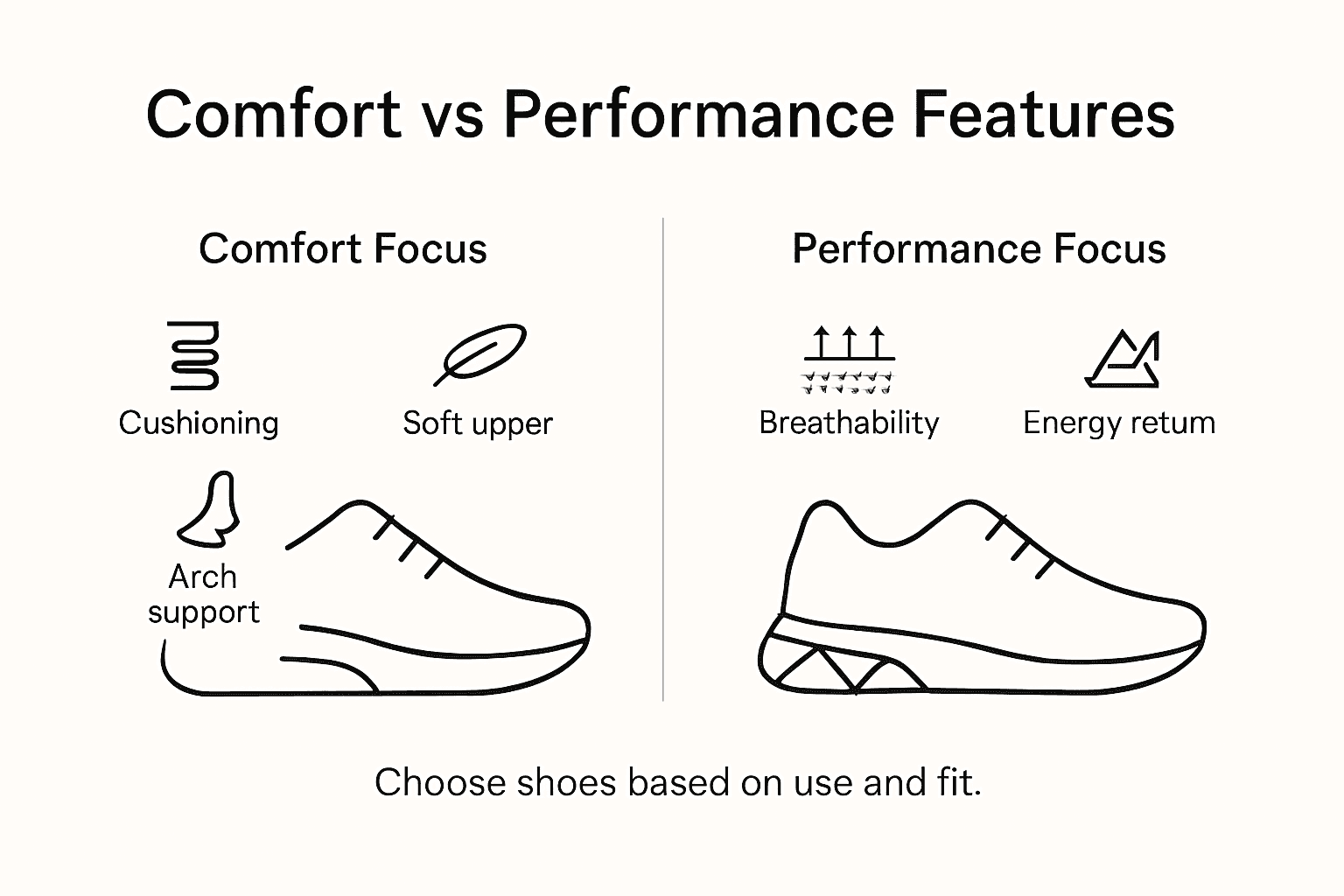
Comfort shoes prioritise cushioning, ergonomic design, and overall wearability. They feature soft materials, supportive insoles, and broader toe boxes that accommodate natural foot movement. In contrast, performance shoes are engineered for specific activities, emphasising technical specifications like weight reduction, biomechanical efficiency, and targeted muscle support. Minimalist shoes represent an extreme example of performance-oriented footwear, designed to closely approximate barefoot conditions with high flexibility and minimal interference with natural foot mechanics.
The key distinction lies in their design philosophy. Comfort shoes aim to reduce physical strain and provide all-day wearability, while performance shoes focus on maximising efficiency during specific activities. Optimal functionality is achieved through meticulous design of shoe components, carefully selected materials, and precise manufacturing techniques that align with the intended use.
To better illustrate the unique focuses of comfort and performance shoes, here is a direct comparison:
| Focus Area | Comfort Shoes Emphasis | Performance Shoes Emphasis |
|---|---|---|
| Cushioning & Softness | Prioritised for daily comfort | Balanced with weight efficiency |
| Ergonomic Design | Supports all-day wearability | Tailored for specific activities |
| Toe Box Shape | Broad, allows natural spread | Narrower for secure fit |
| Material Selection | Soft, flexible fabrics | Lightweight, high-tech materials |
| Technical Innovations | Memory foam, shock absorption | Energy return, biomechanical aids |
| Intended Wear Duration | Prolonged daily use | Short bursts, high-performance |
Pro Tip: Select shoes based on your primary activity and foot biomechanics rather than purely aesthetic considerations, ensuring both comfort and performance meet your specific lifestyle requirements.
Distinct Features And Technology Explained
Shoe technology has evolved significantly, transforming footwear from simple protective coverings into sophisticated biomechanical tools. Research examining relationships between comfort perception and biomechanical variables demonstrates the complex engineering behind modern athletic footwear, revealing how intricate design elements impact performance and user experience.

Performance shoes leverage advanced technological innovations to enhance human movement. Key technological features include adaptive cushioning systems, material density gradation, and biomechanically optimised structures. Cutting-edge research into midsole design using polyurea foams highlights the importance of precise material engineering, showing how strategic density variations can dramatically improve shock absorption and energy return.
Modern shoe technologies focus on three primary domains: material science, biomechanical engineering, and ergonomic design. Advanced materials like memory foams, carbon-fibre reinforcements, and breathable synthetic fabrics enable shoes to adapt dynamically to movement patterns. Biomechanical sensors and pressure-mapping technologies now allow manufacturers to create shoes that respond intelligently to individual walking and running mechanics.
Pro Tip: When selecting performance footwear, prioritise shoes that demonstrate scientifically validated technological features rather than relying solely on marketing claims about comfort or performance.
Health Benefits And Everyday Impact
Scientific research exploring biomechanical variables during running reveals crucial insights into how footwear design directly impacts physical health, demonstrating that shoe technology extends far beyond mere aesthetic considerations. Different cushioning technologies can significantly reduce impact forces, potentially lowering the risk of repetitive strain injuries and providing long-term musculoskeletal protection.
The profound connection between footwear and personal health is increasingly understood through advanced measurement techniques. Innovative sensorized insole technologies enable precise reconstruction of contact pressure distribution, offering unprecedented insights into individual foot biomechanics. These technological advances allow for personalised shoe recommendations that can mitigate common issues like plantar fasciitis, knee strain, and lower back discomfort.
Everyday impact of well-designed shoes extends to multiple physiological domains. Proper footwear can improve posture, reduce joint stress, enhance walking efficiency, and prevent chronic pain development. By supporting natural foot mechanics, technologically advanced shoes contribute to overall musculoskeletal wellness, transforming what was once considered a simple accessory into a critical health intervention.
The following table summarises key health benefits provided by advanced shoe technologies:
| Health Benefit | Related Shoe Feature | Everyday Impact |
|---|---|---|
| Reduced joint stress | Adaptive cushioning | Minimises discomfort, joint wear |
| Enhanced posture | Ergonomic insole shaping | Promotes spinal alignment |
| Lower injury risk | Targeted support structures | Decreases repetitive strain risks |
| Efficient movement | Biomechanical optimisation | Improves walking and running form |
| Pain prevention | Personalised fit technology | Alleviates common foot conditions |
Pro Tip: Invest in professionally fitted shoes that match your specific foot structure and movement patterns, as individual biomechanical differences significantly influence long-term musculoskeletal health.
Choosing The Right Shoe For Your Needs
Sport footwear’s functional features encompass critical elements including comfort, performance, protection, support, and shock absorption, making shoe selection a nuanced process far beyond simple aesthetic preferences. Optimal functionality demands careful consideration of individual biomechanical requirements, activity levels, and personal movement patterns.
Different activities necessitate specific shoe characteristics. Running shoes require different structural supports compared to walking shoes, while workplace footwear demands yet another set of design priorities. Minimalist shoe designs represent an innovative approach, approximating barefoot movement with high flexibility and minimal interference, demonstrating how advanced footwear technology can adapt to diverse movement philosophies.
Selecting appropriate footwear involves a comprehensive assessment of personal needs. Factors like foot shape, arch type, weight, typical activity levels, and potential biomechanical challenges all play crucial roles in determining the most suitable shoe design. Professional biomechanical assessments can provide detailed insights, helping individuals make informed choices that support long-term foot health and physical performance.
Pro Tip: Conduct a thorough foot assessment before purchasing shoes, considering your unique movement patterns, arch structure, and typical daily activities to ensure optimal comfort and support.
Common Mistakes When Selecting Footwear
Research examining biomechanical variables during running reveals critical insights into common footwear selection errors, demonstrating that inappropriate shoe choices can significantly impact physical health and performance. Many individuals make fundamental mistakes by prioritising style over functional design, leading to potential long-term musculoskeletal complications.
One prevalent error is neglecting individual biomechanical requirements. Consumers often select shoes based on aesthetic appeal or brand popularity rather than understanding their unique foot structure and movement patterns. Advanced sensorized insole technologies provide unprecedented insights into precise contact pressure distribution, highlighting the importance of personalised footwear selection that accounts for individual biomechanical nuances.
Additional common mistakes include purchasing shoes without proper sizing, ignoring arch support requirements, and failing to consider the specific demands of different activities. Workplace professionals, athletes, and casual wearers each require distinctly engineered footwear that supports their unique movement mechanics. Overlooking these critical factors can lead to discomfort, reduced performance, and potential long-term physical strain.
Pro Tip: Always prioritise biomechanical compatibility over aesthetic preferences when selecting footwear, and invest time in understanding your individual foot structure and movement patterns before making a purchase.
Find Your Perfect Balance Between Comfort and Performance
Choosing the right footwear is more than just picking a stylish pair. As highlighted in the article, the challenge lies in understanding your unique foot biomechanics and lifestyle needs to avoid discomfort, injury, or reduced efficiency. Many struggle to strike the perfect balance between ergonomic support for all-day wearability and the advanced technological features that enhance performance during specific activities. Concepts like adaptive cushioning, biomechanical optimisation, and personalised fit technology are critical in ensuring that footwear protects your health while boosting your movement.
Discover footwear solutions that are scientifically engineered for foot health and designed to keep pace with your lifestyle. Whether you want shoes that offer outstanding comfort for daily use or advanced performance technology to enhance your athletic performance, our curated selection at YDA Footwear integrates these benefits.
Take the step to support your feet the right way. Explore our range now at YDA Technology and find footwear that truly fits your biomechanical needs. Don’t settle for fashion alone when your health and performance depend on every step. Visit https://ydauk.com and shop today to experience the difference that expert engineering makes.
Frequently Asked Questions
What are the main differences between comfort and performance shoes?
Comfort shoes prioritise cushioning, ergonomic design, and all-day wearability, while performance shoes are engineered for specific activities, focusing on weight reduction and biomechanical efficiency.
How do comfort shoes benefit overall health and well-being?
Comfort shoes can reduce physical strain, improve posture, enhance walking efficiency, and prevent chronic pain by supporting natural foot mechanics and providing adequate cushioning.
What technological features should I look for in performance shoes?
Key technological features in performance shoes include adaptive cushioning systems, biomechanically optimised structures, and lightweight, high-tech materials that enhance energy return and shock absorption.
How can I determine the right type of shoe for my specific needs?
To choose the right shoe, assess individual factors like foot shape, arch type, typical activity levels, and any biomechanical challenges. Professional biomechanical assessments can also provide valuable insights.
Recommended
- 7 Essential Features of Performance Shoes for Foot Health – YDA UK
- Why Choose Lightweight Shoes: Complete Guide – YDA UK
- Why Lightweight Shoes Are Beneficial: Complete Guide – YDA UK
- Complete Guide to Why Choose Comfortable Shoes – YDA UK
- Understanding Fashionable Reading Glasses Guide for Style – ministry of sight