
Toe spring explained: boost comfort and support in footwear
TL;DR:
- Toe spring is a subtle upward curve in shoe soles that supports natural foot movement and reduces forefoot pressure. Choosing the appropriate level enhances walking efficiency and can prevent or mitigate foot health issues such as plantar fasciitis and bunions. A holistic approach to shoe design, considering all features together, ensures optimal comfort and function tailored to individual needs.
A tiny curve at the tip of your shoe sole might be quietly dictating whether your feet feel fine at 6pm or absolutely wrecked. Most people never notice toe spring. Even dedicated shoe shoppers focus on cushioning, arch support, or brand reputation, entirely missing one of the most consequential design details in everyday footwear. This guide covers what toe spring actually is, how it shapes your walking motion, and why choosing the right level of it can genuinely transform foot comfort, especially if you already deal with specific foot health concerns.
Table of Contents
- What is toe spring and why does it matter?
- How toe spring influences comfort and energy efficiency
- Choosing the right toe spring for your foot needs
- Toe spring, foot health, and common concerns
- Our view: getting toe spring right in modern footwear
- Innovative solutions: finding support for your feet
- Frequently asked questions
Key Takeaways
| Point | Details |
|---|---|
| Toe spring definition | The upward curve of the shoe sole at the toe impacts walking comfort and foot health. |
| Balance is vital | Both too little and too much toe spring can cause discomfort; matching shoe design to your needs is important. |
| Comfort and energy | Toe spring reduces forefoot strain and increases energy efficiency during walking. |
| Health-conscious choices | Choosing shoes based on toe spring profile benefits those with specific foot problems. |
| Integrated shoe technology | Effective footwear integrates toe spring with cushioning and support for optimal results. |
What is toe spring and why does it matter?
Toe spring is the upward curve built into the front of a shoe sole, lifting the toe box away from the ground when the shoe sits flat. If you place most trainers or everyday shoes on a table, you will notice the front tilts upward rather than lying flush. That angle is the toe spring. It is measured in millimetres from the ground to the underside of the toe box.
This feature has been part of shoe construction for generations, but its purpose is frequently misunderstood. Many shoppers assume the curve is purely aesthetic, or that it simply reflects how the shoe was manufactured. In reality, toe spring is an intentional biomechanical feature designed to work with the natural rolling motion of your foot as you walk or stand.
Here is what toe spring actually does for your foot:
- Reduces friction at toe-off: As your foot pushes off the ground, the upward curve encourages a smooth, rolling motion rather than a grinding pivot.
- Lessens pressure under the forefoot: By keeping the toes slightly lifted, it distributes load more evenly across the foot.
- Assists the windlass mechanism: This is the natural tightening of the plantar fascia that helps propel you forward as you walk.
- Compensates for stiff soles: Shoes with less flexible soles rely more heavily on toe spring to allow forward movement.
“The shape of your shoe’s sole is not just about looks. Every curve and contour is a design decision that affects how your body moves from heel to toe.” This is why understanding features like toe spring, alongside the toe box guide, gives you far greater control over your comfort.
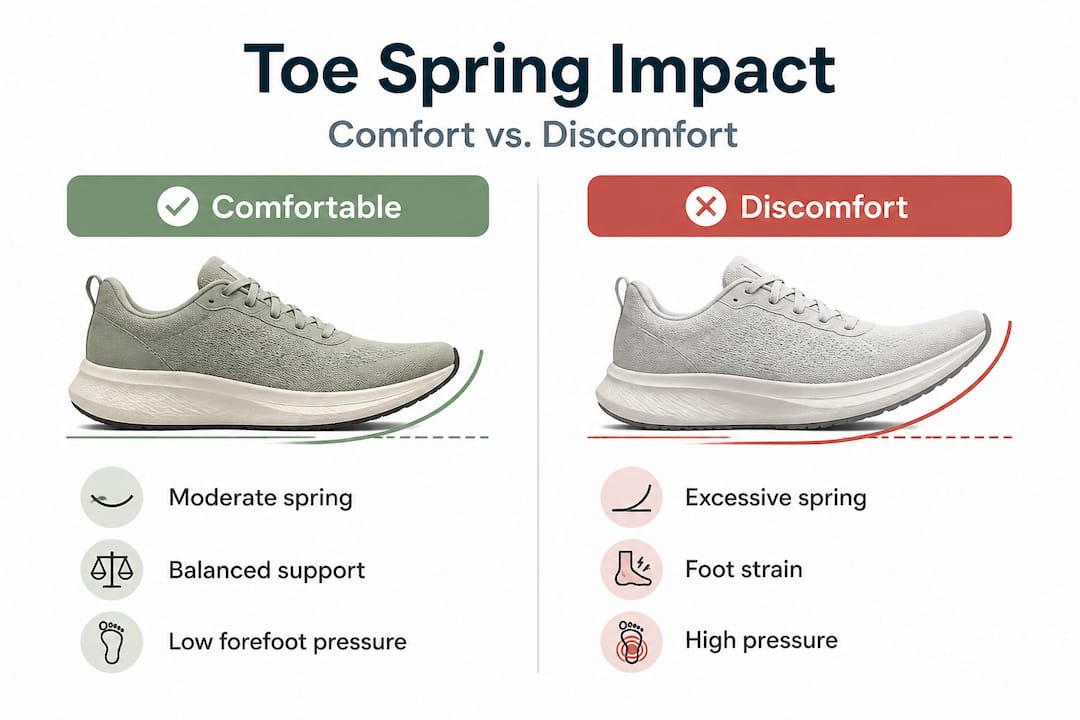
A common misconception is that more toe spring always means more comfort. It does not. A shoe with an exaggerated upward curve might feel cushioned initially, but it can force your toes into an extended position for prolonged periods, weakening the small muscles in your feet over time. Getting the right amount matters enormously.
How toe spring influences comfort and energy efficiency
Toe spring is not just a passive shape. It actively affects how much energy you use with each step, how much pressure your forefoot absorbs, and how fatigued your feet become over a full day of walking or standing.
Consider this comparison of toe spring effects:
| Toe spring level | Effect on forefoot pressure | Walking effort | Best for |
|---|---|---|---|
| Low (0–5 mm) | Higher pressure distributed naturally | Slightly more effort | Flexible, strong feet |
| Moderate (6–10 mm) | Balanced pressure reduction | Natural, efficient motion | Most everyday wearers |
| High (11 mm+) | Reduced pressure but potential strain | Less muscular effort needed | Recovery, post-surgery, stiff soles |
Research into footwear biomechanics consistently shows that moderate toe spring, combined with well-designed shock absorption, produces the most comfortable and energy-efficient walking experience for the majority of people. When the toe spring is calibrated correctly, the foot’s natural rolling action from heel strike to toe-off requires noticeably less muscular effort. Over a day of walking, that adds up to genuinely less fatigue.
Excessive toe spring, however, creates problems. When the toes are held persistently upward, the intrinsic foot muscles, the small muscles responsible for fine motor control and toe gripping, are not engaged. This can cause them to weaken gradually, contributing to conditions like hammer toes, claw toes, or general instability.
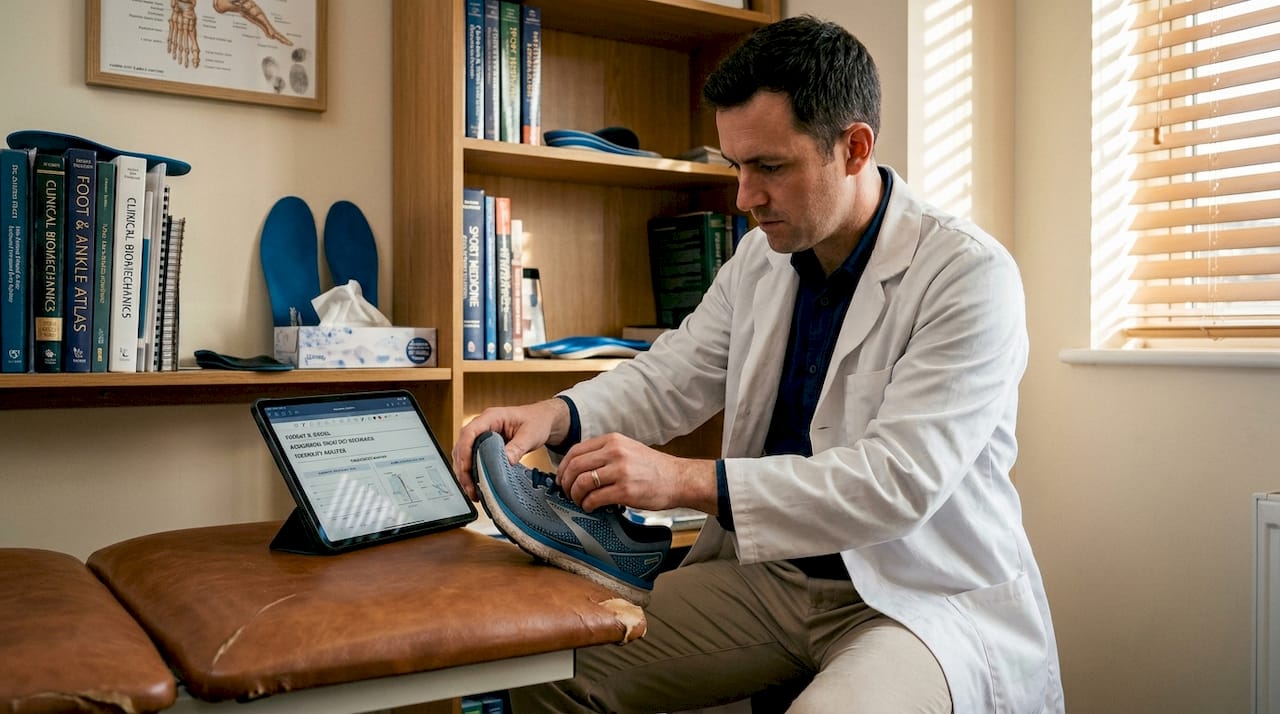
Pro Tip: If you feel your toes gripping or curling inside your shoe whilst walking, the toe spring may be too high for your foot type. Your toes should rest naturally without actively reaching for the ground.
Key signs that toe spring is working well for you include:
- No forefoot numbness after an hour or more of walking.
- Smooth heel-to-toe transition without a clunky or jarring midstride.
- No toe cramping or curling inside the shoe.
- Even wear on the sole at the ball of the foot rather than concentrated pressure points.
Checking these signals regularly is a core part of testing shoe comfort before committing to a new pair. It takes less than five minutes and can save you weeks of discomfort.
Choosing the right toe spring for your foot needs
Not every foot is the same, and toe spring is not a universal setting. The right profile depends on the structure of your foot, your typical daily activities, and any existing health concerns.
Here is a side-by-side look at how different foot types relate to toe spring:
| Foot type | Recommended toe spring | Reason |
|---|---|---|
| Flat feet (low arches) | Moderate, with strong arch support | Prevents overpronation and forefoot strain |
| High arches | Low to moderate | Reduces pressure concentration at ball of foot |
| Wide forefoot | Moderate with wide toe box | Avoids compression and allows natural splay |
| Stiff ankles or post-surgery | Higher toe spring | Compensates for reduced joint mobility |
| Generally healthy feet | Moderate | Maintains natural muscle engagement |
When you are shopping and want to assess toe spring without specialist equipment, use these practical steps:
- Place the shoe on a flat surface. Observe the gap between the sole and the ground at the front. A few millimetres is normal; a dramatic upward curve warrants closer inspection.
- Press the toe box downward gently. A well-constructed shoe should resist slightly but flex consistently, not collapse suddenly or stay completely rigid.
- Hold the shoe at heel and toe, then bend it. The flex point should occur roughly at the ball of the foot, not at the arch or mid-sole.
- Walk in the shoe for at least five minutes. Pay attention to whether your toes feel lifted away from the insole or whether they make comfortable, natural contact.
- Check the insole for pressure marks after wear. Concentrated marks beneath the second or third toe suggest too much upward angle.
Good shoe shopping tips will always include advice on checking sole geometry, not just cushioning or material feel. Toe spring is a detail that rewards the attentive buyer.
Pro Tip: Avoid pointed-toe styles if forefoot health is a priority. Even when a pointed toe flat has toe spring built in, the narrow shape prevents the toes from sitting naturally, which negates much of the benefit.
When evaluating shoe technology, look beyond marketing language. Terms like “rocker sole” often describe an exaggerated toe spring design, which suits specific clinical needs but may not be appropriate for everyday wear without guidance from a foot health professional.
Toe spring, foot health, and common concerns
For people managing specific foot conditions, toe spring is not just a comfort consideration. It can be a genuine health variable that either helps or worsens existing problems.
Here are the most important health-related factors connected to toe spring:
- Plantar fasciitis: Moderate toe spring supports the windlass mechanism and takes strain off the plantar fascia during toe-off. However, an overly high toe spring in a rigid shoe can overstretch the fascia on each step.
- Arthritis in the toes or forefoot: Higher toe spring reduces the range of motion required at the metatarsophalangeal joints (the joints at the base of the toes), which eases pain for people with reduced joint flexibility.
- Bunions: A wide toe box combined with moderate toe spring is preferable. Excessive toe spring in a narrow shoe pushes the big toe inward, which can aggravate bunion development.
- Neuromas (nerve pain between toes): Lower forefoot pressure from appropriate toe spring can reduce the compression that triggers neuroma symptoms.
- Postural problems: Improper toe spring that forces compensatory movement patterns can affect ankle, knee, and even hip alignment over time.
“When your shoes force your body into unnatural positions, the effects rarely stay confined to your feet. Poor forefoot mechanics ripple upward through the entire kinetic chain.” This is why the benefits of comfort footwear extend well beyond foot-level relief.
Symptoms that suggest your current shoes have an unsuitable toe spring include persistent ball-of-foot soreness, toe cramping during or after walking, unexplained shin or calf fatigue, and visible calluses forming under specific toes. If you experience any of these regularly, it is worth examining your footwear closely rather than assuming the issue is purely muscular or age-related.
For a deeper understanding of how shoe construction choices affect health across different conditions, the footwear technology guide provides clear context on why design decisions at the manufacturing level translate directly into daily wellbeing.
Our view: getting toe spring right in modern footwear
Here is something the mainstream shoe industry rarely says clearly: toe spring is not a variable you should optimise in isolation. Full stop.
After years of working with health-focused footwear, we have seen a pattern. A customer finds that a shoe with a particular toe spring level feels good in the shop, buys several pairs, and then wonders why they still have discomfort six weeks later. The answer is almost always that toe spring was matched, but everything else was not. Cushioning density, heel-to-toe drop, insole material, and toe box width all interact with toe spring to produce the full experience of the shoe on your foot.
Focussing exclusively on toe spring is a bit like adjusting only the bass on a sound system and wondering why the music still sounds wrong. It is a meaningful dial, but it operates within a larger system.
The honest wisdom from this space is that the best shoe for your foot is one where every design variable supports the others. Moderate toe spring paired with inadequate arch support still produces problems. A perfectly engineered toe spring inside a toe box that is too narrow causes its own set of difficulties. The interaction matters far more than any single measurement.
What this means practically is that you should look for footwear brands that discuss their design decisions as an integrated system rather than highlighting single features in isolation. When a brand talks about how shoe technology addresses energy return, pressure distribution, and joint alignment together, that is a far stronger signal of genuine innovation than any single specification.
The most comfortable footwear we have encountered takes a whole-foot approach. Toe spring is part of that picture. But it is never the whole story.
Innovative solutions: finding support for your feet
Understanding toe spring is a genuinely useful step, but applying that knowledge means finding shoes where the entire design works for your specific foot health needs.
At YDA UK, the approach to footwear starts with the science of how feet actually function across a full day of wear. The YDA shoe technology integrates features like toe spring, energy-return soles, and anatomically informed cushioning into a single coherent design. If you are dealing with forefoot pain, fatigue, or a specific condition that makes ordinary shoes a problem, exploring the full range of health-focused footwear gives you access to shoes built around the evidence rather than around aesthetics alone. Every feature is there for a reason, and those reasons are grounded in genuine foot health principles.
Frequently asked questions
Does toe spring prevent foot pain?
A well-calibrated toe spring reduces forefoot pressure and may help prevent pain, but the entire shoe structure, including cushioning, arch support, and toe box width, contributes equally to the result.
Can too much toe spring worsen foot conditions?
Yes. Excessive toe spring can lead to discomfort and may exacerbate conditions like plantar fasciitis or arthritis, as confirmed by guidance on how shoe shape affects foot health.
How do I check if a shoe has the right toe spring?
Press down at the front of the shoe on a flat surface. A guide on testing shoe comfort advises that it should flex evenly without being overly stiff or so loose it collapses immediately.
Is toe spring important for all shoe types?
Toe spring is relevant in most daily wear shoes. As covered in shoe shopping guidance, it is especially important for active users and anyone managing foot health proactively, where small design details have an outsized effect on comfort.