
Selecting Shoes for Energy: Achieve Comfort and Performance
Finding footwear that truly supports your feet can feel daunting, especially for those with active lifestyles or ongoing foot concerns. Comfort and injury prevention are not just buzzwords but genuine priorities backed by expert research, with personalised assessment and advanced shoe features making a real difference. Discover practical ways to evaluate your unique needs and learn how smart technologies and tailored designs can transform your energy, mobility, and daily well-being.
Table of Contents
- Step 1: Assess Your Personal Comfort And Energy Needs
- Step 2: Identify Footwear Technologies That Boost Energy Efficiency
- Step 3: Match Shoe Style And Support To Daily Activities
- Step 4: Test Shoe Features For Comfort And Performance
- Step 5: Verify Quality And Suitability For Long-Term Use
Quick Summary
| Key Insight | Explanation |
|---|---|
| 1. Assess Personal Needs | Understanding biomechanics and comfort needs is essential for selecting appropriate footwear. |
| 2. Explore Energy-Efficient Technologies | Footwear innovations like piezoelectric materials can enhance energy output and support sustainability. |
| 3. Match Shoes to Activities | Choose shoes according to specific activities for improved performance and injury prevention. |
| 4. Test for Comfort and Performance | Spend time evaluating how shoes interact with your body for optimal comfort and functionality. |
| 5. Verify Quality for Longevity | Regularly check shoe quality to ensure durability and maintain performance over time. |
Step 1: Assess your personal comfort and energy needs
Selecting the right shoes starts with a deep understanding of your individual biomechanics and energy requirements. Experts emphasise evaluating personal comfort as a critical foundation for choosing footwear that supports both performance and injury prevention.
To effectively assess your comfort and energy needs, consider these strategic approaches:
- Analyse your movement patterns: Observe how you walk, run, or stand during daily activities
- Identify previous injury history: Note any past foot, ankle, or leg injuries that might influence shoe selection
- Evaluate your typical activity levels: Determine whether you need shoes for casual walking, intense running, or workplace demands
- Understand your foot shape: Recognise whether you have high arches, flat feet, or neutral foot structures
Biomechanical research shows that personalised footwear assessment goes beyond simple size matching. Your shoes should harmonise with your unique physical characteristics, supporting natural movement while providing targeted energy efficiency.
Top recommendation: Visit a professional biomechanical assessment centre to get precise measurements and personalised shoe recommendations.
Step 2: Identify footwear technologies that boost energy efficiency
Understanding modern footwear technologies can transform your walking and running experience by maximising energy output and comfort. Advanced energy-harvesting technologies are revolutionising how we think about shoe design and performance.
Key energy-efficient footwear technologies include:
- Piezoelectric materials: Capture mechanical energy from movement
- Nanostructured fibres: Enhance energy conversion and shoe flexibility
- Strategic material placement: Optimise energy capture without compromising comfort
- Innovative energy transfer systems: Convert kinetic motion into usable electrical energy
Cutting-edge footwear engineering now focuses on integrating smart materials that transform your natural motion into sustainable power. These technologies not only improve performance but also support green technological innovations in personal mobility.
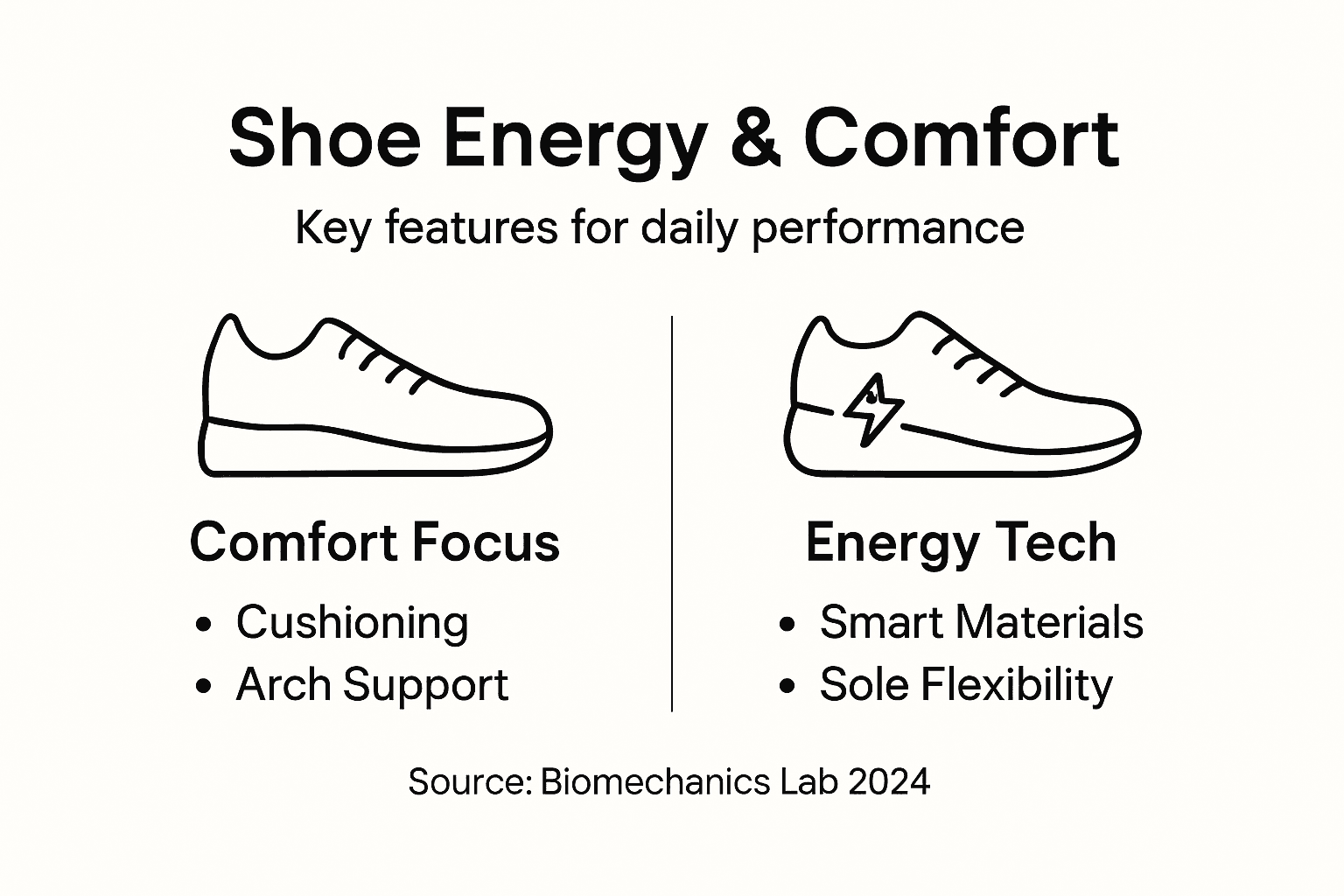
The following table summarises critical footwear technology concepts and their practical benefits:
| Technology | How It Works | Practical Benefit |
|---|---|---|
| Piezoelectric materials | Convert movement into electrical energy | Power wearable devices |
| Nanostructured fibres | Increase flexibility, enable energy flow | Enhanced comfort, efficiency |
| Strategic material design | Directs energy capture to key zones | Reduces fatigue, boosts output |
| Energy transfer systems | Harness kinetic movement | Sustainable energy generation |
Modern footwear isn’t just about protection - it’s about maximising human potential through intelligent design.
Expert tip: Look for shoes with integrated piezoelectric elements that can convert your walking motion into usable electrical energy for small devices.
Step 3: Match shoe style and support to daily activities
Individualized footwear design is crucial for preventing injury and maximising comfort across different daily activities. Understanding how shoe features align with specific movement patterns can dramatically improve your overall performance and foot health.
Consider these key strategies for matching shoe style to your daily activities:
- Walking shoes: Prioritise flexibility and cushioning for consistent ground contact
- Running shoes: Select shoes with enhanced heel support and shock absorption
- Workplace footwear: Choose shoes with arch support and stability for prolonged standing
- Athletic training: Look for specialised shoes matching specific sport biomechanics
Footwear needs vary significantly depending on your specific activities and personal biomechanics. Different contexts demand unique shoe characteristics that support your body’s natural movement patterns.

Here is a quick comparison of shoe types and the support features they commonly provide:
| Shoe Type | Primary Support Feature | Typical User Activity |
|---|---|---|
| Walking shoes | Enhanced cushioning | Daily walking and light errands |
| Running shoes | Advanced shock absorption | Long-distance runs, training |
| Workplace shoes | Targeted arch reinforcement | Prolonged standing, office work |
| Athletic trainers | Sport-specific stability | Gym sessions, agility workouts |
Your shoes are not just accessories - they’re precision tools designed to complement your body’s mechanics.
Expert recommendation: Consider consulting a biomechanical specialist who can analyse your specific movement patterns and recommend personalised footwear solutions.
Step 4: Test shoe features for comfort and performance
Footwear design features play a crucial role in determining overall comfort and performance across various activities. Understanding how to systematically evaluate these features can help you make more informed footwear choices.
Key strategies for testing shoe features include:
- Flexibility test: Bend the shoe to check midsole responsiveness
- Weight assessment: Compare shoe mass and its impact on movement
- Cushioning evaluation: Test shock absorption through walking and running
- Arch support inspection: Check internal structure and comfort during movement
Biomechanical testing methods reveal critical insights into how shoe design influences joint mechanics and overall body movement. These assessments help identify shoes that genuinely support your specific activity requirements.
Effective shoe testing goes beyond visual appearance - it’s about understanding how the shoe interacts with your unique body mechanics.
Expert recommendation: Spend at least 10-15 minutes walking and moving in potential shoes to thoroughly assess their comfort and performance characteristics.
Step 5: Verify quality and suitability for long-term use
Comprehensive footwear assessment tools help determine the long-term durability and performance of your chosen shoes. Understanding how to critically evaluate shoe quality goes beyond initial comfort and aesthetic appeal.
Key strategies for verifying shoe quality include:
- Material inspection: Check stitching integrity and fabric quality
- Stress point evaluation: Examine areas of potential wear and structural weakness
- Sole flexibility assessment: Test resilience and potential degradation over time
- Construction quality review: Look for precision in manufacturing details
Qualitative research reveals that long-term shoe suitability depends on multiple dimensions including durability, comfort, and perceived quality. These factors directly influence user satisfaction and the shoe’s potential lifespan.
Quality is not about perfection in a single moment, but consistent performance over time.
Expert recommendation: Perform a detailed visual and physical inspection every month to catch early signs of wear and maintain your shoes’ optimal performance.
Discover Footwear That Powers Your Every Step
Selecting shoes for energy and comfort means understanding your unique foot health needs and embracing innovative technologies designed to enhance performance. The challenge lies in finding footwear that supports your biomechanics, boosts energy efficiency and keeps you comfortable all day long. At YDA UK, we specialise in blending style with advanced foot health technology to meet these precise goals.
Explore our carefully curated Shoes – YDA UK collection where every design incorporates supportive structures and energy-efficient materials. Whether you need shoes for walking, running or everyday errands, our range is built for durability and long-term comfort. Take the step now to elevate your foot health with footwear engineered to keep you moving confidently. Visit https://ydauk.com to find your perfect fit and experience the difference technology makes.
Frequently Asked Questions
How can I assess my personal comfort and energy needs when selecting shoes?
To assess your personal comfort and energy needs, analyse your movement patterns and identify any previous injuries. By understanding your foot shape and evaluating your typical activity levels, you can determine what features to look for in shoes that will support your performance and reduce the risk of injury.
What footwear technologies can improve energy efficiency in my shoes?
Look for footwear technologies such as piezoelectric materials and nanostructured fibres that enhance energy transfer and comfort. Prioritising shoes that integrate these technologies can boost your energy efficiency significantly, allowing for a more effective physical performance during activity.
How can I match shoe style to my daily activities for optimal support?
To find the right shoe style, consider the specific demands of your daily activities, like walking, running, or standing for long periods. Select shoes designed for those specific movements to ensure you receive the appropriate support and cushioning needed to maintain comfort and prevent injury.
What features should I test in shoes to ensure comfort and performance?
When testing shoes, evaluate their flexibility, weight, cushioning, and arch support. Spend at least 10-15 minutes walking and moving in the shoes to thoroughly assess how they interact with your body mechanics and to determine if they provide the comfort and performance you require.
How can I verify the quality and durability of my selected shoes?
Inspect the materials, stitching, and construction quality of the shoes to verify their durability. Perform a detailed visual and physical inspection every month to catch early signs of wear, ensuring that your shoes maintain optimal performance over time.
Recommended
- Energy Efficiency in Shoes – Boosting Everyday Comfort – YDA UK
- How Shoes Impact Energy – Boosting Comfort and Health – YDA UK
- What Is Energy Efficient Footwear? Complete Guide – YDA UK
- Role of Footwear in Reducing Fatigue: Key Insights – YDA UK
- Bicicleta tipos: Cómo elegir la adecuada según tu objetivo - Blog Ciclista