
Most comfortable shoe materials for healthier feet
Choosing the right shoe material should be simple, but walk into any shop or browse online and you’re immediately confronted with acronyms, foam densities, and marketing buzzwords that mean very little without context. The material your shoe is made from affects far more than how it feels in the first five minutes. It shapes how your joints load, how your feet breathe, and whether you’ll be nursing aches by the afternoon. Whether you’re managing plantar fasciitis, spending long hours on your feet, or simply want shoes that genuinely support your body, understanding what’s inside your footwear is one of the most practical steps you can take for your long-term foot health.
Table of Contents
- How to evaluate comfort in shoe materials
- Classic and advanced cushioned insole materials
- Innovative midsole and footbed materials for modern comfort
- Minimalist and maximalist: finding your comfort zone
- Speciality materials for problem feet and unique needs
- Why choosing the right shoe materials is personal (and often misunderstood)
- Shop innovative, comfortable footwear
- Frequently asked questions
Key Takeaways
| Point | Details |
|---|---|
| Material matters | The choice of shoe material directly affects comfort and how well your shoes support foot health. |
| Evidence-based picks | PU-EVA insoles and advanced foamed rubbers offer science-backed pressure relief and support. |
| No single best fit | Everyone’s feet and needs are unique, so the most comfortable material varies from person to person. |
| Condition-specific options | Specialist materials are available for those with diabetes or plantar fasciitis to relieve pain and reduce risk. |
| Try and adapt | Experiment with new materials gradually to find your best comfort zone, especially when switching styles. |
How to evaluate comfort in shoe materials
Not all comfort is created equal. A shoe that feels plush in the shop may leave your feet aching after a full day, while a firmer option might actually reduce fatigue over time. Knowing what to look for cuts through the noise.
Genuinely comfortable shoe materials share several measurable qualities. They distribute pressure evenly across the foot, reducing hotspots and localised stress. They offer appropriate cushioning without sacrificing stability. They flex with natural foot movement rather than fighting it. They manage moisture to prevent blisters and bacterial build-up. And they’re light enough not to add unnecessary load to each step.
The midsole and insole are where most of the comfort engineering happens. Recent research into midsole stiffness found that increasing stiffness beyond 3000 MPa reduces foot displacement by 48% and plantar stress by 47.5%, though gains plateau beyond that point, making it optimal for overload prevention rather than maximum softness. This matters because it shows that comfort isn’t simply about being soft. It’s about being engineered correctly for your foot’s mechanics.
When evaluating shoe technology for foot health, look for these signs that a material genuinely supports your feet:
- Pressure reduction: Does the material spread load across the whole foot?
- Joint support: Does it stabilise the ankle and knee without over-correcting?
- Moisture management: Is it breathable or lined with wicking materials?
- Flexibility: Does it bend where your foot naturally bends?
- Condition suitability: Is it designed for your specific needs, such as high arches or diabetic sensitivity?
Pro Tip: Always look for evidence-based information rather than marketing claims. If a brand can’t point to research or clinical testing behind their materials, treat the comfort promise with scepticism.
Classic and advanced cushioned insole materials
With those criteria in mind, let’s look at some of the most comfortable and proven cushioning materials found inside shoe insoles.
EVA (ethylene-vinyl acetate) is the most widely used foam in footwear. It’s lightweight, affordable, and offers decent shock absorption. The downside is that it compresses over time, losing its cushioning properties faster than denser alternatives. It suits everyday casual wear well but may not hold up under heavy daily use.
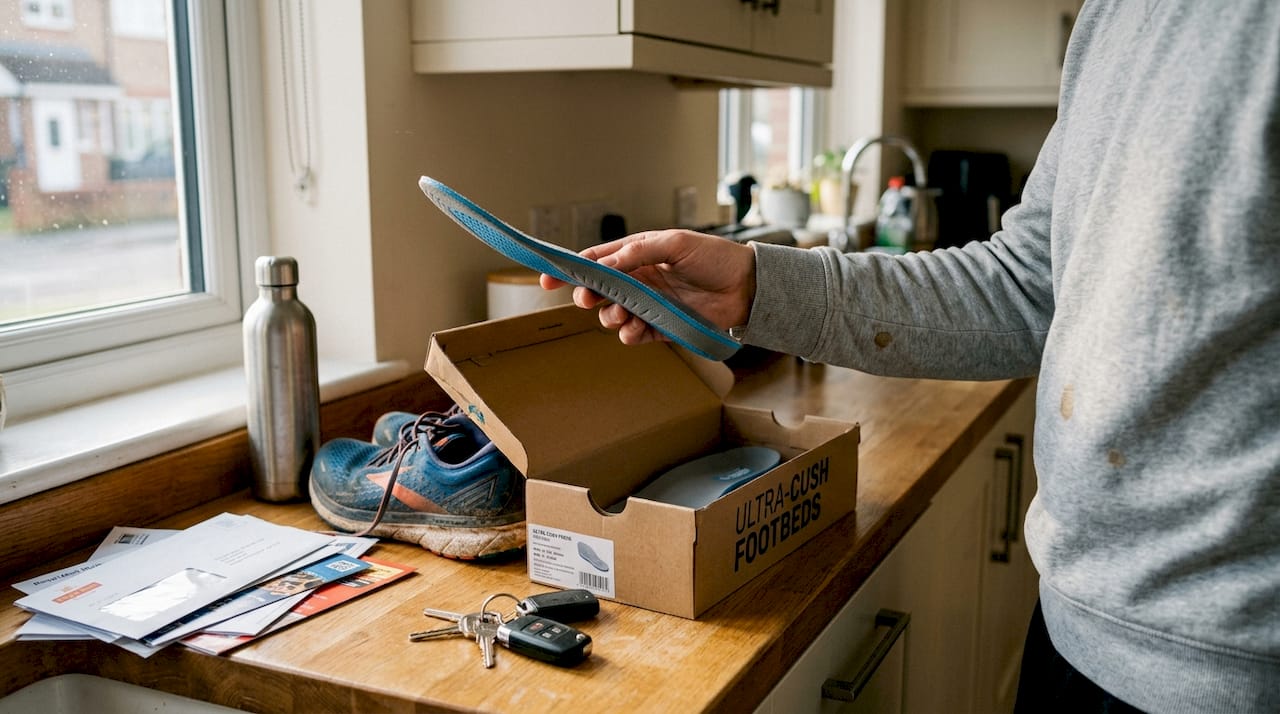
PU (polyurethane) is denser and more durable than EVA. It retains its shape longer and offers superior long-term support, though it adds a little weight. For people who spend eight or more hours on their feet, PU insoles often outperform EVA over the course of a working week.
PU-EVA blends aim to combine the best of both. The blend delivers responsiveness from EVA with the durability of PU, making it a strong all-round option for active daily wear.
The research backing here is striking. A PU L24 on EVA insole reduces plantar pressure by 82.9 to 84.3% in both standing and gait, outperforming other insole configurations tested. That’s a dramatic reduction for anyone dealing with forefoot pain or heel discomfort.
Explore advanced cushioning technologies and footwear innovations for comfort to see how these materials are being applied in current shoe design.
Here’s a quick breakdown by condition:
- Plantar fasciitis: PU or PU-EVA blends with heel cup design
- Long standing hours: Dense PU for sustained pressure relief
- General everyday wear: Standard EVA or lightweight PU-EVA
- Post-surgical recovery: Multi-density insoles with targeted offloading zones
Key stat: An 82.9 to 84.3% reduction in plantar pressure from a single insole material change is not a marginal improvement. For people in chronic foot pain, this kind of evidence-backed difference is significant.
Innovative midsole and footbed materials for modern comfort
For those looking beyond classic cushioning, next-generation midsoles and footbeds are breaking new ground in comfort.
Natural fibre-reinforced foamed rubbers, such as collagen fibre-natural rubber composites, represent one of the more exciting recent developments. These materials are lightweight yet structurally strong, offering excellent energy return and support without the environmental cost of fully synthetic alternatives. They’re also more breathable than traditional rubber compounds, which helps with temperature regulation during extended wear.
3D printed biomimetic lattices take a different approach entirely. By mimicking the internal structure of natural materials like bone or coral, these lattices can be engineered to distribute pressure in highly targeted ways. Different zones of the footbed can be tuned to different densities, offering personalised support that a uniform foam simply cannot replicate.
As innovations in shoe materials research confirms, both natural fibre-reinforced foamed rubber and 3D printed biomimetic lattices offer lightweight construction, high strength, and superior pressure dispersion compared to conventional options.
“The shift toward biomimetic and natural composite materials in footwear isn’t just about performance. It reflects a deeper understanding of how the foot actually functions under load.”
Learn more about types of shoe materials and footwear technology explained for a fuller picture of what’s available today.
| Material | Density | Strength | Comfort rating | Eco impact |
|---|---|---|---|---|
| Standard EVA | Low | Moderate | Good | Moderate |
| Polyurethane (PU) | High | High | Very good | Moderate |
| Collagen fibre-NR | Low-medium | High | Excellent | Low |
| 3D printed lattice | Variable | High | Excellent | Low-moderate |
- Natural fibre-reinforced rubber: Best for everyday comfort, eco-conscious buyers, and those needing lightweight support
- 3D printed lattices: Best for custom pressure mapping, athletic use, and complex foot conditions
Minimalist and maximalist: finding your comfort zone
Of course, comfortable means different things depending on your foot shape, history, and preferences, especially when it comes to minimalist versus maximalist shoe materials.
Minimalist shoes use thin, flexible soles with little to no cushioning. The idea is to encourage natural foot movement and strengthen intrinsic foot muscles over time. Maximalist shoes go the opposite direction, featuring thick, heavily cushioned midsoles designed to absorb impact and reduce stress on joints.
The research paints a nuanced picture. Maximal cushioning may increase loading rates, vertical oscillation, and ankle eversion, which can actually reduce stability and running economy. Minimalist shoes may benefit some knee and hip conditions, but transitioning too quickly raises the risk of Achilles tendon issues and plantar fasciitis.
| Factor | Minimalist | Maximalist |
|---|---|---|
| Cushioning | Minimal | High |
| Stability | High (with adaptation) | Variable |
| Adaptation needed | Yes, gradual | Minimal |
| Best for | Strong, healthy feet | Joint pain, high impact |
| Risk profile | Achilles, PF if rushed | Reduced proprioception |
If you’re considering switching to minimalist footwear, follow these steps:
- Start with short wear periods of 20 to 30 minutes per day
- Gradually increase duration over 8 to 12 weeks
- Strengthen foot muscles with targeted exercises before and during the transition
- Monitor for any new pain in the heel, arch, or calf
- Seek guidance from a podiatrist if you have a pre-existing condition
Pro Tip: Choose based on your foot type, activity level, and health history rather than what’s trending. A shoe that works brilliantly for one person can cause real harm for another.
Explore minimalist shoes explained for a deeper look at who benefits most.
Speciality materials for problem feet and unique needs
Your comfort needs may go beyond everyday support. Let’s focus on the best material choices for anyone managing foot pain or chronic health concerns.
For people with diabetes, foot sensitivity and circulation issues mean that pressure points can quickly become serious wounds. Soft, multi-layer insoles with gel or memory foam layers help distribute load and reduce shear forces. Seamless linings and soft leather uppers further reduce friction risk.
For arthritis, materials that absorb shock without requiring the foot to do extra work are key. Rocker-bottom soles combined with cushioned PU midsoles can significantly reduce joint stress during walking.
For plantar fasciitis, deep heel cups in firm EVA or PU, combined with arch-supporting footbeds, help reduce strain on the fascia. Learn more about features for plantar fasciitis to identify what actually works.
For healthy feet, it’s worth noting that minimal footwear may promote healthier biomechanics long-term, with no strong evidence that excessive cushioning or arch support benefits people without existing conditions. This is an important counterpoint to aggressive marketing around premium insoles.
Here’s a condition-by-condition material guide:
- Diabetes: Gel or memory foam multi-layer insoles, seamless uppers, soft leather
- Arthritis: Rocker soles, dense PU midsoles, wide toe boxes
- Plantar fasciitis: Deep heel cups, firm EVA or PU, structured arch support
- Flat feet: Motion control materials, firm medial post, supportive footbeds
- High arches: Cushioned, flexible midsoles with neutral support
Always look for shoe tech for diabetes that references clinical testing rather than generic comfort claims.
Why choosing the right shoe materials is personal (and often misunderstood)
Here’s the uncomfortable truth the footwear industry rarely admits: there is no universally comfortable shoe material. Every piece of research we’ve covered points to the same conclusion. Context matters enormously.
Take the finding that softer midsoles increase impact peak but decrease loading rate, and that runners compensate by increasing ankle stiffness. For a competitive runner, this is a critical biomechanical consideration. For someone walking to the shops and back, it’s largely irrelevant. The science is real, but its application is highly individual.
What we see time and again is that people buy shoes based on brand reputation or a single comfort feature, without considering how that material interacts with their specific foot shape, gait, and daily demands. A thick, cushioned midsole might feel wonderful in the shop and cause knee pain within a fortnight. A firm, minimal shoe might feel strange at first and become the most comfortable thing you’ve ever worn after six weeks of adaptation.
The honest approach is to treat shoe shopping like a gradual experiment. Read the evidence. Understand your foot type. Consider your health history. Then test, adapt, and adjust. Explore reducing foot pain with shoes and athletic footwear innovations to build a more complete picture before committing.
Ignore the hype. Embrace smart trial and gradual adaptation. Your feet will tell you more than any marketing campaign ever will.
Shop innovative, comfortable footwear
Armed with all this knowledge, you might be ready to find shoes that genuinely match your comfort and health priorities.
At YDA UK, the footwear range is built around many of the advanced and condition-focused materials covered in this guide. From cushioned insole technologies to innovative midsole constructions, the focus is firmly on combining style with genuine foot health benefits. Whether you’re managing a specific condition or simply want shoes that feel as good at the end of the day as they do at the start, explore the shoe technology at YDA to understand what sets these designs apart. Browse the full range of shoes for problem feet and find footwear that’s been engineered to work with your body, not against it.
Frequently asked questions
Which shoe material reduces pressure on the feet best?
Current research shows that a PU L24 on EVA insole can lower plantar pressure by over 82%, making it one of the strongest evidence-backed options for foot comfort available today.
Is more cushioning always better for foot health?
Maximal cushioning can increase loading rates and reduce stability, so more padding is not always better. Choose your cushioning level based on your specific activity and foot health needs.
What is the best shoe material for diabetic feet?
Soft, pressure-distributing materials such as multi-layer insoles with gel or memory foam are widely recommended for diabetic feet. Seamless uppers and soft leather linings further reduce friction and pressure risk. Learn more at shoe tech for diabetes.
Are minimalist shoes better than cushioned shoes for everyone?
Minimal footwear may promote healthier biomechanics for some people long-term, but they are not suitable for everyone. Gradual adaptation and professional advice are essential before making the switch.