
How to break in new shoes for comfort and healthy feet
TL;DR:
- Gradual indoor wear allows shoes to mold to your feet without high friction.
- Abrupt methods like heat or water can damage shoe materials and should be avoided.
- Properly broken-in shoes show no blisters, fit comfortably, and feel stable during use.
You buy a pair of high-performance shoes, lace them up with genuine excitement, and within an hour your heels are raw and your toes are screaming. Sound familiar? New shoes, especially technically engineered ones, need time to adapt to the unique shape of your feet. Gradual wear starting indoors prevents blisters by allowing materials to mould to your feet without high friction. This guide walks you through exactly what to prepare, how to progress safely, which mistakes to avoid, and how to recognise when your shoes are genuinely ready to perform.
Table of Contents
- What you need before breaking in new shoes
- Step-by-step: The safest method to break in new shoes
- Common mistakes and risky break-in shortcuts
- How to tell if your shoes are properly broken in
- The real reason break-in matters for high-performance shoes
- Find the right shoes for lasting comfort and support
- Frequently asked questions
Key Takeaways
| Point | Details |
|---|---|
| Start gradual wear | Begin indoors with short sessions to let shoes slowly mould to your feet. |
| Avoid shortcuts | Heat or water tricks risk damaging your footwear—stick with gradual adaptation. |
| Monitor comfort | Listen to your body and look for signs like stable cushioning and absence of blisters. |
| Peak performance takes time | Full break-in and optimal support typically require several weeks and 50–150 miles. |
What you need before breaking in new shoes
Before you even think about stepping outside, preparation makes all the difference. The single most important factor is fit. Shoes that are too small compress your toes, while shoes that are too large create friction as your foot slides. Neither situation improves with wear. Always check shoe interiors for rough seams, uneven insoles, or poorly placed stitching before your first session.
Here is what you should gather before starting:
- Moisture-wicking socks at the thickness you plan to wear regularly
- Blister plasters or gel pads for known hotspot areas like heels and little toes
- Shoe trees to maintain shape between sessions
- A clean indoor surface for your first few wears
- A training log or notes app to track comfort changes session by session
High-performance footwear today is built from materials that behave very differently from traditional leather. Carbon-plated racers, foam-stacked trainers, and knitted uppers each respond to pressure and heat in their own way. Understanding the technology in your specific pair helps you set realistic expectations. Take a moment to evaluate shoe technology before you begin, so you know whether you are working with a stiff carbon plate or a more flexible foam construction.
| Shoe type | Typical upper material | Expected break-in feel |
|---|---|---|
| Carbon-plated racer | Engineered mesh | Stiff initially, softens at toe box |
| Daily trainer | Foam and knit | Flexible quickly, cushioning settles |
| Stability shoe | Structured synthetic | Firmer sides loosen gradually |
| Trail shoe | Reinforced mesh | Toe cap and heel collar need most time |
As for timelines, there is no universal break-in period; 2 to 4 weeks or 15 to 100 miles is typical, but pain always signals a wrong fit rather than just newness. Modern foams and engineered uppers often soften faster than older leather constructions, but cushioning still needs mileage to stabilise.
Pro Tip: If a specific area causes sharp pain rather than mild pressure, stop immediately. Discomfort that does not ease within the first ten minutes of a session is your body telling you something is structurally wrong, not just unfamiliar.
Step-by-step: The safest method to break in new shoes
With your materials ready, follow these steps in order. Skipping ahead is the most common reason people end up with blisters or stress injuries.
- Session one: indoors only, 20 to 30 minutes. Walk around your home on a clean floor. Pay attention to any pressure points at the heel, ball of foot, or little toe.
- Sessions two to four: extend to 45 minutes indoors. Try different surfaces if possible, such as carpet versus hard flooring, to flex the sole in varied ways.
- First outdoor session: a flat walk of no more than 2 miles. Avoid hills, uneven ground, or pace changes.
- Progressive outdoor sessions: add 1 to 2 miles per outing. Introduce gentle inclines only once the heel collar feels comfortable.
- First run or performance session: keep it short, 2 to 4 miles, at an easy pace. Monitor hotspots carefully and adjust lacing tension if needed.
- Full performance use: only after consistent comfort across multiple sessions. This is when you can test shoe comfort under real conditions.
Gradual wear starting indoors is the expert-backed method because it allows materials to mould without the high friction of outdoor surfaces. The upper softens at the contact points specific to your foot shape, not a generic last.
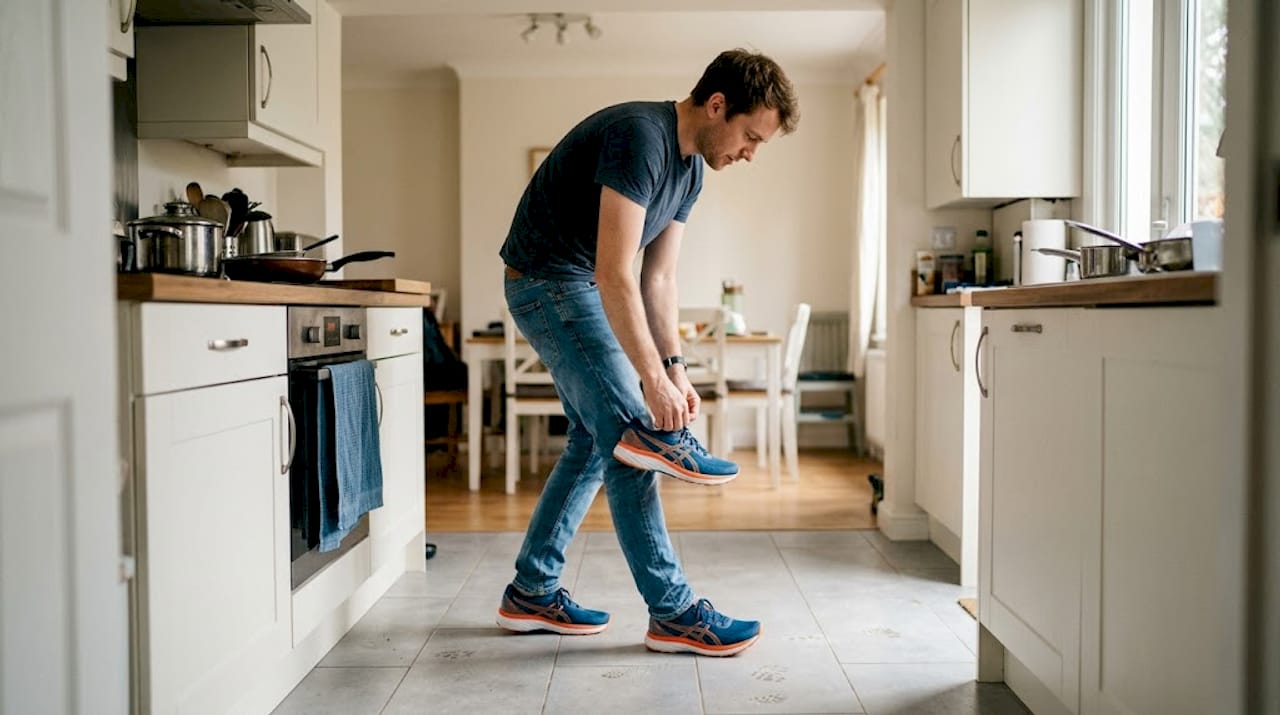
Midsole foam compresses significantly in the first 50 to 150 miles, stabilising cushioning and allowing your foot to adapt to the shoe’s energy return characteristics. This is why a shoe can feel oddly firm or bouncy at first and then settle into a noticeably different ride.
| Method | Speed of break-in | Risk level | Recommended |
|---|---|---|---|
| Gradual indoor to outdoor | Slow (2 to 4 weeks) | Low | Yes |
| Wearing all day immediately | Fast (days) | High (blisters, soreness) | No |
| Heat gun or hair dryer | Very fast | Very high (material damage) | No |
| Freezing with water bag | Fast | High (sole delamination) | No |
Always revisit the shoe shopping process if you find the shoe consistently causes pain in the same spot across multiple sessions. Some shoes simply do not suit your foot shape, and no amount of gradual wear will change that.
Pro Tip: Lacing technique changes comfort dramatically. A heel-lock lacing pattern, where you thread through the top two eyelets to create a loop, reduces heel slippage and cuts blister risk significantly during the early sessions.
Common mistakes and risky break-in shortcuts
While gradual methods are safest, some common mistakes can undo your good work or harm your shoes. The biggest errors are usually made out of impatience.
“Aggressive methods such as heat guns, freezer bags, and soaking risk permanent damage to shoe materials and structure. Expert consensus is clear: natural, gradual moulding is the only safe approach.”
Here are the mistakes most likely to set you back:
- Wearing new shoes for a full day too soon. Your feet fatigue faster in unfamiliar footwear, and prolonged friction causes blisters before the material has softened.
- Ignoring early pain signals. Mild pressure is normal; sharp or persistent pain is not. Pushing through it causes skin damage and can alter your gait.
- Using the wrong socks. Cotton socks retain moisture and increase friction. Always use the sock thickness you intend to train in.
- Over-flexing the sole by hand. Bending the shoe aggressively before wear can crack foam cells in the midsole and reduce cushioning life.
- Applying heat from a hair dryer or heat gun. This softens adhesives, warps carbon plates, and can permanently deform foam structures.
- Soaking in water or using the freezer bag trick. Water weakens bonding agents. Freezing stresses materials not designed for that temperature range.
Aggressive methods risk damage to the very engineering that makes high-performance shoes worth buying. A carbon plate that has been heat-warped no longer returns energy efficiently. A midsole foam that has been over-flexed loses its progressive compression properties.
The one mild exception is a shoe stretcher for tight toe boxes in leather or semi-structured shoes. Even then, use it conservatively and only after consulting the manufacturer’s guidance. Always avoid ill-fitting shoes rather than trying to force a bad fit into a good one.
How to tell if your shoes are properly broken in
Once you have followed these methods, how do you know when your shoes are truly broken in and performing at their best? There are clear physical and performance signals to look for.
Physical signs your shoes are broken in:
- No new blisters or skin irritation after a full session
- Heel collar feels snug but not tight, with no rubbing
- Toe box allows natural toe splay without pinching
- Upper has softened at your specific pressure points
- Insole shows a light impression of your foot shape
Performance signs your shoes are ready:
- Stable, even feeling underfoot with no unexpected tipping or rolling
- Natural foot movement through the gait cycle without restriction
- No muscle soreness in feet or calves attributable to the shoe itself
- Cushioning feels consistent from heel strike to toe-off
Midsole foam compresses significantly in the first 50 to 150 miles, which is why most shoes reach optimal comfort somewhere in that range. Before that point, the cushioning is still settling and energy return is not yet consistent.
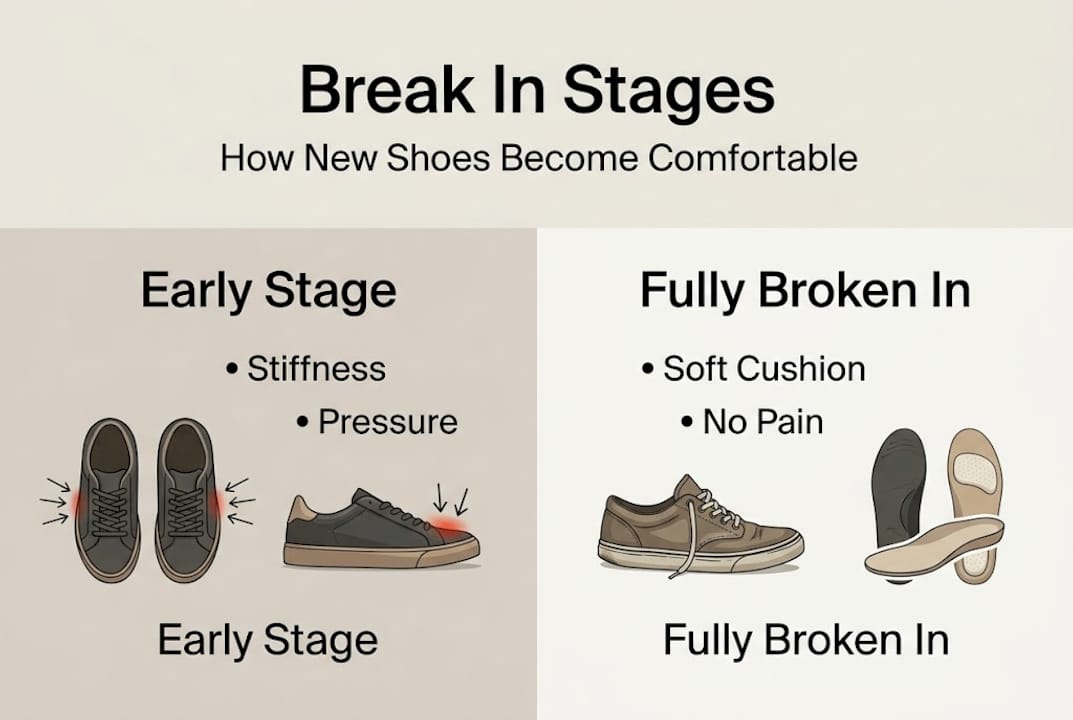
It is also worth noting that worn shoes increase heel stress, which is why new shoes need sufficient break-in to optimise biomechanics and distribute load correctly across the foot.
| Break-in stage | Mileage range | What to expect |
|---|---|---|
| Early | 0 to 20 miles | Pressure points, stiffness, possible hotspots |
| Mid | 20 to 80 miles | Upper softening, cushioning beginning to settle |
| Optimal | 80 to 150 miles | Full comfort, stable cushioning, natural movement |
| Worn out | 300 to 500 miles | Cushioning degraded, replacement needed |
Use a footwear selection guide if you are unsure whether ongoing discomfort is a break-in issue or a fit issue. There is a meaningful difference, and confusing the two leads to persisting with shoes that are genuinely wrong for your feet. A good workflow for finding right shoes can prevent that problem before you even make a purchase.
The real reason break-in matters for high-performance shoes
Conventional wisdom says “just wear them until they feel better.” That advice made sense for stiff leather brogues in another era. It does not apply to modern engineered footwear, and following it can actively undermine the technology you have paid for.
High-performance shoes are built around specific material interactions. Foam densities, plate geometries, and upper tension are all calibrated to work together after a period of use. Wearing them hard from day one compresses foam unevenly, stresses the upper before it has conformed to your foot, and can alter the plate’s flex point relative to your metatarsals.
Modern high-performance shoes, including carbon-plated designs, may break in faster due to advanced foams, but they still require mileage for peak efficiency. Racing in a pristine pair is a genuine risk to both performance and foot health.
We believe the break-in process is not an inconvenience. It is the period during which your shoe becomes your shoe. Understanding what is happening inside the materials, and buying shoes online for foot health with that knowledge, transforms how you approach every new pair. Patience here is not passive. It is the most active thing you can do for your long-term foot health.
Find the right shoes for lasting comfort and support
A proper break-in process starts with choosing footwear that is genuinely engineered for your feet. When the technology is right from the outset, the adaptation period is shorter, more comfortable, and far more rewarding.

At YDA, our footwear is built around YDA shoe technology designed to support foot health from the very first wear. Whether you are managing specific foot concerns or simply seeking superior everyday comfort, our range of shoes for problem feet offers engineered cushioning, structured support, and materials that respond intelligently to your movement. Explore the collection and find the pair that works with your feet, not against them.
Frequently asked questions
How long does it take to break in new shoes?
Most new shoes need 2 to 4 weeks or 15 to 100 miles to break in fully, depending on the material and construction of the model.
Is it safe to break in shoes with heat or water?
No. Using heat, water, or freezing can permanently damage shoe materials and alter fit; gradual natural wear is the only method recommended by experts.
How do I know when my shoes are properly broken in?
Your shoes are broken in when cushioning feels stable, there are no blisters or hotspots, and movement feels natural. Midsole foam stabilises fully within the first 50 to 150 miles.
Should I wear new shoes for a race or event immediately?
No. High-performance shoes require mileage before they reach peak efficiency, and racing in a brand-new pair risks both discomfort and underperformance.