
Why check shoe interiors? Foot health and comfort explained
Most people judge a shoe by what they can see from the outside. The sole looks intact, the upper seems fine, so everything must be in order. But the real story of how a shoe is performing, and what it is doing to your feet, is written on the inside. Interior wear, lining breakdown, and insole compression all signal problems long before the outsole shows any visible damage. This guide walks you through exactly what to look for inside your shoes, why it matters for your foot health, and how a simple inspection habit can prevent pain, injury, and unnecessary expense.
Table of Contents
- Understanding the importance of shoe interior checks
- What wear patterns reveal about your feet
- Spotting material breakdown: Hygiene and support risks
- Quality assurance: Comfort features and orthotic readiness
- Routine inspection and shoe replacement: A healthy habit
- Step forward with the right footwear
- Frequently asked questions
Key Takeaways
| Point | Details |
|---|---|
| Early problem detection | The interior reveals issues before the exterior, enabling early action to prevent pain or injury. |
| Better foot hygiene | Routine checks help prevent odour, moisture build-up, and infections by catching problems soon. |
| Improved comfort and fit | Spotting interior wear and damage ensures your shoes continue to support your feet properly. |
| Smart shoe replacement | Knowing when to replace based on interior signs extends health and shoe value. |
Understanding the importance of shoe interior checks
The outsole of a shoe is built to take punishment. It is designed to resist abrasion and last. The interior, however, is in direct contact with your foot every single step you take. That contact leaves evidence. Pressure points, sweat, friction, and movement all leave marks on the lining and insole that tell a precise story about how your foot is behaving inside the shoe.
A common misconception is that only the sole matters when assessing shoe condition. In reality, interior wear patterns reveal gait abnormalities like overpronation or supination far earlier than outsole wear does, enabling early intervention before pain or injury develops. The outsole may still look presentable while the insole has already collapsed under your arch or worn thin beneath your heel.
Here is what interior checks can uncover:
- Uneven insole compression pointing to gait imbalances
- Lining wear that indicates friction hotspots and blister risk
- Heel counter deformation suggesting poor fit or instability
- Moisture damage that creates hygiene risks
- Seam irritation that causes pressure points
“The inside of your shoe is a map of your movement. Read it before your feet start sending pain signals.”
If you want to check shoe comfort properly, the interior is your starting point, not an afterthought. A thorough footwear buying checklist always includes interior assessment as a core step.
What wear patterns reveal about your feet
With your attention on interiors, the wear patterns themselves give clear messages about your feet and habits. Overpronation, where the foot rolls inward excessively, leaves the inner edge of the insole compressed and worn. Supination, the opposite motion, wears the outer edge. Both are visible inside the shoe well before the outsole reflects the same pattern.
Heel wear is particularly telling. Interior heel wear can signal Haglund’s deformity or shoe slippage, and if left unaddressed, the lining breaks down and blisters follow. Reinforcing the heel area before holes form is far cheaper than treating the resulting skin damage.
| Interior wear location | Likely cause | Recommended action |
|---|---|---|
| Inner edge of insole | Overpronation | Seek motion control or stability shoes |
| Outer edge of insole | Supination | Look for cushioned, neutral shoes |
| Heel lining worn through | Slippage or Haglund’s deformity | Add heel grip or replace shoes |
| Ball of foot compressed | High impact or forefoot striking | Increase cushioning or check shoe size |
| Toe box lining frayed | Toes gripping or shoe too short | Reassess shoe length and fit |
The difference between outsole and interior wear insights is significant. Outsole wear shows where your foot lands. Interior wear shows how your foot moves within the shoe, which is the more clinically useful information. Exploring footwear innovations for healthy feet can help you understand which technologies address specific gait patterns. If you are already experiencing discomfort, reviewing shoe technology for foot health gives you a framework for choosing smarter. For those with existing conditions, shoes for problem feet offers targeted guidance.
Spotting material breakdown: Hygiene and support risks
After recognising suspicious wear patterns, it is also important to assess the condition of your shoe interiors for hygiene and support. Material breakdown is not just a comfort issue. It is a health issue. Interior lining breakdown and heel counter damage compromise support, increase blister risk, and create conditions where bacteria and fungi thrive.
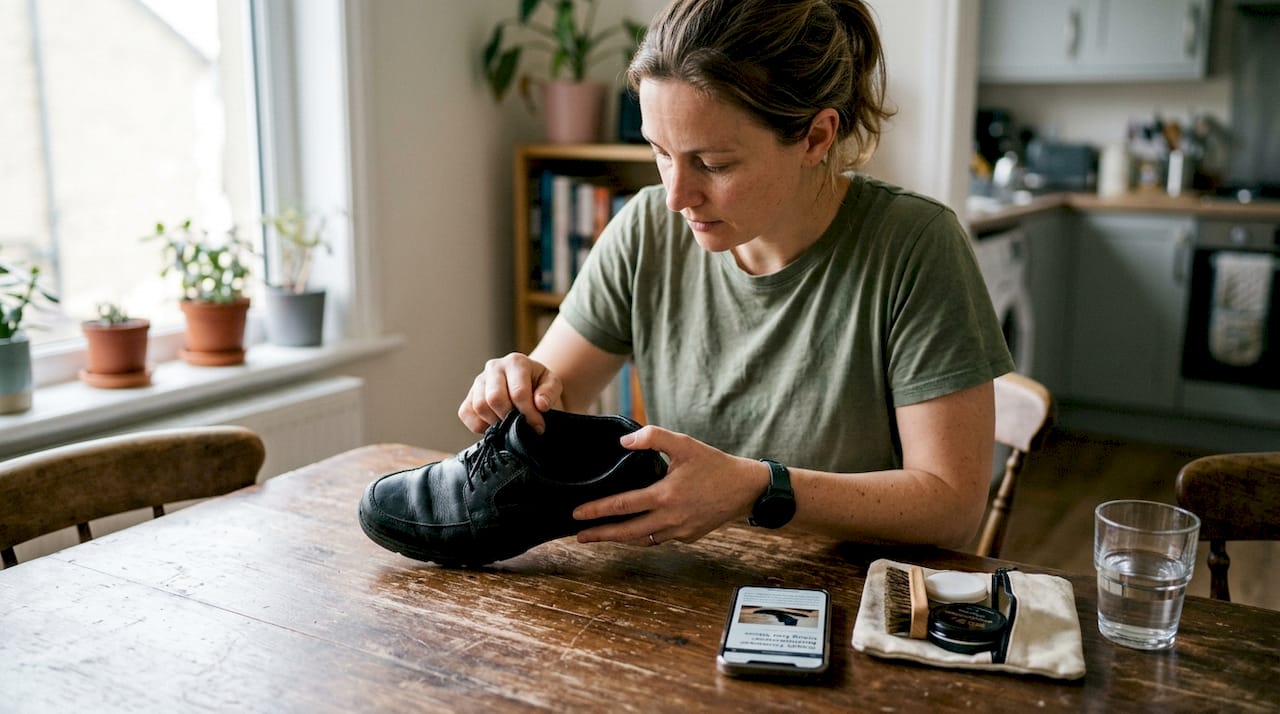
Signs to look for include:
| Interior fault | Risk | Recommended action |
|---|---|---|
| Loose or peeling lining | Friction, blisters | Replace insole or retire shoe |
| Thinning insole | Loss of cushioning and arch support | Insert aftermarket insole |
| Broken heel counter | Instability, ankle strain | Replace shoes immediately |
| Persistent odour | Bacterial or fungal colonisation | Deep clean or discard |
| Visible mould or discolouration | Fungal infection risk | Discard immediately |
Here is a numbered checklist for inspecting material condition efficiently:
- Remove the insole and check its underside for compression, cracking, or mould.
- Run your hand along the lining to feel for rough patches, loose material, or exposed stitching.
- Press the heel counter firmly. It should not collapse or flex inward.
- Smell the interior. Persistent odour after airing indicates bacterial or fungal build-up.
- Check the toe box lining for fraying or holes that could cause skin irritation.
Pro Tip: Replace shoes or insoles at the first sign of persistent odour or interior holes. Waiting until the outsole wears through means your feet have already been absorbing the consequences for weeks. For more guidance, expert footwear care tips cover maintenance strategies that extend shoe life significantly. Understanding why shoes wear out helps you anticipate problems before they escalate, and if you own comfort-focused styles, knowing how to care for comfort shoes is essential reading.
Quality assurance: Comfort features and orthotic readiness
Beyond wear and hygiene, quality assurance ensures your shoe truly supports you, especially if you rely on custom comfort or orthotics. When assessing a new or existing shoe, the interior must meet certain benchmarks to deliver genuine performance.
Interior quality checks ensure smooth surfaces, proper insole depth for orthotics, and no protrusions that cause pressure points. A shoe that fails these checks will undermine even the best orthotic device.
What to demand from any performance shoe interior:
- Smooth, flat seams with no raised ridges near the toe box or heel
- Insole thickness of at least 4mm to accommodate custom orthotics
- A removable insole that lifts out cleanly without adhesive residue
- Consistent cushioning across the full footbed, not just the heel
- No internal stitching that contacts the foot directly
Steps to check for orthotic compatibility:
- Remove the existing insole and check whether it lifts out in one piece.
- Measure insole thickness. Anything under 4mm leaves insufficient depth for most orthotics.
- Place your orthotic inside and check that the shoe closes comfortably without pressure.
- Walk a few steps and confirm there is no heel slippage or toe crowding.
- Check that the upper does not bulge or distort with the orthotic in place.
Pro Tip: Always check for removable insoles before purchasing if you use custom orthotics. A glued-in insole is a dealbreaker, regardless of how good the shoe looks from the outside. Knowing how to maintain shoe comfort naturally extends the life of both your shoes and your orthotics. A solid footwear selection guide will always prioritise interior compatibility as a primary criterion.
Routine inspection and shoe replacement: A healthy habit
Finally, knowing what to check means little without a routine. Here is how to turn this knowledge into a simple, effective habit that protects your feet year-round.
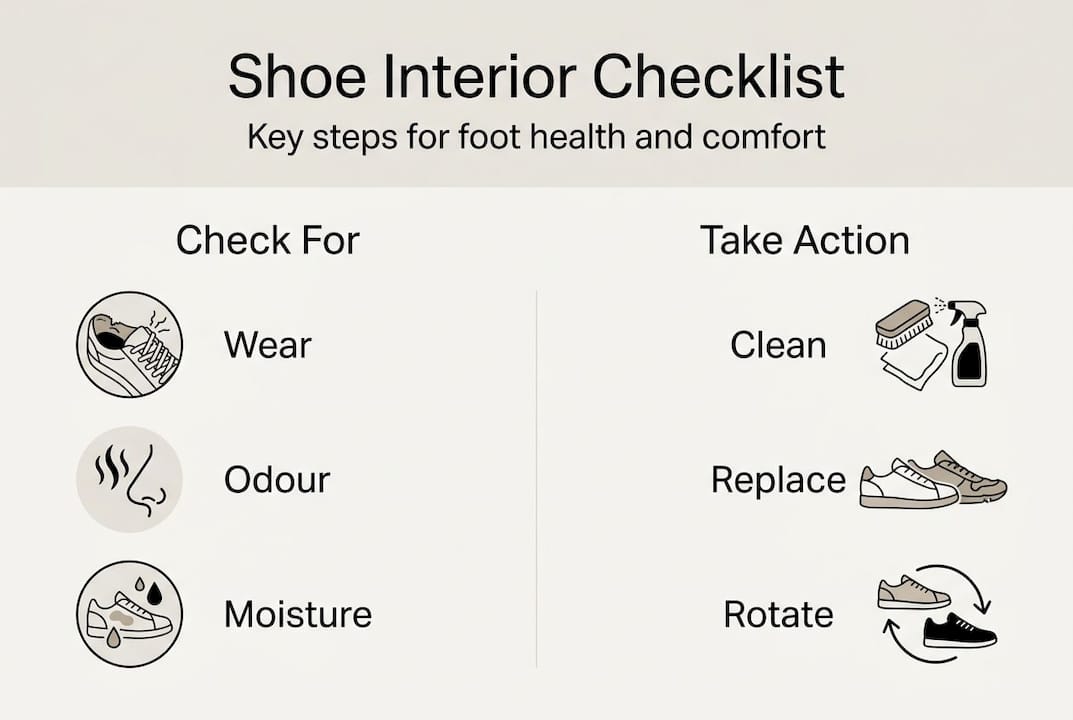
Podiatrists recommend routine interior inspections for moisture, odours, and fungal build-up, with shoes replaced after 300 to 500 miles when cushioning flattens. That mileage benchmark translates to roughly six to twelve months for most daily wearers, but interior condition should always override the calendar.
A practical inspection schedule:
Daily
- Air shoes out after each wear. Never store them damp.
- Give the interior a quick sniff. Early odour is easier to address than established colonisation.
Weekly
- Remove insoles and allow them to dry separately.
- Run a hand along the lining to check for new rough patches or loose material.
Monthly
- Conduct a full inspection using the five-step checklist from the previous section.
- Assess insole compression by pressing firmly across the footbed.
- Check heel counter rigidity and lining integrity at friction points.
A key statistic worth noting: rotating shoes with a 48-hour drying period between wears significantly reduces fungal build-up. Most people wear the same pair daily, which keeps the interior damp and accelerates both material breakdown and microbial growth. Two pairs in rotation is one of the most effective and underused foot hygiene strategies available.
For ongoing guidance, shoe care and hygiene tips provide a practical reference you can return to as your shoes age.
Step forward with the right footwear
Armed with this knowledge, you are ready to choose and care for shoes that support you every step of the way. Checking shoe interiors is not a niche habit for podiatry patients. It is a straightforward practice that protects your gait, your hygiene, and your investment in quality footwear.

At YDA, every shoe is designed with the interior in mind. From smooth, seam-free linings to removable insoles built for orthotic compatibility, YDA shoe technology addresses the exact benchmarks this article has outlined. Whether you are managing a specific foot condition or simply want footwear that performs as well on the inside as it looks on the outside, browse all YDA shoes to find a pair engineered for genuine foot health. Start with shoes designed for problem feet if you need targeted support from day one.
Frequently asked questions
How often should I check the inside of my shoes?
Podiatrists recommend checking shoe interiors every two to four weeks for wear, moisture, and odour, and more frequently if you wear them daily or during high-activity periods.
What are the biggest risks of ignoring shoe interiors?
Ignoring interior checks increases the risk of blisters, persistent odour, fungal infections, and worsening gait issues, as lining breakdown and heel counter damage compromise both support and hygiene over time.
When should I replace my shoes based on interior condition?
Replace shoes when insoles are flat, holes or persistent odour appear, or after 300 to 500 miles of use, whichever comes first.
Does checking the inside really matter if the sole still looks good?
Absolutely. Interior wear patterns reveal poor fit and unhealthy gait that the outsole simply cannot show, making interior checks the more reliable indicator of foot health impact.
Recommended
- How to Evaluate Shoe Technology for Better Foot Health – YDA UK
- Workflow for Finding Right Shoes for Health and Comfort – YDA UK
- Footwear Selection Guide 2025: Choose Shoes for Health and Comfort – YDA UK
- Why avoid ill-fitting shoes for foot health comfort – YDA UK
- Importance of Seat Comfort – Impact for Outdoor Users – Sitpack