
How to Buy Shoes Online for Foot Health and Style
Finding shoes that look great and feel supportive should not be a guessing game for health-conscious people striving for daily comfort. Navigating the crowded online marketplace gets easier when you focus on what your feet truly need rather than chasing fleeting trends. By paying close attention to your unique foot shape, activity level, and any existing concerns, you set yourself up for lasting comfort with the right footwear assessment at every step.
Table of Contents
- Step 1: Assess Your Foot Health Needs
- Step 2: Browse For Suitable Shoe Styles
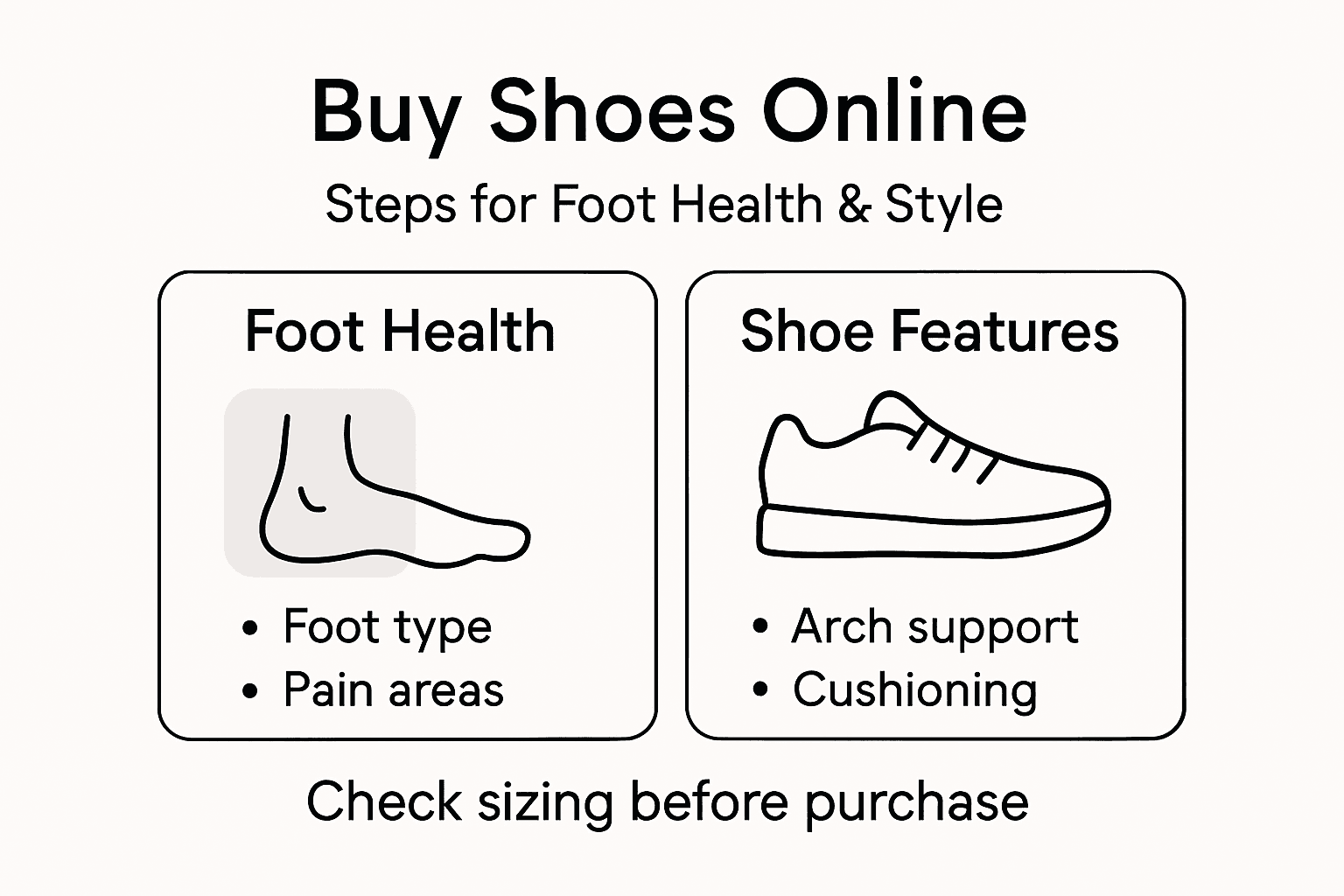
- Step 3: Review Technology And Features
- Step 4: Check Sizing And Availability
- Step 5: Complete Your Purchase Securely
- Step 6: Verify Fit And Comfort On Delivery
Quick Summary
| Major Insight | Detailed Explanation |
|---|---|
| 1. Assess your foot health first | Understand existing foot conditions and characteristics to choose the right footwear that maximises comfort and support. |
| 2. Tailor your search based on foot type | Filter shoe selections by arch height and foot shape to ensure you find models that provide adequate support and avoid discomfort. |
| 3. Examine shoe technology critically | Different cushioning and arch support vary widely; focus on features that directly benefit your specific foot health requirements. |
| 4. Verify sizing before purchase | Sizes differ across brands; measure your feet accurately to avoid returns and ensure a comfortable fit when selecting shoes. |
| 5. Test shoes thoroughly upon arrival | Wear your new shoes indoors for a while to check for fit and comfort issues before deciding to keep or return them. |
Step 1: Assess your foot health needs
Before you start scrolling through endless shoe listings online, take a genuine moment to understand what your feet actually need. This step matters far more than aesthetics because your feet carry you through every day, and the right footwear directly impacts how comfortable and pain-free that journey feels. Understanding your individual foot characteristics will guide every purchasing decision that follows.
Start by identifying any existing foot concerns or medical conditions. Do you experience heel pain after walking? Does one foot feel flatter than the other? Have you been diagnosed with plantar fasciitis, bunions, or arthritis? These conditions shape which shoe features will genuinely help versus which marketing claims are just noise. If you’ve had issues with shoe fit in the past, think about what went wrong. Was the arch support inadequate? Did the heel slip? This pattern recognition tells you exactly what to prioritise when shopping. Beyond specific problems, consider your daily activities. Someone training for a marathon needs different support than someone working at a desk, and a retail assistant standing for eight hours has entirely different requirements than someone in a warehouse environment.
Physical assessment comes next. Examine your feet in their natural standing position. Press your thumb against your arch and notice how much it compresses. Check whether your arches are high, medium, or low. Walk across a hard floor and listen to how your feet strike the ground. Do you land heel first with a normal rolling motion, or do you overpronate (rolling inward) or supinate (rolling outward)? You can even wet your foot and step onto paper to see your footprint pattern. Research shows that proper footwear assessment based on individual foot characteristics is critical for preventing issues like callus formation and foot pain. Your foot type and gait pattern determine which shoe construction will work best for you.

Consider your existing shoe collection. Pull out a pair you genuinely love and a pair that leaves your feet aching. Compare them physically. Look at the heel height, arch support, flexibility points, and overall cushioning. What specific features make the comfortable pair work? Online shoe shopping becomes far smarter when you understand exactly what has worked for your feet in the past. If you wear orthotics or insoles, measure them. Some shoes accommodate inserts better than others, and knowing their dimensions helps you identify compatible options.
Document your findings in straightforward notes. Write down your foot type, any pain points, your daily activity level, and the shoe features that have served you well. Include your shoe size across different brands if you’ve noticed variation. This personal foot profile becomes your filter when browsing options online, cutting through marketing language and helping you focus on what genuinely suits your feet.
Here is a summary of common foot types and the shoe features that provide optimal comfort:
| Foot Type | Key Shoe Feature | Typical Issues Prevented |
|---|---|---|
| High arch | Extra cushioning | Reduces heel and forefoot pain |
| Low arch | Firm arch support | Prevents overpronation, fatigue |
| Wide forefoot | Spacious toe box | Minimises bunions and discomfort |
| Sensitive skin | Soft, breathable upper | Avoids blisters and irritation |
Pro tip: Take photographs of your feet from above and the side while standing normally, then reference these images when reading shoe descriptions online to match the shoe’s design to your actual arch height and foot shape.
Step 2: Browse for suitable shoe styles
Now that you understand your foot’s unique characteristics and needs, you can browse online with genuine purpose rather than simply chasing trends. The goal here is finding shoes that feel as good as they look, where your personal style preferences align with what your feet actually require. This balance between aesthetics and function transforms online shopping from overwhelming to straightforward.
Start by filtering your search using your foot profile from the previous step. If you have low arches, look for shoes with substantial arch support built in. High arches need cushioning that prevents pressure concentration. When browsing product descriptions, pay close attention to construction details. Read whether the shoe uses a structured heel counter (which keeps your heel secure and prevents slipping), how much toe box depth exists, and what materials the upper is made from. Natural leather and breathable synthetics reduce moisture and friction compared to plastic synthetic materials. Look for adjustable fastenings like laces or straps that allow you to customise fit throughout the day as your feet swell slightly. Many online retailers provide detailed specifications about heel height, arch prominence, and width options, so use these technical details alongside product photos to visualise whether the shoe matches your needs.
As you browse, consider your lifestyle honestly. If you’re commuting by public transport and standing at a desk, you need something fundamentally different from a shoe designed for evening wear. Professional environments may limit your style choices, so search within those parameters from the start rather than forcing inappropriate options to work. Check the shoe’s toe box shape carefully through photos and customer reviews. You want adequate room for your toes to spread naturally without feeling cramped, paired with a snug, firm fit around the heel that prevents friction and blistering. Don’t assume all shoes of the same size feel identical across brands. Read customer reviews specifically mentioning foot width and arch height to understand whether other people with similar feet found the shoe comfortable.
Filter your browsing by material composition too. If you tend towards sweaty feet, avoid solid leather uppers without breathable linings. If you have sensitive skin, search for soft materials and reviews confirming minimal rubbing. The style preferences that matter to you come last in this process, not first. By narrowing your options based on actual foot health requirements before considering aesthetics, you end up with shoes that genuinely suit you rather than ones that look perfect but leave your feet aching.
Understanding shoe construction helps you select models that suit your lifestyle and foot health:
| Construction Element | Benefit for Foot Health | Typical Lifestyle Suitability |
|---|---|---|
| Structured heel counter | Prevents heel slippage | Standing, active work |
| Deep toe box | Allows natural toe splay | Wide feet, bunion sufferers |
| Adjustable fastenings | Enables custom fit | Long days, swelling |
| Breathable lining | Controls moisture, odour | Warm climates, long wear |
Pro tip: Bookmark shoes that meet your foot health criteria but aren’t quite your style, then search for similar models from different brands that offer the same supportive features in designs you actually love wearing.
Step 3: Review technology and features
Shoe technology sounds impressive in marketing materials, but not every feature genuinely benefits your feet. This step teaches you to evaluate what marketing claims actually mean and which technologies align with your specific foot health needs. Understanding the difference between genuine innovations and clever advertising protects your money and your comfort.
Start by examining cushioning technology. Manufacturers describe countless proprietary systems, gel inserts, foam types, and shock absorption methods. The reality is simpler. You need sufficient cushioning to reduce impact stress without creating instability. Too much soft cushioning can actually increase injury risk by preventing your foot from sensing the ground properly. Look for product descriptions that specify the cushioning material and location rather than vague brand names. A shoe might feature gel in the heel but firmer support in the forefoot, which creates a balance many feet prefer. Read customer reviews describing how cushioned the shoe feels and whether people with conditions similar to yours found it helpful. If you have heel pain, reviews mentioning heel cushioning relief matter. If you struggle with arch collapse, reviews praising arch support carry more weight than general comfort praise.
Arch support deserves particular attention because it varies dramatically between shoes claiming similar benefits. Flexibility and cushioning features significantly influence foot biomechanics and how your foot functions during walking. Some shoes offer built-in arch support through their construction, whilst others accommodate custom insoles better. Examine whether the shoe’s arch area is rigid or flexible, and whether that matches your needs. A stiff arch support helps some people tremendously whilst others find it restrictive. The technology that works depends entirely on your individual foot structure and any existing conditions.
Be cautious about minimalist or barefoot shoe claims unless you genuinely understand their purpose. Research shows different footwear technologies produce varying effects on foot biomechanics, and minimal shoes suit some people whilst others require traditional support structures. If you have never worn minimalist footwear, transitioning requires gradual adjustment. Don’t purchase a pair expecting them to solve problems if you have no experience with that design philosophy. Moisture wicking technology matters if your feet sweat significantly, whilst waterproofing becomes crucial only if you regularly encounter wet conditions. Filter out the technologies irrelevant to your actual lifestyle.
Compare what the shoe offers against what your feet genuinely need. Does a shoe with advanced pronation control matter if you have neutral gait? Probably not. Does a lightweight construction benefit you if you need maximum stability? Less likely. Align features with requirements, not with marketing hype or what seems trendy.
Pro tip: Search for independent reviews or testing data on specific shoe models rather than relying solely on manufacturer claims, as real world user experiences often reveal which features actually deliver tangible benefits for your foot type.
Step 4: Check sizing and availability
Finding the perfect shoe means nothing if it does not come in your size or if it sells out before you complete your purchase. This step ensures you can actually buy what you have selected and that the shoe will fit properly when it arrives. Getting sizing right dramatically reduces returns and disappointment with online shoe purchases.
Begin by understanding your actual shoe size across different brands. Shoe sizing varies considerably between manufacturers, and a size 8 from one brand may feel entirely different from a size 8 from another. If you have previously purchased shoes online, review your order history to see which sizes worked well and which felt too tight or loose. Check the retailer’s sizing information carefully. Most quality online shoe retailers provide detailed size charts showing length measurements in centimetres, width options, and sometimes even notes about whether the shoe runs large, small, or true to size. Compare these measurements against shoes you currently own and love. Measure your feet in the evening when they are slightly swollen, as this reflects their actual size throughout most of your day. Stand on a hard floor with weight distributed evenly and measure from your longest toe to your heel. Do this for both feet, as many people have slightly different sizes. Reliable sizing information helps customers make informed purchases and minimises fitting issues when shopping online, so take time to understand the retailer’s specific sizing system rather than assuming standardised measurements.
Read customer reviews mentioning fit and sizing specifically. Someone who wears the same width as you and has a similar foot type can provide invaluable feedback about whether the shoe accommodates their dimensions comfortably. Pay attention to reviews from people describing their foot characteristics, not just generic comfort comments. If multiple reviewers mention the shoe runs narrow, and you have wide feet, that is crucial information. Some retailers offer free returns within a specified window, which reduces the risk of ordering if you are uncertain. Check their return policy before purchasing, as this affects how you approach sizing decisions. A retailer offering 30 days free returns means you can order slightly uncertain sizes knowing you can send them back without cost.
Verify availability before committing to your purchase. Confirm the exact size and width you need is in stock, not backordered or marked coming soon. Online inventory can change rapidly, particularly for popular sizes and styles. Add the shoe to your basket, proceed through checkout, and confirm the size selection one final time before submitting your order. Many regretted purchases happen because someone selected the wrong size during that final step. Some retailers hold items in your basket for only a limited time, so complete your purchase promptly once you have confirmed everything is correct.
Pro tip: Order two sizes if the retailer offers free returns and you are genuinely uncertain between two options, then wear each pair indoors for brief periods before deciding which to keep and which to return.
Step 5: Complete your purchase securely
You have found shoes that match your foot health needs, reviewed the features carefully, and confirmed sizing is correct. Now comes the final step: completing your purchase in a way that protects your personal information and ensures you can easily resolve any issues if problems arise. Taking a few extra moments here saves significant frustration later.
Before you proceed to checkout, review your entire order one more time. Confirm the shoe model, size, width, and colour are exactly what you intended. Check the total price including delivery charges and any applicable taxes. Verify the delivery address matches where you want the shoes sent. Many online retailers allow you to proceed through their entire checkout process before final payment, which gives you a chance to catch mistakes before committing financially. Some people abandon items in their basket unintentionally, so take time to review everything rather than rushing through. Understand the retailer’s exchange and return policies thoroughly. Know how many days you have to return unworn shoes, what condition they must be in, and whether returns are free or whether you pay postage. Secure payment is essential to protect your consumer data, and return and exchange rights should be clarified before purchase, so read this information carefully rather than clicking accept without understanding your rights.
When you reach the payment page, look for security indicators. Legitimate retailers display a padlock symbol in your browser’s address bar, and their website address begins with https rather than http. The s stands for secure. Never enter payment information on a website lacking these security features. Use a trusted payment method offering buyer protection, such as credit cards or established digital payment systems. These provide safeguards if something goes wrong with your order. Avoid wire transfers or unusual payment methods that offer no recourse if the retailer fails to deliver or sends incorrect items. Save your order confirmation number immediately after purchase. Screenshot or print this confirmation email, as it contains your order details, tracking information once your shoes ship, and reference numbers for any future communication with the retailer.
Once you receive your confirmation, keep all documentation. Store your receipt digitally and physically if you printed it. If the shoes arrive and do not fit or feel uncomfortable, you will need this information to initiate a return or exchange. Do not discard the packaging immediately, as you may need to return the shoes in their original box. Try on the shoes indoors on a clean floor to avoid scuffing them if you plan to return them. Many retailers will not accept returns of visibly worn shoes, so check this carefully before wearing them outside.
Pro tip: Set a calendar reminder for two weeks after your shoes arrive to document any comfort or fit issues, as retailers typically require returns within 14 to 30 days and you do not want to miss this window if problems develop gradually.
Step 6: Verify fit and comfort on delivery
Your shoes have arrived and you are excited to try them on. Before you wear them outside or commit to keeping them, take time to verify they fit properly and feel comfortable. This verification period is your final chance to catch sizing or comfort issues before the return window closes. Acting quickly here protects your money and your foot health.
When you first open the package, inspect the shoes for any visible damage or defects from shipping. Check that you received the correct size, width, and colour. Put on the socks you normally wear with shoes, then try both shoes on your feet. Stand up and walk around your home on a hard floor, not carpet, as this mimics how the shoes will feel during actual use. Pay attention to how the heel fits. Does it slip when you walk, or does it feel secure? A properly fitting shoe keeps your heel snug without rubbing. Check your toes have adequate space to spread naturally without feeling cramped. Press down on the toe box to confirm there is at least a thumb’s width of space between your longest toe and the shoe’s end. Check for redness, pressure marks, and overall comfort during initial wear, and wear new shoes indoors for short periods before prolonged use to monitor fit adaptation. Walk around for at least 10 minutes to detect any discomfort or pressure points developing in specific areas. Common problem spots include the heel counter, the arch area, and the outside edge of the little toe.
If you notice red marks or pressure areas after trying them on, the shoes do not fit properly. Early intervention matters. Return or exchange the shoes before wearing them outside, as extended wear can cause blisters, calluses, and foot pain that persists after you stop wearing the problematic shoes. Some shoes feel slightly uncomfortable initially but improve with a short break-in period. Distinguish between minor adjustments your foot makes as it adapts to new shoes and genuine fit problems. Slight tightness across the top of the foot often eases as the materials soften slightly. A heel that rubs painfully or an arch that feels unbearably stiff will not improve significantly with wear and signals you need a different shoe.
Document how the shoes feel using notes or photos if you are on the fence about keeping them. Walk in them again the next day indoors. If discomfort persists or worsens, initiate a return immediately whilst you still have time. If the shoes feel excellent after this initial verification, you can confidently wear them outdoors knowing they meet your foot health needs and style preferences.
Pro tip: Try on your new shoes at the end of the day when your feet are slightly swollen, as this reflects their typical size and prevents you from misjudging fit based on morning measurements when feet are smaller.
Discover Foot Health and Style in One Step with YDA UK
Choosing the right shoes online can feel overwhelming when faced with sizing challenges, arch support needs, and the desire for both comfort and style. Many struggle with finding footwear that supports conditions like low or high arches while still matching their personal look and lifestyle. At YDA UK, we understand these challenges and provide a curated collection designed with your foot health in mind. Whether you require structured heel counters, breathable materials, or spacious toe boxes, our range blends advanced YDA Technology with modern designs crafted for everyday comfort.
Explore our extensive selection of Shoes that prioritise cushioning, support, and adaptability to your unique foot profile. For those seeking gender-specific fits and styles, browse our Mens and Womens collections handpicked to ensure the perfect balance between health benefits and fashion. Do not wait until discomfort takes over. Visit YDA UK today to find shoes that truly care for your feet and elevate your style with every step.
Frequently Asked Questions
How do I assess my foot health needs before buying shoes online?
Begin by identifying any existing foot concerns, such as pain, arch type, or specific medical conditions like plantar fasciitis or bunions. Document your findings and create a personal foot profile that includes your foot type and any features that provide comfort, which will help guide your online shopping.
What features should I look for in shoes that accommodate my foot type?
Focus on key shoe features that complement your specific foot characteristics. For example, if you have high arches, seek shoes with extra cushioning; if you have a low arch, look for firm arch support to help prevent overpronation. Analyze your daily activities to further refine your search based on functionality.
How can I evaluate shoe technology and its relevance to my foot health?
Examine the cushioning technology described in the shoe’s product details, prioritising materials that provide sufficient support without sacrificing stability. Read customer reviews that highlight comfort and suitability for conditions similar to yours, ensuring the technology aligns with your foot health needs.
What steps should I take to ensure proper sizing before purchasing shoes online?
Start by measuring your feet accurately, noting that shoe sizes vary across brands. Use a detailed size chart provided by the retailer to compare your measurements, and consider ordering multiple sizes if returns are free, so you can trial them comfortably at home.
How can I verify if new shoes fit properly once they arrive?
Try the shoes on indoors with your regular socks and walk around to check for any discomfort. Ensure there’s enough space in the toe box and that the heel fits snugly without slipping; document any pressure points immediately to decide if a return is necessary within the return window.
What should I do if my shoes don’t fit well after trying them on?
If you experience tightness or discomfort in specific areas, take prompt action to initiate a return or exchange. Ensure you keep the original packaging and follow the retailer’s return policy to avoid potential costs, allowing you to find a better-fitting pair without hassle.