
Avoid Returns: adidas Shoe Size Chart With 0.5–1.0 cm Comfort Rule
Measure your foot length heel to toe, then match that number to the official adidas size chart rather than relying on your usual size in another brand. As a rule of thumb, round up when you fall between two sizes or when you plan to wear thicker socks. Fit also shifts by model, so always check the product notes before you check out.
TL;DR:
- Measuring foot length in the evening provides the most accurate size, and rounding up when between sizes ensures a more comfortable fit.
- adidas size labels differ by country and model, so conversion charts must be used to match foot length to UK, EU, or US sizes accurately.
- Foot shape, width, and model type significantly affect fit, requiring adjustments such as sizing up, wide-fit options, or lacing modifications for comfort.
- Thicker socks and insoles reduce internal volume, often necessitating half a size larger to maintain proper fit and comfort during wear.
- Shoe sizing varies between men’s, women’s, and unisex models, with each requiring specific conversion approaches for accurate sizing.
Table of Contents
- How to measure your foot accurately at home
- Converting foot length to UK, EU and US adidas sizes
- Fit differences across adidas running, trainer and lifestyle models
- Width and foot shape: standard, wide or alternative fit
- Measuring foot width and arch for a better adidas fit
- Sizing differences between kids, toddlers and adult adidas shoes
- Common fit problems with adidas shoes and how to fix them
- How sock thickness and insoles change adidas shoe sizing
- Converting adidas sizes for soccer boots versus casual trainers
- YDA’s perspective on measurement and foot-health-centred sizing
- Consider YDA footwear built around fit and foot health
- Useful sizing resources and references
- FAQ
How to measure your foot accurately at home
A reliable measurement beats guesswork every time, and it takes less than five minutes with things you already have at home.
Gather a ruler or tape measure, a sheet of paper larger than your foot, a pen, and a flat wall or hard floor. Measure in the evening when your feet have naturally swollen from the day’s activity, since this gives you the largest and most realistic reading.
- Stand on the paper with your heel against the wall and your weight evenly distributed.
- Mark the point of your longest toe on the paper, then mark the back of your heel.
- Measure the distance between the two marks in centimetres or inches.
- Repeat on the other foot, since most people have one foot slightly longer than the other.
- Use the larger of the two measurements when you check a size chart.
If your measurement falls between two whole sizes, add a comfort allowance of 0.5 to 1.0 centimetres before matching to the chart. This extra space keeps your toes from crowding the front of the shoe during movement, and YDA’s guide to measuring in centimetres walks through the same process in more detail if you want a second reference.
Pro Tip: Trace both feet on paper and keep the sheet. You can reuse it for every future online order instead of remeasuring each time.
Converting foot length to UK, EU and US adidas sizes
Adidas size labels, whether UK, EU or US, are simply different naming systems for the same underlying foot length. A UK 8 and a EU 42 point to roughly the same measurement, just expressed on different scales, which is why converting correctly matters more than chasing a familiar number.
YDA’s men’s foot size chart lays out these conversions side by side so you can read straight across from a measured length to the matching UK, EU or US label. As a concrete example, a 10-inch foot corresponds to a US men’s size 8, which gives you a fixed point to check your own measurement against.
A few things to keep in mind when reading adidas size labels:
- Men’s and women’s adidas sizes use different numbering even at the same foot length, so a women’s size is not simply a men’s size with a fixed offset added.
- Unisex adidas listings, common in lifestyle and running ranges, typically follow men’s sizing, so women shopping unisex styles often need to convert from their usual women’s size.
- YDA’s women’s conversion chart sets out the measure-first approach for women’s and unisex comparisons.
- YDA’s US shoe size chart is a useful cross-reference if an adidas listing only shows US sizing.
- Individual size pages, such as YDA’s shoe size 39 guide, show exactly how one specific size maps across systems if you want to check a single number rather than a full table.
When your measured length sits exactly between two sizes on the chart, round up rather than down. A slightly roomier shoe is far easier to live with than one that pinches your toes after an hour of wear.
Fit differences across adidas running, trainer and lifestyle models
The same size label does not always mean the same fit once you compare adidas models side by side. Running shoes are typically built with extra room at the toe box to allow for foot swelling and forward movement during longer efforts, so many runners find they need their usual size or sometimes half a size up from their everyday trainer.
Lifestyle trainers and casual styles, by contrast, are often cut closer to the foot for a cleaner look, which can make them feel snug compared with a running shoe in the same labelled size.
A few practical pointers for navigating this:
- Check whether the upper is a stiffer synthetic or a stretchy knit, since knit uppers tend to mould to your foot while structured uppers hold their shape.
- Consider sizing up half a size for running models if your toes currently brush the front of your usual lifestyle trainer.
- Read the product description for any fit note such as “runs small” or “true to size” before ordering.
- Contact customer service for guidance on a specific model if the listing gives no fit information at all.
Getting into the habit of checking these details before ordering saves you the hassle of a return later.
Width and foot shape: standard, wide or alternative fit
Length is only half the sizing story. Width and foot volume determine whether a correctly sized shoe actually feels comfortable, and this is where a lot of fit complaints start.
When you try a shoe on, check for a few specific signs rather than relying on a general impression. Press along the widest part of your foot to see if the upper bulges or strains, watch for your heel lifting out of the shoe as you walk, and check whether your toes feel crowded sideways rather than just lengthways.
If something feels off, you have several practical fixes before giving up on a model:
- Go up half a size, which often buys enough extra width alongside the extra length.
- Look for a wide-fit version where the model offers one.
- Swap in the shoe’s removable insole for a thinner one if volume, not length, is the problem.
- Adjust lacing patterns to relieve pressure across the top of the foot without changing the overall size.
If you manage a foot-health condition or persistent discomfort regardless of size, a podiatrist or foot-health specialist can assess your shape properly rather than leaving it to trial and error. YDA’s shoe size width chart is a useful reference point when you are trying to work out whether your issue is length, width, or both.
Pro Tip: If you need a wide fit and a half size up, try the wide fit first. It often restores comfort without adding unwanted length.
Measuring foot width and arch for a better adidas fit
Width and arch shape matter just as much as length once you move beyond a basic size chart. To measure width, stand on a sheet of paper as you did for length, then mark the widest points on both sides of your foot, usually across the ball of the foot, and measure the distance between the two marks.
Arch type affects how a shoe should sit against the middle of your foot. A simple wet footprint test gives you a rough idea: wet the sole of your foot, step onto a dry surface or paper, and look at the print. A print showing most of the foot’s width suggests a low or flat arch, a narrow band in the middle suggests a high arch, and something in between suggests a neutral arch.

Neither your width nor your arch measurement changes which length size you buy, but both affect which specific adidas model and width option suit you best. A low arch combined with a narrow width, for example, often fits more securely in a snugger lifestyle last, while a high arch with a wider forefoot may feel better in a model with extra room across the ball of the foot.
Recording both measurements alongside your foot length gives you a fuller picture to compare against any product notes before you buy, particularly for models described as narrow, standard or wide fit.
Sizing differences between kids, toddlers and adult adidas shoes
Children’s feet grow quickly and unevenly, which is why kids’ and toddlers’ adidas sizing works on a separate scale from adult sizing rather than simply being a smaller continuation of it.
Toddler sizes typically use their own numbering, often starting from the smallest infant sizes and moving through a kids’ range before transitioning into adult numbering once a child’s foot reaches around the equivalent of an adult size 3 to 3.5 in UK sizing, depending on the specific chart used. Because growth spurts happen fast, it is worth remeasuring a child’s foot every few months rather than assuming last season’s size still fits.
A few points worth keeping in mind for children’s adidas footwear:
- Always measure a child’s foot length directly rather than estimating from age, since growth rates vary widely between children.
- Allow slightly more growing room than you would for an adult shoe, since children’s feet lengthen faster than an adult’s over the same period.
- Check whether a listing is labelled as kids’ or youth sizing specifically, since the numbering does not align directly with adult charts.
The same measurement method used for adults, tracing the foot and measuring heel to toe, works just as well for children and is the most reliable way to avoid buying a size that is outgrown within weeks.
Common fit problems with adidas shoes and how to fix them
A handful of fit complaints come up again and again with adidas footwear, and most have a straightforward fix once you know what is causing them.
Heel slip, where your heel lifts slightly with every step, often points to a shoe that is either too long or too wide in the heel for your foot shape. Tightening the laces through the top eyelets, or trying a model with a more structured heel counter, usually resolves this before you need to change size.
Toe crowding, where your toes feel squeezed at the front, can mean the shoe is too short, too narrow, or both. If your measured length matches the size chart but crowding persists, the issue is more likely width, in which case a half size up or a wide-fit option tends to help more than a full size change.
Pressure across the top of the foot, sometimes called a hot spot, often comes from lacing pulled too tight over a high instep rather than from the overall size being wrong. Loosening the laces slightly or skipping one eyelet can relieve this without affecting how securely the shoe sits.
If a shoe still feels wrong after trying these adjustments, it is worth returning or exchanging it for a different size or width rather than persisting through discomfort, since ongoing pressure points can lead to blisters or longer-term foot strain.

How sock thickness and insoles change adidas shoe sizing
The socks and insoles you wear can shift how a correctly sized adidas shoe feels, sometimes enough to make a true-to-size shoe feel tight or loose.
Thicker socks, such as those worn for running in colder weather, take up extra volume inside the shoe, which can turn a snug fit into a tight one. If you know you will mostly wear a particular style with thicker socks, it is worth trying the shoe on with that sock thickness, or sizing up half a size if you are buying online and cannot test it in advance. Sock thickness and material are worth considering together, since cushioned running socks behave differently from thin dress socks even at the same size.
Swapping the stock insole for an aftermarket or orthotic insert has a similar effect, since many replacement insoles are thicker than the one that ships with the shoe. This can reduce the internal volume enough to make length and width both feel tighter than before, particularly around the toe box.
If you regularly wear thicker socks or custom insoles, factor that into your sizing decision at the point of purchase rather than discovering the mismatch after the shoe has already arrived and been worn outdoors.
Converting adidas sizes for soccer boots versus casual trainers
Sizing expectations shift depending on what you plan to use the shoe for, and this is particularly noticeable comparing adidas soccer boots with everyday casual trainers.
Soccer boots are typically designed for a closer, more precise fit than casual footwear, since a looser boot can affect ball control and stability during quick changes of direction. Many players size down slightly from their usual casual trainer size, or stick to their exact measured size rather than rounding up, to get that closer contact with the foot.
Casual and lifestyle trainers, by comparison, are built more for comfort over long periods of standing or walking, which is where the general comfort allowance of half a centimetre to a centimetre mentioned earlier applies most comfortably.
If you are buying both a soccer boot and a casual trainer in the same adidas size, do not assume they will feel identical. Check the specific product notes for each model, since boots in particular often carry their own fit guidance distinct from the brand’s general size chart.
YDA’s perspective on measurement and foot-health-centred sizing
Getting the length, width and comfort allowance right is not just about avoiding a return, it is about protecting your feet over months of wear. At YDA, our focus on foot-health technology means we treat accurate measurement as the starting point for comfort, not an afterthought.
A shoe that fits properly reduces pressure points, blisters and the kind of discomfort that puts people off wearing supportive footwear altogether. Before you order any pair online, adidas included, measure both feet, note your width and arch, and check the product’s own fit notes rather than relying on memory of a past size.
Consider YDA footwear built around fit and foot health
If sizing charts and conversions feel like extra work just to get a comfortable shoe, some footwear approaches start from the opposite direction: designed around proprietary technology intended to stabilise and support each step, with comfort and energy efficiency built in rather than adjusted for afterwards.
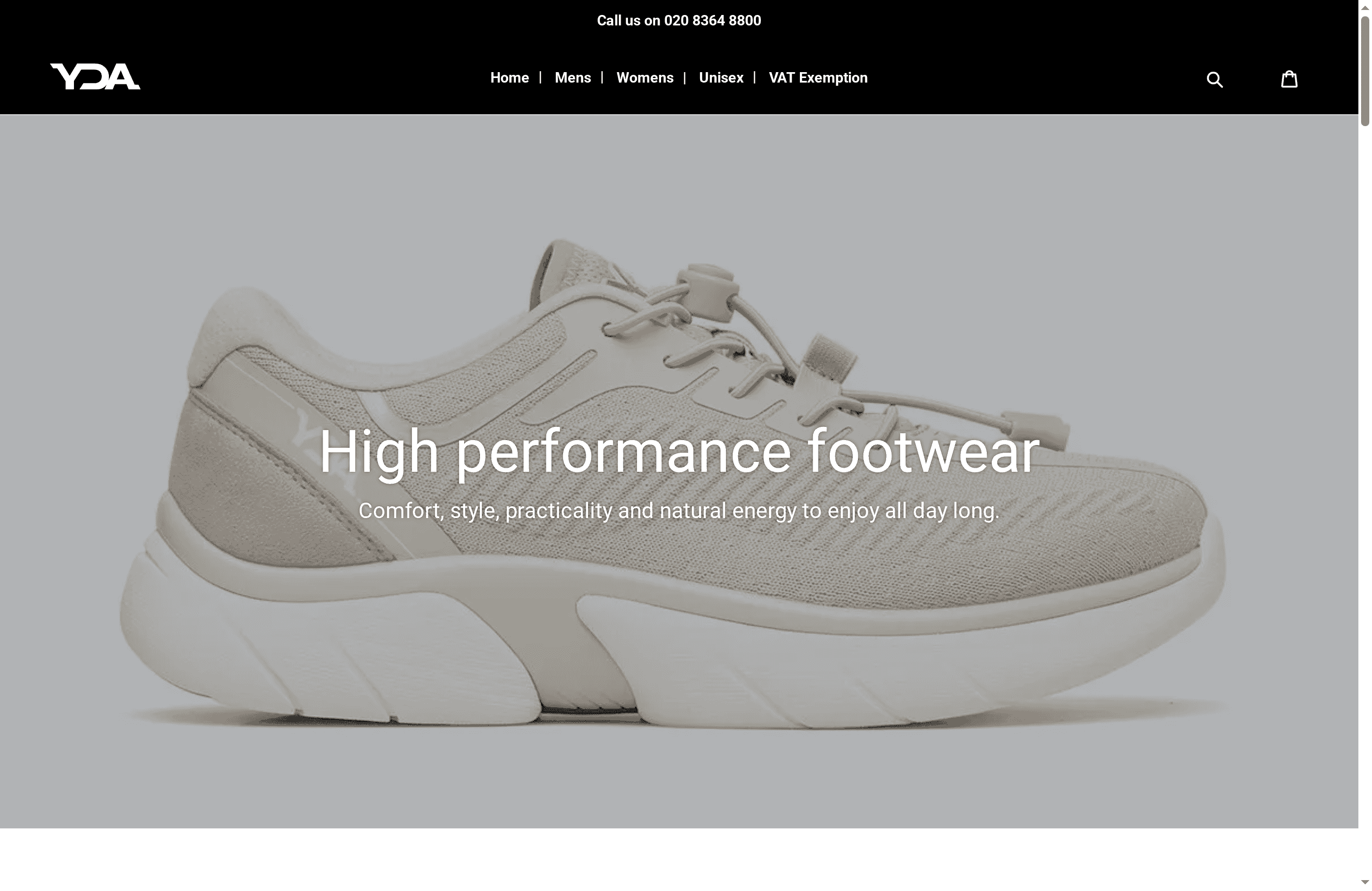
Our sizing guides and YDA Technology page walk through how our high performance footwear is built to support foot health alongside everyday comfort.
| What you get | Where to check it |
|---|---|
| Foot-health focused technology | YDA Technology page |
| Men’s, women’s and US conversion charts | YDA sizing guides |
| Width and fit guidance | Shoe size width chart |
Browse our high performance footwear to see the current range and find your size with confidence.
Useful sizing resources and references
For further reading, see YDA’s men’s size chart, the width chart, and STRYQ’s running fit guide for activity-specific advice.
FAQ
How do I find my correct adidas shoe size?
Measure your foot length heel to toe in centimetres, then match that figure to an official adidas or conversion size chart rather than assuming your usual size in another brand applies. If your measurement falls between two sizes, round up for extra comfort.
Do adidas shoes run small or true to size?
Fit varies by model rather than following one rule across the whole range, with running shoes often needing more toe room than lifestyle trainers. Always check the specific product’s fit notes, since a listing described as “runs small” needs a different approach than one marked “true to size”.
Is adidas sizing the same for men and women?
No, men’s and women’s adidas sizes use different numbering even at an identical foot length, and unisex listings typically follow men’s sizing. YDA’s women’s conversion chart sets out how to convert between the two when comparing listings.
Should I size up for thicker socks or insoles?
Thicker socks and replacement insoles both reduce the internal volume of a shoe, which can make a true-to-size pair feel tight. If you regularly wear thicker socks or custom insoles, consider sizing up half a size or trying the shoe on with that sock thickness before buying.
What should I do if my foot measurement falls between two adidas sizes?
Add a comfort allowance of roughly 0.5 to 1.0 centimetres and round up to the next size rather than down. A slightly roomier fit is far easier to adjust for with socks or insoles than a shoe that is genuinely too short.