
Shoe chart guide: get the right fit every time
TL;DR:
- Using a shoe chart helps convert foot measurements into standardized regional sizes for better fit accuracy.
- Measuring your foot in millimeters and in the evening provides the most objective and reliable sizing baseline across brands.
A shoe chart is a measurement translation tool that converts your foot’s length and width into a standardised size across regional systems such as US, UK, EU, and Mondopoint. Getting this right matters more than most people realise. Between 63% and 72% of people wear shoes that do not correctly fit their feet, leading to blisters, heel slippage, and long-term foot damage. The Brannock device, New Balance’s fit guides, and ISO Mondopoint all exist for one reason: to give you a number you can trust before you buy.
How do the main international shoe size systems differ?
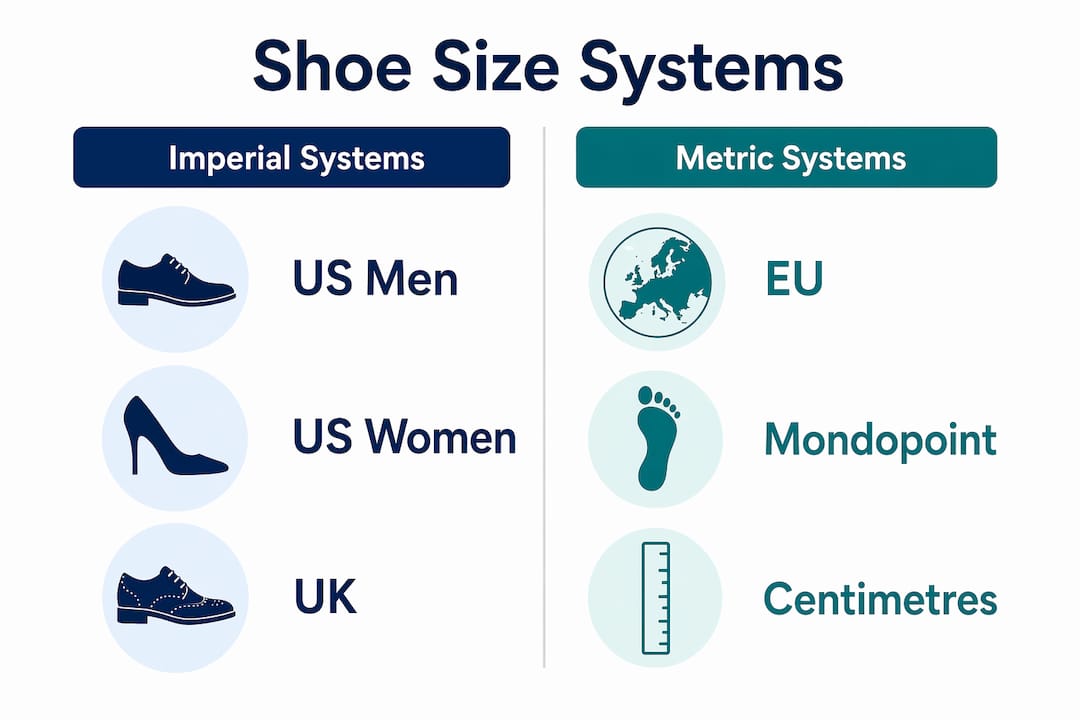
The four dominant sizing systems share no common baseline, which is why a size chart for shoes is not a simple lookup table.
US sizing uses 1/3-inch increments and operates on two separate gendered scales. Men’s and women’s US sizes carry an offset of approximately 1.5 sizes, meaning a men’s US 8 equals a women’s US 9.5. That gap catches shoppers out constantly, particularly when buying unisex styles.
UK sizing starts at a different origin point than US sizing and uses the same 1/3-inch increment structure. The labels differ by roughly one size from their US equivalents, though the exact offset varies by gender. A UK men’s 8 is broadly equivalent to a US men’s 8.5, but this is not universal across brands.
EU sizing, often called the Paris Point system, uses 6.67 mm increments and is unisex. EU sizing is unisex, while US and UK systems are gendered. That distinction matters when you are converting across regions, because the same EU 42 maps to different US sizes depending on whether you are looking at a men’s or women’s scale.
Mondopoint is the ISO international standard. It expresses shoe size as the direct foot length in millimetres, with no gender offset and no regional variation. A Mondopoint 270 means the shoe fits a 270 mm foot. Full stop.
| System | Increment | Gendered? | Example |
|---|---|---|---|
| US | 1/3 inch | Yes | Men’s 9 / Women’s 10.5 |
| UK | 1/3 inch | Yes | Men’s 8.5 / Women’s 6 |
| EU (Paris Point) | 6.67 mm | No | EU 42 |
| Mondopoint | 1 mm | No | 270 mm |
Pro Tip: When shopping across regions, always convert from your foot length in centimetres rather than from a labelled size. A labelled size carries regional and gender assumptions that your foot measurement does not.
Why is foot length in centimetres the best baseline?
Mondopoint is the only truly objective sizing standard because it uses direct foot length in millimetres, bypassing every historical sizing inconsistency built into US, UK, and EU labels. Starting from your foot length in centimetres removes the guesswork entirely.
Footwear specialists confirm that consumers often misunderstand size labels due to different gender and regional standards, making foot measurement the safest starting point. A US women’s 8 in one brand may correspond to a EU 38.5 or a EU 39 depending on the manufacturer’s last. Your foot length does not change between brands. Your labelled size does.
Brand vanity sizing adds another layer of confusion. Some brands cut their lasts generously and label them conservatively, so you appear to wear a smaller size. Others do the opposite. Relying solely on a generic conversion chart is a major source of poor fit because it ignores these brand-level decisions entirely.
Feet also change throughout the day. Measuring in the afternoon or evening gives you the most accurate reading because feet swell with use and gravity. A morning measurement can underestimate your true size by up to half a size.
Key reasons to use foot length as your anchor:
- Removes gender and regional label ambiguity
- Gives you a consistent number to compare across brands
- Accounts for foot swelling when measured at the right time
- Works directly with Mondopoint and most brand-specific fit guides
- Reduces fit errors when buying shoes online
Pro Tip: Write your foot length in millimetres on your phone. Every time you shop online, compare that number directly against the brand’s size chart rather than converting from a labelled size.
How to measure your feet correctly at home
Accurate home measurement is straightforward. You need a sheet of plain paper, a pencil, a ruler or measuring tape, and a flat hard floor.
- Prepare the surface. Place the paper on a hard floor, not carpet. Carpet compresses slightly and shifts your foot position.
- Stand, do not sit. Standing places your full body weight on your foot, spreading it to its true width and length. Sitting underestimates both dimensions.
- Trace your foot outline. Hold the pencil vertically and trace around your entire foot, keeping the pencil flush against your skin. Angling the pencil inward will shorten the measurement.
- Measure the longest point. Draw a straight line from the back of your heel to the tip of your longest toe. Measure this line in millimetres.
- Measure the width. Draw a line across the widest part of your foot, typically across the ball. This number matters for width fittings, particularly if you have wider feet.
- Repeat for the other foot. Most people have one foot larger than the other, and your size should be based on the larger measurement. Sizing to the smaller foot causes compression and discomfort.
A common error is printing a sizing template from a brand’s website and trusting it without checking the print scale. Printable sizing tools must be printed at 100% scale to be accurate. If your printer scales the page to fit, the template becomes useless. A ruler is always more reliable.
For those with wider feet needing a precise fit, width measurement is as important as length. Standard shoe charts often only address length, so checking a brand’s width guide separately is worth the extra step.
Pro Tip: Measure both feet in the evening after you have been on your feet for several hours. This gives you the largest realistic measurement and prevents you from buying shoes that feel fine in the morning but tight by afternoon.
How do shoe charts vary by brand?
Generic footwear size comparison charts give you a starting point, nothing more. Brand-specific size charts and fit notes reveal that shoes from different brands fit differently even at identical labelled sizes. This is the single most overlooked fact in shoe shopping.
Brooks running shoes, for example, are known to run true to size with a slightly wider toe box. Converse canvas shoes run large and most wearers size down by half a size. Hoka shoes are often recommended at true size but with attention to volume, as their stack height can affect how the foot sits in the shoe. These are not minor differences. They affect comfort on long runs, daily wear, and foot health over time.
Strategies for using size charts when shopping online:
- Always locate the brand’s own size chart, not a third-party conversion table
- Cross-reference your foot length in millimetres against the brand’s Mondopoint or centimetre column
- Read the brand’s fit notes, which often specify whether a model runs narrow, wide, long, or short
- Check the shoe fit checklist before confirming any online order
- For foot conditions such as bunions or plantar fasciitis, size up by half a size to allow for swelling and orthotics
Shoes that are too tight can cause bunions, nerve compression, and other chronic foot issues. This is not a minor inconvenience. It is a long-term health risk that a correct size chart reading prevents. Accurate foot measurement and proper chart usage reduces up to 70% of shoe fit issues, which is a significant improvement for something that takes five minutes to do properly.
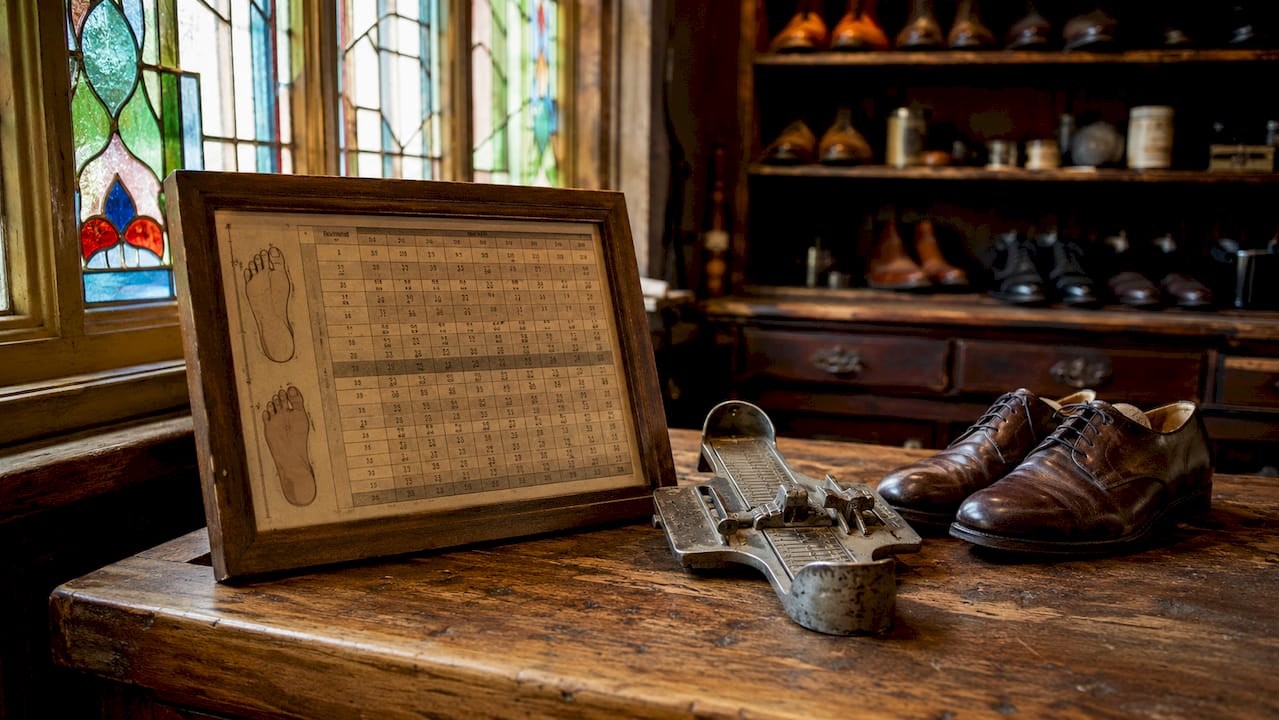
The Brannock device, found in most specialist footwear retailers, measures foot length, width, and arch length, forming the basis of many US shoe size systems. If you have not had your feet measured with one in the past two years, it is worth doing. Foot size changes with age, weight, and pregnancy, and your labelled size from a decade ago may no longer be accurate.
Key takeaways
Accurate shoe sizing starts with your foot length in millimetres, not a labelled size from a previous purchase.
| Point | Details |
|---|---|
| Measure in the evening | Feet swell throughout the day, so evening measurement gives the most accurate sizing baseline. |
| Use foot length, not labels | Your foot length in millimetres is consistent across brands; labelled sizes are not. |
| Size to the larger foot | Most people have one foot larger; always fit to the bigger measurement to avoid discomfort. |
| Check brand-specific charts | Generic conversion charts miss brand-level fit differences; always use the brand’s own guide. |
| Tight shoes cause real harm | Shoes that compress the foot can cause bunions and nerve damage over time. |
Why i think most people are using shoe charts wrong
After years of advising people on footwear fit, the pattern I see most often is this: someone knows their size in one brand, assumes it transfers everywhere, and then wonders why their feet hurt by midday. The shoe chart is not the problem. The assumption that a labelled size is a fixed fact is the problem.
The most useful shift I have seen people make is treating their foot length in millimetres as their true size. Not a US 9. Not a EU 42. A number in millimetres that belongs to their foot, not to a brand’s sizing decision. Once you have that number, every brand’s chart becomes readable in a consistent way.
There is also a timing issue that almost nobody talks about. Most people measure their feet in the morning, if they measure at all. Morning feet are smaller. Shoes bought to a morning measurement are often too tight by 3pm. The proper shoe fitting principle of measuring in the afternoon is not fussy advice. It is the difference between shoes that work all day and shoes that work for two hours.
The other thing I would push back on is the idea that sizing up is always a safe fallback. A shoe that is too long creates its own problems, including toe jamming on downhill slopes and heel lift that causes blisters. The goal is precision, not just avoiding tightness. A good size chart, used correctly with an accurate measurement, gets you there without guesswork.
— Panagiotis
How Ydauk approaches shoe fit and sizing
Ydauk builds its footwear around the principle that fit is not a secondary consideration. Every shoe in the Ydauk range is designed with foot health at its centre, using YDA Technology to support natural foot movement and distribute pressure correctly across the sole. That only works when the shoe fits accurately in the first place. Ydauk provides detailed sizing guidance alongside each product to help you match your foot length measurement to the right size, without relying on generic conversion tables. If you want to understand how the technology behind the fit works, the YDA shoe technology page explains the engineering decisions that make each shoe perform as intended.
FAQ
What is a shoe chart used for?
A shoe chart converts your foot’s length and width measurements into a standardised size across regional systems such as US, UK, EU, and Mondopoint. It removes the guesswork from shoe shopping, particularly when buying across brands or regions.
Which shoe sizing system is the most accurate?
Mondopoint is the most objective system because it uses direct foot length in millimetres with no gender offset or regional variation. It is the ISO international standard and the most reliable baseline for cross-brand comparisons.
How often should i measure my feet?
Measure your feet at least once a year, or after significant life changes such as pregnancy, weight change, or injury. Foot size changes over time, and a measurement from several years ago may no longer be accurate.
Why do my shoes feel tight in the afternoon but fine in the morning?
Feet swell throughout the day due to activity and gravity. Measuring in the morning underestimates your true size. Afternoon or evening measurement gives a more accurate reading for all-day comfort.
Should i always follow the brand’s size chart rather than a general conversion table?
Yes. Brand-specific charts account for the manufacturer’s last shape, width, and fit notes. Generic conversion tables only address labelled size equivalents and miss the brand-level differences that affect actual fit.