
On shoes sizing: your complete fit guide
TL;DR:
- Getting shoe sizing right is crucial to prevent foot pain, blisters, and joint strain, yet most people unknowingly wear ill-fitting shoes. Accurate measurements of length, width, and arch length—preferably with a device like a Brannock—are essential, especially when shopping for brands like On that use proprietary fits. Sizing should be based on the larger foot and taken in the late afternoon to account for foot swelling; for athletic use, sizing up by half a size is recommended to accommodate foot splay and swelling during activity.
Getting shoe sizing right is the single most effective way to prevent foot pain, blisters, and long-term joint strain. Between 63 and 72% of people wear shoes that do not correctly fit their feet in length or width. That figure means the majority of shoe wearers are unknowingly causing daily discomfort. On shoes sizing, as a concept, covers the full process of measuring your feet accurately and matching those measurements to the correct size across different systems and models. Brands like On Running use proprietary fits that differ from standard sizing, making precise measurement and brand-specific guidance non-negotiable.
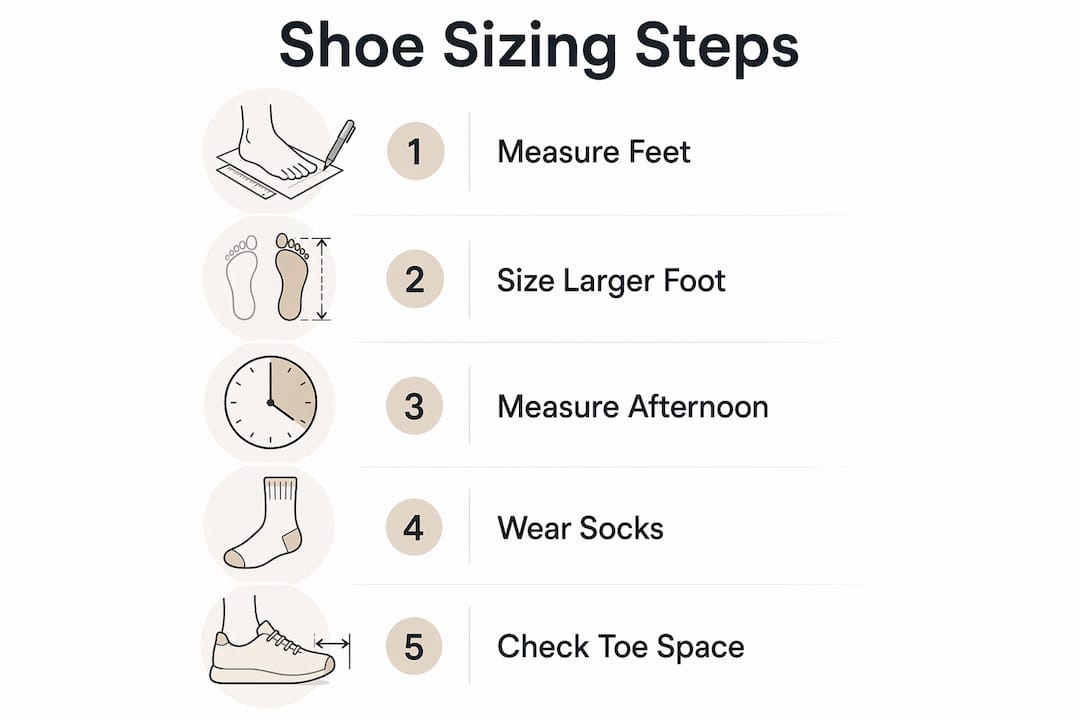
How to measure your shoe size accurately at home
Accurate measurement is the foundation of every good shoe purchase. The most reliable tool for this is a Brannock device, which measures length, width, and arch length simultaneously. Most specialist shoe shops carry one. If you are measuring at home, a piece of paper, a pencil, and a ruler will do the job.
Follow these steps for a reliable result:
- Place a sheet of paper on a hard floor and stand on it with your full weight distributed evenly.
- Trace around your foot with a pencil held vertically, keeping the pen flush against your skin.
- Measure the longest distance from heel to the tip of your longest toe. This is your foot length.
- Measure the widest point across the ball of your foot. This is your foot width.
- Measure from your heel to the ball of your foot (the widest point). This is your arch length, which can reveal sizing needs that heel-to-toe length alone misses.
- Repeat the process for both feet.
Most people have one foot 4 to 8 mm longer than the other. Always size to the larger foot. A shoe that fits the smaller foot will compress the larger one and cause blisters within hours.
Timing matters too. Feet swell by 5 to 8% throughout the day, so measuring in the late afternoon or evening gives you the most accurate reading. A measurement taken first thing in the morning will likely be smaller than your foot is when you are actually wearing shoes during the day.
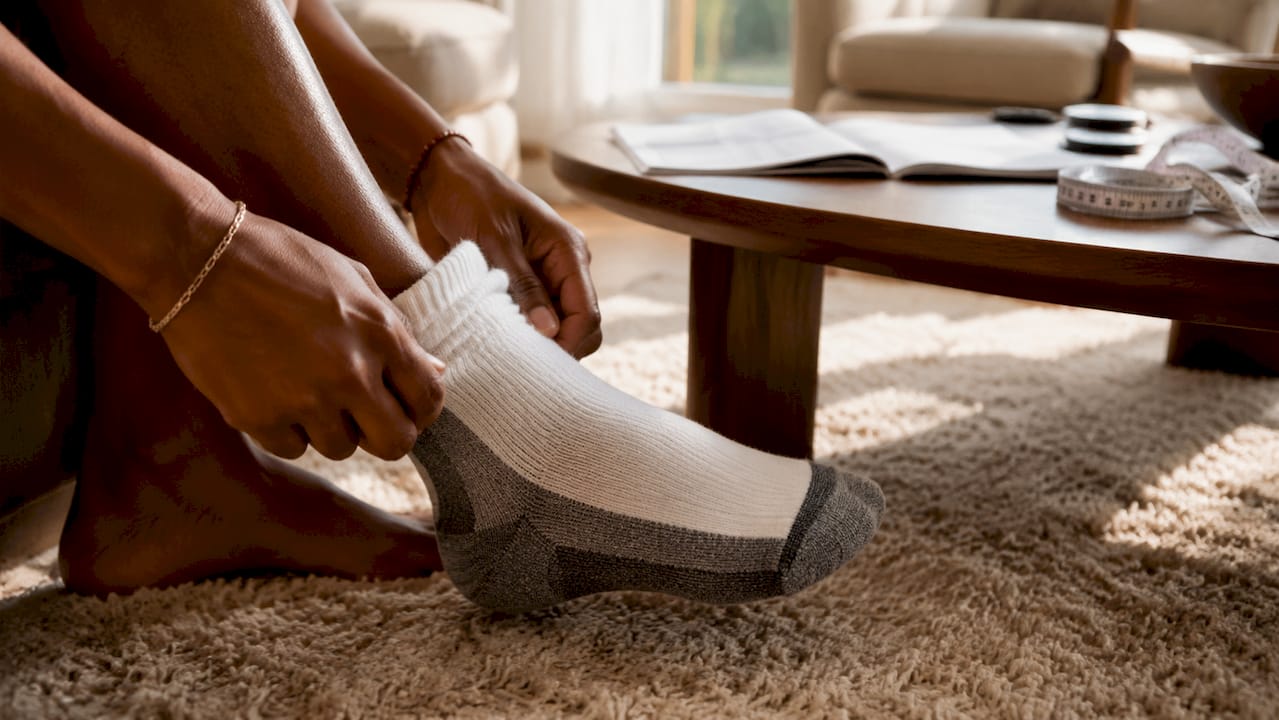
Pro Tip: Wear the socks you plan to use with your new shoes when you measure. A thick running sock adds measurable volume and will affect which size fits correctly.
On shoes sizing: how the brand fits compared to standard sizes
On shoes are designed for a snug, locked-in fit, particularly in athletic models. This is an intentional design choice for performance, not a manufacturing inconsistency. As Jeffery Barraza notes, the fitted feel of On shoes reflects the brand’s focus on secure foot placement during running, not a sign that you have chosen the wrong size.
That said, the snug construction does have practical implications for sizing decisions:
- Cloud and Cloudflow models fit close to true size for everyday wear, but runners covering distances above 10 km often benefit from going half a size up to accommodate foot splay.
- Cloudmonster has a slightly wider toe box than other On models, making it a better choice for those with broader feet without needing to size up.
- Cloudstratus and Cloudsurfer run particularly snug through the midfoot. If you have a high arch or a wider foot, sizing up by half a size is the standard recommendation.
- Everyday and casual On models generally fit true to size for most foot shapes.
Sizing up by half a size is recommended for long runs or wider feet across the On range. The reason is foot splay: walking and running increase blood flow to the feet, causing them to expand during activity. A shoe that fits perfectly at rest may feel tight after 30 minutes of running.
Proper shoe fit should leave about 1 thumb-width of space between your longest toe and the end of the shoe. Dr Tom Biernacki recommends approximately 1 cm of toe box clearance as the standard for comfort. Check the heel grip too. Your heel should sit firmly without lifting when you walk. Heel slip is a sign the shoe is too long or the lacing is too loose, not that the shoe fits well.
| Feature | True size | Half size up |
|---|---|---|
| Everyday casual wear | Recommended for most foot shapes | Consider if foot is wide |
| Running under 10 km | Fits well for narrow to medium feet | Recommended for wide feet |
| Running over 10 km | May feel tight due to foot splay | Recommended for most foot shapes |
| High arch or wide midfoot | May cause pressure | Recommended |
How do international shoe sizing systems compare?
Shoe sizing systems across the world do not share a common baseline, which makes direct number-to-number conversions unreliable. Different systems start measurement baselines differently, meaning a US 9 is not simply a UK 8 or an EU 42 in every brand. As Alex Morgan stresses, assuming linear conversions between US, UK, and EU sizing leads to consistent errors.
Here is how the main systems work:
| System | Basis | Notes |
|---|---|---|
| US | Barleycorn units from a fixed baseline | Men’s and women’s scales differ by 1.5 sizes |
| UK | Barleycorn units, different baseline to US | Typically 0.5 to 1 size smaller than US |
| EU | Paris points (2/3 cm increments) | No gender split in the numbering scale |
| Mondopoint | Foot length in mm or cm | ISO 9407 standard; most accurate for cross-brand use |
The Mondopoint system, standardised by ISO 9407, is the most logical option for online shopping and cross-brand comparison because it measures your actual foot length directly. A Mondopoint size of 270 means your foot is 270 mm long. There is no conversion formula to memorise and no gender-based offset to account for.
For On shoes specifically, the brand publishes its own size chart in EU sizing with Mondopoint equivalents. Always use the brand’s verified chart rather than a generic conversion table, because On’s lasts (the foot-shaped moulds used to build the shoe) differ from those used by other manufacturers.
Pro Tip: When buying On shoes online, measure your foot in millimetres and cross-reference directly with the brand’s Mondopoint chart. This removes the ambiguity of US-to-EU conversions entirely and gives you a precise starting point.
What are the signs your On shoes do not fit correctly?
Poor fit produces clear physical signals. Recognising them early prevents the kind of repetitive strain that builds up over weeks of wearing the wrong size. You can find a structured overview of these signals in this practical guide to shoe fit issues.
Signs your shoes are too small:
- Blisters on the tips or sides of your toes
- Toenails bruising or turning black after runs
- A feeling of pressure across the ball of the foot
- Numbness in the toes during activity
Signs your shoes are too large:
- Your heel lifts with each step
- Your foot slides forward, causing friction at the toe box
- You feel unstable on uneven surfaces
- Blisters form on the back of the heel from repeated rubbing
Foot asymmetry and daily swelling are the two most common reasons people end up in the wrong size. Because most people have one foot larger than the other, sizing to the smaller foot is a frequent mistake that causes toe box compression on one side. For those with swollen feet or conditions that affect foot volume, measuring in the evening and allowing extra toe box space is particularly important.
Pro Tip: After putting on your On shoes, press down on the toe box with your thumb. You should feel roughly 1 cm of space between your longest toe and the end of the shoe. If your thumb meets resistance immediately, size up.
Choosing the right On shoe size for your activity
The right size for a 5 km park run differs from the right size for a full day of walking in the city. Activity type, foot shape, and sock thickness all affect which size performs best. For a broader look at how to approach this decision, Ydauk’s guide on buying shoes for foot health covers the full picture.
Key factors to consider when choosing your size:
- Running: Go half a size up from your measured size to account for foot splay and swelling over distance. This applies to all On running models.
- Everyday wear: True to size works for most people. If you have a wide foot, check whether the specific model offers a wide fit variant before sizing up.
- Sock thickness: A thin liner sock and a thick cushioned running sock can differ by up to half a size in effective volume. Always try shoes with the socks you intend to wear.
- Foot shape: A narrow heel with a wide forefoot (common in many people) may require lacing adjustments rather than a size change. On shoes include lacing guides for this reason.
- Time of day: Try shoes in the afternoon when your feet are at their largest. A shoe that fits in the morning may feel tight by evening.
Using customer fit reviews alongside the brand’s size chart gives you a real-world sense of how a specific model runs. On’s website includes fit feedback from verified purchasers, and this data is more useful than generic sizing advice for model-specific decisions.
Key takeaways
Correct shoe sizing starts with measuring both feet in the evening, sizing to the larger foot, and using brand-specific charts rather than generic conversion tables.
| Point | Details |
|---|---|
| Measure both feet | Most people have one foot 4 to 8 mm longer; always size to the larger foot. |
| Measure in the evening | Feet swell by 5 to 8% during the day; afternoon measurements reflect your true size. |
| On shoes run snug | On’s locked-in fit is intentional; go half a size up for running or wide feet. |
| Use Mondopoint for conversions | ISO 9407 Mondopoint sizing uses actual foot length in mm, removing conversion errors. |
| Check toe box clearance | Leave 1 cm between your longest toe and the shoe end to accommodate splay and swelling. |
Why I think most people get On sizing wrong from the start
People consistently misread On shoes as running small. After spending years testing footwear and working through sizing decisions with a wide range of foot types, I am convinced the real problem is not the shoes. It is that most people measure their feet once, years ago, and treat that number as permanent.
Feet change. They widen with age, swell with heat, and shift in arch height after pregnancy or injury. The person who was a UK 9 at 25 may genuinely need a UK 9.5 or a wider fit at 40. On shoes, with their performance-oriented snug construction, expose this mismatch faster than a looser casual shoe would.
The second mistake I see repeatedly is ignoring the arch length measurement. Heel-to-toe length tells you the minimum shoe length you need. Arch length tells you where the flex point of the shoe should sit relative to your foot. If those two measurements point to different sizes, the arch length should take priority for athletic shoes. A shoe that flexes in the wrong place causes fatigue and strain regardless of how well the length fits.
My advice: measure your feet properly this week, not from memory. Use the Ydauk complete sizing guide as your reference point. Then apply the thumb test every time you try a new model. The number on the box is a starting point, not a verdict.
— Panagiotis
How Ydauk’s YDA technology supports a better fit
Getting the right size is only half the equation. The shoe itself needs to support your foot’s natural mechanics once it is on. Ydauk builds its footwear around YDA technology, which is designed to distribute pressure evenly across the foot, reduce fatigue, and support foot health over long periods of wear. For anyone who has struggled with fit issues despite choosing the correct size, the construction of the shoe matters as much as the number on the label. Explore Ydauk’s range to find footwear that combines accurate sizing with technology built around how your foot actually moves.
FAQ
How do I know if my On shoes are the right size?
Press your thumb into the toe box after lacing up. You should feel approximately 1 cm of space between your longest toe and the end of the shoe. Your heel should sit firmly without lifting when you walk.
Do On shoes run small compared to other brands?
On shoes are designed for a snug, locked-in fit, which can feel smaller than other brands at the same size. For running or wider feet, sizing up by half a size is the standard recommendation.
What is the most accurate way to measure shoe size?
A Brannock device measures foot length, width, and arch length simultaneously and gives the most accurate result. At home, trace your foot on paper in the evening and measure heel to longest toe in millimetres.
Why does shoe size vary between US, UK, and EU systems?
Each system uses a different measurement baseline and increment scale, making direct number conversions unreliable. Using a brand’s verified size chart or the Mondopoint system (foot length in mm) removes this ambiguity.
Should I size up for running in On shoes?
Yes. Foot splay during running causes feet to expand, and On’s snug construction amplifies the effect. Going half a size up from your measured size is recommended for runs over 10 km or for wider foot shapes.