
How to extend shoe lifespan: your practical guide
TL;DR:
- Proper shoe care, including rotation, cleaning, and storage, can extend the lifespan of footwear significantly. Understanding shoe materials and construction helps in implementing effective maintenance routines that preserve support and prevent early deterioration. Investing in high-quality shoes and maintaining them properly ultimately saves money and keeps your feet comfortable for years.
Shoes wear out faster than they should. Not because they are poorly made, but because most of us never learn how to extend shoe lifespan properly. A decent pair of trainers might cost you £100 or more, and without the right care, they can deteriorate within months. With consistent maintenance, you can prolong shoe life significantly, cutting replacement costs and keeping your feet comfortable for years. This guide covers everything from understanding your shoes’ construction to building a maintenance routine that actually works.
Table of Contents
- Key takeaways
- How to extend shoe lifespan starts with knowing your shoes
- Preparation: tools and storage you actually need
- Step-by-step shoe care routines that work
- Troubleshooting and preventing premature damage
- Monitoring wear and knowing when to replace
- My perspective on shoe care most people get wrong
- Shoes built to last: how Ydauk supports your care routine
- FAQ
Key takeaways
| Point | Details |
|---|---|
| Rotation is your best tool | Rotating 2 to 3 pairs can extend shoe lifespan by 25 to 40% by allowing midsole foam to recover. |
| Storage conditions matter | Keep shoes in a cool, dry, ventilated space away from sunlight to slow material degradation. |
| Clean by material type | Leather, synthetic, and fabric all need different cleaning methods to avoid premature damage. |
| Midsoles fail invisibly | Foam can lose cushioning long before outsoles show visible wear, so check support regularly. |
| Track your wear | A simple log of mileage and maintenance helps you replace shoes at the right time, not too early or too late. |
How to extend shoe lifespan starts with knowing your shoes
You cannot care for something you do not understand. Shoes are more complex than they look, and the materials used in their construction directly determine how long they will last and what kind of care they need.
Materials and their durability profiles
- Leather is the most durable upper material. Full-grain leather resists water, moulds to your foot over time, and responds well to conditioning. Well-constructed leather shoes can last 3 to 5 years with proper care. Lower-quality shoes may deteriorate within 6 to 12 months without maintenance.
- Synthetic uppers (mesh, nylon, polyester) are lighter and cheaper to produce, but they are more vulnerable to UV degradation and abrasion over time.
- Fabric and canvas require the most frequent cleaning and are the least water-resistant, though they are easy to refresh with gentle washing.
Construction types that affect longevity
How a shoe is assembled matters as much as the material it is made from. Goodyear welted shoes, where the upper is stitched to a welt before being attached to the outsole, can be resoled multiple times. Cemented (glued) construction is common in modern trainers and casual shoes, and while it is lightweight, it is generally not resoleable.
The midsole is where most shoes fail first, often invisibly. Midsole foam breaks down through two separate processes: mechanical compression in EVA foam and chemical hydrolysis in polyurethane foam. You can learn more about identifying quality footwear to make smarter purchasing decisions from the start.
Shoes with wide toe boxes, stiff heel cups, and supportive midsoles hold their structure longer. Shoes that flex easily in the middle often lack structural support and break down faster, regardless of how carefully you treat them.
Preparation: tools and storage you actually need
Before you can follow any shoe maintenance guide, you need the right supplies. The good news is that nothing on this list is expensive or hard to find.
Your essential care kit
- Cedar shoe trees (they absorb moisture and hold shape)
- A soft-bristled brush for dry brushing dirt from outsoles and uppers
- A mild detergent or specialist shoe cleaner
- A waterproof spray appropriate to your shoe material
- Leather conditioner or cream (for leather shoes specifically)
- A microfibre cloth for buffing and drying
Storage: the overlooked part of shoe care
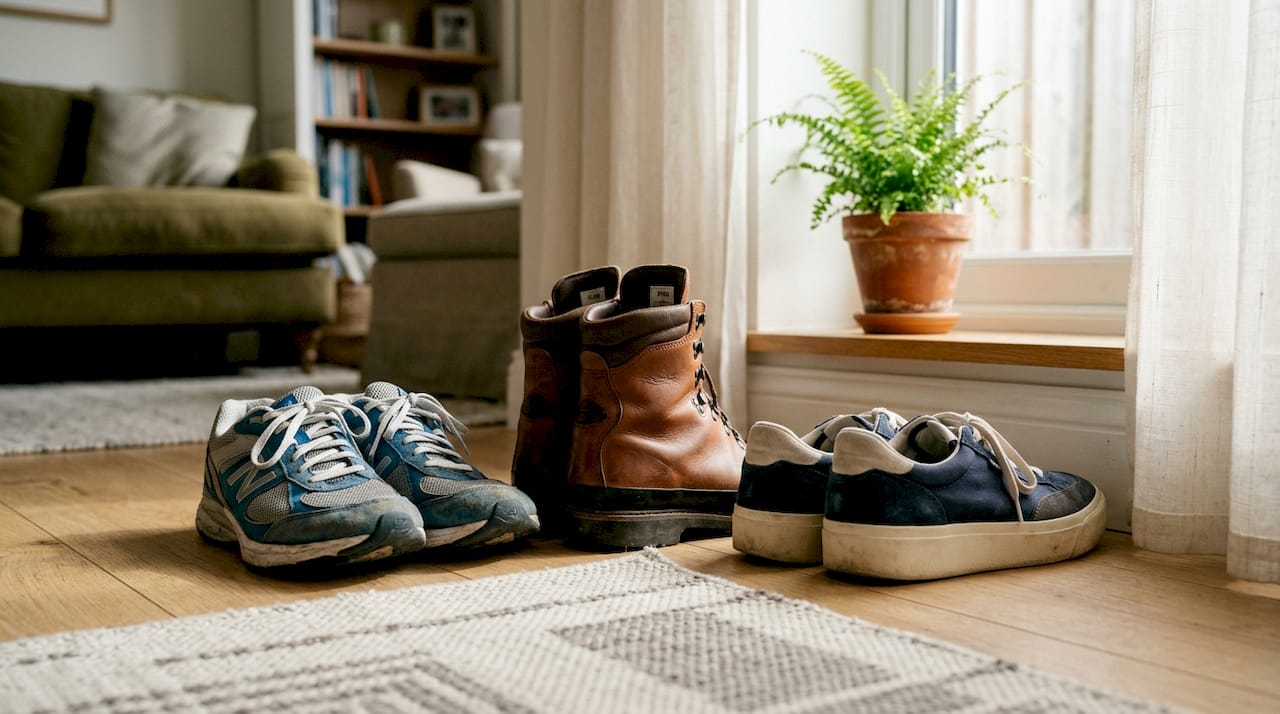
Most people store shoes in piles on the floor or cramped in a rack near the door. Both of these habits cause damage. Storing shoes in cool, dry, well-ventilated areas away from sunlight slows material degradation considerably. Excess humidity or heat accelerates rubber cracking and polyurethane foam decay, often in ways you cannot see until the damage is done.
| Storage method | Benefit | Best for |
|---|---|---|
| Cloth shoe bags | Prevents dust and scuffing | Leather and dress shoes |
| Original shoe box | Maintains shape, blocks light | Seasonal or rarely worn shoes |
| Open shoe rack (ventilated) | Allows airflow | Daily wear trainers |
| Cedar shoe trees inside | Absorbs moisture, holds form | All leather footwear |
| Newspaper stuffing | Budget option for shape retention | Casual and fabric shoes |
Pro Tip: Never store shoes in sealed plastic bags. Trapped moisture accelerates the chemical breakdown of foam midsoles and causes mildew on fabric uppers.
Step-by-step shoe care routines that work
This is where your tips for longer lasting shoes actually come into practice. Consistency beats intensity here. A five-minute routine done weekly will do far more than an occasional deep clean.
Cleaning by material type
Fabric and synthetic trainers:
- Remove laces and insoles before you begin. Hand wash insoles with bicarbonate of soda and allow them to dry fully before reinserting.
- Dry brush the outsoles to remove loose dirt and debris.
- If machine washing, place the shoes in a laundry bag, select a cold delicate cycle, and use a mild detergent. Avoid heat drying at all costs as it warps soles and breaks down adhesives.
- Stuff with dry newspaper after washing and leave to air dry at room temperature, away from radiators or direct sunlight.
Leather shoes:
- Wipe away surface dirt with a slightly damp cloth.
- Apply a small amount of leather conditioner and work it into the upper in circular motions.
- Regularly polish and condition leather to prevent drying and cracking. Finish with a waterproofing spray to reduce water damage and salt staining.
- Buff with a clean cloth to restore the shine.
Rotation and midsole recovery
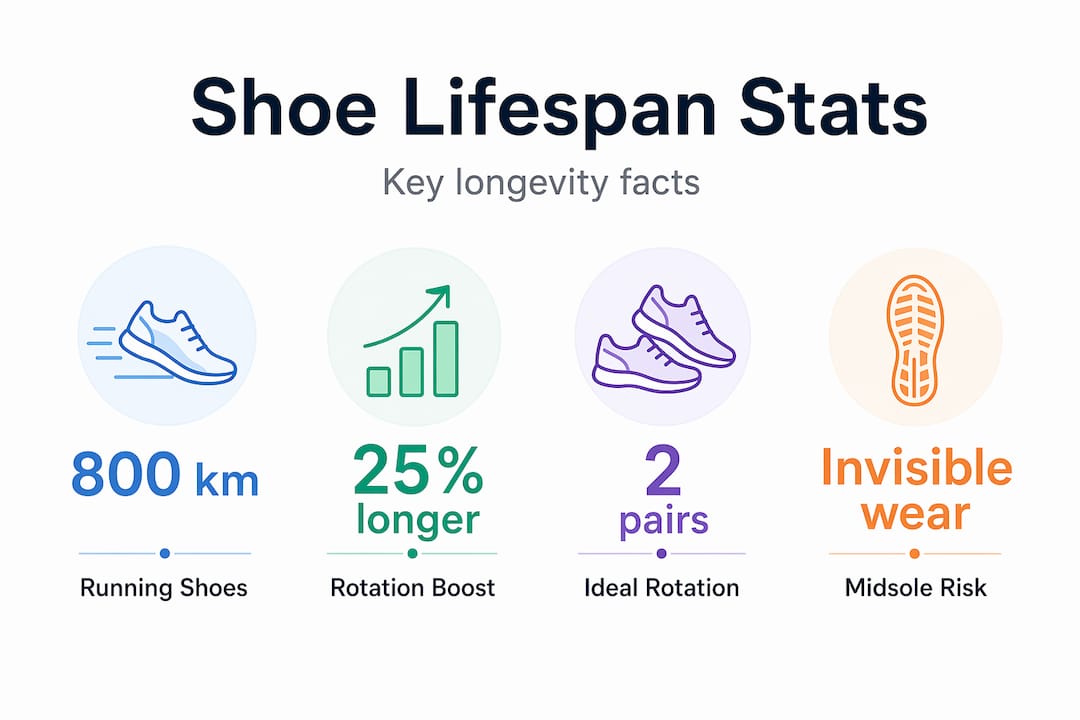
Rotating between two or three pairs of shoes is one of the most effective things you can do to extend running shoes lifespan and everyday footwear alike. Shoe rotation can extend lifespan by 25 to 40% and reduce injury risk by 39% compared to wearing a single pair daily.
The reason comes down to foam physics. Midsole foam needs 24 to 48 hours to decompress after use. Wear the same pair every day and the foam never fully recovers, losing cushioning ability permanently far sooner than it should. Read more about why rotation matters for both foot health and performance.
It also pays to rotate different shoe models rather than identical pairs. Varying the support and cushioning profile your feet experience reduces the chance of repetitive stress patterns building up.
- Replace insoles every three to six months, even if the shoe itself still looks good.
- Replace laces when they begin to fray, as damaged laces create uneven tension across the upper.
- Always untie your shoes before removing them. Feet swell throughout the day, and forcing shoes on and off without loosening the laces stresses the heel counter and upper stitching.
Pro Tip: When introducing a new pair into your rotation, wear them for short periods initially. Gradual use lets the materials adapt to your foot shape without stressing weak points early.
Troubleshooting and preventing premature damage
Even with good habits, shoes run into problems. Knowing what to look for early saves you money and keeps your shoes functional for longer.
Early warning signs to watch for
- Outsole wear patterns: Worn down at the heel edge or ball of the foot is normal. Worn through to the midsole means you have waited too long.
- Midsole compression: Press your thumb firmly into the midsole. If it feels rock solid with no give, the foam has lost its cushioning capacity, even if the shoe looks fine on the outside.
- Upper cracking: Leather that cracks has not been conditioned enough. Synthetic mesh that frays or tears near the toe box is typically a fit or overuse issue.
- Creasing: Some creasing in leather is normal, but deep creasing across the toe box accelerates if you wear shoes that are too long for your foot.
Preventive measures worth taking
Toe taps and heel protectors are small metal or rubber attachments fitted by a cobbler that add years to shoes worn on hard surfaces. They cost very little and protect the areas that wear fastest.
Avoid harsh cleaning chemicals. Bleach, acetone, and alcohol-based sprays degrade both rubber outsoles and synthetic uppers quickly. The same logic applies to household glues for repairs, which often damage shoe materials irreparably. A professional cobbler will nearly always produce a better result.
Environmental damage is far more common than most people realise. Storing shoes near a boiler, in a hot car boot, or by a sunny window causes rubber to harden, foam to collapse, and adhesives to fail. You may not notice until the sole begins to separate.
Pro Tip: Lace your shoes using the correct technique for your foot type. Skipping eyelets near a narrow heel or adding extra loops at the ankle reduces internal movement and prevents unnecessary wear on the lining.
Monitoring wear and knowing when to replace
The final part of any shoe maintenance guide is knowing when your efforts are no longer enough. Shoes have a finite life, and wearing them past that point is bad for your feet, not just your budget.
Wear and support assessment guidelines
| Shoe type | Typical lifespan | Key warning sign |
|---|---|---|
| Running trainers | 500 to 800 km | Loss of midsole rebound |
| Walking shoes | 800 to 1,200 km | Heel compression visible |
| Leather dress shoes | 3 to 5 years | Upper cracking, resoling needed |
| Casual canvas / fabric | 1 to 2 years | Sole separation, upper fraying |
| Work boots | 2 to 4 years | Outsole worn through, waterproofing lost |
Even when outsoles look intact, midsole foam may have lost rebound capacity entirely. This is why mileage tracking matters far more than visual inspection alone. Keep a simple note on your phone or a small notebook logging when you bought each pair, how often you wear them, and when you last cleaned or conditioned them.
Replacing shoes on a schedule rather than waiting for visible failure means you are never walking on compromised support. That matters for your joints and your posture, especially if you are on your feet for long stretches during the day.
My perspective on shoe care most people get wrong
I have spent a long time paying attention to how footwear actually wears, and the mistake I see most consistently is that people focus entirely on the outside of a shoe and ignore what is happening inside.
The midsole degradation problem is real and almost entirely invisible. I have seen runners complaining of knee pain who were convinced their shoes were fine because the outsole still had grip. The foam had been compressed flat for months. Microscopic moisture accumulation causes chemical hydrolysis in polyurethane midsoles during storage. Removing insoles and airing shoes out after each wear is one of the simplest, most underrated habits you can build.
The other thing most shoe care articles skip over is the quality of the shoe itself. Good care extends the life of a good shoe dramatically. It extends the life of a poor shoe only marginally. If you are spending serious money on footwear, pair it with serious care. If you are buying cheap, no amount of cedar shoe trees will save you from replacement in six months.
My honest recommendation: buy two or three pairs of genuinely good shoes rather than five cheap ones. Rotate them, clean them consistently, and track the mileage. You will spend less over three years than most people spend replacing poor-quality shoes annually.
— Panagiotis
Shoes built to last: how Ydauk supports your care routine

Everything in this guide works best when the shoe itself is built for durability. Ydauk designs footwear with foot health and long-term performance at the centre of every decision. The YDA shoe technology focuses on energy return, structural integrity, and materials that hold up under real daily use, making your care routines more effective rather than compensating for a poorly made product. If you want shoes that respond well to conditioning, rotation, and proper storage, starting with well-engineered footwear is the foundation. Explore Ydauk’s range to find a pair designed to reward the effort you put into caring for them.
FAQ
How often should you clean your shoes?
Wipe down shoes after each wear and do a thorough clean every two to four weeks, depending on use. Leather shoes benefit from conditioning monthly.
Can rotating shoes really make them last longer?
Yes. Rotating two to three pairs allows midsole foam to decompress over 24 to 48 hours, extending overall lifespan by 25 to 40%.
What is the best way to dry wet shoes?
Remove insoles and laces, stuff with dry newspaper, and leave to air dry at room temperature. Never use a tumble dryer, radiator, or direct sunlight as heat warps soles and breaks down adhesives.
When should you replace running shoes?
Most running trainers should be replaced between 500 and 800 km of use. Even if the outsole looks intact, the midsole foam may have lost its cushioning capacity well before that point.
Does shoe storage really affect lifespan?
Yes. Heat, humidity, and UV light all degrade shoe materials. Storing shoes in cool, dry areas away from direct sunlight significantly slows rubber cracking and foam decay.