
How to maintain shoes: a guide to lasting footwear
TL;DR:
- Proper shoe maintenance significantly prolongs their lifespan by adopting consistent cleaning, conditioning, and drying habits. Understanding material-specific care needs and using appropriate tools prevent damage and preserve appearance. Regular routines and mindful practices, rather than expensive products, are key to keeping shoes in optimal condition over time.
Your favourite pair of shoes should not give up before you do. Yet most people replace their footwear far sooner than necessary, simply because they never learned how to maintain shoes properly. Whether you wear performance trainers, leather dress shoes, or everyday comfort footwear, the difference between a pair that lasts two years and one that lasts five comes down to a handful of consistent habits. This guide covers everything from material-specific cleaning to drying routines, storage, and the preventative steps that protect your shoes’ comfort and performance over the long term.
Table of Contents
- Understanding your shoe materials and care needs
- Essential tools and products for shoe maintenance
- How to clean shoes based on material
- The best way to dry and store your shoes
- Preventative habits and ongoing maintenance for shoe longevity
- Why shoe maintenance is more about habits than hero products
- Discover YDA’s technology for durable, health-focused shoes
- Frequently asked questions
Key Takeaways
| Point | Details |
|---|---|
| Material-specific care | Choose cleaning and maintenance methods based on your shoe’s materials to avoid damage. |
| Proper drying techniques | Always air dry shoes at room temperature away from direct heat to maintain shape and durability. |
| Use appropriate tools | Employ dedicated brushes, conditioners, and sprays suited to your shoe type for best results. |
| Routine habits matter | Regularly rotate shoes, remove dirt promptly, and condition leather to extend wear life. |
| Avoid quick fixes | Consistent care beats relying on intensive products or harsh cleaning methods for shoe preservation. |
Understanding your shoe materials and care needs
To care for shoes well, you first need to understand what they are made of. The material dictates everything: how you clean them, how you dry them, and which products you should never let near them. Using the wrong method on the wrong material is one of the fastest ways to ruin a pair of shoes you spent good money on.
Not all sneakers and running shoes are made the same, and maintenance depends heavily on material type. Understanding the types of shoe materials used in your footwear is the single most important piece of knowledge you can have before starting any care routine.
Here is a quick breakdown of the most common shoe materials and their core maintenance implications:
- Synthetic and fabric uppers (mesh, knit, canvas): Generally the most forgiving. These tolerate machine washing with the right precautions and dry relatively quickly.
- Leather (full-grain, corrected-grain): Durable but demanding. Leather needs conditioning to stay supple and is vulnerable to water saturation and harsh detergents.
- Suede and nubuck: Soft and attractive, but notoriously difficult to clean. Water can stain them permanently, so these materials require dry-cleaning tools and dedicated sprays.
- Satin and fabric dress shoes: Highly delicate. Spot cleaning only, with minimal moisture.
Matching your shoe care tips to the right material is not optional. It is the foundation of every other step in this guide.
Essential tools and products for shoe maintenance
With the right tools at hand, you are ready to keep your shoes clean and well-maintained using methods that suit each material. Dedicated brushes, mild detergents, leather conditioners, and protective sprays are all recommended for effective shoe care across different material types.
Here is what a well-stocked shoe care kit should include:
| Tool or product | Best used for | Notes |
|---|---|---|
| Horsehair brush | Leather shoes | Removes surface dirt without scratching |
| Suede brush | Suede and nubuck | Lifts fibres and removes light marks |
| Soft cloth or sponge | Synthetics and fabric | Apply cleaning solution gently |
| Mild detergent | Fabric and mesh shoes | Avoid anything with bleach or optical brighteners |
| Leather cleaner | Full-grain and smooth leather | Use before conditioning |
| Leather conditioner | All leather types | Apply every 4 to 6 wears |
| Suede eraser | Suede and nubuck | Lifts dry stains without water |
| Waterproofing spray | All materials | Apply after cleaning and drying |
| Cedar shoe trees | All shoes, especially leather | Absorb moisture and hold shape |
You do not need to buy everything at once. Start with the tools that match what you already own, and build from there. Investing in expert footwear care tips alongside the right kit will take you much further than any single product on its own.
How to clean shoes based on material
Knowing how to clean your shoes properly by material is crucial to avoiding damage and preserving their appearance. The wrong technique, even with a gentle product, can cause irreversible harm. Here is how to approach each main material type.
Synthetic and fabric shoes
Synthetic or fabric shoes can sometimes be cleaned in a washing machine using a gentle cycle and low temperatures. Follow these steps for the best result when learning how to clean sneakers at home:
- Remove the laces and insoles and set them aside to clean separately.
- Knock off any dried mud or debris with a soft brush before washing.
- Place shoes in a mesh laundry bag to prevent them from tumbling against the drum.
- Add a small amount of mild detergent. Avoid fabric softener.
- Select a cold, delicate cycle. Never use a hot wash.
- Air dry at room temperature. Do not use a tumble dryer.
Leather shoes
More delicate materials such as leather and suede require hand-cleaning with appropriate products and brushes. For leather, this is the approach that works:
- Use a horsehair brush to remove surface dirt and dust.
- Apply a small amount of leather cleaner or saddle soap to a damp cloth.
- Work it gently into the leather in circular motions.
- Wipe off any residue with a clean, dry cloth.
- Apply leather conditioner once the shoe is clean and fully dry.
- Buff lightly to finish and restore a subtle sheen.
Suede and nubuck shoes
- Use a dedicated suede brush to restore the nap and lift surface dirt.
- For dry stains, a suede eraser works without introducing moisture.
- Never submerge suede in water. Even a damp cloth can leave marks.
- Use a purpose-made suede cleaner spray for more stubborn marks, applied sparingly.
Pro Tip: Always test any cleaning product on a small, hidden area of the shoe first. What works on one material or colour can cause discolouration on another.
Following the right shoe care best practices for performance footwear is especially important if your shoes have specialist insoles or arch support features, as these are often not designed to tolerate aggressive washing. You can also find detailed guidance on how to care for comfort shoes that prioritise foot health, where the interior lining and insole deserve just as much attention as the outer material.
The best way to dry and store your shoes
After cleaning, drying and storage routines are vital steps to keep your shoes in optimal condition. This is where many people undo all of their good work.
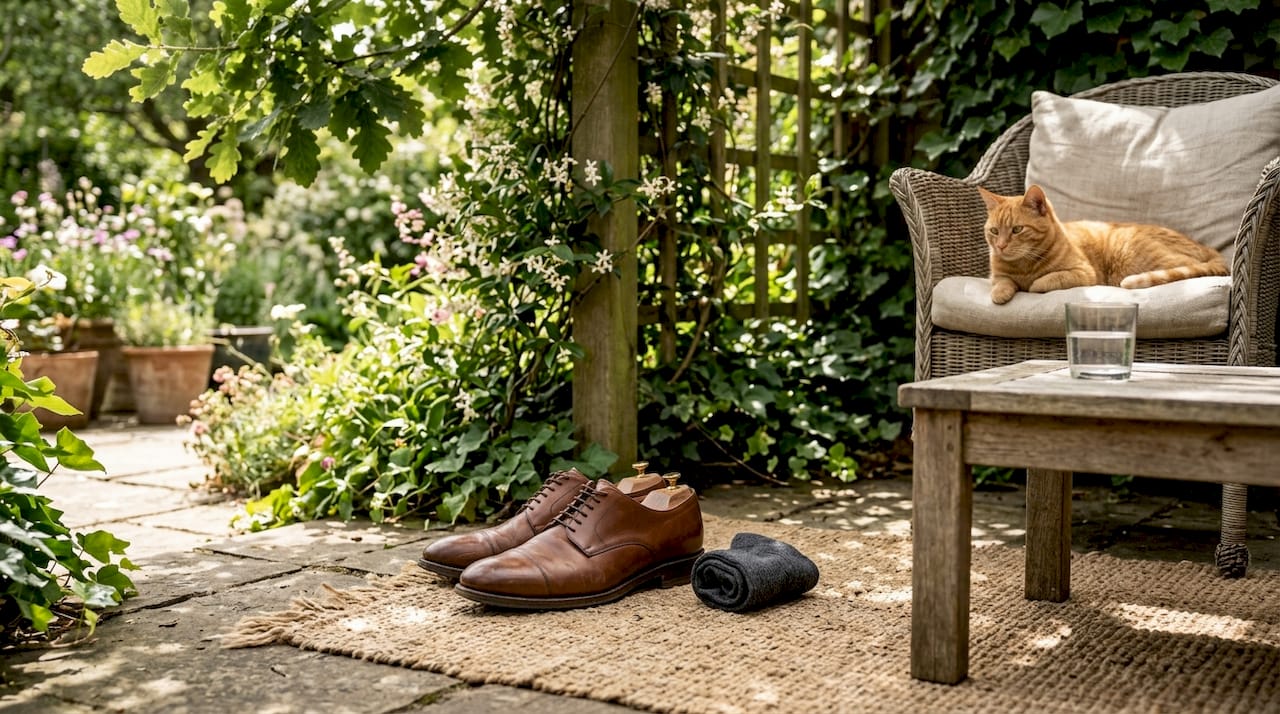
Air-drying shoes naturally at room temperature and avoiding direct heat sources prevents warping, shrinking, and sole separation. That means no radiators, no direct sunlight, and absolutely no hairdryers, regardless of how impatient you are.
Here is what good drying practice looks like:
- Stuff shoes with newspaper or paper towels immediately after washing. This absorbs internal moisture and helps the shoe hold its shape while drying.
- Replace the stuffing after a few hours if the shoes are particularly wet.
- Allow 24 to 48 hours for shoes to dry fully before wearing them again.
- Never store damp shoes in a bag or box. Trapped moisture is the fastest route to mould, odour, and material breakdown.
Using shoe trees immediately after wearing absorbs moisture and maintains shape, which is particularly important for leather shoes that can crease and crack if left to dry without support. Cedar shoe trees are especially effective because cedar is naturally moisture-wicking and has a mild deodorising effect, which helps to prevent shoe odour building up over time.
Pro Tip: If you do not own shoe trees, tightly rolled socks placed inside your shoes are a reasonable substitute for short-term shape retention after a light wear.
Understanding why shoe rotation matters is also part of good drying strategy. Rotating between at least two pairs gives each shoe a full day to recover between uses. It also reduces the wear pattern on the sole, extending the life of both pairs considerably. Pay attention to shoe interiors too; the lining, insole, and footbed trap sweat and bacteria, and these areas need ventilation just as much as the outer material.
For storage, keep shoes in a cool, dry, well-ventilated space. Avoid plastic bags and airtight boxes, which trap moisture. If you are storing shoes long-term, a fabric dust bag is a much better option.
Preventative habits and ongoing maintenance for shoe longevity
By adopting these habits, you maintain your shoes’ health continuously, minimising damage before it occurs. The most important shift in mindset here is moving from reactive cleaning to proactive care.
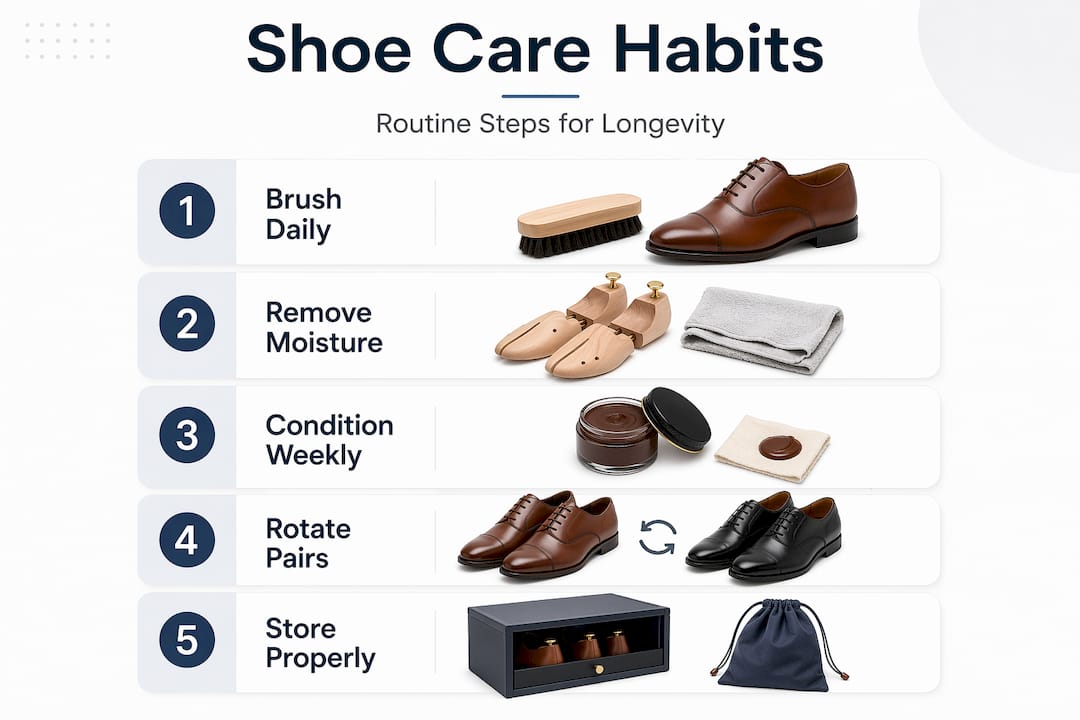
Behaviour-level habits like rotating trainers, applying oil to leather, and avoiding machine washing delicate shoes greatly extend shoe lifespan, according to expert cobblers. These are not time-consuming tasks. They are simply consistent ones.
Here are the core habits worth building into your routine:
- Rotate shoes regularly. Wearing the same pair every day accelerates breakdown. Two or three pairs in rotation is the sweet spot.
- Apply leather conditioner every 4 to 6 wears. This replenishes the oils that keep leather supple and prevents surface cracking, especially in cold or dry climates.
- Spot clean immediately. A fresh stain takes two minutes to address. A set stain may be permanent. Do not leave dirt to grind into the material overnight.
- Use a waterproofing spray before wearing new shoes and after every major clean. This is one of the most underused shoe care tips and one of the most effective.
- Avoid abrasive brushes, harsh detergents, or bleach on any shoe material. These damage surface fibres and strip protective coatings faster than general wear ever would.
- Check soles and stitching regularly. Catching a loose sole or broken stitch early means a simple, inexpensive repair. Leaving it means replacing the whole shoe.
Pro Tip: Schedule a monthly shoe check. Pick a fixed date, inspect each pair, condition any leather, and refresh the waterproofing spray on anything that regularly faces rain or moisture.
You can find practical shoe rotation benefits and footwear care tips that go deeper into each of these habits, particularly for performance footwear where the midsole and insole take the most sustained pressure.
“The best shoe care advice is the most boring: clean them when dirty, condition leather regularly, and let them dry properly. Nothing flashy, but it works every time.” — Expert cobbler perspective, The Guardian, 2026
Why shoe maintenance is more about habits than hero products
Here is something the shoe care product industry would rather you did not realise: the biggest threats to your shoes are not lack of product. They are heat, neglect, and the wrong cleaning method applied at the wrong time.
Most consumers reach for a specialised spray or cleaner when their shoes look bad, hoping it will fix weeks of accumulated damage in one go. It rarely does. Preservation is often about avoiding high agitation, high heat, or abrasive cleaning rather than finding one magic product, as experienced cobblers consistently point out. This is a profound reframing if you have been approaching shoe care the way most people do.
Think about what actually kills a shoe prematurely. It is the tumble dryer cycle used once in desperation. The radiator drying session that warps the sole. The month of daily wear without any moisture absorption or conditioning. None of these failures require a product to fix them. They require a decision not to do them in the first place.
Good shoe care best practices are built on material awareness and repetition, not shopping. The most effective shoe maintenance techniques cost almost nothing: newspaper stuffing, a horsehair brush, a basic conditioner, and the discipline to rotate your footwear. That combination will outperform any premium product used inconsistently on the wrong material.
If your shoes are wearing out faster than expected, the honest answer is usually that something in your routine is actively damaging them, not that you need something new to save them.
Discover YDA’s technology for durable, health-focused shoes
After putting these care habits into practice, the next step is making sure your footwear is worth maintaining in the first place. Well-made shoes respond to good care far better than cheap alternatives that break down regardless of how carefully you treat them.

At YDA, footwear is built around the intersection of foot health and lasting performance. YDA’s shoe technology is designed to support how your foot moves naturally, using materials and construction methods that hold up to daily life when properly cared for. Pairing that engineering with the maintenance habits in this guide gives your shoes every possible advantage. Visit the YDA UK homepage to explore the range and find footwear designed to go the distance.
Frequently asked questions
Can all shoes be cleaned in a washing machine?
No. Only synthetic and fabric shoes are generally safe for machine washing on a gentle, cold cycle. Leather and suede require hand cleaning to avoid damage, as material type determines appropriate care.
Why should I avoid drying shoes with direct heat?
Direct heat causes shoes to warp, shrink, crack, or lose adhesive strength. Air drying at room temperature prevents warping, shrinking, and sole separation, preserving both shape and durability.
How often should I condition leather shoes?
Condition leather shoes every 4 to 6 wears. Conditioning this frequently keeps the material supple and prevents cracking, with adjustment needed for harsher climates or heavy daily use.
What is the importance of rotating shoes regularly?
Rotating shoes allows them to dry fully between uses, reducing moisture build-up and uneven wear. Rotating two or three pairs extends the life of each pair by giving the material time to recover and breathe.
Can I use any cleaning product on all shoe types?
No. Cleaning products must match the shoe material. Leather cleaners differ significantly from those used on synthetics, and using the wrong product risks stripping protective coatings or causing permanent staining.