
Shoe care best practices: keep performance footwear lasting
TL;DR:
- Proper shoe care routines can significantly extend the lifespan and performance of footwear.
- Regular inspection, appropriate cleaning, and shoe rotation are essential for maintaining foot health and shoe durability.
- Avoid damaging practices like heat drying, harsh chemicals, or full immersion to preserve shoe materials and structure.
Shoe care best practices: keep performance footwear lasting
You spend serious money on performance footwear, choosing models engineered for foot health, energy return, and everyday comfort. Yet within months, many pairs lose their cushioning, develop unpleasant odours, or show structural breakdown that compromises the very benefits you paid for. The frustrating reality is that most premature shoe deterioration is entirely preventable. Research-backed care routines can significantly extend both shoe life and the health benefits they deliver. This guide covers everything from fundamental maintenance principles to step-by-step cleaning techniques, smart rotation habits, and the most common mistakes that silently destroy even premium footwear.
Table of Contents
- Understanding shoe care fundamentals
- Essential tools and products for healthy footwear
- Step-by-step cleaning and conditioning routines
- Shoe rotation and long-term maintenance habits
- Troubleshooting common shoe care mistakes
- Why clever, consistent shoe care matters more than premium price tags
- Support your shoe care goals with expert solutions
- Frequently asked questions
Key Takeaways
| Point | Details |
|---|---|
| Material and care matter | Every shoe’s material needs a tailored cleaning and maintenance approach for longevity. |
| Rotation boosts health | Switching between pairs reduces injury risk and keeps your footwear functioning at its best. |
| Avoid heat damage | Always dry shoes at room temperature to maintain midsole cushioning and structure. |
| Regular inspection is vital | Check shoes monthly for wear, damage, and odour to ensure healthy feet and peak performance. |
Understanding shoe care fundamentals
With a solid introduction, let’s examine the critical basics that underpin every successful shoe care routine.
One of the most persistent myths in footwear is the idea that every shoe should be replaced at exactly 500 miles. The reality is considerably more nuanced. Research confirms that shoe lifespan varies widely, with the 500 miles or 800km guideline showing only weak to strong correlations with midsole degradation depending on foam type. A shoe built with dense, traditional EVA foam may degrade faster than one using newer PEBA or nitrogen-infused foams, meaning blanket mileage rules are genuinely unhelpful for performance-focused owners.
Understanding the key components of your shoe matters more than tracking distance. The midsole provides cushioning and energy return. The outsole handles traction and ground contact. The upper governs breathability and structure. Each component ages at a different rate depending on materials, usage conditions, and how well you maintain them. Proper care addresses all three simultaneously.
| Wear indicator | Running shoes | Walking shoes | Specialty shoes |
|---|---|---|---|
| Midsole compression | High (300-500 miles) | Moderate (600-800 miles) | Variable by design |
| Outsole wear | High at heel/forefoot | Even distribution | Depends on activity |
| Upper distortion | Moderate | Low to moderate | Often reinforced |
| Odour development | Rapid | Gradual | Varies by lining |
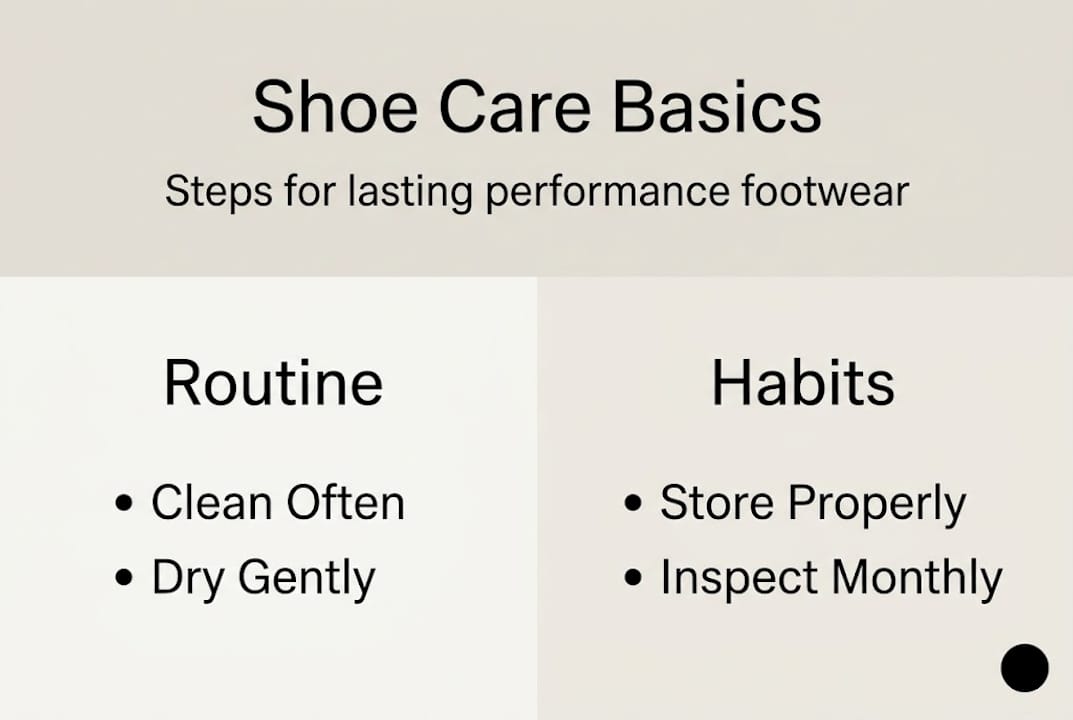
The core principles of effective shoe care are actually straightforward: clean regularly, dry safely, store correctly, and inspect often. Many owners clean their shoes only when they look visibly dirty, but surface appearance is a poor indicator of internal wear or microbial build-up. Shoe rotation for foot health is a companion habit that multiplies the benefits of every cleaning routine you build.
Another overlooked area is the role of shoe care in footwear and injury prevention. A shoe that has lost midsole integrity but still looks clean and presentable on the outside is no longer protecting your joints effectively. Regular physical inspection, pressing your thumb firmly into the midsole to check rebound, and checking for lateral collapse of the heel counter, gives you information that a mileage counter simply cannot.
Essential tools and products for healthy footwear
Armed with foundational knowledge, it is essential to gather the right tools and products for your footwear type.
Not all cleaning products are created equal, and using the wrong one can permanently damage the very materials you are trying to protect. The safest approach is to match your cleaning and conditioning product directly to the shoe material. Here is a practical guide:
| Material | Recommended cleaner | Conditioning product | Avoid |
|---|---|---|---|
| Full-grain leather | Damp cloth, leather soap | pH-balanced conditioner | Bleach, acetone |
| Mesh/knit upper | Soft brush, mild foaming cleanser | None needed | Soaking, harsh solvents |
| Synthetic leather | Damp microfibre cloth | Synthetic protector spray | Oil-based conditioners |
| Suede/nubuck | Suede brush, dry eraser | Suede protector spray | Water saturation |
| Canvas | Soft brush, diluted soap | None | Machine wash (hot cycle) |
For footwear with leather elements, condition monthly with pH-balanced products and use shoe trees, with cedar preferred, to absorb moisture and prevent creasing. This is not optional for leather: conditioning prevents cracking and maintains the material’s suppleness, which directly affects how the shoe flexes with your foot.
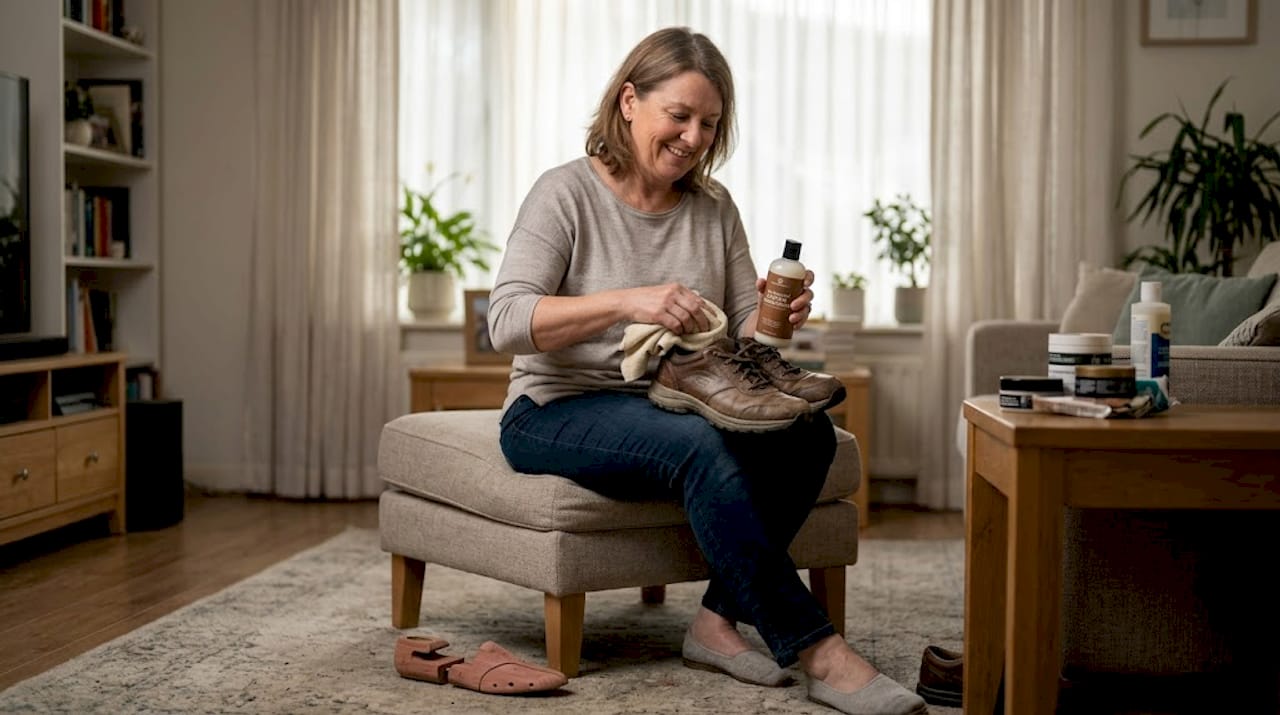
Cedar shoe trees deserve special mention. Cedar is naturally antimicrobial and hygroscopic, meaning it actively draws moisture out of the shoe lining after each wear. This significantly slows the microbial growth responsible for persistent odours. Plastic shoe trees maintain shape but offer none of these additional benefits.
Your essential home shoe care kit should include:
- Soft-bristle brush for removing loose dirt
- Stiff-bristle brush for textured outsoles
- Microfibre cloths for applying and buffing products
- pH-balanced leather conditioner
- Foaming mesh shoe cleanser
- Water and stain protector spray appropriate for each material
- Cedar shoe trees (one pair per shoe is ideal)
- Replacement insoles for high-use pairs
For ongoing expert footwear care tips that go beyond the basics, it is worth exploring specialist resources tailored to health-oriented shoe designs. Technical footwear often incorporates proprietary foam compounds, antimicrobial linings, and structured insoles that need targeted care approaches. This comfort shoe care guide covers specific considerations for those designs.
Pro Tip: Always check the care label or manufacturer’s guidance before applying any product. Generic laundry detergents contain enzymes and surfactants that aggressively break down technical fabrics and adhesives, shortening shoe life dramatically.
Step-by-step cleaning and conditioning routines
With tools at hand, follow these step-by-step routines to ensure each cleaning session boosts both performance and longevity.
- Remove loose dirt first. Use a dry stiff brush on the outsole and a softer brush on the upper. Never apply liquid to a dusty or muddy surface, as it drives grit deeper into the material fibres.
- Remove and wash insoles separately. Insoles harbour most of the bacteria responsible for odour. Hand-wash them with mild soap, rinse thoroughly, and allow them to air dry completely before reinserting.
- Spot-clean the upper. Apply a small amount of appropriate cleanser to a microfibre cloth or soft brush, then work in gentle circular motions. Do not saturate the material.
- Wipe away residue. Use a clean damp cloth to remove any cleanser, then blot with a dry cloth.
- Dry safely. This step is where most people make a critical error.
Critical temperature warning: Exposing shoes to heat above 35°C, whether from a hairdryer, radiator, or direct sunlight, damages EVA and PEBA midsole foams through oxidation. Low-heat drying retains 94.7% compression recovery compared to just 58.3% with standard high-heat methods. Permanent cushioning loss is the result.
- Condition leather elements. Once dry, apply a small amount of pH-balanced conditioner to any leather panels using a soft cloth. Work it in gently and allow it to absorb before buffing lightly.
- Inspect for damage. Check the heel counter, toe box, midsole sidewalls, and outsole before storing. Early detection of separation or cracking allows for timely repair rather than full replacement.
Pro Tip: Stuff damp shoes with dry paper towels and position a small fan nearby. This setup pulls moisture out efficiently without exposing foam midsoles to damaging heat. Replace the paper towels after an hour if shoes are very wet.
For issues like mould, visible staining, or persistent odour, heavier intervention is warranted. A diluted white vinegar solution (one part vinegar to three parts water) applied to the interior lining and allowed to dry naturally is effective for mould and odour. For stubborn outsole staining, a paste of baking soda and water left for 20 minutes before brushing works well. The key is to maintain shoe comfort rather than restore it after the fact. For advice on preventing foot injuries through structural shoe maintenance, specialist guidance is invaluable.
Shoe rotation and long-term maintenance habits
Beyond cleaning routines, develop smart habits to extend your footwear’s utility and keep your feet protected.
Shoe rotation is perhaps the single most impactful long-term maintenance habit you can build. Shoe rotation reduces injury risk by 39% according to Malisoux’s 2015 study, largely because rotating pairs introduces biomechanical variation that prevents the repetitive strain patterns associated with overuse injuries. Beyond injury prevention, rotation allows midsole foam to decompress fully between wears, which significantly slows permanent compression set.
| Factor | Single pair approach | Rotation approach |
|---|---|---|
| Midsole recovery time | Minimal (worn daily) | 24 to 48 hours per pair |
| Foot injury risk | Higher (repetitive strain) | Reduced by up to 39% |
| Shoe lifespan | Shorter | Extended significantly |
| Monthly cost | Higher (frequent replacement) | Lower over time |
| Odour development | Faster | Slower (more drying time) |
The benefits of shoe rotation extend beyond just your shoes. Your feet themselves adapt better when not locked into identical mechanical patterns every day, which matters especially for those wearing health-oriented footwear designed to support specific gait characteristics.
Build these habits into your routine:
- Alternate between at least two pairs for any regular activity
- Insert cedar shoe trees immediately after each wear
- Store shoes in a cool, dry, ventilated space away from direct light
- Conduct a physical inspection of each pair monthly
- Schedule a deep-clean session quarterly, or more frequently for high-use pairs
- Monitor outsole wear patterns, which reveal gait irregularities worth addressing
Knowing when to retire a shoe is equally important. Signs that a pair has reached its end include visible midsole compression (the foam looks visually squashed), heel counter collapse that does not spring back when pressed, outsole worn through to the midsole layer, or persistent discomfort that was not present when the shoes were new. Shoe flexibility and comfort are the first qualities to decline when a shoe is past its useful life.
Pro Tip: Set a recurring monthly reminder in your calendar specifically for shoe inspection. It takes three minutes but can catch problems early enough to act on them before they affect your foot health or require a full replacement.
Troubleshooting common shoe care mistakes
Even the most diligent owners can slip up; here is how to sidestep the errors that undo your hard work.
The most damaging mistakes in shoe care are often those made with the best intentions. Knowing what not to do is as valuable as any positive routine.
Common mistakes to avoid:
- Using a washing machine or tumble dryer. Heat and agitation destroy adhesive bonds, warp midsoles, and distort uppers. Even a gentle cycle causes micro-damage.
- Applying generic household detergents. These strip protective coatings from technical fabrics and dry out leather aggressively.
- Drying near radiators or in direct sunlight. As noted, temperatures above 35°C cause permanent midsole foam degradation.
- Neglecting insole hygiene. Insoles are a breeding ground for bacteria, and ignoring them accelerates odour and potential fungal issues.
- Relying solely on mileage to gauge replacement. As research confirms, the 500-mile guideline is not universal, with midsole degradation correlating differently across foam types and shoe models.
- Storing shoes in plastic bags or airtight boxes. Trapped moisture encourages mould and material deterioration.
Improper care also creates genuine health risks. Mould inside footwear can trigger skin reactions and respiratory sensitivity in enclosed spaces. Structural loss in the heel counter leads to ankle instability. A shoe that looks fine but has lost its midsole integrity is delivering none of the cushioning or joint protection it was designed to provide.
Knowing the signs of top footwear care mistakes helps you course-correct before serious damage occurs. And understanding shoe flexibility and health gives important context for why structure matters so much in the first place.
Pro Tip: Photograph the outsoles and midsoles of your shoes monthly from the same angle. A simple side-by-side comparison over three months makes compression and wear patterns immediately visible, far more clearly than a single inspection.
Why clever, consistent shoe care matters more than premium price tags
Having covered every angle from theory to execution, here is a hard-won lesson that transforms how we value shoes.
There is a tendency among footwear enthusiasts to equate price with performance longevity. Spend more, get more life. Our experience suggests this relationship is far weaker than most people assume. We have seen budget-tier shoes maintained meticulously through rotating, proper drying, cedar trees, and monthly inspection outlast premium pairs that were worn daily, dried on radiators, and cleaned with household spray.
The variable that matters most is not what you paid. It is what you do consistently after the purchase. Small, repeatable habits, inserting shoe trees immediately after every wear, never exposing foam to heat, alternating pairs to allow full recovery, produce compounding results over months. Shoes maintained through real-world rotation results and disciplined care routines routinely last double the lifespan of neglected pairs, regardless of their original price.
The mindset shift we advocate is moving from “replace when worn” to “maintain and optimise.” This is not just about saving money, though it does that effectively. It is about preserving the specific foot health and biomechanical benefits your footwear was engineered to deliver for as long as possible. A shoe performing at 60% of its designed function is not saving you money. It is quietly failing your feet.
Support your shoe care goals with expert solutions
If you are ready to put your best foot forward, discover solutions that amplify your care efforts.
The care routines in this guide deliver maximum results when paired with footwear designed to last and support genuine foot health from the outset. Shoes built with advanced materials and health-focused engineering respond better to proper maintenance and reward consistent care with noticeably extended performance.

At YDA UK, we design footwear around health outcomes and comfort engineering, with the YDA shoe technology developed specifically to support foot function, energy efficiency, and everyday comfort. Explore our range to find footwear that is built to reward the care you invest in it, and browse our specialist resources for ongoing guidance tailored to performance-focused owners.
Frequently asked questions
How often should I replace performance shoes?
There is no universal mileage rule. The 500-mile guideline varies considerably across foam types, so inspect regularly for physical wear rather than relying on distance alone.
Is it safe to dry shoes with a hairdryer or heater?
No. Heat above 35°C degrades EVA and PEBA midsole foams permanently, with low-heat drying retaining 94.7% compression recovery compared to just 58.3% with heat-exposed methods.
What is the benefit of rotating shoes?
Rotating pairs allows midsole foam to recover fully and introduces biomechanical variation. Shoe rotation reduces overuse injury risk by up to 39% according to the Malisoux 2015 study.
Do I need special products for caring for health-focused shoes?
Yes. Condition leather monthly with pH-balanced products and avoid harsh detergents on technical fabrics to preserve both materials and integrated health features.
How can I prevent persistent shoe odours?
Insert cedar shoe trees after every wear and allow shoes to air fully between uses. Cedar shoe trees absorb moisture and reduce microbial activity, which is the primary cause of persistent odour.