
How to identify shoe fit issues: a practical guide
TL;DR:
- Ill-fitting shoes are a common cause of foot pain, blisters, and long-term deformities. Proper fit should be assessed in the late afternoon with correct socks, ensuring adequate toe space and heel stability. Immediate discomfort indicates the need to return or exchange shoes, as modern footwear rarely stretches or improves with wear.
If your feet hurt by midday, or you keep developing blisters in the same spot, ill-fitting shoes are likely the cause. Knowing how to identify shoe fit issues is the first step to protecting your long-term foot health. The problem is more widespread than most people realise. Over 60% of adults wear the wrong shoe size, leading to conditions like bunions, hammertoes, and plantar fasciitis. This guide walks you through exactly what to look for, when to check, and how to fix it.
Table of Contents
- Key takeaways
- Signs of bad shoe fit to look out for
- Preparing to check your shoe fit properly
- Step-by-step fit tests you can do yourself
- Troubleshooting common fit problems
- What a well-fitted shoe actually feels like
- My honest take on shoe fit after years of seeing it go wrong
- Discover Ydauk shoes built around your foot
- FAQ
Key takeaways
| Point | Details |
|---|---|
| Fit beats size label | Shoe size numbers vary by brand; your foot shape matters more than the number on the box. |
| Test late in the day | Feet swell by up to 8% during the day, so afternoon is the best time to assess shoe fit. |
| Know the warning signs | Blisters, red marks, and pressure points are early signals of a poor fit that needs addressing. |
| Apply the thumb width rule | Leave a thumb’s width of space between your longest toe and the front of the shoe. |
| Never wait for shoes to break in | Modern shoes should feel comfortable immediately. Discomfort on day one rarely improves. |
Signs of bad shoe fit to look out for
Learning how to identify shoe fit issues starts with reading what your body is already telling you. Your feet are communicating. Most people just aren’t listening.
Blisters, calluses, and red marks are not random. They signal repeated friction between your skin and the shoe at a specific pressure point. If a blister keeps forming in the same location, the shoe is consistently rubbing or pressing incorrectly at that spot. The same logic applies to calluses on the ball of the foot or the heel.
Identifying tight shoes requires paying attention to a few distinct sensations. Look out for:
- Pinching or numbness across the toe box or sides of the foot
- Toe cramping where your toes are curled or compressed
- Redness on the tops of your toes or along the sides after removing the shoe
- Black toenails caused by repeated toe jamming against the front of the shoe during walking or running
- Heel blisters from the back of the shoe rubbing against skin with each step
Loose shoes produce a different set of symptoms. Heel slippage is the most obvious one. If your heel lifts noticeably with each step, the shoe is too long or too wide at the back. Your foot will slide forward, jamming your toes into the front. This creates pressure at the toe box even in a shoe that technically feels “big.”
Experts warn that recurring foot pain and calluses are not normal. They consistently signal shoe fit problems that need correction, not tolerance.
The most dangerous signs are the ones people ignore because they appear gradually. A slight hotspot becomes a blister. A blister becomes a sore. A sore becomes a wound. Catching the early signs of bad shoe fit prevents a chain reaction that affects how you walk, stand, and move every day.
Preparing to check your shoe fit properly
Before you assess any shoe, your preparation matters as much as the test itself. Common shoe fit problems often go undetected simply because people check at the wrong time or in the wrong conditions.
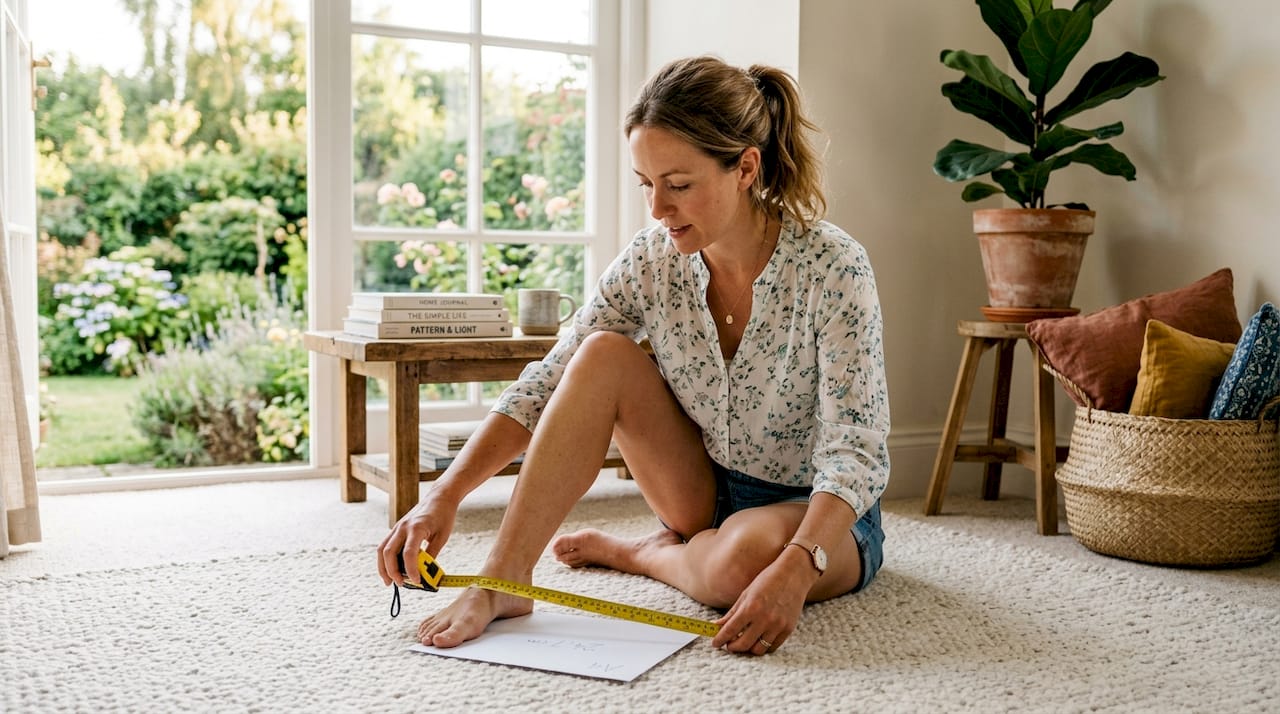
Timing is everything. Feet swell by 5 to 8% throughout the course of a day. If you try on shoes first thing in the morning, you’re fitting to your smallest foot. By afternoon, that same shoe may feel noticeably tighter. Always assess shoe fit in the late afternoon or evening, when your feet are at or near their largest volume. Foot swelling patterns vary from person to person, making this timing especially important.
Wear the socks you actually plan to use with the shoe. A thick walking sock changes the fit completely compared to a thin cotton sock. It sounds obvious, but many people try on shoes bare-footed in a shop and then wear them later with thick socks and wonder why they feel tight.
Here’s a quick preparation checklist:
- Measure both feet (they are rarely the same size)
- Fit shoes to the larger foot
- Wear the socks you’ll use with those shoes
- Try shoes on in the afternoon or evening
- Stand up while being measured, not seated
| Preparation step | Why it matters |
|---|---|
| Measure late afternoon | Accounts for natural foot swelling throughout the day |
| Use correct socks | Sock thickness directly affects how the shoe fits around the foot |
| Fit to the larger foot | Avoids discomfort and pressure on the bigger foot |
| Stand during measurement | Foot spreads under body weight, giving a more accurate reading |
| Ignore size labels | Shoe size labelling varies between brands and gives no guarantee of fit |
Pro Tip: Don’t assume your shoe size from years ago is still accurate. Feet change shape with age, weight shifts, and pregnancy. Get measured at least once a year.
Step-by-step fit tests you can do yourself
Once you’re prepared, run through these checks every time you assess a shoe. These methods apply whether you’re in a shop or testing a pair at home.
-
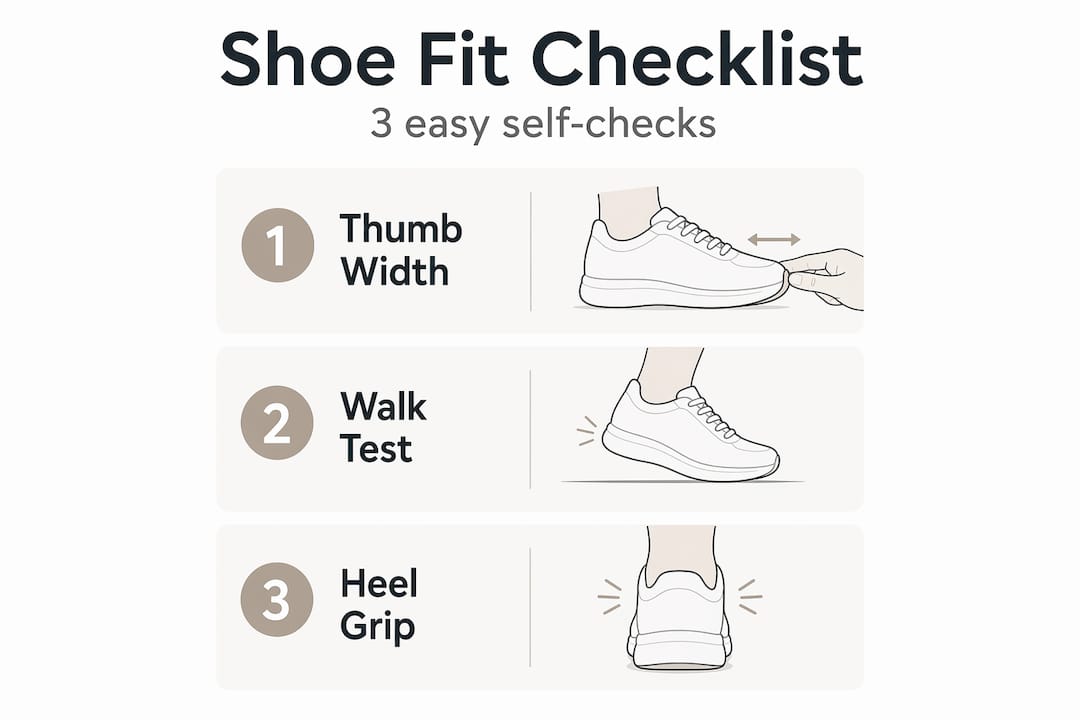
Check toe box space. Press gently on the front of the shoe while wearing it. There should be a thumb’s width of space between your longest toe and the end of the shoe. This accommodates the natural forward slide of your foot during walking. No space means your toes are jamming. Too much space means the shoe is too long.
-
Test heel movement. Slip your finger vertically behind your heel inside the shoe. When you walk, your heel should move no more than 3 to 6 mm. Any more than that and the shoe is too loose at the back, which will cause blisters and instability.
-
Check width alignment. The widest part of your shoe should line up with the widest part of your foot, typically the ball. If your foot spills over the insole on either side, or if the upper material bulges, the shoe is too narrow.
-
Run a twist test. Hold the shoe at both ends and twist it gently. A well-structured shoe resists excessive twisting. A shoe that collapses immediately offers very little arch support or structural stability, regardless of how comfortable it feels on the shelf.
-
Bend the shoe. Flex it at the ball of the foot, which is where your foot naturally bends. If the shoe bends in the middle of the arch instead, it will strain your plantar fascia and the arch of your foot over time.
-
Walk in it. This is where many people skip ahead too fast. Walk at your normal pace for at least two to three minutes. Notice any hotspots, any heel slipping, any toe pressure. A properly fitted shoe should support the arch without creating pressure and fit the foot’s widest points without squeezing.
Pro Tip: Do the walk test on a hard surface, not carpet. Carpet masks pressure points that become obvious on tile or wood flooring.
| Test | What you’re checking | Red flag |
|---|---|---|
| Thumb width check | Toe box space | Less than a thumb’s width at the front |
| Heel slip test | Heel stability | More than 6 mm of vertical movement |
| Width alignment | Shoe width vs foot width | Bulging upper or foot spilling over insole |
| Bend test | Flex point location | Shoe bends at the arch, not the toe box |
| Walk test | Overall comfort and hotspots | Any discomfort, slipping, or pressure after walking |
Troubleshooting common fit problems
When something feels off after purchase, people often assume the shoe just needs more wear. This is one of the most persistent myths in footwear. Modern synthetic shoes rarely stretch. Comfort should be immediate. Waiting for a shoe to “break in” is not a strategy. It’s a way to develop injuries.
Here is how to address the most common shoe fit problems:
- Narrow toe box: If your toes feel pinched, the shoe is likely too narrow for your foot shape. This is not a size issue. It is a width issue. Look for styles labelled wide fitting, or explore shoes designed for problem feet with a more accommodating toe box.
- Heel slippage: If your heel lifts, try heel grips inside the shoe or a thicker sock. If neither resolves it, the shoe is genuinely too large at the back and should be exchanged.
- Arch discomfort: If the arch of the shoe digs into your foot, the support height doesn’t match your foot’s arch shape. Not every arch support suits every foot.
- Pressure on the top of the foot: This usually means the lacing is too tight or the upper is too stiff. Re-lace with a wider loop over the pressure point or consider a different shoe construction.
If a shoe hurts on the first full wear, return it. Pain is not a sign that your foot needs to adjust. It is a sign the shoe does not fit.
Read about why ill-fitting shoes harm foot health to understand how these problems compound over time if left unaddressed.
What a well-fitted shoe actually feels like
Recognising the positive signs of correct fit is just as valuable as spotting the problems. Many people have worn poor-fitting shoes for so long they’ve forgotten what “right” actually feels like.
A correctly fitted shoe offers:
- Toe freedom: You can wiggle all five toes without them touching the front or sides of the shoe
- Snug heel: Your heel sits firmly without being gripped so tight it cuts into the Achilles tendon
- No pressure points: After a ten-minute walk, there are no spots on your foot that feel hot, sore, or numb
- Arch contact without pressure: The insole makes full contact with your arch without digging in
- Stable midfoot: The shoe holds the widest part of your foot without squeezing or allowing it to slide side to side
If you notice any discomfort within the first thirty minutes of wearing a new shoe, take note. Minor rubbing that produces redness is a fit issue, not a skin issue. If it persists after a second wear, proper shoe fitting should be reassessed before wearing the shoe again.
When symptoms such as persistent arch pain or numbness continue despite changing shoes, it is worth seeking professional advice from a podiatrist. Some foot conditions require orthotics or specialist footwear beyond standard retail options.
My honest take on shoe fit after years of seeing it go wrong
I’ve seen countless people endure months of foot pain because they were too attached to a shoe size they’ve had since their twenties. Here is what I’ve learned: shoe size is fiction. It is a manufacturing convention that varies wildly between brands, countries, and even shoe styles within the same brand. I’ve worn a size 43 in one brand and a 45 in another. The number means almost nothing.
What I find most troubling is how normalised foot pain has become. People describe blisters, aching arches, and numb toes as though these are expected side effects of wearing shoes. They are not. They are signals. And in my experience, ignoring those signals for even a few weeks can turn a minor fit problem into a chronic foot condition that takes months to recover from.
The advice I give consistently is this: trust your feet more than you trust the label. Measure in the afternoon. Walk before you commit. And if a shoe hurts on day one, it will not hurt less on day thirty. Return it.
The most impactful shift I’ve seen in people’s comfort comes not from expensive orthotics or fancy insoles, but from simply choosing a shoe with enough width and depth for their actual foot shape. Most feet are not the narrow, low-volume shape that most fashion-led shoes are designed for. Knowing your foot, testing the fit properly, and refusing to accept discomfort as normal, that is the whole game.
— Panagiotis
Discover Ydauk shoes built around your foot
If you’ve worked through these checks and still struggle to find a shoe that fits without compromise, the problem may not be your feet. It may be the shoes you’ve been choosing from. At Ydauk, every design is built around the principles of foot health and natural movement. The YDA shoe technology addresses the exact fit issues covered in this guide, from toe box depth and arch contact to heel stability and width accommodation. Rather than expecting your foot to adapt to the shoe, Ydauk’s approach starts with how the foot actually works. Explore the full range and see how purpose-built footwear changes the way your feet feel by the end of the day.
FAQ
What are the main signs of a bad shoe fit?
Blisters, calluses, red marks, heel slippage, and toe cramping are the most common signs. Recurring discomfort in the same spot after wearing a shoe always points to a fit problem, not a skin problem.
When is the best time to check shoe fit?
Late afternoon or evening is best, as feet swell by 5 to 8% throughout the day. Fitting shoes in the morning means you may be buying for your smallest foot size.
How much toe space should a properly fitting shoe have?
There should be roughly a thumb’s width of space between your longest toe and the front of the shoe. This allows for the natural forward slide of the foot during walking without causing jamming.
Should I rely on my usual shoe size when buying a new pair?
No. Shoe size labelling varies considerably between brands. Always measure both feet and assess fit based on how the shoe actually feels on your foot, not the number on the label.
Can shoes become more comfortable after wearing them a few times?
Rarely. Modern shoes do not stretch significantly after purchase. If a shoe is uncomfortable on the first wear, it is unlikely to improve. Return or exchange it rather than waiting for a break-in period that may never come.