
Why Shoe Fit Matters for Foot Health and Comfort
Finding stylish shoes that truly fit is more complicated than scanning size labels in your favourite shops. If you have ever left with sore feet or struggled with persistent aches, you are not alone. The way your shoes match your foot’s unique shape and needs is a key factor in daily comfort, energy, and long-term health. This article sheds light on proper shoe fit and unpacks common myths that can affect your wellbeing.
Table of Contents
- Defining Shoe Fit And Dispelling Common Myths
- Shoe Fit Variations And Foot Type Considerations
- How Proper Fit Supports Comfort And Performance
- Health Risks Linked To Poor Shoe Fit
- Choosing Shoes: Avoiding Common Mistakes
Key Takeaways
| Point | Details |
|---|---|
| Proper Shoe Fit is Multifaceted | A fitting shoe considers length, width, and the unique shape of your foot, ensuring stability and comfort across various activities. |
| Myths and Misconceptions About Fit | Common beliefs about shoe size and stretching can lead to poor foot health; actual fit depends on how the shoe feels during movement. |
| Foot Type Influences Shoe Selection | Different arch types necessitate specific shoe characteristics for optimal support and comfort, highlighting the importance of proper measurement. |
| Regular Reevaluation is Essential | Feet change over time due to factors like age, weight, and activity, making regular measurements necessary to maintain proper fit. |
Defining Shoe Fit and Dispelling Common Myths
Proper shoe fit goes far beyond simply selecting the correct size number. Shoe fit involves how well shoes accommodate the length, width, and shape of your feet whilst providing appropriate support for your lifestyle and body type.
At 30-50 years old, you likely have a well-established relationship with your feet. Yet many people operate under assumptions about footwear that are simply untrue, leading to discomfort, pain, and long-term foot health complications.
What Real Shoe Fit Actually Means
Shoe fit is not a single measurement. It’s a relationship between your foot’s unique geometry and a shoe’s design, materials, and construction.
A properly fitting shoe:
- Accommodates your foot’s length, width, and arch shape without forcing or restricting movement
- Provides stable support at the heel, midfoot, and forefoot during standing and walking
- Allows your toes adequate space (roughly the width of your thumb from the longest toe to the shoe’s end)
- Feels comfortable when standing and walking, not just sitting down
- Suits your lifestyle, foot shape, and body’s biomechanics
Your feet aren’t static. Measuring feet regularly matters because size and shape can change over time due to age, weight fluctuations, pregnancy, and activity levels. What fit perfectly five years ago may not work today.
Real shoe fit means finding shoes that work with your foot’s unique shape, not forcing your foot to adapt to arbitrary sizing standards.
The Five Myths Holding You Back
Myth 1: Shoes will stretch to fit over time.
This is the most costly misconception. Whilst shoes may soften slightly with wear, they don’t stretch significantly enough to transform a poor fit into a good one. If shoes feel tight in the store, they’ll remain tight. Breaking in new shoes shouldn’t cause foot pain.
Myth 2: Size numbers guarantee consistency across brands.
A size 7 from one manufacturer fits completely differently than a size 7 from another. Each brand uses its own shoe last—the internal form around which shoes are constructed. The only reliable measurement is how the shoe feels on your specific foot.
Myth 3: All shoes of the same size fit identically.
Even within a single brand, shoes vary by style, material, and construction method. A dress shoe, running shoe, and casual shoe at the same size will fit differently based on their design.
Myth 4: Fitting shoes by appearance is accurate.
Visual assessment means nothing. A shoe can look spacious but feel cramped, or appear snug but provide excellent comfort. The only valid test is standing and walking in the shoes for several minutes.
Myth 5: If they’re comfortable initially, they’re properly fitted.
Seating comfort differs from walking comfort. Always stand and walk around to assess how shoes perform during actual movement before purchasing.
A summary table can help clarify how common shoe fit myths differ from reality:
| Myth | Why It Is Misleading | Key Fact |
|---|---|---|
| Shoes stretch fully | Only soften slightly, never reshape | Good fit is needed from outset |
| Size number consistency | Varies between brands and styles | Fit depends on shoe last/design |
| Visual fit accuracy | Appearance can deceive comfort | True fit must be experienced |
| All shoes same fit | Construction and purpose affect fit | Always test each shoe individually |
| Initial comfort equals proper fit | Standing vs walking matters | Fit must support movement, not just standing |
Why This Matters for Your Health
Worn improperly can trigger problems throughout your body. Poorly fitting shoes create stress at the foot, which reverberates through your ankles, knees, hips, and lower back. People in this age group often experience chronic pain they attribute to aging when the real culprit is footwear.
The impact of understanding what shoe last means for your foot health helps you recognise why the shoe’s internal structure matters as much as its external appearance.
Pro tip: Always fit shoes in the afternoon when your feet are slightly swollen from daily activity, as morning measurements may not reflect how your feet feel during actual wear.
Shoe Fit Variations and Foot Type Considerations
Your foot’s unique structure determines which shoes will genuinely work for you. Not all feet are created equal, and shoe fit cannot be a one-size-fits-all solution.
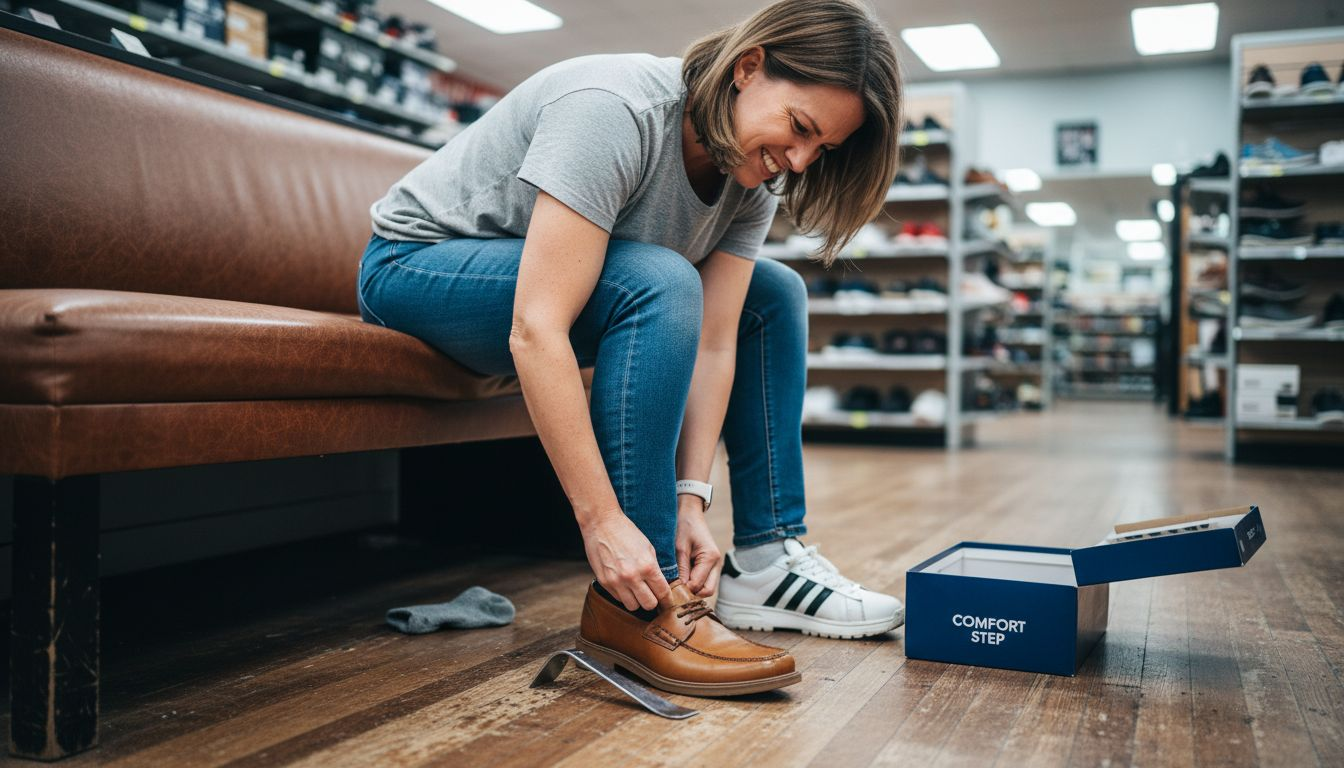
Foot type, especially arch height, significantly influences which shoes fit best. Whether you have neutral arches, flat feet, or high arches dramatically changes what your feet need from footwear.
Understanding Your Arch Type
Your arch is the curved area running along your foot’s inner side. It acts as a shock absorber and stability mechanism during movement.
There are three primary arch types:
- Neutral arches: Moderate curve; most flexible shoe options available; balanced weight distribution
- Flat feet (low arches): Minimal curve; feet overpronate; require motion control and straight-last shoes
- High arches: Pronounced curve; feet supinate; need cushioned shoes with curved lasts for impact absorption
Flat feet tend to roll inward excessively when walking or running. High arches create excessive stress on the outer foot edge. Neutral arches sit comfortably in the middle, allowing greater shoe variety.
Your arch type affects everything from daily comfort to injury prevention. Wearing shoes designed for the wrong arch type forces your foot into unnatural movement patterns, straining muscles, tendons, and joints.
Here is a reference table summarising arch types and preferred shoe characteristics:
| Arch Type | Typical Characteristics | Ideal Shoe Features |
|---|---|---|
| Neutral arch | Balanced shape, moderate curve | Flexible, supportive, wide options |
| Flat feet | Minimal curve, pronation tendency | Motion control, straight-lasted, stable |
| High arch | Pronounced curve, supination tendency | Extra cushioning, curved-lasted, impact absorption |
Your arch type is not a minor detail—it determines whether a shoe supports your biomechanics or works against it.
Width and Depth Matter Equally
Architecture involves more than just arch height. Shoe fit should account for foot width, depth, and individual shape variations to promote balance and reduce injury risks.
Consider these fit dimensions:
- Width: Measured across the ball of your foot; affects midfoot comfort and stability
- Depth: How much vertical space the shoe offers; critical for toe box comfort
- Length: Beyond just size numbers; your toes need proper clearance
- Heel fit: Should be snug without slipping; prevents blisters and ankle instability
Many people focus solely on length while ignoring width and depth. A shoe can be the right length but far too narrow, or the correct width but insufficiently deep. Each dimension independently affects comfort and health.
Age and Life Changes Affect Fit
Your feet change throughout your life. Weight gain, pregnancy, age-related tissue changes, and activity level shifts all alter your foot’s shape and size.
At 30-50 years old, your feet may be noticeably different from a decade ago. What once fit comfortably might now feel cramped or unsupportive. Regular measurement and reassessment ensures your shoes continue matching your current foot rather than your historical foot.
Hormonal changes, particularly in women approaching or experiencing menopause, can affect foot swelling and arch height. Consistent physical activity strengthens arches, whilst sedentary periods can flatten them slightly.
Pro tip: Have your feet measured professionally at least every two years, and always try shoes on both feet whilst standing and walking to account for natural size differences and how your specific arch type performs under actual conditions.
How Proper Fit Supports Comfort and Performance
Comfort and performance are not separate concerns—they’re directly linked to how well your shoes fit. A properly fitted shoe creates the foundation for everything your feet accomplish throughout your day.
Proper shoe fit supports comfort by ensuring the shoe shape matches your foot, providing appropriate cushioning and eliminating undue pressure on sensitive areas. When shoes match your foot’s geometry, comfort follows naturally rather than requiring a painful break-in period.
The Comfort Connection
Comfort isn’t merely about feeling good in the moment. It’s about shoes that function harmoniously with your foot’s structure, reducing strain and fatigue.
Well-fitted shoes deliver comfort through:
- Proper cushioning: Absorbs impact without excessive softness that creates instability
- Shape alignment: Shoe contours follow your foot’s natural curves rather than forcing adjustment
- Pressure distribution: Weight spreads evenly across the foot, avoiding concentrated stress points
- Breathability: Materials allow moisture escape, preventing discomfort from dampness
- Heel stability: Snug heel cup prevents sliding that causes blisters and ankle strain
You might experience initial discomfort in new shoes, but this should diminish within hours of wear. Persistent pain signals poor fit, not a shoe needing patience to break in.
Performance Goes Beyond Athletics
Performance matters whether you’re walking to the office, standing at work, or actually exercising. Performance improves with shoes designed for specific activities, offering correct cushioning, support, and flexibility for better foot function and reduced injury risk.
Daily performance includes:
- Standing for extended periods without fatigue or discomfort
- Walking distances without pain developing mid-journey
- Maintaining balance and stability on various surfaces
- Engaging in hobbies or sports without restriction or fear of injury
Poorly fitted shoes compromise performance by forcing your foot into compensatory movement patterns. Your foot tries to correct the shoe’s inadequacies, exhausting muscles and stressing joints throughout your leg.
The Posture and Pain Connection
Well-fitted shoes provide foundational support for proper posture and balance, reducing foot, knee, hip, and back pain significantly. Your feet are the base upon which your entire skeletal system aligns.
When shoes fail to support your feet properly, a cascade begins: compromised foot stability affects ankle alignment, which influences knee positioning, which affects hip mechanics, ultimately impacting your lower back and spinal health.
Proper shoe fit prevents a chain reaction of misalignment that causes pain far beyond your feet.
Key support features matter:
- Arch support matching your arch type prevents excessive pronation or supination
- Cushioning reduces impact forces travelling up your kinetic chain
- A spacious toe box eliminates pressure that distorts foot position
- A snug but not tight fit maintains heel stability throughout movement
Pro tip: Test shoes by walking on different surfaces—carpet, tile, stairs—for at least 10 minutes before purchasing, as comfort varies by surface type and walking pattern.
Health Risks Linked to Poor Shoe Fit
Poor shoe fit isn’t merely uncomfortable—it’s a direct pathway to serious foot health problems. Years of wearing ill-fitting shoes accumulate damage that can alter your foot’s structure permanently.
Poor shoe fit, especially shoes that are too tight or narrow, causes bunions, corns, calluses, and hammertoes. These conditions result from constant pressure and friction that lead to pain, deformities, and potentially require surgical intervention if left untreated.
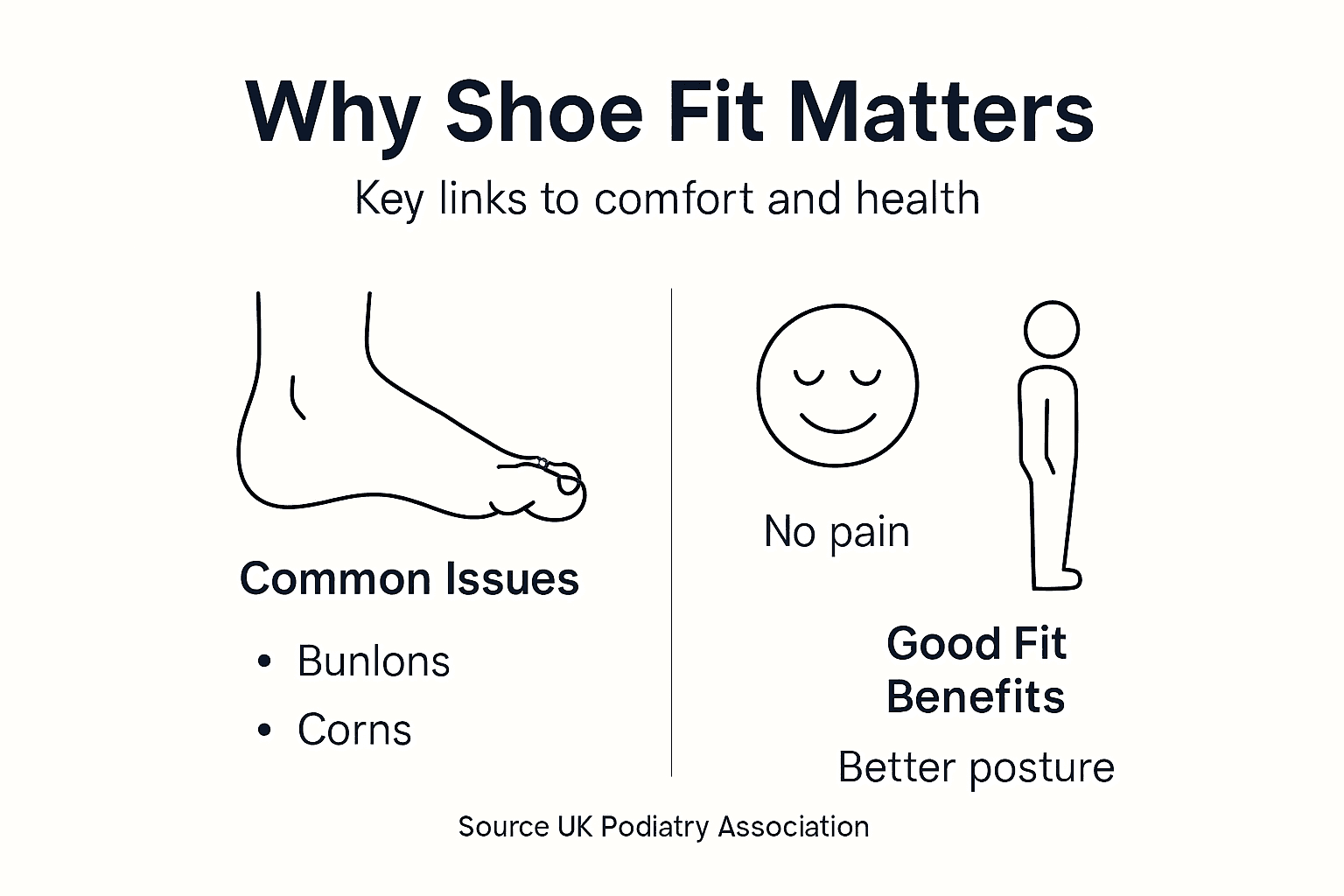
Structural Foot Deformities
Your foot’s bones are malleable, particularly under sustained pressure. Tight or narrow shoes physically reshape your foot over time, creating permanent deformities.
Common structural problems include:
- Bunions: The big toe joint enlarges and angles inward, causing pain and limiting shoe choices further
- Hammertoes: Toe joints bend abnormally, creating pressure points that develop corns and calluses
- Crossover toe: The second toe angles over the big toe, causing instability and pain
- Corns and calluses: Thickened skin develops where pressure concentrates, becoming painful and difficult to treat
Once these deformities develop, they’re rarely reversible without surgery. Your foot has literally been reshaped by years of poor fit. At 30-50 years old, you may already be experiencing early signs of these conditions without realising the cause.
Structural foot deformities caused by poor fit often require surgical correction, making prevention infinitely preferable to treatment.
Pain That Radiates Beyond Your Feet
Improperly fitted shoes cause foot pain and increase stress on feet, leading to secondary problems affecting knees, hips, and back. The damage extends far beyond your feet because your entire body depends on proper foot alignment.
When your feet struggle to maintain proper positioning:
- Your knees compensate, leading to knee pain and potential damage to cartilage
- Your hips shift to accommodate foot problems, creating hip pain and reduced mobility
- Your lower back bears additional stress, resulting in chronic pain or injury
- Your posture deteriorates, affecting shoulder and neck tension
Many people experience chronic pain they attribute to age or genetics when the real culprit is footwear. Fixing foot fit often resolves pain problems throughout the body.
Specific Risk Factors
Certain shoe styles dramatically increase risk. High heels alter your foot’s angle unnaturally, placing excessive pressure on the ball of your foot and toes. Narrow toe boxes crush toes together, preventing natural spreading and creating friction.
Even shoes that fit well initially can become problematic if your feet change. Weight gain, pregnancy, hormonal changes, and ageing all alter foot size and shape. Shoes that fit five years ago may now be dangerously tight.
Pro tip: Inspect your feet monthly for signs of pressure damage—redness, calluses, or toe misalignment—and replace shoes immediately if they cause any discomfort, rather than waiting for pain to develop.
Choosing Shoes: Avoiding Common Mistakes
Shoe shopping is deceptively simple on the surface. Yet most people make predictable errors that sabotage their foot health before they even leave the shop.
The good news? These mistakes are entirely preventable with a straightforward approach focused on your actual feet rather than convenience or appearance.
Mistake One: Relying on Size Numbers Alone
This is the foundational error. Common mistakes in shoe buying include relying solely on shoe size without considering width, depth, and individual foot shape. Size numbers vary dramatically between brands, styles, and manufacturers.
A size 8 from one brand bears no guarantee of fit compared to a size 8 from another. Your actual foot geometry matters infinitely more than the number on a label.
Instead, always:
- Try on both the length and width in each shoe
- Ignore what the size tag says; focus on how the shoe feels
- Measure both feet, as they often differ slightly in size
- Test the shoe whilst standing and walking, not just sitting
Size numbers are marketing conventions, not precise measurements of your foot’s actual fit.
Mistake Two: Fitting Shoes at the Wrong Time
Your feet swell throughout the day due to activity, circulation changes, and gravity. Morning feet are significantly smaller than afternoon feet.
Buying shoes based on morning measurements guarantees they’ll feel uncomfortably tight by evening. This is why shoes purchased early in the day often feel too snug within hours of wear.
Always shop for shoes later in the day when your feet have expanded to their actual working size. This ensures proper fit throughout your waking hours.
Mistake Three: Purchasing Based on Appearance
A shoe can look spacious but feel cramped. It can appear narrow yet fit comfortably. Visual assessment is fundamentally unreliable.
Prioritising style over comfort creates problems immediately. Shoes that look good but don’t fit properly trigger pain and damage within days. Your 30-50-year-old feet deserve comfort, not cosmetic compromises.
The appearance that matters most is how your foot looks inside the shoe—not constrained, not sliding, properly supported.
Mistake Four: Ignoring Activity-Specific Needs
Different activities demand different shoe characteristics. Walking shoes differ from standing shoes, which differ from athletic shoes, which differ from formal shoes.
Wearing general-purpose shoes for specific activities forces your feet into unsuitable support patterns. A walking shoe won’t provide adequate support for all-day office standing. A formal shoe won’t handle weekend hiking.
Match your shoes to your actual lifestyle and planned activities. Your primary shoes should address how you spend most of your time.
Mistake Five: Expecting Stretch or Break-In
Quality shoes feel good immediately. Discomfort during initial wear signals poor fit, not a shoe needing patience.
Shoes stretch marginally—perhaps a half-size at most—and only in width, not length. If shoes feel tight in the shop, they’ll remain problematic. Conversely, shoes that feel perfect when trying them on will feel excellent after weeks of wear.
Pro tip: Before purchasing, walk in shoes for at least 10 minutes, including stairs and different floor surfaces, to ensure comfort across varied movement patterns rather than just standing still.
Discover Footwear That Fits Your Unique Needs for Lasting Comfort and Health
Finding shoes that truly fit your foot shape, accommodate your arch type and provide proper support is essential to prevent pain and long-term problems. At YDA UK, we understand the importance of shoe fit beyond size numbers. Our collection features high-performance footwear designed with innovative technology to match your foot’s unique geometry, ensuring comfort throughout your daily activities.
Take control of your foot health now by exploring our expertly crafted Shoes – YDA UK collection. Don’t settle for shoes that merely look good but cause discomfort over time. Visit https://ydauk.com today and find the perfect pair tailored to your needs before your current shoes wear out and cause unnecessary strain.
Frequently Asked Questions
What does proper shoe fit really mean?
Proper shoe fit refers to how well a shoe accommodates the unique shape of your foot, including length, width, and arch type, while providing appropriate support for your lifestyle and activities.
How often should I measure my feet for shoe fit?
You should measure your feet regularly, ideally every couple of years, as size and shape may change due to factors like age, weight fluctuations, and activity levels.
Can shoes stretch to accommodate my feet over time?
No, while shoes may soften after wear, they do not stretch enough to transform a poor fit into a good one. If shoes feel tight in the store, they will likely remain uncomfortable.
How does my foot arch type influence shoe fit?
Your foot’s arch type—neutral, flat, or high—significantly impacts which shoes provide the best support and comfort. Each arch type necessitates specific shoe features to prevent strain and injury.